


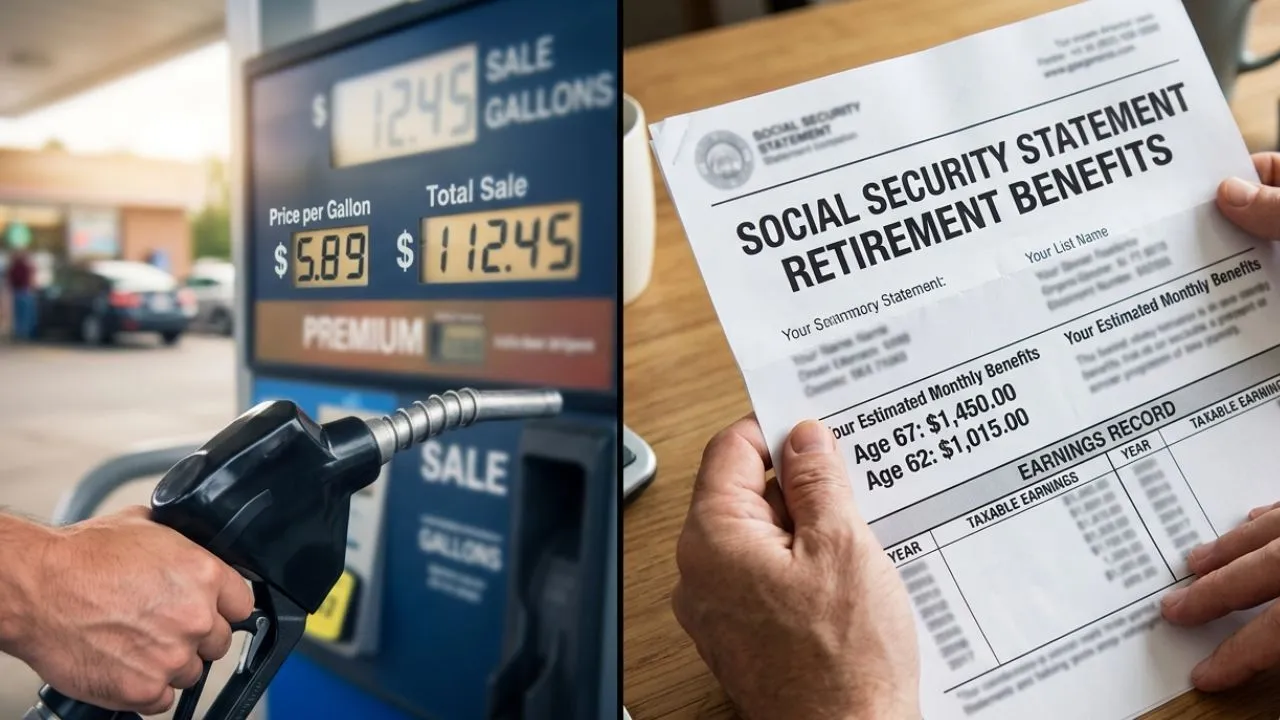
A war in a narrow shipping corridor is now reshaping the cost of daily life across the United States. Gasoline prices remain roughly $1.40 per gallon above pre-March levels after the Strait of Hormuz disruption cut global oil flows and tightened fuel inventories worldwide.
The Federal Reserve Bank of Dallas estimates that if the disruption lasts through Q3 2026, it could add 1.1 percentage points to headline inflation, directly affecting the CPI-W window used to calculate the 2027 Social Security COLA.
That inflation pressure now flows into the Federal Reserve’s June 16 rate decision, mortgage rates, savings yields, and household expenses nationwide.
The connection is institutional and measurable: the Dallas Fed models the impact, the Bureau of Labor Statistics publishes CPI-W data, the Social Security Administration uses it for annual benefit adjustments, and the Federal Reserve sets interest rates that shape borrowing and savings costs across the economy.
What the Hormuz Closure Has Done to Your Gas Bill Since March 4
Commercial traffic through the Strait of Hormuz has remained severely disrupted since early March 2026, with military escort operations and intermittent ceasefire negotiations failing to fully normalize energy shipments. The Strait accounts for roughly 20 percent of global seaborne oil trade and 20 percent of global liquefied natural gas supply, per the United Nations Conference on Trade and Development official report UNCTAD/OSG/TT/INF/2026/1.
Federal Reserve Policy

Fed April Decision: How the Oil Shock Influenced the FOMC Vote
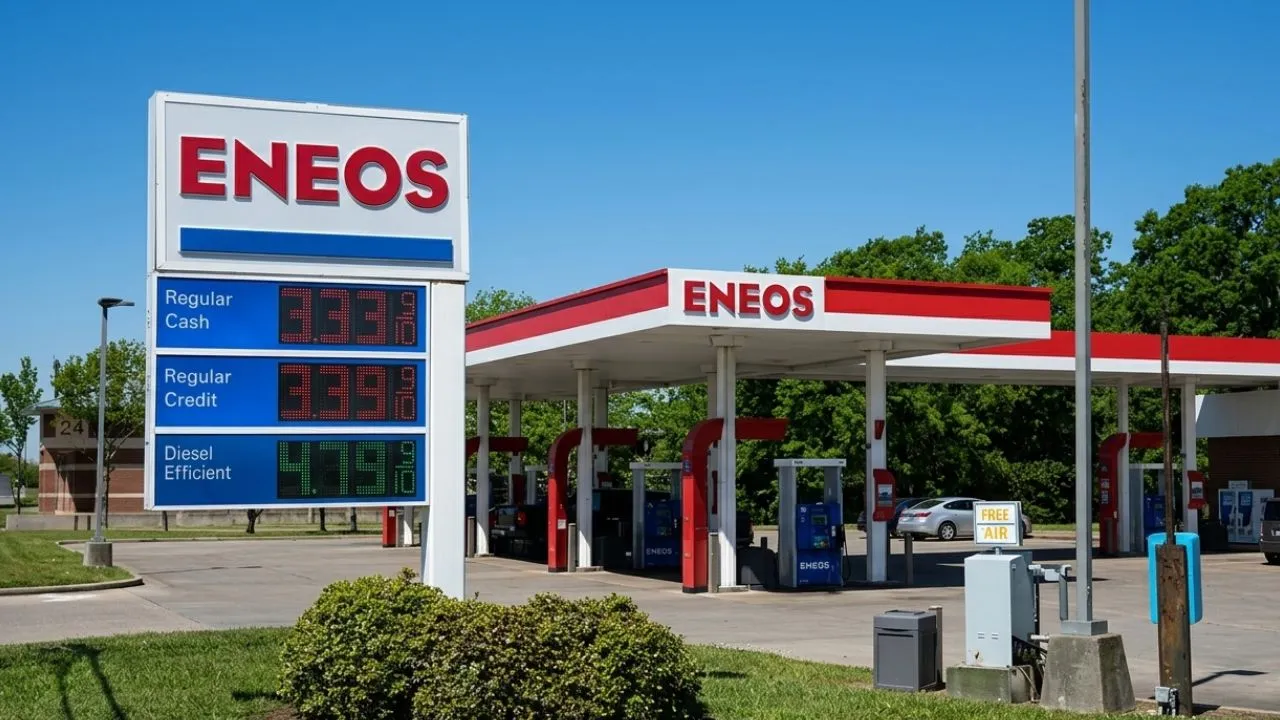
Iran War Is Adding $1.40 to Your Gas — And It Is Not Done
The IEA characterized the closure as the largest oil supply disruption in history. U.S. gasoline pricing indicators and New York Harbor gasoline futures remain roughly $1.40 per gallon above pre-closure March levels despite recent volatility tied to ceasefire negotiations and tanker-escort operations.
The mechanism is direct. Crude oil is the primary input for gasoline, diesel, and jet fuel. Significant volumes of Gulf crude, from Saudi Arabia, the UAE, Iraq, and Qatar, previously transited the Strait. With that flow disrupted, global refiners compete for a reduced supply.
Higher input costs reach your pump within two to four weeks. EIA inventory data released May 6 showed U.S. gasoline inventories falling for the 11th consecutive week, increasing pressure ahead of the summer driving season. The EIA publishes updated U.S. retail gasoline prices every Monday morning at eia.gov/petroleum/gasdiesel. Today’s release is the most current data available.
The U.S. military is currently running Project Freedom, confirmed by U.S. CENTCOM, escorting commercial vessels through the Strait. Whether those operations stabilize or escalate the situation determines whether $3.60 gasoline is the ceiling or a point on the way higher.
For how energy costs flow through the federal government’s own fiscal accounts, see the Treasury account explained and the breakdown of what the Powell Fed board rate hold means for deposit timing.
What the Dallas Fed Found: 1.1 Percentage Points Added to Your Inflation
The Federal Reserve Bank of Dallas published a working paper in April 2026 projecting that a three-quarter closure of the Strait of Hormuz would add 1.1 percentage points to fourth-quarter-over-fourth-quarter U.S. headline inflation in 2026. A one-quarter closure adds 1.7 percentage points on an annualized basis in the first quarter.
For core inflation, which strips out food and energy, the same three-quarter scenario adds 0.3 percentage points. One-year inflation expectations would rise by up to 0.5 percentage points under the three-quarter projection. Source: dallasfed.org/research/economics/2026/0417.
Dallas Fed Hormuz Inflation Projections
One-quarter closure: plus 1.7 percentage points annualized to Q1 headline inflation. Three-quarter closure: plus 1.1 percentage points to fourth-quarter-over-fourth-quarter 2026 headline inflation. Core inflation impact under three-quarter closure: plus 0.3 percentage points. One-year inflation expectations under three-quarter closure: up to plus 0.5 percentage points.
The timing creates a specific and serious problem for Social Security recipients. The Social Security Administration calculates the annual Cost-of-Living Adjustment using the average CPI-W for the third quarter of the prior year, covering July, August, and September.
The 2027 COLA is calculated entirely from Q3 2026 CPI-W data. The Hormuz closure began March 4. Three quarters from March runs through approximately September 2026. That is the exact window the SSA uses to set your 2027 monthly benefit level.
March 2026 CPI-W was already running at 3.3 percent year-over-year per BLS data. Independent Social Security analyst Mary Johnson raised her 2027 COLA estimate to 3.2 percent after seeing that March reading.
Neither estimate fully accounts for the Dallas Fed’s three-quarter inflation projection materializing through September. For how the COLA calculation interacts with Medicare Part B premiums, see the COLA Medicare offset analysis. The SSA’s COLA formula is confirmed at ssa.gov/cola.
What Higher Inflation Means for the Fed Rate Decision on June 16
The Federal Reserve held the federal funds rate at 3.5 to 3.75 percent at the April 29, 2026 FOMC meeting. Three voting members dissented against language indicating potential future rate cuts.
Minneapolis Fed President Neel Kashkari stated on CBS on May 3 that rate hikes may be necessary if the Hormuz closure continues. The Wall Street Journal reported May 2 that internal Fed discussion had shifted from when to cut rates to what conditions would require a hike. Source: federalreserve.gov.
The Federal Reserve’s primary mandate is price stability, anchored at 2 percent inflation. If the Dallas Fed’s three-quarter scenario materializes, headline inflation could be running more than a full percentage point above that target by Q4 2026. That outcome makes rate cuts nearly impossible to justify and makes rate hikes a live possibility for the first time since 2023.
The June 16 and 17 FOMC meeting will be the first chaired by Kevin Warsh, who takes the chair on May 15. The meeting will be his first rate decision as chair.
The Dallas Fed inflation data, Q2 CPI reports, and weekly EIA gasoline releases between now and June 16 are the primary data the committee will weigh. For the full institutional framework connecting Fed rate decisions to deposit timing and savings rates, see Fed policy explained and the rate and deposits guide.
The connection to your accounts is immediate. Current savings account and CD rates remain competitive precisely because rates are elevated. Rate cuts would lower those returns. Rate hikes would push them further up.
Mortgage rates, already above 7 percent for most 30-year products, would rise further under a hike scenario. For savers holding current CD positions, elevated rates extending through 2026 are financially advantageous. For prospective homebuyers or anyone waiting for mortgage relief, the Hormuz situation is extending the timeline further.
Reuters reporting published May 7 also showed global fuel inventories continuing to tighten even amid temporary ceasefire optimism, reinforcing the Federal Reserve’s concern that energy inflation may persist longer than markets initially expected.
What Happens Next: The Two Scenarios That Determine Your Financial Outcome
Every financial decision in the second half of 2026, covering savings positioning, mortgage timing, retirement contributions, and household budgeting, is shaped by which of two paths the Hormuz situation takes. The Dallas Fed model, BLS CPI-W monthly releases, and EIA weekly data will signal in real time which scenario is materializing.
Scenario A: Hormuz reopens before Q3 2026
Oil prices normalize. The Dallas Fed inflation projection does not fully materialize. The 2027 COLA is calculated on moderate Q3 CPI-W data. The Fed resumes rate-cut discussions in late 2026. Mortgage relief becomes possible before year-end. Gas prices retreat toward pre-March levels.
Scenario B: Hormuz remains closed through Q3 2026
The Dallas Fed’s 1.1-point inflation addition materializes in the data. Q3 2026 CPI-W is elevated. The 2027 COLA increases in nominal terms but part of the gain is consumed by higher Medicare Part B premiums and higher everyday costs.
The Fed faces a genuine rate hike decision at or after the June meeting. Mortgage rates stay elevated or rise further. Savers holding current positions benefit from rates remaining high. Continued inventory declines would also increase the risk of gasoline prices remaining above seasonal norms even if ceasefire negotiations continue.
The U.S. CENTCOM Project Freedom operations are the variable that determines which scenario prevails. Three real-time data sources tell you which direction the situation is moving. Check EIA gasoline prices weekly at eia.gov/petroleum/gasdiesel.
Monitor BLS CPI-W monthly releases, especially the July, August, and September readings, at bls.gov/cpi. Follow the SSA COLA formula methodology at ssa.gov/cola. Each data release narrows the range of outcomes.
What This Means For Your Money Now
- Check EIA weekly gasoline price and inventory releases every Wednesday and Monday at eia.gov/petroleum/gasdiesel. Inventory declines are now becoming as important as crude prices in determining summer fuel costs.
- If you receive Social Security, monitor monthly CPI-W releases at bls.gov/cpi . The Q3 average covering July, August, and September determines your 2027 COLA. See the 2027 COLA projection for current estimates and the COLA Medicare offset for how Medicare Part B interacts with any increase.
- If you have a savings account or CD, elevated inflation means rates stay higher for longer. Current CD positions locked in at today’s rates are advantageous if Scenario B develops.
- If you are shopping for a mortgage, do not expect rate relief before the June 16 and 17 FOMC meeting at minimum, and only if inflation data improves materially before then.
- For how each FOMC rate decision flows through to your savings account and deposit timing, see the federal reserve rate and deposits guide .
Macro Data Update: Interagency Signals
As of May 11, 2026, updated cross-agency indicators show continued tightening in energy supply conditions, with EIA weekly gasoline inventories still tracking below seasonal norms and volatility persisting in Gulf-linked crude benchmarks.
The Federal Reserve’s current policy stance remains data-dependent ahead of the June 16–17 FOMC meeting, with inflation expectations continuing to reflect elevated energy input costs in near-term CPI modeling.
The Bureau of Labor Statistics CPI-W trajectory for Q3 2026 remains the key determinant of the 2027 Social Security COLA baseline, with July–September readings now carrying disproportionate weight in forward inflation expectations.






One thought on “How Strait of Hormuz Conflict Adds $1.40 to Gas Prices: Inflation and Bill Impact @import url("https://fonts.googleapis.com/css2?family=Poppins:wght@400;500;600&family=Source+Sans+3:wght@400;500;600;700&display=swap"); /* ========================================= NORMAL BYLINE ========================================= */ .izo-clean-byline { display: flex; align-items: center; justify-content: space-between; width: 100%; max-width: 620px; gap: 16px; margin-top: 4px; margin-bottom: 16px; font-family: "Poppins", Arial, sans-serif; } .izo-clean-byline-content { display: flex; flex-direction: column; justify-content: center; align-items: flex-start; min-width: 0; gap: 4px; line-height: 1.12; transform: translateY(-4px); font-family: "Poppins", Arial, sans-serif; } .izo-clean-author-wrap { position: relative; display: inline-block; width: fit-content; line-height: 1.12; margin: 0; padding: 0; outline: none; } .izo-by-label { font-family: "Poppins", Arial, sans-serif; font-size: 14px; font-weight: 400; color: #111; line-height: 1.12; margin-right: 3px; } .izo-clean-author-name { position: relative; display: inline-block; font-family: "Poppins", Arial, sans-serif; font-size: 14px; font-weight: 600; color: #111; cursor: pointer; line-height: 1.12; padding: 0; margin: 0; text-decoration-line: underline; text-decoration-color: #111; text-decoration-thickness: 1px; text-underline-offset: 1px; } .izo-clean-author-name::after { display: none; } .izo-clean-meta { font-family: "Poppins", Arial, sans-serif; font-size: 11px; font-weight: 400; color: #555; line-height: 1.12; margin: 0; padding: 0; } /* ========================================= RIGHT ACTIONS GOOGLE + SHARE ========================================= */ .izo-byline-actions { display: flex; align-items: center; justify-content: flex-end; gap: 7px; flex: 0 0 auto; position: relative; top: 6px; } /* ========================================= GOOGLE SOURCE BADGE ========================================= */ .izo-google-source-badge { display: inline-flex; align-items: center; justify-content: center; width: 34px; height: 34px; min-width: 34px; flex: 0 0 34px; padding: 6px; margin: 0; box-sizing: border-box; background: #ffffff !important; border: 1px solid rgba(85,85,85,0.30) !important; border-radius: 6px; box-shadow: none !important; text-decoration: none !important; overflow: hidden; transition: border-color 0.18s ease, background-color 0.18s ease; } .izo-google-source-badge img { display: block; width: 100%; height: 100%; max-width: 100%; object-fit: contain; object-position: center; margin: 0; padding: 0; border: 0 !important; border-radius: 0 !important; background: transparent !important; box-shadow: none !important; } .izo-google-source-badge:hover { background: #ffffff !important; border-color: rgba(85,85,85,0.45) !important; box-shadow: none !important; transform: none !important; } .izo-google-source-badge:focus { background: #ffffff !important; outline: 1px solid rgba(85,85,85,0.45); outline-offset: 2px; box-shadow: none !important; } /* ========================================= SHARE BUTTON ========================================= */ .izo-share-button { display: inline-flex; align-items: center; justify-content: center; width: 34px; height: 34px; min-width: 34px; flex: 0 0 34px; padding: 7px; margin: 0; box-sizing: border-box; background: #ffffff !important; border: 1px solid rgba(85,85,85,0.30) !important; border-radius: 6px; box-shadow: none !important; color: #333333 !important; cursor: pointer; text-decoration: none !important; overflow: hidden; appearance: none; -webkit-appearance: none; transition: border-color 0.18s ease, color 0.18s ease, background-color 0.18s ease; } .izo-share-button svg { display: block; width: 18px; height: 18px; fill: none; stroke: currentColor; stroke-width: 1.8; stroke-linecap: round; stroke-linejoin: round; margin: 0; padding: 0; } .izo-share-button:hover { background: #ffffff !important; border-color: rgba(85,85,85,0.45) !important; color: #111111 !important; box-shadow: none !important; transform: none !important; } .izo-share-button:focus { background: #ffffff !important; outline: 1px solid rgba(85,85,85,0.45); outline-offset: 2px; box-shadow: none !important; } /* ========================================= AUTHOR DETAILS CARD ========================================= */ .izo-clean-author-tooltip { position: absolute; top: calc(100% + 10px); left: 0; width: 440px; max-width: calc(100vw - 40px); background: #fff; color: #333; border: 1px solid #e5e5e5; border-radius: 8px; padding: 16px; font-family: "Source Sans 3", Arial, sans-serif; font-size: 13px; font-weight: 400 !important; line-height: 1.55; box-shadow: 0 8px 24px rgba(0,0,0,0.10); opacity: 0; visibility: hidden; transform: translateY(5px); transition: opacity 0.2s ease, transform 0.2s ease, visibility 0.2s ease; z-index: 9999; pointer-events: none; } /* ========================================= IMAGE + BIO ========================================= */ .izo-tooltip-main { display: flex; align-items: flex-start; gap: 14px; width: 100%; } .izo-tooltip-image { width: 96px; height: 96px; flex: 0 0 96px; object-fit: cover; object-position: center; display: block; border-radius: 6px; margin: 0; padding: 0; } .izo-tooltip-bio { flex: 1 1 auto; min-width: 0; font-family: "Source Sans 3", Arial, sans-serif; font-size: 13px; font-weight: 400; line-height: 1.55; color: #333; margin: 0; padding: 0; } .izo-clean-author-tooltip strong { font-family: "Source Sans 3", Arial, sans-serif; font-weight: 400 !important; } /* ========================================= DESKTOP HOVER ========================================= */ .izo-clean-author-wrap:hover .izo-clean-author-tooltip { opacity: 1; visibility: visible; transform: translateY(0); pointer-events: auto; } /* ========================================= KEYBOARD / MOBILE TAP ========================================= */ .izo-clean-author-wrap:focus .izo-clean-author-tooltip, .izo-clean-author-wrap:focus-within .izo-clean-author-tooltip { opacity: 1; visibility: visible; transform: translateY(0); pointer-events: auto; } /* ========================================= POPUP FOOTER SOCIALS | READ PROFILE ========================================= */ .izo-tooltip-footer { display: flex; align-items: center; gap: 14px; margin-top: 16px; width: 100%; } .izo-tooltip-socials { display: flex; align-items: center; gap: 14px; margin: 0; padding: 0; } .izo-tooltip-socials a { display: inline-flex; align-items: center; justify-content: center; width: 24px; height: 24px; color: #222; text-decoration: none; border: none; transition: opacity 0.2s ease, transform 0.2s ease; } .izo-tooltip-socials a:hover { opacity: 0.72; transform: translateY(-1px); } .izo-tooltip-socials svg { width: 21px; height: 21px; fill: currentColor; display: block; } /* Grey separator */ .izo-tooltip-separator { display: inline-flex; align-items: center; justify-content: center; color: #b5b5b5; font-family: "Source Sans 3", Arial, sans-serif; font-size: 20px; font-weight: 400; line-height: 1; margin: 0 1px; } /* Read profile */ .izo-clean-author-tooltip .izo-profile-link { display: inline-block; font-family: "Source Sans 3", Arial, sans-serif; font-size: 13px; font-weight: 600; color: #1a73e8; text-decoration: none; border-bottom: 1px solid #1a73e8; line-height: 1.25; white-space: nowrap; } /* ========================================= MOBILE ========================================= */ @media (max-width: 650px) { .izo-clean-byline { display: flex; flex-direction: row; align-items: center; justify-content: space-between; width: 100%; max-width: 100%; gap: 7px; margin-top: 3px; margin-bottom: 14px; flex-wrap: nowrap; } .izo-clean-byline-content { display: flex; flex-direction: column; flex: 1 1 auto; min-width: 0; max-width: calc(100% - 68px); gap: 3px; line-height: 1.12; transform: translateY(-4px); } .izo-clean-author-wrap { line-height: 1.12; margin: 0; padding: 0; max-width: 100%; white-space: nowrap; } .izo-by-label { font-size: 12px; line-height: 1.12; margin-right: 3px; } .izo-clean-author-name { font-size: 12px; font-weight: 600; line-height: 1.12; padding: 0; margin: 0; text-underline-offset: 1px; white-space: nowrap; } .izo-clean-meta { font-size: 9.5px; line-height: 1.12; margin: 0; padding: 0; color: #555; white-space: nowrap; } /* ========================================= GOOGLE + SHARE MOBILE STAY ON SAME ROW ========================================= */ .izo-byline-actions { display: flex; flex-direction: row; align-items: center; justify-content: flex-end; gap: 5px; flex: 0 0 auto; white-space: nowrap; position: relative; top: 5px; } /* GOOGLE MOBILE */ .izo-google-source-badge { width: 28px; height: 28px; min-width: 28px; flex: 0 0 28px; padding: 5px; border-radius: 5px; background: #ffffff !important; border: 1px solid rgba(85,85,85,0.30) !important; box-shadow: none !important; margin: 0; } .izo-google-source-badge img { width: 100%; height: 100%; } /* SHARE MOBILE */ .izo-share-button { width: 28px; height: 28px; min-width: 28px; flex: 0 0 28px; padding: 6px; border-radius: 5px; background: #ffffff !important; border: 1px solid rgba(85,85,85,0.30) !important; box-shadow: none !important; margin: 0; } .izo-share-button svg { width: 15px; height: 15px; stroke-width: 1.8; } /* ========================================= MOBILE AUTHOR CARD ========================================= */ .izo-clean-author-tooltip { width: min(340px, calc(100vw - 32px)); max-width: calc(100vw - 32px); padding: 14px; left: 0; font-size: 12.5px; line-height: 1.5; } .izo-tooltip-main { gap: 11px; align-items: flex-start; } .izo-tooltip-image { width: 82px; height: 82px; flex: 0 0 82px; border-radius: 5px; } .izo-tooltip-bio { font-size: 12.5px; line-height: 1.5; } /* Mobile footer */ .izo-tooltip-footer { gap: 11px; margin-top: 14px; flex-wrap: nowrap; } .izo-tooltip-socials { gap: 12px; } .izo-tooltip-socials a { width: 22px; height: 22px; } .izo-tooltip-socials svg { width: 20px; height: 20px; } .izo-tooltip-separator { font-size: 18px; margin: 0; } .izo-clean-author-tooltip .izo-profile-link { font-size: 12.5px; line-height: 1.2; } }
ByAdarsha Dhakal

Adarsha Dhakal is the Founder and Editor of Investozora, an independent U.S. financial news publication he launched in August 2025. He covers IRS tax refunds, Social Security benefit payments, federal payment systems, Federal Reserve policy, and U.S. Treasury operations, explaining how government financial decisions affect the daily lives of American households. All reporting is sourced directly from official government records including IRS.gov, SSA.gov, FederalReserve.gov, and fiscal.treasury.gov.
|
Read full profile →
Published May 5, 2026 · 6:48 AM ET · Updated 2 months ago

”