

Berkshire Hathaway filed its definitive acquisition agreement for Taylor Morrison Home Corporation on May 31, 2026, at $72.50 per share in cash, totaling $8.5 billion. The SEC filing is available at SEC.gov through the EDGAR corporate filing system.
What Berkshire Just Signaled
Warren Buffett does not buy homebuilders on impulse. When Berkshire Hathaway announced on May 31, 2026 that it was acquiring Taylor Morrison Home Corporation for $8.5 billion at $72.50 per share in cash, the transaction represented the first major acquisition under new Berkshire CEO Greg Abel.
The choice of a homebuilder as the first significant capital deployment under Abel communicates a specific thesis about the American housing market: the structural shortage of single-family homes is not a temporary condition, and the companies that build those homes will benefit from that shortage for years.
Taylor Morrison operates across multiple high-growth Sun Belt and Western markets, building entry-level and move-up single-family homes at price points targeted specifically at millennials and older Gen Z buyers who represent the largest demographic wave moving into homeownership over the next decade.


Berkshire’s acquisition removes Taylor Morrison from the public market entirely, eliminating the quarterly earnings pressure that typically constrains expansion decisions in homebuilding. The SEC acquisition filing can be verified at the SEC EDGAR company search.
The housing market signal from Buffett arrives at the same moment as a sharp institutional adjustment in mortgage pricing. The 30-year fixed mortgage rate dropped 36 basis points in a rapid repricing this week.
A 36 basis point decline on a $400,000 mortgage over 30 years reduces the monthly payment by approximately $85 to $100 and the total interest cost over the life of the loan by approximately $30,000 to $36,000. That is not a dramatic monthly change, but it is a measurable affordability improvement that directly expands the pool of buyers who qualify under standard debt-to-income ratios.
Why This Window Is Real
The mortgage rate drop did not happen in isolation. It reflects a specific bond market dynamic in which short-term yields have risen faster than long-term yields, compressing the spread that mortgage lenders use to set 30-year fixed rates. This condition does not persist indefinitely.
The June 16 FOMC decision could reverse the compression depending on the size and tone of any rate action. Buyers who can complete a mortgage application and lock a rate before June 16 are acting inside a pricing window that may not reappear for months.
The mechanics of how a Federal Reserve rate decision flows from the policy announcement into individual mortgage pricing takes between 24 and 72 hours depending on the lender’s internal hedging position.
Once lenders reprice their rate sheets after a Fed decision, the adjustment is immediate and does not wait for borrowers to ask. The connection between the Fed rate path and mortgage costs is explained in the Warsh Fed Treasury yields savings impact article.
For buyers navigating the purchase timeline alongside the rate environment, the Treasury yields mortgage savings Social Security article maps the full relationship between macro rate movements and the specific instruments that affect homebuyer costs.
ACH Timing for Real Estate Transactions
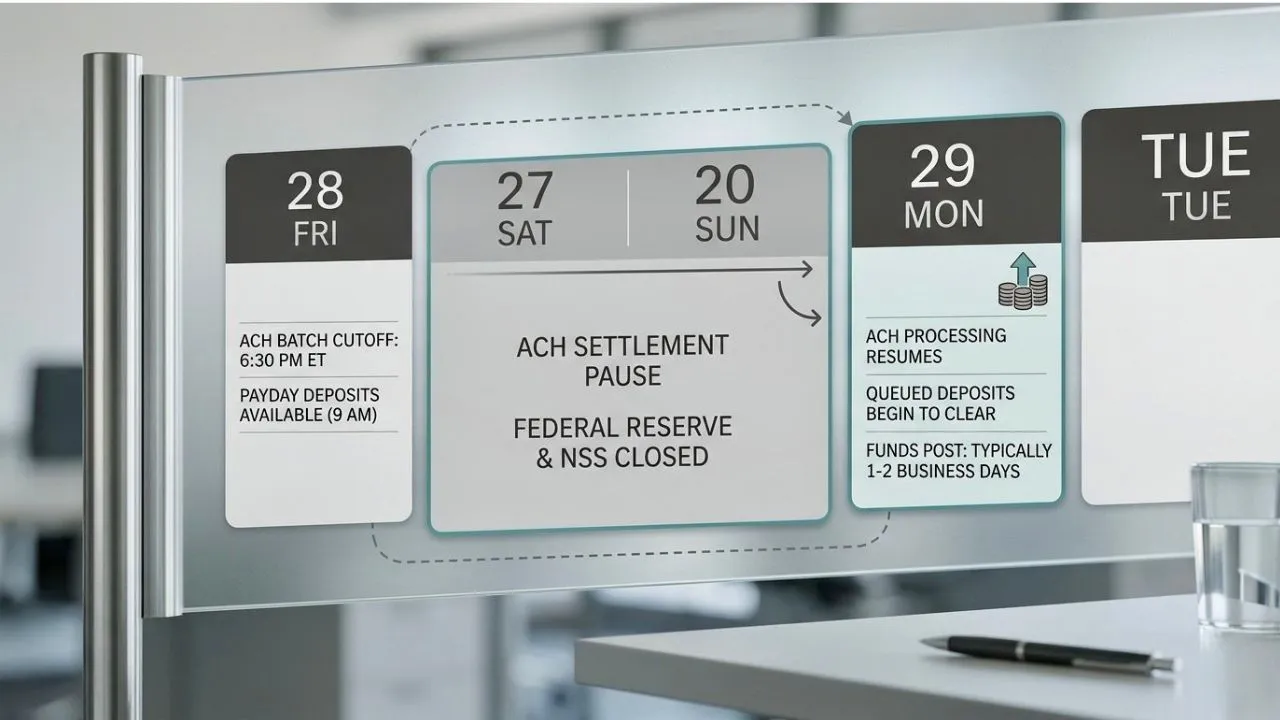
The final piece of the housing transaction equation that most buyers do not understand until closing day is the settlement payment timing. Real estate closings require the movement of large amounts of money through the Automated Clearing House network or wire transfer systems operating under Federal Reserve clearinghouse deadlines.
Missing an ACH cutoff at a closing can delay possession by 24 hours or longer and, in some cases, trigger penalty clauses in the purchase agreement. Standard ACH transactions initiated before 2:45 PM Eastern Time settle on the same business day through the Federal Reserve’s FedACH system.
Transactions initiated after the cutoff settle on the next business day. The Federal Reserve’s FedACH processing schedule is published at frbservices.org, which is the authoritative source for all timing questions related to federal clearing windows.
For closing funds above $50,000, most title companies and attorneys require a wire transfer rather than ACH to guarantee same-day settlement. Wire transfers must be initiated before the sending bank’s internal wire cutoff, which varies by institution but typically falls between 4:00 PM and 5:00 PM Eastern Time.
Missing that window means waiting for the next business day regardless of when the Fed settlement window opens. The complete breakdown of wire versus ACH mechanics at closings is covered in the wire transfer ACH RTP differences article.
For anyone coordinating a closing this month, the money movement system provides the foundational map of how every type of payment moves through the U.S. banking system and where delays originate.
What You Should Do Now
- If you are actively shopping for a home and have been waiting for rates to fall, contact your lender today to run a current rate lock quote. The mortgage rate drop window is live but time-limited relative to the June 16 FOMC meeting.
- If you are closing on a home within the next 30 days, ask your title company or attorney whether closing funds will move via ACH or wire transfer. Confirm the specific cutoff time for your institution and calendar a buffer of at least 90 minutes.
- If you are interested in tracking Berkshire’s housing thesis as a signal for the broader real estate market, follow the Taylor Morrison acquisition timeline through the SEC EDGAR system at sec.gov as the deal progresses through regulatory review.
- Review the FedACH settlement delay article if you have ever experienced a closing day deposit delay. Understanding why it happened is the first step to preventing it on the next transaction.
- The mortgage rate environment will be repriced within 24 to 72 hours of the June 16 Fed decision. If you are in the application process, accelerate your timeline where possible.