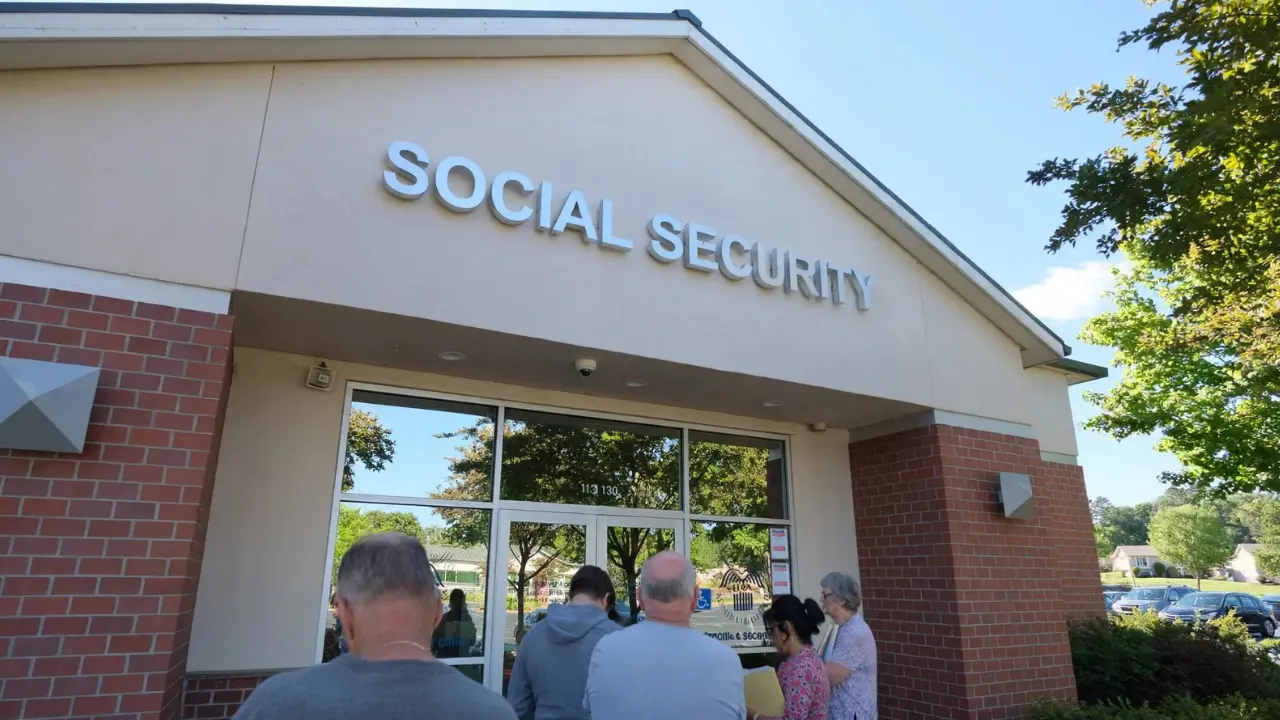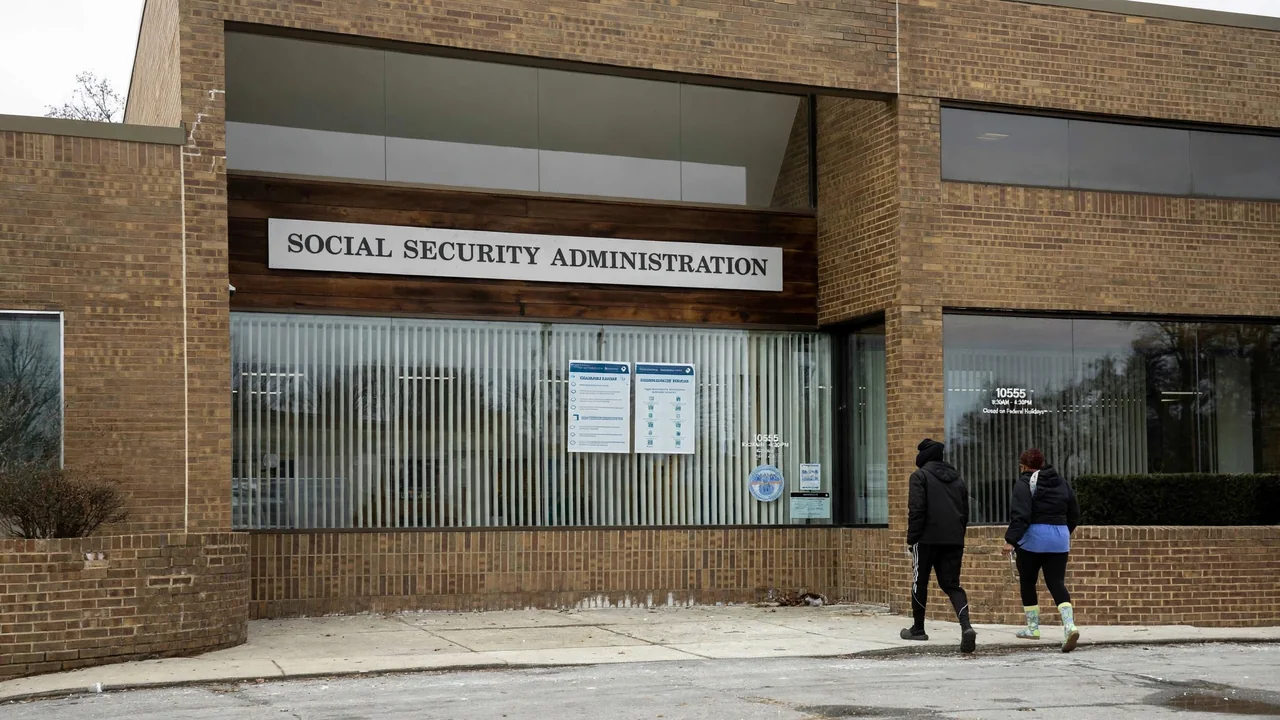


The Social Security retirement trust fund is now projected to reach depletion in 2032, one year earlier than previously estimated, according to the latest trustee report data confirmed today by CNN, the Washington Post, and ABC News, with Congress having taken no legislative action to address the shortfall.
Every working American and every current retiree has a direct financial stake in one date: 2032. That is the year the Social Security retirement trust fund is now projected to exhaust its reserves. When that happens, the program does not shut down.
Social Security does not disappear. But what occurs at that moment is something that 70 million beneficiaries and hundreds of millions of workers have never experienced, and almost nobody has explained in plain English.
This is that explanation.
The 2032 date moved up by one full year from prior projections. That acceleration means Congress has roughly six years to act before the automatic benefit reduction mechanism written into federal law takes effect. Six years sounds like a long time. In the legislative calendar of the United States Congress, on an issue this politically charged, it is not.
What the Trust Fund Actually Is
Social Security is funded through two mechanisms operating simultaneously. The first is the payroll tax, which collects 12.4 percent of wages up to the taxable maximum, split between employers and employees, on an ongoing basis.
The second is the trust fund itself, a reservoir of Treasury securities that was built up over decades when payroll tax income exceeded program outlays. The Social Security Administration holds those securities and redeems them as needed when current payroll tax receipts are insufficient to cover current benefit payments.


The retirement trust fund, formally called the Old Age and Survivors Insurance Trust Fund, has been paying out more than it collects in payroll taxes since approximately 2021. Each year, the SSA redeems more Treasury securities to cover the gap. The 2032 projection means the fund will have redeemed every security it holds by that year. After that point, the SSA would be operating on payroll tax income alone.
For the broader context of how Social Security payments flow from Treasury authorization through the Federal Reserve network into individual bank accounts, the US money movement system documents the complete federal disbursement pipeline that would continue operating regardless of trust fund status.
What Happens to Your Check in 2032 Under Current Law
This is the part that news coverage almost universally omits. If Congress takes no action and the trust fund reaches depletion in 2032, Social Security does not stop sending checks. It does not default. What happens under current law is a mandatory across-the-board benefit reduction to whatever level can be sustained by incoming payroll tax revenue alone.
The Social Security actuaries have estimated that figure at approximately 79 to 83 percent of the currently scheduled benefit. That means every beneficiary, regardless of age, health, income level, or how long they paid into the system, would see their monthly payment cut by roughly 17 to 21 percent simultaneously and automatically.
For someone receiving the average retirement benefit of approximately $1,900 per month today, a 20 percent cut translates to roughly $380 less per month, or $4,560 less per year. For someone at the maximum benefit, the dollar impact is larger. For someone whose Social Security payment represents 80 to 90 percent of their monthly income, which describes a significant portion of the beneficiary population over age 75, that cut would be structurally devastating.
The Social Security 2032 benefit cut in real dollars calculated what specific benefit levels would look like under various reduction scenarios, and the Social Security trust fund 2032 CBO projection documents the Congressional Budget Office’s independent analysis of depletion timing and reduction magnitude.
Why the Date Moved Earlier
The acceleration from 2033 to 2032 reflects two converging pressures that the prior projection underweighted. First, the demographic reality of the baby boomer cohort has produced a larger and faster-growing beneficiary population than actuarial models projected several years ago.
More people are claiming benefits sooner, and they are living longer in retirement. Second, wage growth patterns over the past 18 months have produced payroll tax receipts that came in slightly below the trajectory required to maintain the prior projection. Neither factor alone would have moved the date. Together, they consumed one full year of buffer.
The Social Security trustees update their projections annually. The consistent directional trend over the past decade has been toward earlier depletion dates, not later ones. Each revision has moved the needle in one direction. The 2032 figure is the most current authoritative estimate. It is not a worst-case scenario. It is the base case.
For the analysis of how the 2032 depletion date interacts with the annual COLA calculation and what it means for beneficiaries tracking their benefit trajectory, the Social Security benefit cut 2032 congressional response covers the legislative options currently being discussed, and the Social Security COLA 2027 formula explains how annual raises are calculated in the years between now and the projected depletion.
What Congress Can Actually Do
There are three legislative mechanisms Congress has used historically to address Social Security solvency gaps, and each one involves a politically difficult trade-off.
The first is raising or eliminating the payroll tax cap. The taxable maximum for 2026 is $184,500. Wages above that threshold are not subject to Social Security payroll tax. Raising or removing that cap would generate significant additional revenue but would represent a substantial tax increase on high earners and would face fierce political opposition from one side of the aisle.
The second is adjusting the benefit formula for future retirees, particularly for higher-earning workers, while protecting lower-income beneficiaries. This approach affects people who have not yet retired and allows a longer phase-in period, but it also reduces the benefit that workers are currently accruing with the expectation of receiving.
The third is raising the full retirement age beyond the current threshold. Full retirement age is already scheduled to reach 67 for workers born after 1960, as detailed in the Social Security full retirement age 2026 guide. Raising it further to 68 or 69 would reduce total lifetime benefits paid for each cohort, effectively functioning as a benefit cut for people who cannot afford to delay claiming.
Most serious solvency proposals involve some combination of all three. No single mechanism closes the gap without either raising substantial revenue or reducing total lifetime benefits paid. The political difficulty is not a misunderstanding of the math. It is a genuine disagreement about who bears the cost.
The Social Security trust fund administration analysis covers the SSA’s own accounting of the trust fund’s trajectory and the reserve adequacy calculations that underlie the 2032 projection. For readers assessing their own claiming strategy in light of the 2032 timeline, the Social Security claiming age break-even analysis is directly relevant, because the break-even calculation changes materially if future benefits are subject to a 20 percent reduction.
What This Means If You Are 55 to 65 Right Now
The cohort most directly affected by the 2032 date is anyone who is currently between ages 55 and 65. People in this group will reach their full retirement age between 2024 and 2034, which means their peak claiming window coincides almost exactly with the projected depletion date. They are too young to have locked in current benefit levels and too old to significantly restructure their retirement savings trajectory.
For this cohort, the 2032 date is not an abstract policy number. It is a direct variable in their retirement income calculation. The decision of when to claim, how to sequence Social Security income with other retirement assets, and how to plan for a potential benefit reduction scenario is one of the most consequential financial decisions they will make in the next five years.
The Social Security benefits at 62 versus 67 versus 70 comparison frames those trade-offs in specific dollar terms, and the maximum Social Security benefit 2026 analysis establishes the current ceiling from which any future reduction would be calculated.
What You Should Do Now
- Create or log into your My Social Security account and review your estimated benefit at full retirement age, age 62, and age 70. These projections are calculated under current law and represent the benefits that could be reduced proportionally if Congress takes no action before 2032.
- Do not treat the 2032 date as fixed. Congress acted in 1983 when Social Security previously faced a major solvency challenge, extending the program’s finances for decades. Legislative action before 2032 remains possible. The key planning question is not whether a reduction is certain, but whether your retirement plan can absorb a potential 15% to 20% benefit reduction without creating financial hardship.
- If you are within five years of full retirement age, model your expected monthly income using both current scheduled benefits and 80% of scheduled benefits. The difference between those figures represents your potential exposure if trust fund reserves become depleted. Planning around the lower figure is a conservative approach and may prove realistic.
- Contact your congressional representatives regarding Social Security’s long-term financing. Congressional offices monitor constituent communications on high-profile issues, and public engagement can influence the urgency policymakers assign to potential reforms.
Social Security 2032 is not a distant policy debate. It is a specific date, now six years away, at which a statutory automatic cut takes effect unless Congress acts. Every beneficiary and every worker currently paying into the system is directly affected. The time for informed preparation is now, not in 2031.