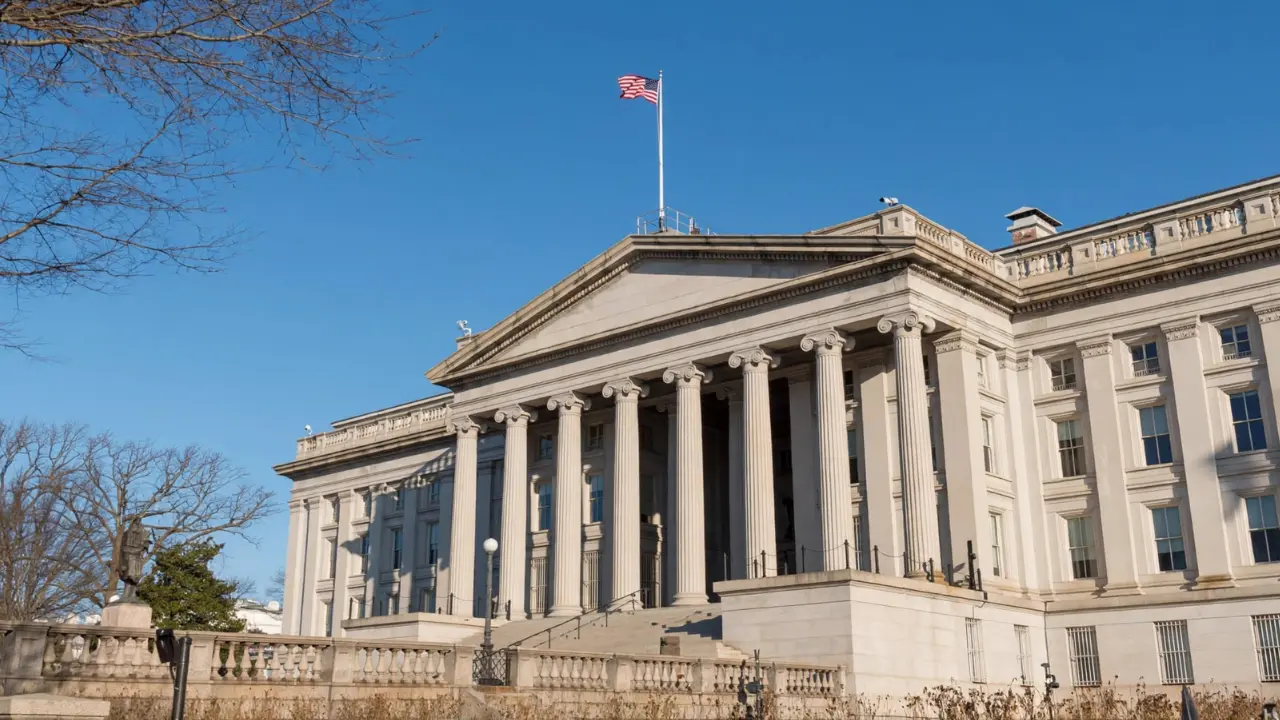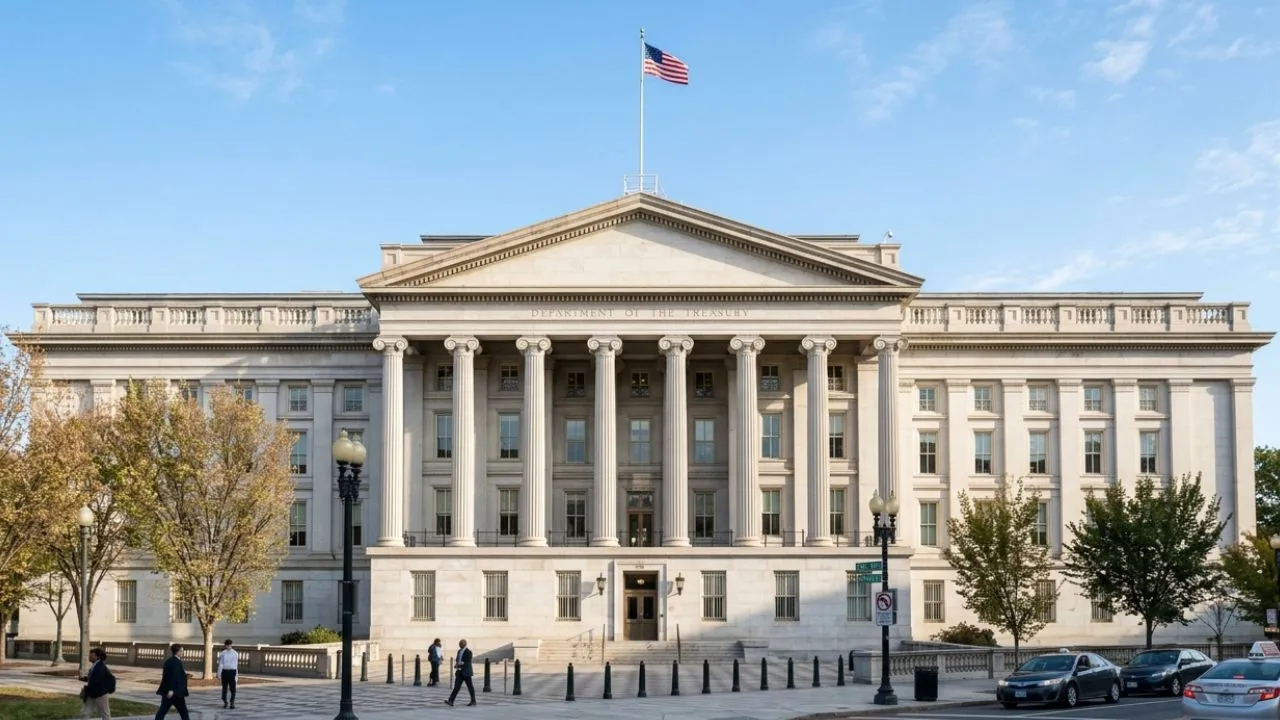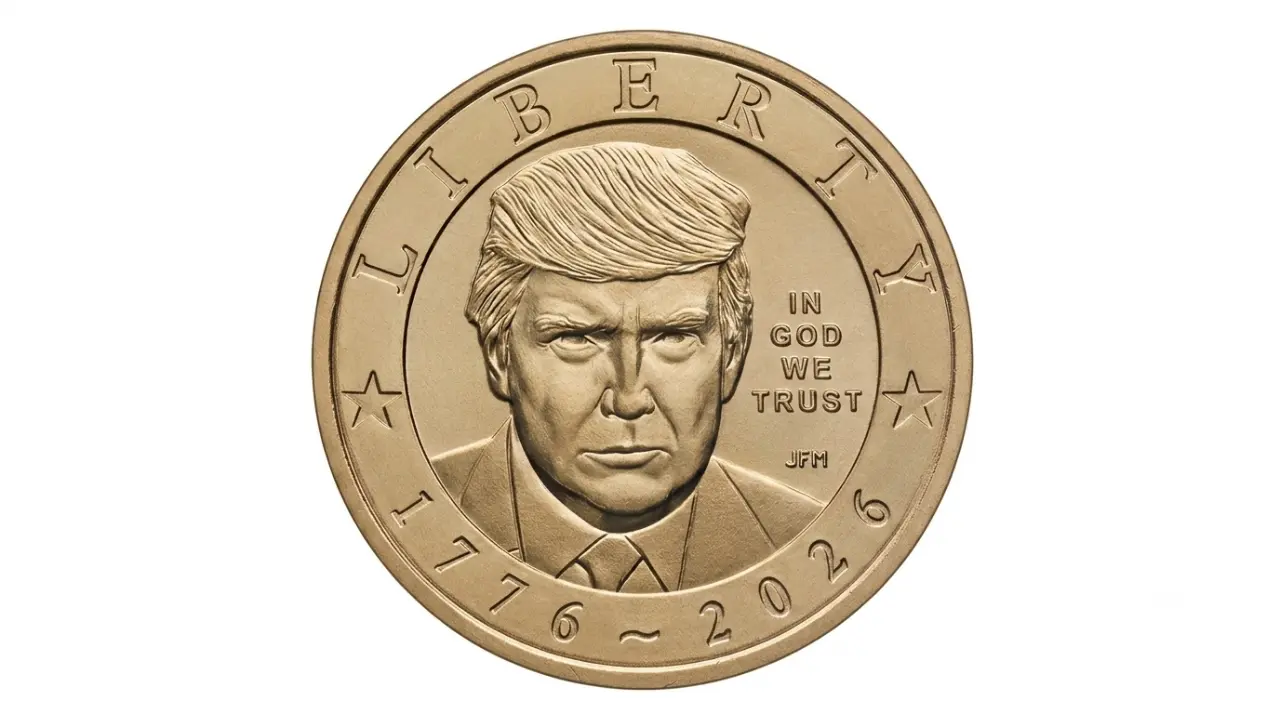
Treasury Secretary Scott Bessent has announced that U.S. Mint production of the commemorative dollar coin will proceed, based on an internal legal determination reached at a January 2026 Commission of Fine Arts meeting. No court has ruled on the coin’s legality.
The Treasury bypass of currency laws now underway is built on a single, narrow legal argument, and it is worth understanding exactly what that argument is before deciding what to make of it.
On July 15, 2026, Treasury Secretary Scott Bessent confirmed that U.S. Mint production of a commemorative one-dollar coin bearing President Donald Trump’s image would move forward, based on an internal legal review Treasury and Mint staff had already reached months earlier.
The law Treasury is reading narrowly
Congress passed the Circulating Collectible Coin Redesign Act of 2020, which Trump signed during his first term, giving the Treasury Secretary authority to issue commemorative dollar coins during calendar year 2026 “emblematic of the United States semiquincentennial,” marking 250 years since the Declaration of Independence. That much is not in dispute.
The complication comes from a much older statute, generally traced to an 1866 law passed after an incident in which a Treasury official put his own image on a five-cent note before anyone noticed.
The modern successor language, embedded in the 2020 Act itself, states that no coin issued under that authority may bear “a head and shoulders portrait or bust of any person, living or dead,” and separately bars any portrait of a living person on the reverse of the coin.
Treasury’s position, confirmed at a January 2026 meeting of the Commission of Fine Arts by the acting chief of the Mint’s Office of Design Management, is that the proposed design does not violate the law as written.
The reasoning rests on two distinctions. First, the restriction on a living person’s portrait applies specifically to the reverse of the coin, and the Trump image sits on the obverse, the front.
Second, the ban on a “head and shoulders portrait or bust” is read as a specific technical term describing a particular style of numismatic portraiture, and Treasury’s lawyers argue the wider illustrative image used in the design, showing Trump’s full raised fist and body against a flag, falls outside that narrower category.
How Treasury chose to proceed
What makes this a genuine bypass, rather than simply a disagreement over interpretation, is the path Treasury chose to establish its position. Rather than seeking an explicit statutory waiver from Congress, or asking a federal court for a declaratory ruling confirming the design’s legality before moving to production, Treasury’s public posture since the January 2026 meeting has been to treat its own internal legal review as final.
The Commission of Fine Arts and the Citizens Coinage Advisory Committee, the two bodies that traditionally review coin designs for artistic merit and legal conformance before a design is finalized, had not completed their standard review of the specific Trump coin designs when they were first publicly released in October 2025.
Critics have characterized the early public release of “first draft” designs as an attempt to make the coin’s existence feel like a settled fact before the advisory process had run its course. Treasury officials have characterized the same release as an act of transparency.
Design details released alongside the announcement show Trump’s profile on the obverse with the word “Liberty” and the dates “1776-2026,” while the reverse shows Trump with a raised fist before an American flag, a reference to his public remarks following an assassination attempt during his 2024 campaign.
Why this differs from past commemorative coins
The Historical Context Standard is useful here. The 2020 Act’s predecessor commemorative programs, including a 2024 coin honoring Harriet Tubman’s role in the Underground Railroad, uncontroversially depicted deceased historical figures, precisely the category of person the underlying restriction was designed to still permit within limits, while excluding living officeholders from using currency for self-promotion.
The Trump coin is the first instance since the 1866 law’s modern codification where a sitting president’s image has moved this far through the production pipeline. Calvin Coolidge remains the only sitting president whose image has appeared on a U.S. coin, a case widely cited by legal commentators as the closest historical precedent, and even that instance did not involve a law with language this specific barring the practice.
Separately, and worth distinguishing clearly from the coin itself, Treasury also announced in March 2026 that Trump’s signature would be added to future paper currency, replacing the traditional practice of using the Treasury Secretary’s and Treasurer’s signatures.
That change does not raise the same statutory question as the coin, since no comparable portrait restriction governs signatures on paper currency, but it reflects the same broader pattern of expanding a sitting president’s personal presence on U.S. money.
What legal exposure remains
This is Investozora’s analysis, separated from the facts above. Treasury’s reading of the statute is a plausible one, but it is not the only plausible one, and it has not been tested by any court.
A textualist reading of “head and shoulders portrait or bust” could reasonably be extended to cover any recognizable portrait of a specific living person, regardless of framing or pose, especially given that the surrounding statutory language exists specifically to prevent officeholders from using circulating currency for self-glorification, a purpose a raised-fist illustration of a sitting president arguably still implicates even if it technically escapes the narrowest reading of the phrase.
Because Treasury chose an internal determination over a judicial or legislative confirmation, the design remains legally exposed to challenge for as long as the coin is in production or circulation, and a future administration, a member of Congress, or a private litigant with standing could still contest it. Readers should not treat Treasury’s own legal conclusion as equivalent to a court’s ruling, since as of publication, no court has been asked to weigh in.
What you should do now
There is no direct financial action required from readers on this story, since the coin does not affect deposit timing, tax filing, or benefit payments. What is useful is understanding that a “commemorative coin” under this program is a legal collectible authorized by Congress, not ordinary circulating currency, meaning it will not replace the dollar bills and coins already in your wallet.
If you are offered the coin, or any private-market version marketed around it, as an investment, treat the marketing claims with the same skepticism you would apply to any collectible, since commemorative coin values depend on collector demand rather than face value or any government guarantee of appreciation.
Readers curious about how currency and coin authority connects to the broader federal payment system can see Investozora’s explainer on the Federal Reserve payment account proposal, a related but separate story about who gets direct access to the government’s money-moving infrastructure, and our money movement hub for the full picture of how U.S. currency and payments actually work.