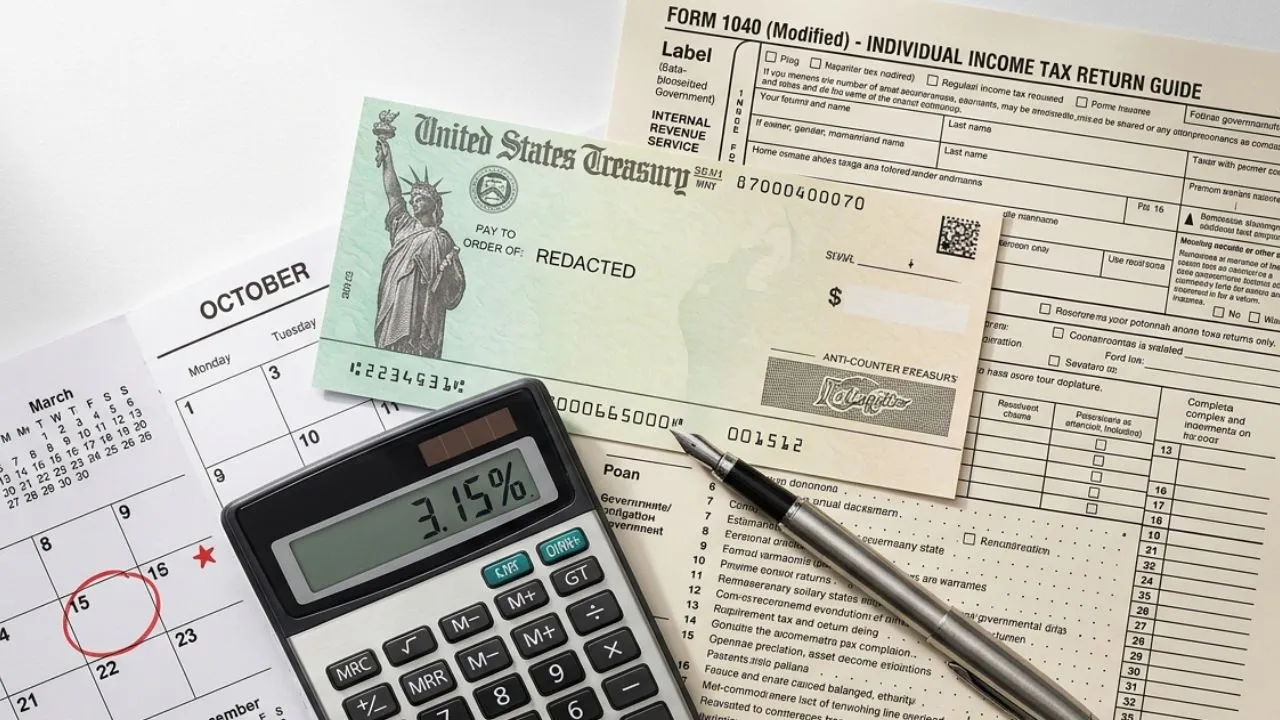
If your IRS refund was deposited into the wrong bank account, what happens next depends entirely on why. If the account number was invalid, the bank rejects it and the IRS mails a paper check. If the number belonged to a real account that accepted the deposit, you must work directly with that bank, and the IRS can only assist by initiating a trace through Form 3911.
Two Very Different Scenarios, Two Very Different Outcomes
The single most important thing to understand about a misdirected refund is that the IRS’s ability to help you depends entirely on what actually happened to the deposit, not on how upsetting or unfair the outcome feels. There are two fundamentally different situations, and confusing them leads to wasted time.
Scenario one
The account or routing number was invalid or didn’t match, meaning the numbers entered on your return did not correspond to a real, active account. In this case, the receiving bank rejects the deposit and returns it to the IRS.
According to tax preparation industry guidance on incorrect direct deposit information, once this happens, the IRS mails a paper check to the address on your federal return, and no trace or recovery action is required from you beyond waiting for that check.
Scenario two
The account number was valid but belonged to someone else, meaning you or your tax preparer transposed a digit or entered the wrong but still-active account number, and the receiving bank accepted the deposit into that account.
This is the scenario that creates real difficulty, because once a bank has accepted funds into a real account, the IRS has no legal authority to reach into that account and pull the money back out.
Why the IRS Cannot Simply Recover Your Money
This is the detail that frustrates taxpayers most, but it reflects an actual legal limitation rather than bureaucratic reluctance. The IRS’s own guidance is direct on this point: refunds misdirected due to taxpayer or tax preparer error, where the bank accepted the deposit into a real account, cannot be reissued by the IRS.
The agency did exactly what it was instructed to do based on the information provided on the return, and it has no independent authority to compel a bank to return funds that bank has already deposited into an account holder’s balance.
This is fundamentally different from a scenario where the IRS itself made a processing error. If the mistake originated with the IRS rather than with your return, different remedies apply, and you should raise that distinction explicitly when contacting the agency.
Step One: Contact the Bank Directly
Your first move should always be contacting the financial institution that received the misdirected deposit, not the IRS. Explain the situation clearly: that a tax refund intended for you was deposited in error into an account at their institution, and ask them to work with you or the IRS to recover the funds. Be prepared to provide documentation showing the error, such as a copy of your tax return, so keep your tax records readily accessible during this process.
Banks are generally required to attempt return of funds when a receiving account name does not match the intended recipient, and many banks will flag and reverse these mismatches relatively quickly once identified. However, the bank is not obligated to succeed, particularly if the account holder has already withdrawn the funds.
Step Two: File Form 3911 If the Bank Doesn’t Respond
If you have contacted the bank and a reasonable waiting period has passed without resolution, generally somewhere in the range of one to two weeks depending on the specific guidance you receive, your next step is filing IRS Form 3911, Taxpayer Statement Regarding Refund. This form formally initiates an IRS trace, authorizing the agency to contact the receiving bank directly on your behalf to determine where the money went and attempt recovery.
Once a trace is initiated, banks generally have up to 90 days from the date the trace was submitted to respond to the IRS’s request for information, and full resolution of the case can take up to 120 days in more complex situations. This is a meaningfully longer timeline than most taxpayers expect, and it is worth planning around that reality rather than assuming a quick turnaround.
What Happens If the Bank Recovers the Funds
If the receiving financial institution successfully recovers the misdirected funds and returns them to the IRS, the IRS will generally notify you of the next steps and reissue your refund, typically by paper check rather than another direct deposit attempt, sent to your last known address on file.
What Happens If the Bank Refuses or Cannot Return the Funds
This is the outcome taxpayers should be prepared for, even though it is not the most common one. If the account holder who received your misdirected funds has already spent or withdrawn them, or if the bank simply refuses to cooperate, the IRS cannot compel the bank or the account holder to return the money.
At that point, the matter effectively becomes a civil dispute between you and the account holder or the financial institution, rather than something the IRS can resolve administratively.
Pursuing legal action in this scenario is a genuine option but one that should be weighed carefully against the cost. Attorney fees and court costs can, in some cases, exceed the value of the refund itself, and this trade-off should factor heavily into any decision about whether to pursue a lawsuit versus accepting the loss.
If You Realize the Error Before Your Return Is Fully Processed
Timing matters enormously here. If you catch an account or routing number error immediately after filing, and your return has not yet posted to the IRS’s system, you may be able to contact the IRS directly at 800-829-1040 and request that the direct deposit be stopped before it is ever sent.
Once a return has posted, changes to banking information generally cannot be made, and the return moves forward on autopilot toward whichever account was listed.
Preventing This Situation in the First Place
The most effective way to avoid this entire recovery process is simply double-checking your bank account and routing numbers before submitting your return, comparing them character by character against a voided check or your bank’s official account documentation rather than relying on memory.
For anyone curious about how routing numbers are structured and what each digit represents, our guide to ABA routing numbers breaks down the format in detail, which can help you spot a transposed digit before it causes a problem.
Analysis: Refund Misdirection Scenarios Compared
The outcome of a misdirected IRS refund depends less on the mistake itself and more on how the receiving bank processes the deposit. In some cases, the issue resolves automatically with little action required, while others involve a lengthy recovery process or even private legal action. The comparison below outlines the most common refund misdirection scenarios, what typically happens in each case, and the appropriate next step for taxpayers.
| Situation | What Happens | Your Recovery Path |
|---|---|---|
| Invalid account/routing number | Bank rejects deposit automatically | IRS mails paper check automatically; no action needed |
| Valid account, wrong person, bank uncooperative | Funds sit with wrong account holder | File Form 3911; trace can take up to 120 days |
| Valid account, wrong person, bank cooperative | Bank recovers and returns funds | IRS reissues refund by paper check |
| Funds already withdrawn by wrong recipient | Bank cannot recover funds | Civil matter between you and account holder |
| Error caught before return posts | Return not yet processed | Call IRS directly to request deposit stop |
How This Connects to the Broader Refund and Payment System
A misdirected refund is ultimately a breakdown at one specific link in the payment chain described in our guide to how federal payments work, where the ACH network delivers the payment exactly as instructed, even if the instructions themselves contained an error.
For a broader understanding of typical refund processing timelines outside of misdirection scenarios, see our guide to the IRS refund schedule, and for a full map of how tax refunds fit into the wider federal payment system, visit our central resource, How U.S. Money Moves.
Will the IRS Reissue a Refund Sent to the Wrong Account?
If your tax refund was deposited into the wrong bank account because of incorrect banking information provided on your tax return, the IRS generally cannot immediately issue a replacement refund. Once a financial institution accepts the direct deposit into a valid account, the funds are no longer under the IRS’s control.
Your first step is to contact the receiving bank and request assistance in recovering the deposit. If that does not resolve the issue, you should file IRS Form 3911 so the agency can begin a formal refund trace with the bank.
How Long Does an IRS Form 3911 Trace Take?
The refund trace process is not immediate and can take several weeks or even months to complete. After you submit Form 3911, the IRS contacts the receiving financial institution to determine what happened to the funds.
Banks generally have up to 90 days to respond to the IRS’s inquiry, and more complex cases can take up to 120 days before a final resolution is reached. During this period, the IRS will notify you if the funds are recovered or if additional action is required.
Can I Sue Someone Who Received My Tax Refund?
If your refund was deposited into another person’s account and the money cannot be recovered through the bank or the IRS refund trace process, legal action may be an available option. At that stage, the dispute generally becomes a civil matter between you and the account holder rather than an IRS administrative issue.
Before filing a lawsuit, consider the potential attorney fees, court costs, and the amount of the refund involved. In many cases, the expense of litigation may outweigh the value of the refund itself, making it important to evaluate your options carefully.
What If My Tax Preparer Made the Banking Error?
If your tax preparer entered the wrong routing or account number, ask them to provide written confirmation of the mistake as soon as possible. You should still follow the standard recovery process by contacting the receiving bank and, if necessary, submitting IRS Form 3911 to request a refund trace.
Although documentation from your preparer can help establish how the error occurred, it does not change the IRS’s legal authority once the funds have been deposited into a valid account. You may also wish to discuss reimbursement or liability directly with the tax preparation firm if the mistake resulted from their negligence.
The Bottom Line
An IRS refund sent to the wrong bank account does not always mean your money is lost, but the recovery process depends on what happened to the direct deposit. If the bank rejects an invalid account number, the IRS will typically mail you a paper refund check automatically.
If the deposit is accepted into someone else’s valid account, your best course of action is to contact the bank immediately and, if necessary, file IRS Form 3911 to begin a refund trace. Acting quickly, keeping complete documentation, and understanding the IRS’s recovery limits can improve your chances of recovering your refund while avoiding unnecessary delays.