This guide reflects IRS refund processing rules confirmed as of July 2026. Refund review procedures are recurring and reviewed regularly, since processing volumes and fraud filters change from filing season to filing season.
If you opened your mailbox and found IRS Letter 4464C, the short answer is this: the IRS has pulled your return aside for a closer look before releasing your refund. It does not mean you are being audited, and it does not mean you did anything wrong.
It means one or more items on your return triggered a review filter, and the IRS is verifying those items before it moves money through the federal money movement system.
What Letter 4464C means
Letter 4464C is a refund hold notice. The IRS sends it when your return has been selected for additional review, most commonly to verify income, withholding, credits claimed, or identity information before your refund is approved.
The letter tells you that the review can take up to 60 days from the date on the letter, and that you do not need to do anything unless the IRS specifically asks you for documents.
This is different from an audit notice. An audit examines your full tax liability and can result in additional tax owed. Letter 4464C is narrower. It is a pre-refund verification step built into the IRS’s fraud and error detection system, and in most cases it ends with your refund being released once the review clears.
The letter typically arrives after your return has already been accepted and processed through the early stages of the IRS pipeline, but before your refund reaches the 21-day refund clock that most filers expect. If you already checked the refund status tool and saw no movement, a 4464C letter often explains why.
Why the IRS sends this letter
The IRS runs every return through automated screening before a refund is released. These filters compare your return against prior-year data, employer-reported wage and withholding records, and known fraud patterns. A return can be flagged for several reasons, including:
- A large refund amount relative to prior filings
- Withholding that does not yet match employer records on file
- A first-time claim of a refundable credit, such as the Earned Income Tax Credit
- Wages reported that have not yet been matched against W-2 or 1099 data
- Signs consistent with identity theft, such as a return filed from an unfamiliar address or device
- Random selection under the IRS’s ongoing compliance sampling
None of these reasons imply wrongdoing. Employer wage data is often reported later than the taxpayer files, so the IRS’s matching system genuinely has not caught up yet. This is one of the most common and least understood causes of a 4464C hold, and it resolves on its own once employer records post to the IRS system.
How this differs from a CP05 notice
Many filers confuse Letter 4464C with a CP05 notice, and the confusion is understandable because both notices describe a refund under review. The practical difference is timing and detail level. A CP05 notice is generally the first communication confirming a hold and outlining what is being verified.
Letter 4464C often follows, confirming the review is still active and restating the 60-day window. If you receive both, you are still in the same review cycle, not two separate ones.
What the 60-day window actually means
The 60 days stated in the letter is a processing window, not a guarantee. It counts from the date printed on the letter, not the day you opened your mail. During this period, the IRS is verifying the specific items that triggered the review, which usually involves matching your reported income and withholding against third-party records submitted by employers, banks, and other payers.
If the IRS needs more time, it can send a follow-up letter extending the review. This is common and does not necessarily indicate a bigger problem. It usually means the specific data point the IRS is waiting on, such as an employer’s late wage filing, has not posted yet.
If 60 days pass with no update and no further letter, that is the point where contacting the IRS directly becomes worthwhile, since the review should have concluded by then.
What to do after receiving Letter 4464C
The most important thing to understand is that most 4464C letters do not require you to send anything. The letter is informational unless it explicitly requests documents or asks you to call. Sending unsolicited paperwork can actually slow the review down, since it adds volume to an already manual verification queue.
That said, there are a few actions that make sense:
Confirm your identity documents are current. If the review relates to identity verification rather than income matching, the IRS may direct you to complete identity verification online or by phone. Following that instruction promptly is the single fastest way to move the review along.
Check your online account. The IRS individual online account shows notices, payment history, and in some cases the status of a pending review, giving you a more current picture than the letter alone.
Track related notices. If you later receive a notice referencing action pending code 570 on your account transcript, that generally corresponds to the same hold described in your 4464C letter. Once the hold clears, you may see refund issued code 846 post to your transcript, which signals the refund has been approved and a payment date has been set.
Avoid filing an amended return during the review. Amending while a review is active can restart parts of the process and create two open cases instead of one.
Identity verification holds specifically
A subset of 4464C letters relate specifically to identity verification rather than income or credit review. These holds exist because the IRS’s fraud detection system flagged something about how or where the return was filed that resembles patterns associated with identity theft.
If your letter mentions identity verification, the IRS will typically direct you to verify your identity through its online identity verification service or by phone, and in some cases through an in-person appointment at a Taxpayer Assistance Center. You will generally need a government-issued photo ID, your prior-year tax return, and the current year’s return to complete verification.
Filers who have previously experienced identity theft, or who want proactive protection, can request an identity protection PIN, a six-digit number that must be included on future returns to confirm the filer’s identity before processing even begins. This does not affect a current 4464C review, but it reduces the odds of a future identity-related hold.
How this connects to the broader refund pipeline
Letter 4464C is one checkpoint inside a larger federal payment pipeline. Once your return clears review, your refund does not move instantly. It is queued for approval, scheduled, and then transmitted through the federal payment system, most often the Automated Clearing House network, before it reaches your bank.
Understanding the refund timeline end to end helps explain why even after a review clears, a few more processing days typically pass before money actually lands in your account.
Refunds tied to certain credits are also affected by statutory holds that exist independent of any individual review. Filers claiming the Earned Income Tax Credit or the Additional Child Tax Credit are subject to the PATH Act freeze, which by law prevents the IRS from releasing those refunds before mid-February each year, regardless of when the return was filed.
If your 4464C letter overlaps with this period, both holds may be running at once, which can extend the apparent wait beyond the 60-day window described in the letter itself.
It’s also worth understanding what happens on the IRS’s internal processing side. Returns move through weekly and daily cycles inside the IRS’s account management system, and a hold like the one described in Letter 4464C effectively pauses your return at a specific point in that cycle until the verification step clears.
What happens if the review finds a discrepancy
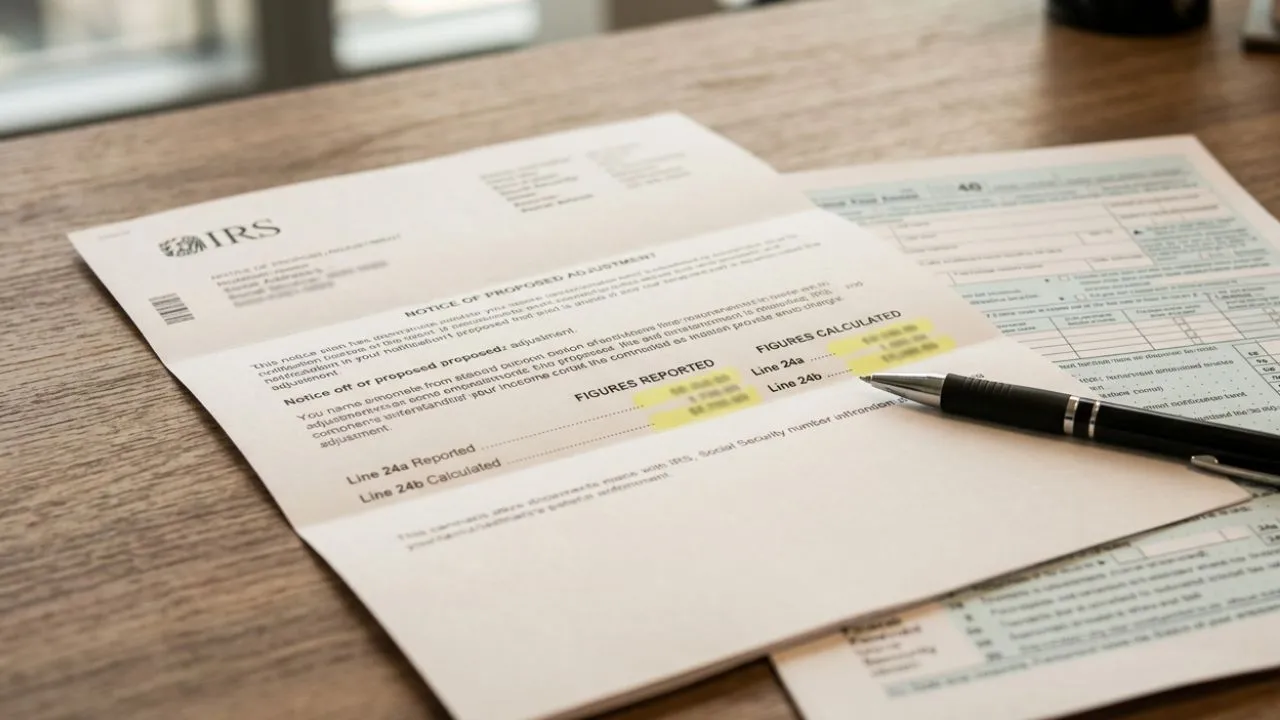
In most cases, the review confirms the return is accurate and the refund is released without any change to the amount. If the review finds a discrepancy, for example if reported withholding does not match employer filings, the IRS will adjust the refund amount and send a separate notice explaining the change before or alongside releasing the adjusted refund.
If you disagree with an adjustment, you have the right to respond and provide supporting documentation. The notice explaining any change will include instructions for how to respond and a deadline for doing so.
If you are unable to resolve the issue directly with the IRS, or if delays create financial hardship, the Taxpayer Advocate Service is an independent office within the IRS that can help resolve stalled cases, particularly ones that have exceeded normal processing timeframes.
Timing expectations by scenario
Because every 4464C letter starts a countdown from a different filing date, it helps to think in scenarios rather than a single fixed number:
Income or withholding verification, no other flags. These typically resolve within the initial 60-day window once third-party wage data posts to the IRS system, often faster if the mismatch clears early.
Identity verification required. Resolution speed depends almost entirely on how quickly you complete the verification step. Returns where the taxpayer verifies promptly by phone or online often see refunds released within a few weeks of verification; delays in verifying are the single biggest driver of extended waits in this category.
Overlap with PATH Act holds. Even after the 4464C review clears, refunds tied to certain credits will not release before mid-February, so the effective wait is whichever restriction ends later.
Extended review past 60 days. If the IRS needs more time, it will send an additional notice. This does not restart the review from zero, but it does mean the original 60-day estimate no longer applies, and contacting the IRS or checking your online account transcript for updated status codes becomes the most useful next step.
How to check your status while waiting
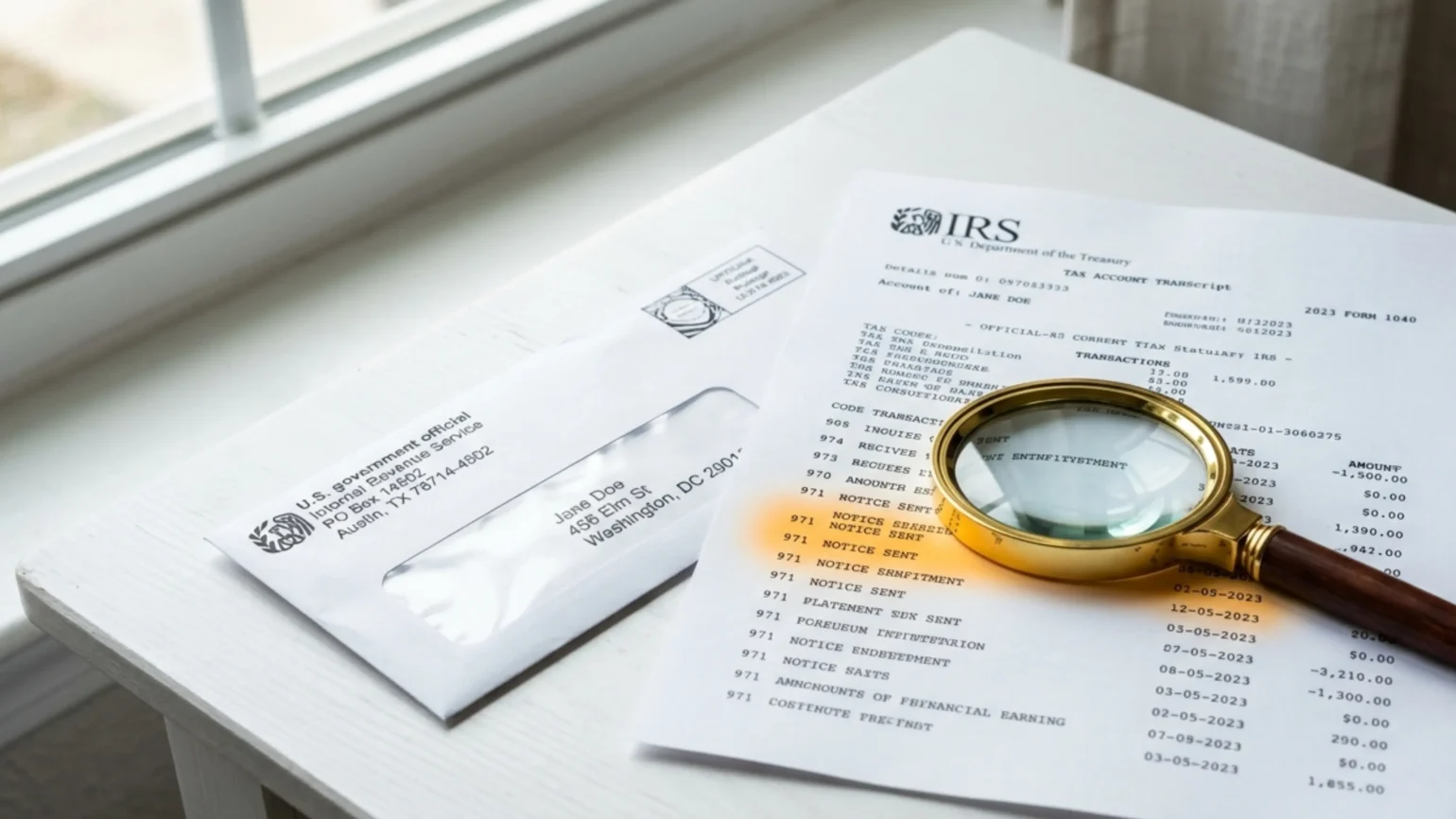
The most direct way to track a return under a 4464C hold is your IRS individual online account transcript, which shows the internal processing codes tied to your return. A notice issued code 971 generally confirms that a letter, including a 4464C, has been generated and mailed.
If your transcript later shows a refund freeze code 810, that typically indicates a broader hold beyond a routine 4464C review, and may require direct contact with the IRS to resolve.
The refund status tool on IRS.gov will often simply show “still processing” during an active 4464C review, since that tool is designed around the standard filing pipeline rather than manual review holds.
For a broader view of how refund timing works across a normal filing season, including what the refund schedule looks like for returns that are not flagged for review, it helps to understand what a typical refund timeline looks like so you can recognize how much your specific case has deviated from it.
Letter 4464C compared with other IRS refund notices
Because the IRS uses several similarly worded notices during refund processing, it helps to see how they differ side by side.
| Notice | What it signals | Typical timeframe | Response required? |
|---|---|---|---|
| Letter 4464C | Refund selected for review of income, credits, or identity | Up to 60 days from letter date | Usually no, unless identity verification is requested |
| CP05 notice | Refund under review, often the first notice in the same cycle | 60 days, may extend | Usually no |
| CP75 series | Review specifically tied to a claimed credit, such as EITC | Can extend beyond 60 days if documentation is requested | Yes, if documents are requested |
| Audit notice (examination) | Full review of return accuracy and tax liability | Weeks to months depending on scope | Yes, typically requires documentation and may involve an assigned examiner |
Seeing these side by side makes clear why a 4464C letter, while unsettling to receive, sits closer to routine verification than to a formal examination. The distinction matters because the appropriate response, and the level of concern warranted, is very different for a review notice than for an audit notice.
Common misconceptions about Letter 4464C
“This means I’m being audited.” An audit is a distinct process with its own notice language and typically its own assigned examiner. Letter 4464C is a refund hold generated by automated screening, not a referral to examination.
“I need to send proof of my income immediately.” Unless the letter specifically requests documentation, sending unsolicited records adds to processing volume without speeding anything up. The IRS is usually waiting on data it already expects to receive from a third party, such as an employer, not from you.
“My refund is gone.” A review hold delays a refund; it does not cancel it. The overwhelming majority of 4464C reviews end with the original refund amount released once verification completes.
“Calling the IRS will speed things up.” Within the first 60 days, IRS phone representatives typically cannot provide more detail than the letter itself, since the review is often still pending third-party data matching. Calling becomes genuinely useful once the 60-day window has passed without resolution.
Why timing varies so much between filers
Two taxpayers can receive an identical-looking 4464C letter and experience very different wait times, and the reason usually comes down to what specifically triggered the review.
A hold based on employer wage matching resolves the moment that employer’s data posts to the IRS system, which can happen anywhere from a few days to several weeks after the letter is sent, depending on when the employer filed its own reporting forms.
A hold based on identity verification depends almost entirely on how quickly the taxpayer completes the verification step, since the IRS is waiting on the taxpayer rather than a third party.
A hold tied to a refundable credit claimed for the first time may take longer, since the IRS’s underwriting-style review of credit eligibility involves more manual checks than a straightforward wage match.
This is also why two people who filed on the same day, claiming similar refunds, can see very different outcomes: the underlying trigger for the review, not the letter itself, is what determines how long the hold actually lasts.
Does Letter 4464C Mean Audit?
No. Letter 4464C is not an audit notice. Instead, it tells you that the IRS has temporarily paused your refund while it verifies information such as your income, withholding, tax credits, or identity.
In most cases, the review is completed without any changes to your tax return, and your refund is released once the verification process finishes. If the IRS decides to begin a formal audit, it will send a separate examination notice explaining what is being reviewed.
Why Did I Receive 4464C?
The IRS sends Letter 4464C when its automated screening system identifies information that needs additional verification before a refund can be issued. Common reasons include waiting for employer wage records, reviewing refundable tax credits, checking withholding information, or confirming a taxpayer’s identity.
Receiving this letter does not automatically mean there is an error on your return or that you did anything wrong. Many reviews occur simply because third-party information has not yet been matched within the IRS system.
How Long Does Review Take?
The letter generally states that the review may take up to 60 days from the date printed on the notice. During that period, the IRS compares information on your return with employer, financial institution, and other third-party records before approving the refund.
Some reviews finish earlier if the necessary information becomes available quickly, while others may take longer if additional verification is required. If the IRS needs more time, it may send another notice extending the review period.
Should I Contact IRS?
In most situations, you do not need to contact the IRS immediately after receiving Letter 4464C. The notice is informational and usually asks taxpayers to wait while the review is completed.
Calling before the stated review period ends often results in the IRS providing the same information already included in the letter. If more than 60 days pass without a refund or an updated notice, contacting the IRS becomes a reasonable next step.
Should I Send Documents?
Only send documents if the IRS specifically requests them. Letter 4464C alone generally does not require you to mail pay stubs, W-2 forms, bank records, or other supporting paperwork.
Sending unsolicited documents can slow the review because they must be manually matched with your case. If the IRS needs additional information, it will clearly explain what documents are required and where they should be sent.
Can My Refund Change?
Yes, but not in every case. Most taxpayers who receive Letter 4464C ultimately receive the same refund amount they originally claimed because the review confirms the return is accurate.
If the IRS discovers a mismatch involving wages, withholding, or tax credits, it may adjust the refund before issuing payment. Whenever an adjustment is made, the IRS sends a separate notice explaining what changed and why.
What If Identity Verified?
If your Letter 4464C instructs you to verify your identity, completing that step as soon as possible is the fastest way to move the review forward. The IRS may ask you to verify online, by phone, or through an in-person appointment at a Taxpayer Assistance Center.
After successful verification, the IRS continues processing your return through its normal refund pipeline. Although processing times vary, many taxpayers receive their refunds within several weeks after verification is completed.
Can I Amend Return?
It is generally best not to file an amended return while your original return is under a 4464C review unless the IRS specifically instructs you to do so. Filing an amendment during an active review can create additional processing delays because the IRS must manage two versions of the same tax return.
Waiting until the review has finished helps prevent unnecessary complications. If you later discover a genuine error, you can amend the return after the original processing is complete.
How Do I Check Status?
The best way to monitor your case is through your IRS Individual Online Account and your account transcript. Your transcript may display processing codes that indicate whether a notice has been issued, a refund hold is in place, or a refund has been approved.
The “Where’s My Refund?” tool may continue showing “still processing” while the review remains active, so it does not always provide detailed updates. Checking your transcript periodically usually offers the clearest picture of your refund’s progress.
Does State Refund Change?
No. Letter 4464C applies only to your federal income tax return processed by the IRS. State tax agencies operate independently and use their own review procedures, processing timelines, and refund systems.
A federal refund review does not automatically delay or affect your state refund. However, if both returns contain similar issues, your state tax agency may conduct its own separate review.
The bottom line
Letter 4464C is a verification hold, not a penalty and not an audit. The IRS is confirming that the income, withholding, or identity information on your return matches what other parties reported before releasing your refund.
In the large majority of cases, the review confirms the return as filed and the refund is released within the 60-day window, sometimes sooner once employer wage data catches up.
The most useful things you can do while waiting are checking your online account for updated status codes, responding promptly if the IRS specifically requests identity verification, and avoiding unsolicited paperwork that could slow the review further.
If 60 days pass with no resolution and no follow-up letter, that is the point to contact the IRS directly or reach out to the Taxpayer Advocate Service for help moving a stalled case forward.
Methodology: This article is based on IRS guidance on refund review notices, published IRS processing timeframes, and Investozora’s ongoing review of IRS transcript status codes referenced by readers who have received Letter 4464C.