



An IRS Offer in Compromise lets a taxpayer settle a tax debt for less than the full amount owed, but only when the IRS agrees the taxpayer genuinely cannot pay the full balance. It is not a shortcut for people who simply prefer to pay less, and the IRS rejects the large majority of offers that do not meet its strict financial standards.
An Offer in Compromise is an agreement between a taxpayer and the IRS to resolve a tax debt for a lower amount than what is owed. Eligibility is based on income, expenses, asset equity, and future earning potential, calculated using IRS worksheets. Most applicants must also be current on all filing requirements and, if self-employed, current on estimated tax payments.
What an Offer in Compromise Actually Is
The IRS has legal authority to accept less than the full tax debt when full collection would cause economic hardship or when there is genuine doubt about whether the debt is correct or fully collectible.
This authority comes from the tax code’s collection provisions, and it exists because pursuing an unpayable debt through liens, levies, and wage garnishment often costs more to enforce than it recovers, while leaving the taxpayer with no path toward compliance going forward.
There are three legal grounds the IRS recognizes for an offer. Doubt as to collectibility applies when the taxpayer’s assets and income are less than the full amount owed. Doubt as to liability applies when there is a genuine dispute about whether the tax is actually owed.
Effective tax administration applies in rare cases where the taxpayer could technically pay the full debt, but doing so would create serious economic hardship or would be unfair given exceptional circumstances. The overwhelming majority of accepted offers fall under doubt as to collectibility.
Who Qualifies for an Offer in Compromise
Eligibility starts with basic compliance requirements before the IRS will even consider the financial details of an offer. A taxpayer must have filed all legally required tax returns, must not be in an open bankruptcy proceeding, and if self-employed with employees, must be current on required federal tax deposits for the current and prior two quarters.
Beyond compliance, the core eligibility test compares what the IRS calls “reasonable collection potential” against the total tax debt. Reasonable collection potential is a formula, not a guess.
It adds together the net realizable equity in the taxpayer’s assets, such as home equity, vehicle equity, and bank account balances, plus the taxpayer’s future income calculated over a set number of months, minus allowable living expenses based on IRS national and local standards for housing, transportation, food, and other necessities.
If reasonable collection potential is lower than the total debt, an offer has a realistic chance of acceptance. If reasonable collection potential meets or exceeds the debt, the IRS will generally expect full payment instead.
This is where many rejected applications go wrong. Taxpayers frequently underestimate their own reasonable collection potential by using their actual spending instead of the IRS’s allowable expense standards, or by overlooking equity in assets such as a car that is nearly paid off or a retirement account that can technically be accessed.
The Two Application Forms
An Offer in Compromise application has two main components. Form 656 is the offer itself, stating the amount the taxpayer proposes to pay and the payment option selected.
Form 433-A (OIC) is used by individual taxpayers to disclose full financial details, including income, expenses, bank accounts, real estate, vehicles, retirement accounts, and other assets. Self-employed taxpayers and business owners typically also complete a business version of the financial disclosure form.
These forms require extensive documentation, including recent pay stubs, bank statements, vehicle registrations, mortgage statements, and proof of monthly expenses. Incomplete or unsupported financial disclosures are one of the most common reasons the IRS returns an application without a full review.
Payment Options for an Accepted Offer
Taxpayers choose between two payment structures when submitting an offer. A lump sum cash offer requires 20 percent of the offer amount to be paid with the application, with the remaining balance paid in five or fewer payments after acceptance.
A periodic payment offer allows the remaining balance to be paid in monthly installments over a longer period, generally up to 24 months, with payments beginning immediately after submission and continuing throughout the IRS review process, regardless of whether the offer is ultimately accepted.
The choice between these options affects the total amount the IRS calculates as collectible, because a longer payment period changes how future income is factored into the reasonable collection potential formula. Taxpayers considering a periodic offer should understand that stopping payments during the review period can result in the IRS returning the application as unprocessable.
Fees and Low-Income Waivers
Most applicants must pay a $205 application fee along with the initial payment required under their chosen payment option. Taxpayers who meet the IRS’s low-income certification guidelines, based on household size and income relative to federal poverty guidelines, can have both the application fee and the initial payment waived entirely.
The low-income certification is determined using a worksheet included with the application forms, and taxpayers should check the current thresholds directly on the IRS’s official offer in compromise instructions before assuming they qualify or do not qualify.
What Happens While the IRS Reviews an Offer
The IRS review process typically takes several months and can extend beyond a year for complex cases. While an offer is pending, the IRS generally suspends active collection actions such as new levies, though this is not an absolute guarantee in every situation.
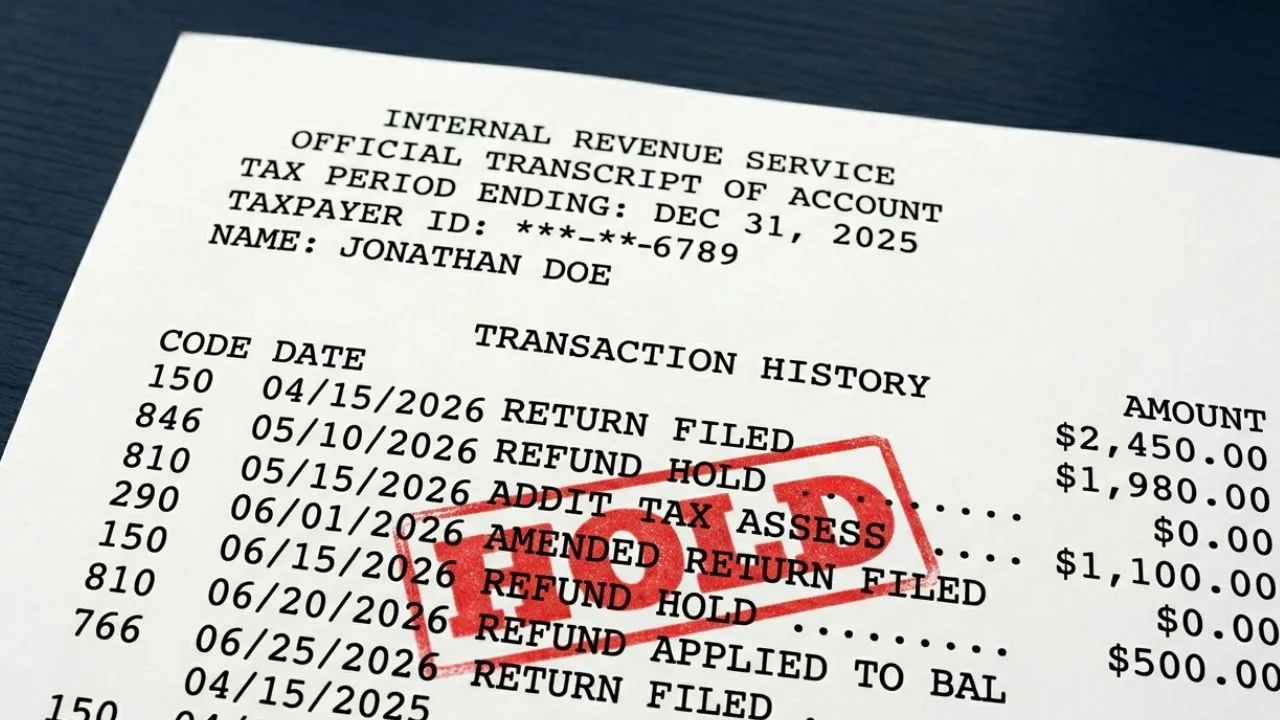
Any tax refund the taxpayer would otherwise receive during the year the offer is submitted is applied to the existing tax debt instead of being paid out, and this applies even if the offer is later accepted.
If the IRS needs more information, it will request additional documentation, and failing to respond within the requested timeframe can result in the offer being returned without a decision.
If the offer is accepted, the taxpayer must remain current on all tax filing and payment obligations for five years following acceptance, or the IRS can reinstate the original tax debt. If the offer is rejected, the taxpayer has the right to appeal the decision through the IRS Office of Appeals within 30 days of the rejection letter.
Offer in Compromise Versus Other IRS Resolution Options
An Offer in Compromise is only one of several tools available to taxpayers who cannot pay their full balance, and it is not always the right fit. For taxpayers who can pay the full amount over time but not immediately, an installment agreement allows monthly payments without reducing the total debt owed, and it involves a much simpler application process.
For taxpayers facing temporary hardship rather than a long-term inability to pay, the IRS can also place an account into currently-not-collectible status, which pauses collection without settling the debt.
Choosing between these options depends heavily on the taxpayer’s specific financial situation, and a comparison of installment agreements against an Offer in Compromise often comes down to whether the debt is truly unaffordable long-term or simply inconvenient to pay all at once.
Common Reasons Offers Get Rejected
Reasonable collection potential exceeds the offer amount. This is the single most common reason for rejection, and it usually stems from unreported equity in a home, vehicle, or retirement account.
Missing tax returns. The IRS will not process an offer while any required return remains unfiled, regardless of how compelling the financial hardship argument may be.
Incomplete financial documentation. Bank statements, pay stubs, and expense records that do not match the figures reported on Form 433-A are a frequent cause of processing delays or outright rejection.
Ongoing noncompliance during review. Falling behind on current-year estimated taxes or missing a periodic payment while the offer is pending can cause the application to be closed before a decision is reached.
Overstated expenses. The IRS applies its own national and local expense standards rather than a taxpayer’s actual spending in many categories, so an application built around personal budget figures rather than IRS standards is likely to overstate what the taxpayer can claim as necessary living expenses.
How This Fits Into the Broader IRS Refund and Collection System
An Offer in Compromise sits at the far end of the IRS collection process, used only after a debt has already been assessed and standard collection has stalled. For taxpayers earlier in the process who are dealing with a refund being reduced or redirected because of an existing balance, Investozora’s guide to the refund offset process explains how the IRS applies refunds against outstanding debts, which is directly relevant since any refund due during an active Offer in Compromise review is automatically applied to the balance rather than paid out.
Understanding how IRS payments and collections connect to the broader federal payment system also helps explain why processing can take months rather than days. For a wider view of how money moves between federal agencies, financial institutions, and individual accounts, see Investozora’s money movement system hub, which lays out the full architecture connecting IRS, Treasury, and Federal Reserve payment systems.
Because settlements and negotiated payments are affected by the broader interest rate environment, taxpayers weighing whether to negotiate a lower lump sum now versus paying over time may also want to understand how Federal Reserve policy affects the cost of borrowing and the return on cash held aside for a settlement, covered in Investozora’s explainer on the Fed’s inflation target and its effect on interest rates broadly.
How the IRS Calculates Future Income
The future income portion of the reasonable collection potential formula is often the most confusing part of the application for taxpayers to complete correctly. The IRS multiplies a taxpayer’s monthly net disposable income, meaning gross income minus allowable expenses, by a set number of months that depends on the payment option chosen.
For a lump sum cash offer paid within five months of acceptance, the IRS generally uses 12 months of future income. For a periodic payment offer paid over a longer period, the IRS generally uses 24 months of future income.
This difference is a major reason some taxpayers can qualify for a meaningfully lower total offer amount simply by choosing the shorter lump sum payment structure instead of a periodic plan, assuming they have access to enough cash to fund the larger upfront payment.
Allowable expenses used in this calculation come from IRS Collection Financial Standards, which set fixed dollar amounts for categories such as food, clothing, housekeeping supplies, and out-of-pocket healthcare costs based on household size, along with regional standards for housing and utilities based on the taxpayer’s county, and separate standards for vehicle ownership and operating costs.
A taxpayer whose actual expenses fall below the standard amount can generally claim the standard amount rather than their lower actual spending, but a taxpayer whose actual expenses exceed the standard amount generally cannot claim more than the standard allows, except in specific documented circumstances such as verified medical needs.
A Practical Example of the Offer Calculation
Consider a taxpayer who owes $45,000 in back taxes. After completing Form 433-A, the IRS determines the taxpayer has $8,000 in net realizable equity in a vehicle, $2,000 in a checking account, and no home equity because they rent. The taxpayer’s monthly net disposable income, after allowable expense standards, comes to $300.
Under a lump sum cash offer using 12 months of future income, the future income component equals $3,600. Adding the $10,000 in asset equity produces a reasonable collection potential of $13,600, well below the $45,000 owed. In this scenario, an offer at or near $13,600 would have a realistic chance of acceptance, since it reflects what the IRS’s own formula calculates the taxpayer could actually pay.
If the same taxpayer instead had $40,000 in home equity, the reasonable collection potential would jump well above the total debt, and the IRS would likely reject any offer for less than the full balance, since the formula shows the debt is fully collectible through existing assets. This example shows why asset equity, particularly home equity, is often the single biggest factor determining whether an Offer in Compromise has a realistic chance of success.
Working With a Tax Professional vs. Applying Directly
The IRS provides detailed instructions, worksheets, and a free online pre-qualifier tool that lets taxpayers get a preliminary sense of whether they might qualify before submitting a full application. Many taxpayers with straightforward finances, a single source of income, and no significant assets can complete the process directly using these official resources without paid assistance.
Cases involving self-employment income, multiple properties, business assets, or significant retirement account balances tend to involve more complex asset valuation and future income calculations, which is where a tax professional, such as an enrolled agent, CPA, or tax attorney experienced in IRS collections work, can add meaningful value.
Taxpayers considering paid help should be cautious of companies that guarantee a specific settlement amount before reviewing any financial details, since no legitimate practitioner can promise a specific outcome before the IRS reviews the actual numbers.
What to Do if an Offer Is Rejected
A rejection is not necessarily the end of the process. Taxpayers have 30 days from the date of the rejection letter to file a formal appeal with the IRS Office of Appeals, which is a separate function from the collections unit that reviewed the original offer.
The appeal is reviewed by an independent appeals officer who was not involved in the initial decision, and the officer can reconsider the reasonable collection potential calculation, particularly if the original decision relied on an asset valuation or expense standard the taxpayer disputes with supporting documentation.
Taxpayers whose circumstances change after a rejection, such as a job loss, a medical event, or a significant decline in asset value, can also submit a new offer reflecting the updated financial picture rather than appealing the original decision.
There is no limit on how many times a taxpayer can submit a new Offer in Compromise, provided each submission includes the required application fee and initial payment unless the taxpayer qualifies for the low-income waiver.
Life During and After an Accepted Offer
Once an offer is accepted, the taxpayer’s compliance obligations do not end. For five years following acceptance, the taxpayer must file all required tax returns on time and pay all future tax liabilities in full and on time, including quarterly estimated payments for self-employed taxpayers.
Any tax refund the taxpayer would otherwise be due during that five-year compliance period is also generally offset against the accepted offer amount if there is an outstanding balance, similar to how refunds are treated during the review period itself.
Failing to meet these ongoing conditions can result in the IRS declaring the offer in default, which reinstates the original tax debt, including any portion that had been forgiven, minus payments already made under the offer.
This is one of the most important details taxpayers overlook: an accepted Offer in Compromise resolves the existing debt, but it does not exempt the taxpayer from staying current on new tax obligations going forward.
How Much Does the IRS Accept?
There is no fixed percentage or standard discount that the IRS accepts for an Offer in Compromise. The amount depends on your reasonable collection potential, which is the IRS’s estimate of how much it can realistically collect from your income, assets, and future earning ability.
Your allowable living expenses, asset equity, and financial circumstances all affect the calculation. As a result, the amount accepted can vary significantly from one taxpayer to another.
Can I Apply During a Payment Plan?
Yes, you can generally submit an Offer in Compromise while you are already making payments under an IRS installment agreement. If the IRS accepts your offer, the Offer in Compromise will replace the existing payment arrangement and you will follow the terms of the new agreement.
Any federal tax refund you are entitled to during the offer’s review year may still be applied to your tax debt. Having an existing payment plan does not guarantee that your offer will be accepted.
Does an Offer Stop Garnishment?
An Offer in Compromise may generally pause certain new IRS collection actions while the offer is being actively considered. However, submitting an offer does not necessarily mean that an existing wage levy or garnishment will be released immediately.
The treatment of an active levy can depend on the specific circumstances of your case and the IRS’s collection status. If your wages are currently being garnished, you should confirm directly with the IRS whether the levy has been released or remains in effect.
What If I Miss Payments?
If you choose a periodic payment option, you must continue making the required payments while the IRS reviews your Offer in Compromise. Missing a required payment can cause the IRS to close the offer as unprocessable, which may end the review before a final decision is made.
This means the IRS may never reach the stage of formally accepting or rejecting the proposed settlement amount. Taxpayers using this payment option should make sure they understand the payment schedule and maintain sufficient funds to meet each deadline.
Do I Need Professional Help?
No, hiring a tax professional is not required to submit an Offer in Compromise. Taxpayers can apply directly by completing the IRS forms and following the official instructions. However, the process requires detailed information about income, expenses, bank accounts, investments, property, debts, and other assets, so errors or incomplete disclosures can create serious problems.
Some taxpayers choose to work with a qualified tax professional, especially when their case involves significant assets, self-employment income, a business, or complicated financial circumstances.
The Bottom Line
An Offer in Compromise offers a genuine path to resolving a tax debt for less than the full amount, but only for taxpayers whose income, expenses, and assets show they truly cannot pay the full balance now or in the foreseeable future.
Success depends on accurately calculating reasonable collection potential using IRS standards, maintaining full compliance throughout the process, and choosing the payment option that best matches the taxpayer’s actual financial capacity. For taxpayers who can pay over time but not immediately, an installment agreement is often the faster and more reliable option.








One thought on “IRS Offer in Compromise: Rules, Eligibility, and Application Process @import url("https://fonts.googleapis.com/css2?family=Poppins:wght@400;500;600&family=Source+Sans+3:wght@400;500;600;700&display=swap"); /* ========================================= NORMAL BYLINE ========================================= */ .izo-clean-byline { display: flex; align-items: center; justify-content: space-between; width: 100%; max-width: 620px; gap: 16px; margin-top: 4px; margin-bottom: 16px; font-family: "Poppins", Arial, sans-serif; } .izo-clean-byline-content { display: flex; flex-direction: column; justify-content: center; align-items: flex-start; min-width: 0; gap: 4px; line-height: 1.12; transform: translateY(-4px); font-family: "Poppins", Arial, sans-serif; } .izo-clean-author-wrap { position: relative; display: inline-block; width: fit-content; line-height: 1.12; margin: 0; padding: 0; outline: none; } .izo-by-label { font-family: "Poppins", Arial, sans-serif; font-size: 14px; font-weight: 400; color: #111; line-height: 1.12; margin-right: 3px; } .izo-clean-author-name { position: relative; display: inline-block; font-family: "Poppins", Arial, sans-serif; font-size: 14px; font-weight: 500; color: #111; cursor: pointer; line-height: 1.12; padding: 0; margin: 0; text-decoration-line: underline; text-decoration-color: #111; text-decoration-thickness: 1px; text-underline-offset: 1px; } .izo-clean-author-name::after { display: none; } .izo-clean-meta { font-family: "Poppins", Arial, sans-serif; font-size: 11px; font-weight: 400; color: #555; line-height: 1.12; margin: 0; padding: 0; } /* ========================================= RIGHT ACTIONS GOOGLE + SHARE ========================================= */ .izo-byline-actions { display: flex; align-items: center; justify-content: flex-end; gap: 7px; flex: 0 0 auto; position: relative; top: 6px; } /* ========================================= GOOGLE SOURCE BADGE ========================================= */ .izo-google-source-badge { display: inline-flex; align-items: center; justify-content: center; width: 34px; height: 34px; min-width: 34px; flex: 0 0 34px; padding: 6px; margin: 0; box-sizing: border-box; background: #ffffff !important; border: 1px solid rgba(85,85,85,0.30) !important; border-radius: 6px; box-shadow: none !important; text-decoration: none !important; overflow: hidden; transition: border-color 0.18s ease, background-color 0.18s ease; } .izo-google-source-badge img { display: block; width: 100%; height: 100%; max-width: 100%; object-fit: contain; object-position: center; margin: 0; padding: 0; border: 0 !important; border-radius: 0 !important; background: transparent !important; box-shadow: none !important; } .izo-google-source-badge:hover { background: #ffffff !important; border-color: rgba(85,85,85,0.45) !important; box-shadow: none !important; transform: none !important; } .izo-google-source-badge:focus { background: #ffffff !important; outline: 1px solid rgba(85,85,85,0.45); outline-offset: 2px; box-shadow: none !important; } /* ========================================= SHARE BUTTON ========================================= */ .izo-share-button { display: inline-flex; align-items: center; justify-content: center; width: 34px; height: 34px; min-width: 34px; flex: 0 0 34px; padding: 7px; margin: 0; box-sizing: border-box; background: #ffffff !important; border: 1px solid rgba(85,85,85,0.30) !important; border-radius: 6px; box-shadow: none !important; color: #333333 !important; cursor: pointer; text-decoration: none !important; overflow: hidden; appearance: none; -webkit-appearance: none; transition: border-color 0.18s ease, color 0.18s ease, background-color 0.18s ease; } .izo-share-button svg { display: block; width: 18px; height: 18px; fill: none; stroke: currentColor; stroke-width: 1.8; stroke-linecap: round; stroke-linejoin: round; margin: 0; padding: 0; } .izo-share-button:hover { background: #ffffff !important; border-color: rgba(85,85,85,0.45) !important; color: #111111 !important; box-shadow: none !important; transform: none !important; } .izo-share-button:focus { background: #ffffff !important; outline: 1px solid rgba(85,85,85,0.45); outline-offset: 2px; box-shadow: none !important; } /* ========================================= AUTHOR DETAILS CARD ========================================= */ .izo-clean-author-tooltip { position: absolute; top: calc(100% + 10px); left: 0; width: 440px; max-width: calc(100vw - 40px); background: #fff; color: #333; border: 1px solid #e5e5e5; border-radius: 8px; padding: 16px; font-family: "Source Sans 3", Arial, sans-serif; font-size: 13px; font-weight: 400 !important; line-height: 1.55; box-shadow: 0 8px 24px rgba(0,0,0,0.10); opacity: 0; visibility: hidden; transform: translateY(5px); transition: opacity 0.2s ease, transform 0.2s ease, visibility 0.2s ease; z-index: 9999; pointer-events: none; } /* ========================================= IMAGE + BIO ========================================= */ .izo-tooltip-main { display: flex; align-items: flex-start; gap: 14px; width: 100%; } .izo-tooltip-image { width: 96px; height: 96px; flex: 0 0 96px; object-fit: cover; object-position: center; display: block; border-radius: 6px; margin: 0; padding: 0; } .izo-tooltip-bio { flex: 1 1 auto; min-width: 0; font-family: "Source Sans 3", Arial, sans-serif; font-size: 13px; font-weight: 400; line-height: 1.55; color: #333; margin: 0; padding: 0; } /* Bio reference links: same color, font and decoration as bio text */ .izo-clean-author-tooltip .izo-tooltip-bio a, .izo-clean-author-tooltip .izo-tooltip-bio a:visited, .izo-clean-author-tooltip .izo-tooltip-bio a:hover, .izo-clean-author-tooltip .izo-tooltip-bio a:focus { color: inherit !important; font: inherit !important; text-decoration: none !important; border-bottom: 0 !important; box-shadow: none !important; } .izo-clean-author-tooltip strong { font-family: "Source Sans 3", Arial, sans-serif; font-weight: 400 !important; } /* ========================================= DESKTOP HOVER ========================================= */ .izo-clean-author-wrap:hover .izo-clean-author-tooltip { opacity: 1; visibility: visible; transform: translateY(0); pointer-events: auto; } /* ========================================= KEYBOARD / MOBILE TAP ========================================= */ .izo-clean-author-wrap:focus .izo-clean-author-tooltip, .izo-clean-author-wrap:focus-within .izo-clean-author-tooltip { opacity: 1; visibility: visible; transform: translateY(0); pointer-events: auto; } /* ========================================= POPUP FOOTER SOCIALS | READ PROFILE ========================================= */ .izo-tooltip-footer { display: flex; align-items: center; gap: 14px; margin-top: 16px; width: 100%; } .izo-tooltip-socials { display: flex; align-items: center; gap: 14px; margin: 0; padding: 0; } .izo-tooltip-socials a { display: inline-flex; align-items: center; justify-content: center; width: 24px; height: 24px; color: #222; text-decoration: none; border: none; transition: opacity 0.2s ease, transform 0.2s ease; } .izo-tooltip-socials a:hover { opacity: 0.72; transform: translateY(-1px); } .izo-tooltip-socials svg { width: 21px; height: 21px; fill: currentColor; display: block; } /* Grey separator */ .izo-tooltip-separator { display: inline-flex; align-items: center; justify-content: center; color: #b5b5b5; font-family: "Source Sans 3", Arial, sans-serif; font-size: 20px; font-weight: 400; line-height: 1; margin: 0 1px; } /* Read profile */ .izo-clean-author-tooltip .izo-profile-link { display: inline-block; font-family: "Source Sans 3", Arial, sans-serif; font-size: 13px; font-weight: 600; color: #1a73e8; text-decoration: none; border-bottom: 1px solid #1a73e8; line-height: 1.25; white-space: nowrap; } /* ========================================= MOBILE ========================================= */ @media (max-width: 650px) { .izo-clean-byline { display: flex; flex-direction: row; align-items: center; justify-content: space-between; width: 100%; max-width: 100%; gap: 7px; margin-top: 3px; margin-bottom: 14px; flex-wrap: nowrap; } .izo-clean-byline-content { display: flex; flex-direction: column; flex: 1 1 auto; min-width: 0; max-width: calc(100% - 68px); gap: 3px; line-height: 1.12; transform: translateY(-4px); } .izo-clean-author-wrap { line-height: 1.12; margin: 0; padding: 0; max-width: 100%; white-space: nowrap; } .izo-by-label { font-size: 12px; line-height: 1.12; margin-right: 3px; } .izo-clean-author-name { font-size: 12px; font-weight: 500; line-height: 1.12; padding: 0; margin: 0; text-underline-offset: 1px; white-space: nowrap; } .izo-clean-meta { font-size: 9.5px; line-height: 1.12; margin: 0; padding: 0; color: #555; white-space: nowrap; } /* ========================================= GOOGLE + SHARE MOBILE STAY ON SAME ROW ========================================= */ .izo-byline-actions { display: flex; flex-direction: row; align-items: center; justify-content: flex-end; gap: 5px; flex: 0 0 auto; white-space: nowrap; position: relative; top: 5px; } /* GOOGLE MOBILE */ .izo-google-source-badge { width: 28px; height: 28px; min-width: 28px; flex: 0 0 28px; padding: 5px; border-radius: 5px; background: #ffffff !important; border: 1px solid rgba(85,85,85,0.30) !important; box-shadow: none !important; margin: 0; } .izo-google-source-badge img { width: 100%; height: 100%; } /* SHARE MOBILE */ .izo-share-button { width: 28px; height: 28px; min-width: 28px; flex: 0 0 28px; padding: 6px; border-radius: 5px; background: #ffffff !important; border: 1px solid rgba(85,85,85,0.30) !important; box-shadow: none !important; margin: 0; } .izo-share-button svg { width: 15px; height: 15px; stroke-width: 1.8; } /* Keep the mobile author card above the featured image */ .izo-clean-byline, .izo-clean-byline-content, .izo-clean-author-wrap { position: relative; z-index: 10000; } .izo-clean-author-tooltip { z-index: 10001; } /* ========================================= MOBILE AUTHOR CARD ========================================= */ .izo-clean-author-tooltip { width: min(340px, calc(100vw - 32px)); max-width: calc(100vw - 32px); padding: 14px; left: 0; font-size: 12.5px; line-height: 1.5; } .izo-tooltip-main { gap: 11px; align-items: flex-start; } .izo-tooltip-image { width: 82px; height: 82px; flex: 0 0 82px; border-radius: 5px; } .izo-tooltip-bio { font-size: 12.5px; line-height: 1.5; } /* Mobile footer */ .izo-tooltip-footer { gap: 11px; margin-top: 14px; flex-wrap: nowrap; } .izo-tooltip-socials { gap: 12px; } .izo-tooltip-socials a { width: 22px; height: 22px; } .izo-tooltip-socials svg { width: 20px; height: 20px; } .izo-tooltip-separator { font-size: 18px; margin: 0; } .izo-clean-author-tooltip .izo-profile-link { font-size: 12.5px; line-height: 1.2; } }
ByAdarsha Dhakal

Adarsha Dhakal is a financial journalist and the Founder and Editor of Investozora, an independent U.S. financial news and economic research publication he established in August 2025. He covers the U.S. economy, Federal Reserve policy, Treasury operations, financial markets, banking, IRS taxation, and Social Security. His reporting emphasizes original government records, verified economic data, transparent calculations, and the distinction between facts and analysis. His financial and economic analysis has also appeared on Investing.com.
|
Read full profile →
Published Jul 25, 2026 · 3:33 PM ET · Updated 2 months ago

”