

Updated: June 22, 2026 – The IRS confirmed in Revenue Ruling 2026-10, published in Internal Revenue Bulletin 2026-22, that the overpayment interest rate for Q3 2026 is 7% annually, compounded daily, effective July 1, 2026, under IRC Section 6621. This rate applies to every individual taxpayer whose refund the IRS has delayed beyond the standard processing window.
The IRS is legally required to pay you 7% interest, compounded daily, if your tax refund is running late. That is not a policy choice. It is a federal statute called Internal Revenue Code Section 6621, and it applies to tens of millions of Americans still waiting on 2025 tax year refunds as of June 16, 2026. The Q3 2026 rate is confirmed at 7%. The federal short-term rate anchoring that figure is 4%. The IRS has no discretion to waive this obligation.
Most taxpayers who have been waiting weeks or months for a refund do not know this payment exists. The IRS does not proactively notify filers that interest is accruing. The IRS interest and late refund interest rate 2026 page on Investozora documents the complete claim process.
The Legal Math Behind Your Money
Section 6621 of the Internal Revenue Code establishes the interest rates on overpayments and underpayments of tax. Under section 6621(a)(1), the overpayment rate is the sum of the federal short-term rate plus 3 percentage points.
The federal short-term rate, rounded to the nearest full percent, based on daily compounding determined during the month of April 2026 is 4 percent. Accordingly, an overpayment rate of 7 percent and an underpayment rate of 7 percent are established for the calendar quarter beginning July 1, 2026.
The word “compounding” in that ruling is doing significant financial work. The IRS does not calculate interest only at the end of a delay period. It compounds daily from the day your refund should have been issued under normal processing timelines.
Under Revenue Procedure 95-17, the IRS uses daily compound interest factors rather than simple interest, meaning each additional day of delay adds slightly more than the previous day’s interest. For a taxpayer awaiting a $5,000 refund that is 90 days late, 7% daily compound interest generates approximately $87 in additional government payment.
For a $10,000 delayed refund at 90 days, that figure approaches $174. The IRS interest late refund what you are owed calculator walks through the precise computation. The quarterly interest rates page at IRS.gov publishes each quarter’s confirmed rates.
The Q2 2026 rate was 6%, meaning the IRS interest rate on your delayed refund just increased by one full percentage point as of July 1, 2026. Section 6621(b)(2)(A) provides that the federal short-term rate determined under section 6621(b)(1) for any month applies during the first calendar quarter beginning after that month. That mechanical lag is why the April 2026 federal short-term rate determination locks in the July 1 effective date for Q3 2026.
Who Qualifies and What Triggers the Clock
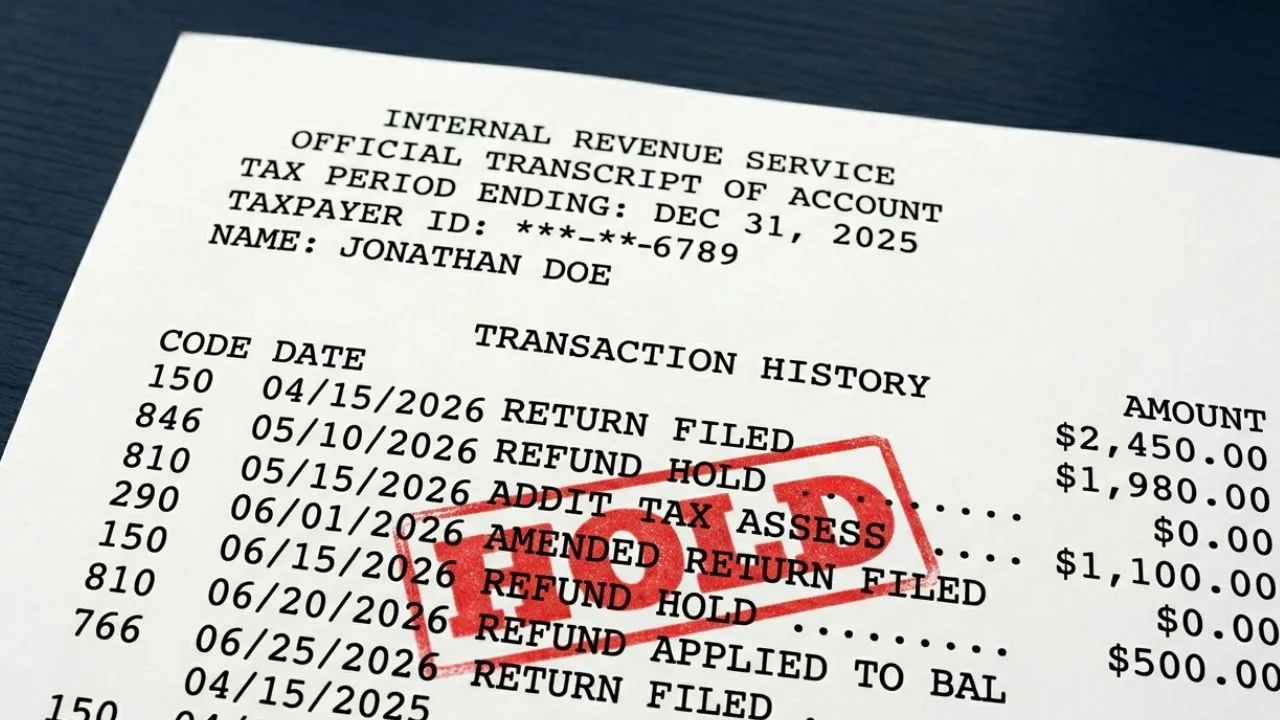
The IRS interest clock starts from 45 days after April 15, 2026 for returns filed on time, or 45 days after the actual filing date for later filers. Returns processed through the Individual Master File system that remain in processing beyond that 45-day window begin accruing interest automatically, whether or not the taxpayer is aware of it. The IRS individual master file processing cycles article explains exactly where in the processing pipeline this clock activates.
Filers who claimed the Earned Income Tax Credit or Child Tax Credit and experienced the PATH Act hold, which was lifted February 15, 2026, may have had their 45-day window begin from that date. The complete framework for determining your specific clock start date is in the IRS refund timeline how long guide. The money that the IRS owes you in interest flows through the same banking infrastructure as your original refund, documented in the full US money movement system reference.
Taxpayers can verify refund status through the official Where’s My Refund tool at IRS.gov. If the tool shows a refund date that has passed without payment, IRS interest 2026 has been accruing since that missed date. If the tool shows no refund date and the return is more than 45 days past filing, the clock is running.
What Happens Next
The Q3 2026 rate of 7% is locked through September 30, 2026. The IRS will determine the Q4 2026 rate based on the federal short-term rate during July 2026, which will be influenced by today’s FOMC meeting and any forward guidance Chair Warsh issues at Wednesday’s press conference.
If the Federal Reserve signals rate hikes at the June 16 FOMC Warsh first rate decision meeting, the Q4 2026 federal short-term rate could rise, potentially pushing the IRS overpayment rate to 8% beginning October 1, 2026. Taxpayers with large delayed refunds have a financial incentive to monitor that determination. The IRS issues the Q4 rate announcement in late July 2026 through the Internal Revenue Bulletin.
What This Means
Internal Revenue Code Section 6621 guarantees 7% daily compound IRS interest on every individual tax refund the IRS has delayed beyond its statutory 45-day window, effective July 1, 2026. Check your refund status at IRS.gov/refunds today. If your refund is late, the IRS owes you interest on that money and will include it automatically in the final payment.
No claim form is required. The payment arrives with your refund. If you have received a refund without an accompanying interest payment and your refund was more than 45 days late, contact the IRS directly using the contact information at IRS.gov/payments/interest.