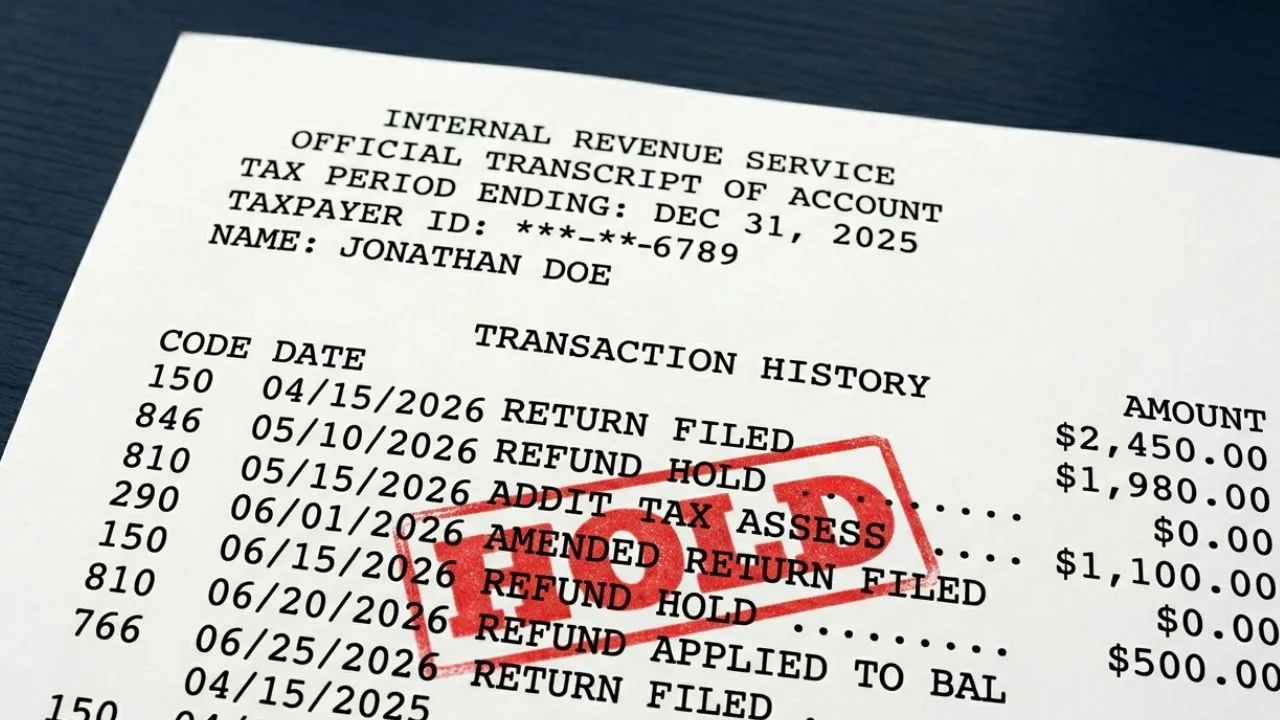
Updated: June 22, 2026 – IRS Code 810 on your tax transcript means the IRS has placed an administrative freeze on your refund. The freeze stops your money from releasing automatically. It does not mean your refund is denied. It means a human reviewer or a specific IRS unit must manually clear the account before any payment can move. Most people resolve this within 9 to 20 weeks, depending on the freeze type.
Quick Summary
- IRS Transaction Code 810 is an explicit administrative hold placed on a refund account and recorded directly in the Individual Master File.
- Four distinct alpha sub-codes determine which IRS unit controls the freeze and how long the resolution process is likely to take.
- No refund is released automatically while a Code 810 freeze remains active. Manual intervention is required in every case before funds can be issued.
- The IRS issues specific correspondence letters associated with each sub-code type. The notice explains exactly what action, if any, the taxpayer must take.
- Resolution timelines range from approximately nine weeks for identity verification freezes to more than one year for cases involving criminal investigation holds.
- Calling the IRS before receiving the required correspondence generally does not accelerate the process because the system requires the notice and response cycle to occur first.
What Code 810 Actually Means
Code 810 is a freeze transaction code posted to a taxpayer’s Individual Master File account by an IRS account management processor, a revenue agent, or an automated compliance filter.
Its technical designation within the Internal Revenue Manual is a Refund Freeze, and its function is singular: it instructs every downstream automated system to halt any pending refund disbursement tied to that account.
When the IRS posts Code 810 to your transcript, it simultaneously stops the standard refund issuance pipeline that connects to the Bureau of the Fiscal Service at the U.S. Treasury. No electronic funds transfer file is generated.
No paper check is queued. The refund sits frozen inside the IRS processing system until the specific unit that owns the freeze either releases it or resolves it through a formal administrative action.
The IRS posts Code 810 under four distinct alpha suffix variations. Each suffix maps to a different IRS function, triggers a different set of correspondence letters, and carries a different expected resolution timeline.
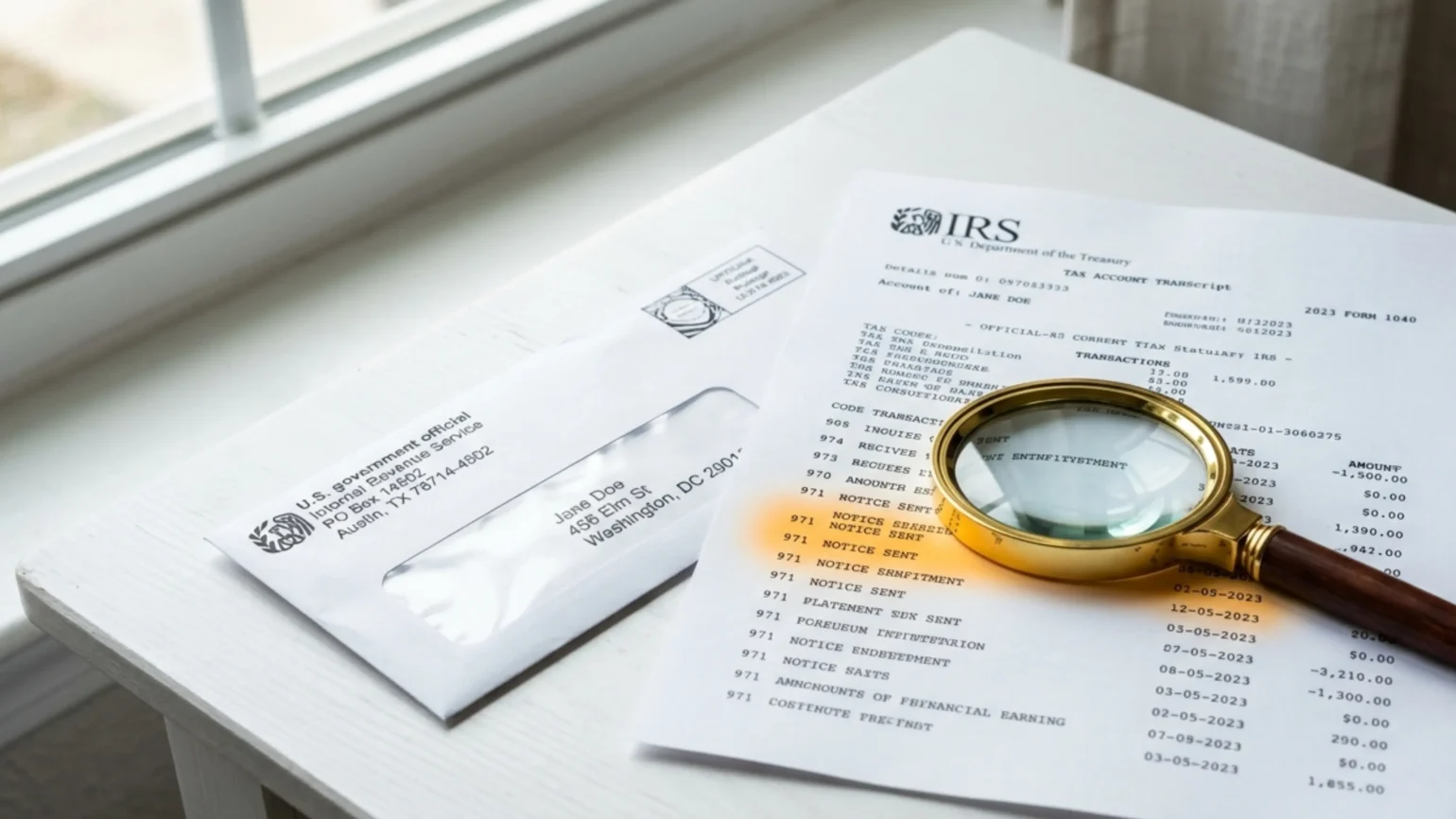
Understanding which sub-code appears on your transcript tells you exactly where your account is held and what process must complete before your money moves. You can cross-reference your transcript history using the IRS transcript guide to confirm which code is active.
The Four Sub-Codes That Trigger a Freeze
The Internal Revenue Manual Part 21, Chapter 5, Section 6 governs all refund deferrals and holds. Each sub-code within the 810 designation corresponds to a specific administrative action and IRS organizational unit.
810-1: Refund Hold
The 810-1 code is the broadest administrative hold. It is used by IRS Accounts Management when a return requires additional review that falls outside a specific criminal or frivolous filing category.
Common triggers include significant discrepancies between third-party income documents and the amounts reported on the return, returns with unusually large credits relative to reported income, and accounts flagged by the Discriminant Function System for compliance review. The DIF audit selection process explains how the IRS scoring model identifies returns for this type of secondary examination.
The IRS typically issues a CP05 notice or a Letter 3064C associated with an 810-1 hold. These notices inform the taxpayer that the IRS is reviewing their return and will contact them if additional information is needed.
In many 810-1 cases, no action is required from the taxpayer. The review completes internally, and the freeze is lifted. Expected resolution time is 60 to 120 days from the review initiation date for straightforward cases.
810-2: Frivolous Return Review
The 810-2 sub-code triggers when the IRS identifies a return as containing a frivolous filing position under IRC Section 6702. This includes returns that claim wages are zero despite documented employment, returns that assert constitutional objections to taxation, or returns that use fabricated deductions based on non-existent legal theories. The IRS Frivolous Return Program within the Ogden Campus handles all 810-2 cases.
The associated correspondence is Letter 3176C, which notifies the taxpayer that their return has been identified as frivolous and provides a 30-day window to file a corrected, compliant return. If no corrected return is submitted, the IRS may assess the $5,000 frivolous filing penalty under IRC Section 6702 and continue the freeze indefinitely.
Resolution requires filing a compliant amended return and waiting for the Frivolous Return Program to process the correction, a timeline that can extend 6 to 12 months. The full IRS erroneous refund rules apply in cases where a partial disbursement occurred before the freeze posted.
810-3: Verification Hold
The 810-3 code is the most commonly encountered sub-code for individual filers in recent tax years. It indicates that the IRS has been unable to verify the identity of the taxpayer who submitted the return. This freeze is typically triggered by the IRS’s identity theft detection filters, which compare return characteristics against known fraud patterns, stolen Social Security Number databases, and prior-year filing history anomalies.
The IRS issues Letter 4883C, Letter 5071C, or Letter 5747C when an 810-3 hold is active. Each letter directs the taxpayer to a specific resolution channel. Letter 5071C directs taxpayers to the IRS online identity verification portal at idverify.irs.gov.
Letter 4883C requires a telephone call to a specialized IRS line. Letter 5747C requires an in-person visit to a local IRS Taxpayer Assistance Center. The IRS’s standard published timeline for 810-3 resolution is 9 weeks after successful identity verification is completed and confirmed in the system.
810-4: Criminal Investigation Freeze
The 810-4 sub-code is the most serious designation and indicates that the IRS Criminal Investigation Division has placed a hold on the account. This freeze is applied when CI has opened or is considering opening a formal investigation into the taxpayer’s returns, which may involve alleged tax fraud, unreported income, or related financial crimes.
A CI freeze does not result in a standard taxpayer letter from IRS Accounts Management. The investigation process operates under different procedural rules. Taxpayers who discover an 810-4 code should immediately engage a qualified tax attorney or CPA with criminal tax defense experience.
Resolution timelines for 810-4 freezes are measured in months to years, depending on the scope and outcome of the CI investigation. No administrative action by the taxpayer will lift this freeze unilaterally. The resolution pathway runs through the CI division and the Department of Justice Tax Division in cases that proceed to prosecution.
The Federal Infrastructure Behind a Frozen Refund
Understanding why Code 810 stops your money requires understanding how a tax refund actually moves through the federal payment system. When the IRS approves a refund and posts Code 846 to a transcript, it generates an electronic payment file and transmits that file to the Bureau of the Fiscal Service at the U.S. Department of the Treasury.
The Fiscal Service then submits the file to the Federal Reserve’s FedACH network, which settles the credit to the taxpayer’s receiving bank, typically at 8:30 AM Eastern Time on the scheduled settlement date. The US money movement system provides the complete operational map of this federal disbursement infrastructure.
Code 810 interrupts this sequence at its origin point. When a freeze is active in the Individual Master File, the automated systems that generate the Code 846 approval and the associated payment file are blocked from executing. The Bureau of the Fiscal Service never receives a payment file. The FedACH network never receives a settlement instruction.
The bank never receives a credit. The refund does not move at any stage of the pipeline because the initiating action, the IRS approval, is administratively blocked. The IRS refund pipeline guide details exactly how this sequence operates under normal approval conditions.
What the IRS Letter Tells You
The correspondence letter the IRS sends in connection with a Code 810 hold is the single most important document in the resolution process. Each letter contains a specific phone number or portal address tied to the IRS unit managing the freeze.
Using any other IRS contact channel typically results in being transferred or told that the representative cannot access the frozen account, because Code 810 cases are owned by specific units with restricted system access permissions.
When you receive your letter, record the letter number, the date it was issued, and the contact information it contains. Note the deadline it specifies, because missing the response window in frivolous filing cases or the identity verification window in 810-3 cases can extend the resolution timeline substantially. Keep every record of your correspondence and any confirmation numbers the IRS provides when you complete the requested verification steps.
If you have not received a letter within 45 days of the Code 810 posting date on your transcript, you may call the IRS general taxpayer assistance line at 1-800-829-1040. In most cases, however, representatives will advise you to allow additional time for the letter to arrive by mail. The IRS does not send Code 810-related correspondence by email or through the online portal.
Frequently Asked Questions
Does Code 810 mean my refund is denied?
Code 810 does not mean your refund is denied. It means your refund is frozen pending a specific administrative review or resolution process. The freeze is a procedural hold, not a final determination. Once the triggering condition is resolved, the IRS releases the freeze and processes your refund through the standard disbursement pipeline. The IRS code 846 explained article covers what the release confirmation looks like on your transcript.
Can I call the IRS to remove a Code 810 freeze faster?
Calling the IRS does not accelerate the removal of a Code 810 freeze in most cases. The freeze is owned by a specific IRS unit, and general taxpayer assistance representatives do not have the system authority to modify or release it. The resolution process runs through the unit that posted the freeze. Your most effective action is to respond to the IRS letter you receive through the exact channel the letter specifies, then allow the published processing window to run.
What happens to my refund interest while Code 810 is active?
The IRS pays statutory interest on delayed refunds under IRC Section 6611. If your refund is held more than 45 days after the later of the return filing deadline or the date you filed, the IRS owes you interest at the current underpayment rate, which is the federal short-term rate plus 3 percentage points. The IRS late refund interest rules explain exactly how this interest accrues and when it posts to your transcript.
Can Code 810 and Code 570 appear together?
Yes. Code 570 is an additional action pending code that frequently appears alongside Code 810. When both codes appear on the same transcript, Code 570 typically reflects a secondary hold or processing step within the same review. The IRS code 570 guide explains the specific function of Code 570 and how it interacts with freeze codes on the same account.
How do I know when the Code 810 freeze is lifted?
The Code 810 freeze is lifted when the IRS posts a corresponding transaction code to your transcript that reverses the hold. For identity verification cases, you will typically see a Code 811 posted once the IRS confirms your identity, followed by a Code 846 when the refund is approved for disbursement. You can monitor your transcript through the IRS online account portal at irs.gov or through the Where’s My Refund tool.
| Sub-Code | IRS Unit | Primary Letter | Expected Resolution |
|---|---|---|---|
| 810-1 | Accounts Management | CP05 / Letter 3064C | 60 to 120 days |
| 810-2 | Frivolous Return Program | Letter 3176C | 6 to 12 months |
| 810-3 | Identity Theft Victim Assistance | Letter 4883C / 5071C / 5747C | 9 weeks post-verification |
| 810-4 | Criminal Investigation Division | No standard letter | 12 months to indefinite |
Edge Cases and Account Anomalies
Amended return filers who also have an active Code 810 face extended timelines. The IRS processes amended returns on a separate pipeline from original returns, and the Code 810 freeze applies to both pipelines simultaneously. Resolving the triggering condition of the freeze does not automatically accelerate the amended return processing timeline, which currently runs 20 to 24 weeks at the IRS.
Taxpayers who file returns claiming the Earned Income Tax Credit or the Additional Child Tax Credit and subsequently receive Code 810 should note that the PATH Act refund hold, which applies to all EITC and ACTC claims until mid-February, is a separate and distinct administrative hold from Code 810. If both holds appear on your transcript, both must be resolved before the refund releases. The PATH Act freeze guide covers the statutory mid-February hold in detail.
If your Code 810 freeze is accompanied by an IRS CP53E notice, it indicates that a direct deposit was attempted but rejected and that the refund was converted to a paper check that is now also frozen pending resolution of the underlying hold. The IRS CP53E notice guide explains this specific scenario.
What You Should Do Now
- Access your IRS online account and review your full tax transcript. Identify the exact Code 810 sub-code posted to your account and note the date it was entered.
- Wait for the IRS correspondence letter associated with your specific sub-code. Do not discard any IRS mail during this period, even if it appears routine or unrelated.
- When the letter arrives, respond through the exact channel specified in the notice. Do not use a different phone number, mailing address, or online portal. Follow only the instructions provided in the correspondence.
- After completing the requested action, record your confirmation number and the date of submission. Allow the full published processing timeframe to pass before contacting the IRS for a status update.
- If your freeze is associated with an 810-4 Criminal Investigation code, consult a qualified tax attorney before taking action or initiating contact with the IRS regarding the matter.
- Monitor your transcript weekly through the IRS online portal. The posting of Code 811 (freeze release) and the subsequent Code 846 (refund approval) will generally appear there before any other notification is issued.
Official Source: Internal Revenue Manual Part 21, Chapter 5, Section 6: irm_21-005-006r.