

IRS Code 420 on a tax transcript means the IRS has referred a tax return to its Examination or Appeals function for further review. It does not automatically mean a full audit is underway. Code 420 simply flags that the return has moved into the examination pipeline, where an employee will decide whether a deeper review is warranted.
Seeing this code can be unsettling, especially for taxpayers who are waiting on a refund. This guide explains exactly what Code 420 means, how it fits into the IRS’s account transcript system, what usually happens next, how long the process tends to take, and what taxpayers can realistically do while their return sits in this status. For background on how refunds move through the federal payment system once an examination clears, see our guide on how U.S. money moves.
What IRS Code 420 actually means
According to the IRS’s internal Section 8A Master Code Files, Transaction Code 420 is officially labeled the Examination Indicator. It posts to a taxpayer’s account transcript when a return has been selected, either by an automated screening process or a manual referral, for consideration by the Examination or Appeals Division. Critically, Code 420 marks that a referral has occurred, not that a formal audit has definitely been opened. Many referrals close without any contact from the IRS at all.
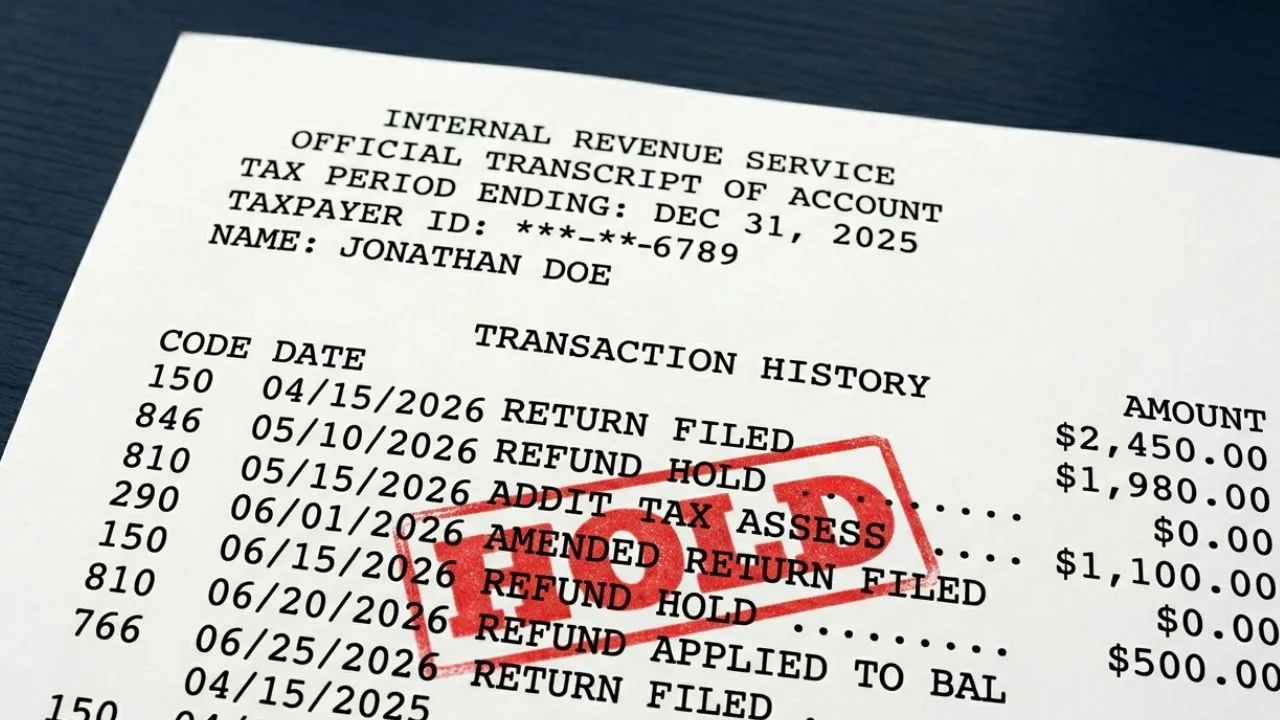
On the transcript itself, the Code 420 line will always show an amount of $0.00. That is because the code’s purpose is informational. It does not assess additional tax, penalties, or interest to the account.
It simply flags the account status for internal tracking. The explanation of transaction text next to the code typically reads “Examination of tax return,” and the date field shows when the referral was recorded on the Individual Master File.
How Code 420 fits into the broader transcript system
IRS account transcripts use three-digit transaction codes to track every action taken on a return, from the initial filing to any adjustments, holds, or releases.
Codes work in pairs in many cases, where one code posts an action and a corresponding code reverses it. For Code 420, the reversal code is IRS Code 971 notice issued, often paired with 421, which specifically marks that an examination referral has been closed or reversed.
If a taxpayer sees both 420 and a later 421 on the same transcript, this generally indicates the review was completed and closed, whether or not any changes were made to the return.
If only 420 appears without a subsequent 421, the referral is still considered open as of the transcript’s most recent update. This is different from other refund-related holds such as irs code 810 refund freeze, which specifically stops a refund from processing rather than flagging a review.
Why a return gets flagged with Code 420
Returns can be referred to examination for a wide range of reasons, and the presence of Code 420 alone does not reveal which one applies to a specific taxpayer. Common triggers include income or withholding amounts that do not match third-party information returns such as Forms W-2 and 1099, unusually large deductions or credits relative to reported income, claims for credits with historically higher error rates such as the Earned Income Tax Credit.
Amended returns that introduce new information requiring verification, and random selection through the IRS’s statistical scoring models, sometimes described using the irs discriminant function audit selection system that scores returns for audit potential.
It is worth noting explicitly that Code 420 by itself does not confirm which of these triggered the referral, and taxpayers should not assume the worst-case scenario simply because the code has posted.
What happens after Code 420 posts
Once a return is referred to examination, an IRS employee in the Examination or Appeals function reviews the case file. Three general outcomes are possible. The review can close with no changes, meaning the IRS found the return acceptable as filed and Code 421 posts to reverse the examination indicator.
The review can close with correspondence, meaning the IRS sends a notice requesting documentation or clarification on a specific item, often followed by a notice such as a irs cp05 notice refund requesting income or withholding verification.
Or the review can escalate into a full audit, in which case the IRS will contact the taxpayer directly by mail, never by phone or email as a first point of contact, outlining the scope of the examination and the taxpayer’s rights under the process.
If a formal audit does open, taxpayers may also see Transaction Code 424, the Examination Request Indicator, which specifically marks that a case has been forwarded for a fuller audit rather than a preliminary review. The presence of 424 alongside 420 is a stronger signal that a substantive audit is underway compared to 420 appearing alone.
How long Code 420 typically stays on a transcript
There is no single fixed timeline, because the length of an examination referral depends on its complexity and the specific issue under review. Simple, automated correspondence reviews, such as verifying income against employer-reported wages, often resolve within roughly 60 to 120 days.
More complex referrals involving multiple tax years, business income, or larger claimed credits can take considerably longer, sometimes stretching past a year if the case is escalated to a full audit with multiple rounds of documentation requests.
During this period, any refund the taxpayer is owed is typically held rather than released. This is one of the most common reasons taxpayers checking the irs wheres my refund not updating tool see no movement in their refund status even though the return was accepted weeks or months earlier. The refund will not post as Transaction Code 846, refund issued, until the examination referral is closed and reversed.
What taxpayers should do if Code 420 appears
Because Code 420 alone does not require any immediate action, the most useful first step is patience combined with organized recordkeeping. Taxpayers should gather documentation supporting the income, deductions, and credits claimed on the return in question, including W-2s, 1099s, receipts for claimed deductions, and any records supporting dependents or credits.
This preparation matters because if the IRS does send a follow-up notice or letter, having documentation ready significantly shortens the response and resolution time.
Taxpayers should also monitor their IRS online account and mail carefully, since the IRS communicates specific requests and next steps exclusively through official written correspondence tied to a case number. No legitimate examination communication begins with an unsolicited phone call demanding immediate payment or personal financial information.
If a taxpayer receives a suspicious call claiming to be from the IRS Examination Division, they should not provide personal or financial information and should instead verify any claimed notice directly through the IRS official website.
For taxpayers who disagree with an examination’s proposed changes once a formal audit concludes, the IRS offers an administrative appeals process separate from litigation, and in some cases a taxpayer may also explore resolution options such as an irs offer in compromise guide if a resulting tax liability creates a genuine hardship, though eligibility depends entirely on individual financial circumstances.
How Code 420 differs from other refund delay codes
Taxpayers frequently confuse Code 420 with other holds that appear on transcripts for entirely different reasons. Code 570, “additional account action pending,” is a general processing hold unrelated to examination and often resolves automatically within a few weeks.
Code 810, a refund freeze, can stem from identity verification requirements or specific compliance flags rather than a full examination referral. Code 971 typically indicates that the IRS has issued a notice explaining some other action on the account, and it frequently accompanies, but is distinct from, an examination referral.
Understanding which specific code has posted, rather than assuming all transcript codes signal the same type of problem, helps taxpayers respond appropriately rather than panicking over a routine processing step.
The bigger picture: examination indicators and refund timing
Code 420 is part of a much larger system the IRS uses to track the life cycle of every filed return, from acceptance through final resolution. Because the agency processes well over 150 million individual returns each year, automated scoring and referral systems are essential for identifying which returns warrant closer review without manually inspecting every filing.
Most returns flagged with Code 420 involve routine verification rather than serious wrongdoing, and a meaningful share close with no changes at all once the underlying numbers are confirmed against third-party records the IRS already holds on file from employers and financial institutions.
Bottom line
IRS Code 420 means a tax return has been referred to the IRS Examination or Appeals function for further review. It is not, by itself, proof of an audit, and many referrals close without any taxpayer contact or change to the return.
Taxpayers who see this code should preserve their supporting documentation, monitor official IRS correspondence, and expect a temporary delay in any refund until the referral closes, generally marked by the reversing Code 421 and, where a refund is due, the eventual posting of Code 846.