
President Donald Trump’s promise to give every adult U.S. citizen a $5,000 “Trump dividend” would require congressional action and could cost roughly $1.2 trillion before any administrative costs, according to an Investozora calculation using Census Bureau population data.
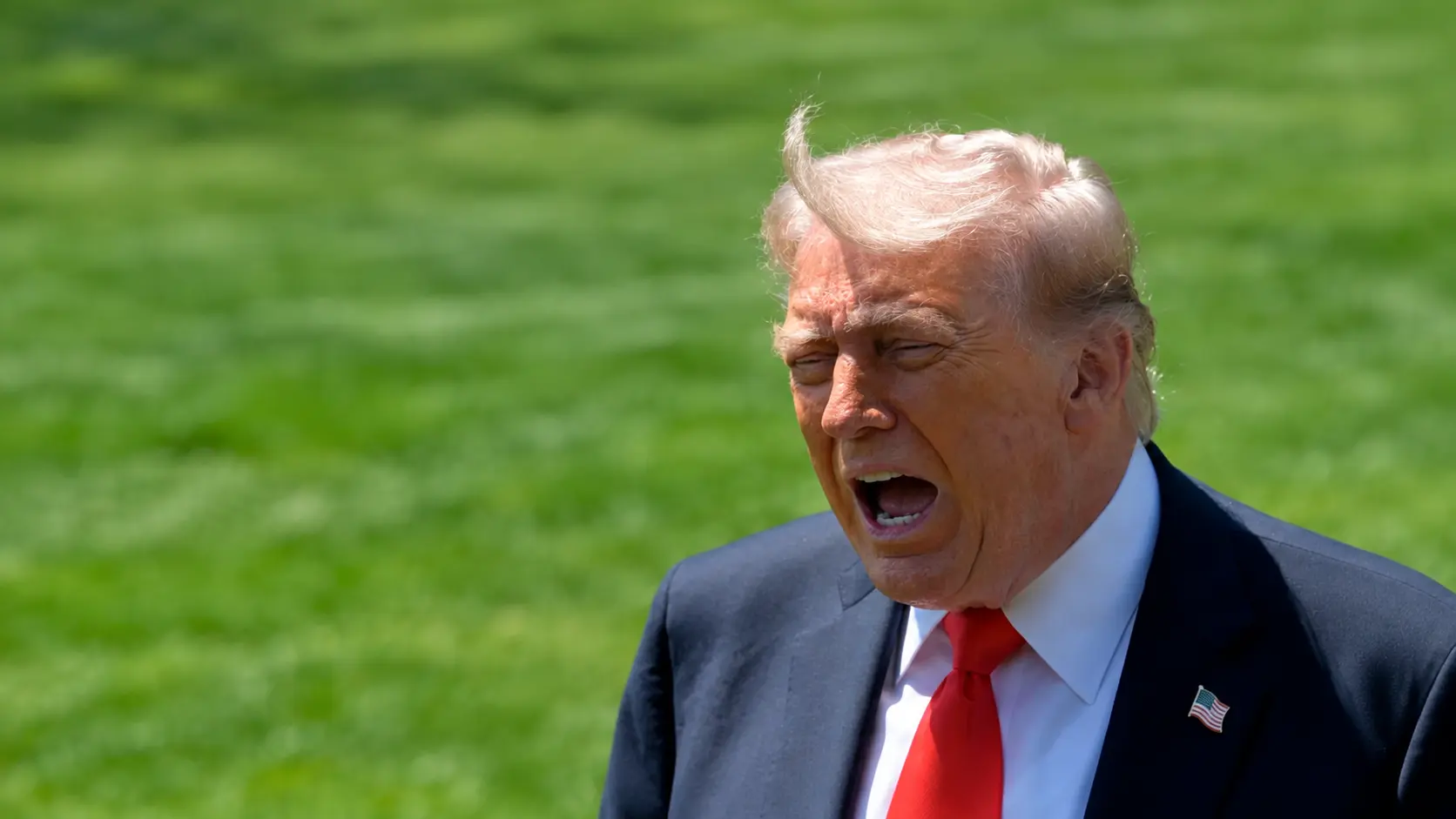
Trump announced the proposal on Sept. 9 at the Republican midterm convention in Dallas. The White House formally promoted it the next day, saying Trump would issue the payment if Republicans retain both the House and Senate in November. Trump also said the money would have to be spent inside the United States.
What Americans do not have is an approved payment program. The White House announcement does not establish an eligibility process, payment date, income limit, tax treatment, delivery method or enacted source of funding. Congress has not yet authorized the roughly trillion-dollar expenditure described by Trump.
That distinction matters because a presidential promise alone cannot move federal money into household accounts. Article I of the Constitution says that “No Money shall be drawn from the Treasury” except through appropriations made by law. In practice, Congress would have to create or authorize the payment and provide the legal spending authority before Treasury could distribute the money.
Investozora has previously explained how a congressional spending authorization ultimately becomes a federal payment through Treasury and the Bureau of the Fiscal Service in its guide to how the federal budget reaches individual accounts.
The potential cost can be estimated from Census data. The Census Bureau’s 2024 American Community Survey estimated that the United States had 245,275,126 citizens age 18 or older. Multiplying that population by Trump’s promised $5,000 produces approximately $1.226 trillion. 245,275,126 adults × $5,000 = $1,226,375,630,000
That is an Investozora calculation, not an official White House or Congressional Budget Office cost estimate. The actual cost could be different because Trump has not released final eligibility rules and the adult citizen population will be different when any future payment is made.
The calculation nevertheless shows the size of the proposal. A payment covering approximately the population identified in the Census data would require about $1.23 trillion before administrative expenses.
That would equal roughly 61% of the $2.0 trillion federal budget deficit CBO estimates the government accumulated during the first 11 months of fiscal year 2026.
The funding question has become more important since Trump made the announcement. Commerce Secretary Howard Lutnick said in an interview this week that the dividend would not come from taxpayers or increase the deficit.
“It’s not tax money,” Lutnick told NBC News, saying the administration could generate money from other sources. He pointed to possible revenue from a proposed visa program for wealthy foreigners and gains on the federal government’s Intel investment.
Vice President JD Vance has also pointed to tariff revenue as a possible source of money for the payments, according to Reuters. But the latest federal budget numbers show why tariffs alone present a major mathematical problem.
In February, CBO projected $418 billion in customs duties for fiscal year 2026. Even that earlier projection would equal only about one-third of Investozora’s estimated $1.23 trillion cost for a single nationwide $5,000 payment. The revenue outlook has since weakened.
On Aug. 20, CBO said projected net customs revenue for fiscal 2026 had fallen by about $250 billion compared with its February forecast. The agency said much of the change followed a Supreme Court decision invalidating tariffs imposed under the International Emergency Economic Powers Act and the expected refund of most of the $166 billion collected under those tariffs.
That means the original tariff revenue projection cannot simply be treated as cash available for a dividend. Federal revenue also is not normally held in a separate pool waiting to be returned to households.
Customs duties enter the federal government’s broader finances alongside other receipts while Congress determines spending through law. Investozora’s guide to federal payments and Treasury disbursement explains how authorized payments ultimately move through the federal financial system.
There is another important difference between Trump’s announcement and an actual federal benefit. The proposal is conditional on Republicans retaining both chambers of Congress in November.
Even if that happens, Republican control would not itself create the payment. Congress would still have to pass legislation containing the necessary legal authority, and Trump would have to sign it unless Congress enacted it over a veto.
Details could also change substantially during that process. Vice President Vance has suggested that wealthier Americans might not receive the payment, according to AP reporting. An income cutoff would reduce the total cost, but no final threshold has been formally established.
Congress could also change the payment amount, limit eligibility, create a refundable tax credit instead of a direct Treasury payment, spread payments across time or reject the proposal entirely.
Trump has proposed a similar idea before. In 2025, he discussed a $2,000 tariff dividend, but those payments were never implemented. The new proposal raises the amount to $5,000 and ties it explicitly to Republican control of Congress after the 2026 midterm election.
For households, the most important point is therefore simple: there is no approved $5,000 payment to claim, no federal application to file and no confirmed payment schedule. Trump has made a political and policy promise. The White House has endorsed it. Administration officials are discussing ways to finance it.
But a nationwide payment approaching $1.2 trillion would require Congress to turn that promise into law and resolve a funding gap that is far larger than currently available tariff revenue.
The next development that would materially change the story would be the release of legislative text, formal eligibility rules or a detailed administration financing plan showing exactly where the money would come from.