
When your bank merges with another institution or closes entirely, your Social Security payment, IRS refund, and any other federal direct deposit can be disrupted, delayed, or returned entirely if you do not take the right steps at the right time.
Bank merger deposit continuity is one of the least-discussed risks in personal finance, and it affects millions of Americans every year as regional bank consolidation continues across the country.
This guide explains exactly what happens at every stage of a bank merger or closure, what the federal payment system does when a deposit cannot be delivered, and what you must do to protect your Social Security payments and IRS refunds before your routing number changes.
What Actually Happens to Your Bank During a Merger or Acquisition
When one bank acquires another, the acquired bank does not immediately disappear. Federal banking law and the operational realities of integrating two financial institutions mean that transitions take time.
Most bank mergers maintain the old routing number for a transition period that typically spans six to twelve months after the merger closes. During this window, your direct deposits will generally continue to arrive without interruption because the acquiring institution is processing payments under the legacy routing number.


However, that transition period ends. When the acquiring bank completes its systems integration, it retires the legacy routing number and routes all traffic through its own. If your direct deposit records at the SSA or IRS still carry the old routing number after the cutover, your payment will be returned to the federal disbursement system as undeliverable.
The ACH network, which carries Social Security payments and IRS refunds through the Federal Reserve’s FedACH system, works through a simple two-part address: a nine-digit routing number that identifies the receiving bank, and your account number that identifies your specific account within that bank.
When either number is wrong or no longer active, the payment fails delivery and is returned. The SSA and IRS do not receive real-time notification that your routing number changed. They send to the address on file. If that address is stale, your money bounces.
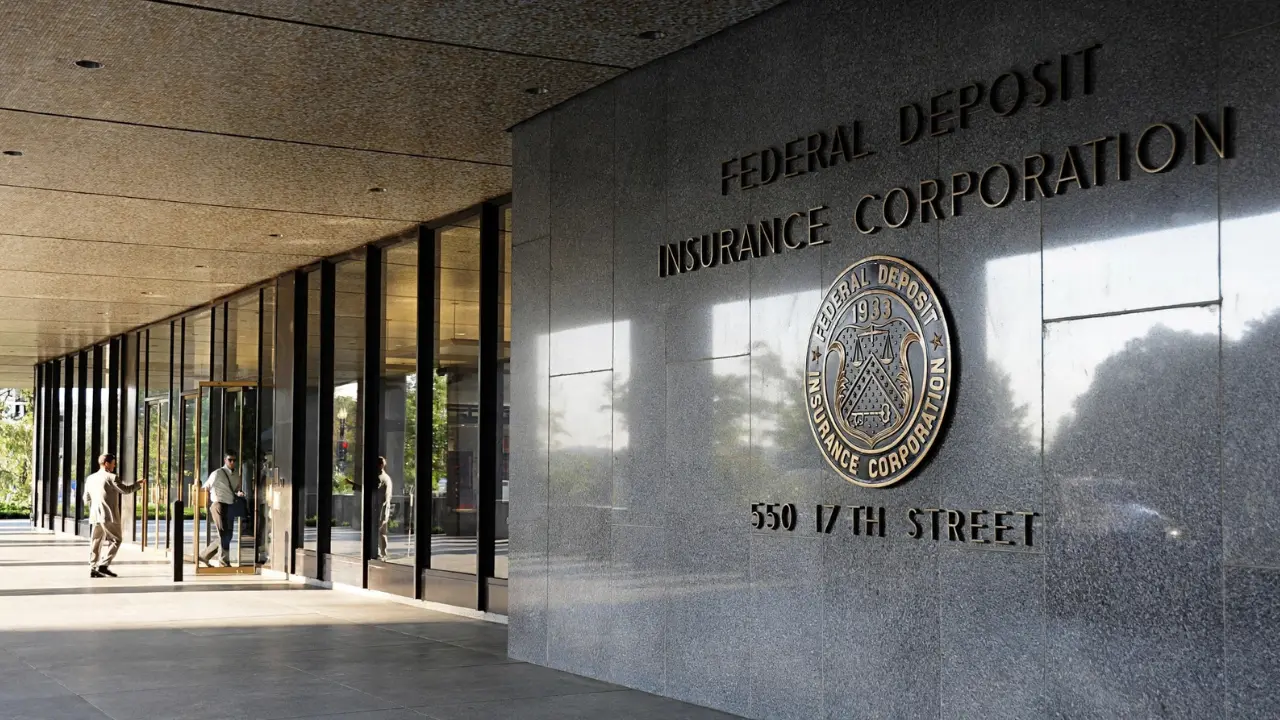
Bank closures work differently. When a bank fails and is closed by federal regulators, the FDIC steps in as receiver. The FDIC typically arranges an assumption agreement with an acquiring institution, which takes over deposits, branches, and often the payment infrastructure.
In most FDIC-assisted transactions, direct deposits continue processing through a brief transition period while depositors are notified of the account transfer. However, the timeline is compressed and unpredictable compared to a planned merger. Acting immediately when you learn your bank has been closed or seized is not optional. It is urgent.
What the Federal Payment System Does When Your Deposit Bounces
Understanding this step is critical, and most people never learn it until their payment is late.
When a Social Security payment or IRS refund is submitted through the FedACH network and the receiving bank returns it as undeliverable, the payment is sent back to the originating institution.
For Social Security, the originator is the Bureau of the Fiscal Service at the U.S. Treasury. For IRS refunds, the IRS initiated the payment, but Treasury’s Fiscal Service handles the actual disbursement. When the returned payment arrives back at the Fiscal Service, the agency must determine how to redirect it.
For Social Security, the SSA updates its records when it receives notice of the return and reissues the payment. But reissuance takes time. In most cases, a returned Social Security payment that cannot be redelivered electronically is reissued as a paper check sent to your address on file.
Paper check delivery adds five to fifteen business days to the payment timeline. If your address on file is also outdated, the check may be delayed further or returned entirely.
For IRS refunds, the situation is less flexible. The IRS uses the banking information from your most recently filed tax return. Once your return is filed and accepted, the direct deposit routing cannot be changed.
If your bank merger or closure occurs after you file and before your refund is issued, and your routing number has changed, the IRS will attempt delivery once. If it fails, the refund is converted to a paper check and mailed to the address on your return. This process can take four to six weeks beyond the original refund timeline, according to current IRS direct deposit guidance.
The money movement system that underlies all federal payments operates on ACH settlement cycles with specific effective date rules. Understanding how that pipeline works explains why there is no instant fix when a payment bounces. The correction must travel back through the same infrastructure that delivered the error.
What Happens to Social Security Deposits Specifically
Social Security direct deposit changes are handled exclusively by the SSA. As of April 14, 2026, the SSA permanently ended the ability to change direct deposit information by phone. All direct deposit changes must now be made through your online account at ssa.gov/myaccount or in person at an SSA field office. For full details on this rule change and what it means for your account, the direct deposit rule change guide explains every step.
This has a direct consequence for bank merger situations. If your bank announces a routing number change that will take effect on a specific date, you must update your SSA direct deposit information before that date. You cannot call the SSA and ask a representative to make the change over the phone. You must either use the online portal or visit an office in person.
The SSA recommends allowing two to three business days for a direct deposit update to take effect before your next scheduled payment. The SSA processes payment files in advance of each payment date.
If your update is submitted too close to the payment processing cutoff, your current month’s payment may still route to the old account. In that case, the bank will either accept the payment into your now-transferred account or return it, depending on how the merging institutions are handling legacy account numbers during the transition.
To confirm when your next Social Security payment is scheduled and verify the date against your update timeline, the payment dates calendar provides the complete 2026 schedule organized by birth date.
What FDIC Insurance Covers and What It Does Not
When your bank is acquired or closed, FDIC insurance protects your deposited funds up to $250,000 per depositor per insured institution. This protection means your money does not disappear in a bank failure. The FDIC ensures that depositors receive their insured funds, typically within a few business days of a bank closure, either through the acquiring institution or through direct payment from the FDIC.
What FDIC insurance does not do is protect the timing or delivery of payments that are in transit when the bank closes. A Social Security payment that is sent to your account on the day your bank closes may arrive in a closed or suspended account. What happens to that payment depends entirely on whether the FDIC-arranged acquiring institution is processing incoming ACH credits during the transition period.
For most FDIC-assisted transactions, the acquiring institution accepts deposits on behalf of the failed bank from day one. Your incoming Social Security or IRS payment will typically be credited to your account as transferred to the new institution.
However, the acquiring institution may place temporary holds while it processes the account transition. Understanding the difference between a hold and a missing payment matters. A held payment is present in your account and will become available according to the institution’s hold policy. A missing payment was returned before the acquiring institution accepted it.
The FDIC resources on bank failures and resolutions provide current information on institutions in resolution and the specific procedures applying to each case.
The Step-by-Step Action Plan When Your Bank Merges or Closes
Acting early is the only strategy that eliminates risk entirely. Reacting after a routing number change has occurred means your next payment may already be in transit to an inactive address.
The moment you receive any communication from your bank about a merger, acquisition, or closure, begin the following sequence.
First: Identify whether your account number is changing. In most mergers, account numbers are preserved and only the routing number changes. In some mergers, both change. Your bank is required to notify you in advance of any changes to your account. Read every piece of mail from your bank carefully during any announced merger period.
Second: Determine the exact date when the new routing number takes effect. This is the hard deadline for all your payment updates. Write it down. Add it to your calendar. Build in a buffer of at least two weeks.
Third: Update your Social Security direct deposit through ssa.gov/myaccount or at your local SSA office. Do this at least two weeks before the routing number change date. Confirm the update was processed and note the confirmation number.
Fourth: For your IRS refund, recognize that you cannot change the banking information on a return already filed. If your bank merger is occurring while you are waiting for a refund on an already-filed return, monitor the IRS Where’s My Refund tool. If the refund is sent to your old routing number before you updated your account, it will likely be reissued as a paper check. The timeline for that reissuance is four to six weeks. Plan accordingly.
Fifth: Update any other direct deposit sources that use your banking information. Pension payments, employer payroll if you are still working, veterans benefits, and state benefit payments all use the same ACH infrastructure and require separate updates through each paying agency.
For a complete explanation of the federal payments guide covering how all government payments are processed, that resource details the institutional mechanics connecting every federal payment to your bank account.
And if you have ever wondered why your deposits arrive at different times depending on the month or your bank, deposit timing explained breaks down the ACH effective date rules that govern every federal payment.
What You Should Do Now
- Check your bank’s website or any recent mail for merger or acquisition announcements. If your bank has announced a transaction, find the specific date when routing numbers will change.
- Log into ssa.gov/myaccount and confirm your current direct deposit routing number matches your bank’s current active routing number.
- If a routing number change is coming, update your SSA direct deposit at least two weeks before the effective date, either online or in person at an SSA field office.
- If you are expecting an IRS refund and your bank merger is occurring while the refund is in process, monitor your refund status through the IRS Where’s My Refund tool and be prepared for a paper check reissuance if delivery fails.
- Contact your merging or acquired bank directly to confirm whether your account number is also changing and to request written documentation of all new account details before the transition date.
A bank merger is a normal business event. A missed Social Security payment or delayed tax refund because of one is entirely preventable. Bank merger deposit risk is real and specific, but it responds completely to informed, timely action. You now have everything you need to act before the problem reaches your account.
Editorial Note: Investozora is an independent news publication. This content is for informational purposes only. For official guidance, please visit ssa.gov, irs.gov, or fdic.gov.