

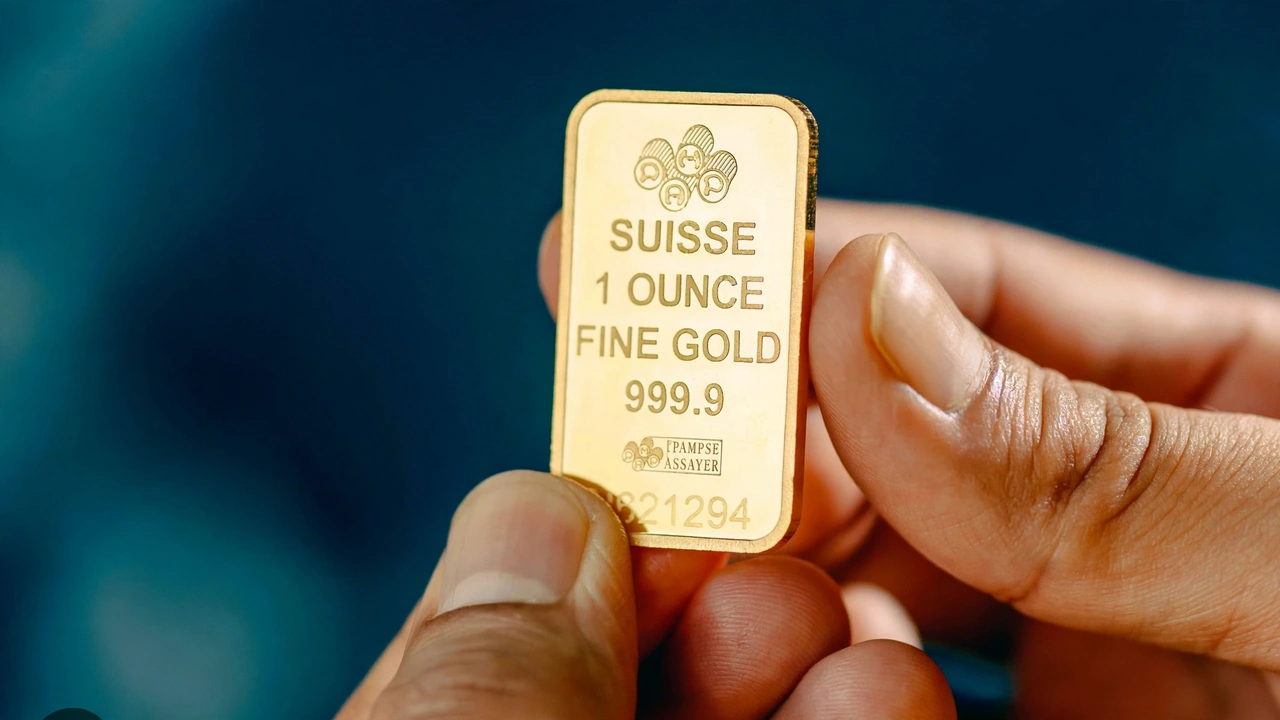
Gold held near $4,184 an ounce early Friday, October 2, stabilizing before the U.S. employment report after a volatile week in which rising Treasury yields and a stronger dollar remained important headwinds for bullion.
Spot gold was little changed at $4,184.45 an ounce at 04:19 GMT, or 12:19 a.m. ET, according to Reuters’ October 2 precious-metals market update. U.S. gold futures were up 0.3% at $4,214.70. For comparison, spot gold was at $4,165.29 at 2:08 p.m. ET Thursday in Reuters’ previous market observation.
The Friday reading was $19.16 higher, or about 0.46%, although those observations were taken at different times and should not be treated as official daily closes. Gold was still down more than 2% for the week, leaving Friday’s stabilization well short of reversing the broader retreat.
Gold stabilizes while Treasury yields remain elevated
The notable feature of Friday’s trade is that gold remained above $4,180 even after a sharp repricing in government bonds. The benchmark 10-year Treasury yield reached 5.344% Thursday, its highest level since 2002, before easing to about 5.249% in early Friday trading, according to contemporaneous market data reported by Reuters.
The dollar index was around 102.08 and headed for a third consecutive weekly gain. Treasury’s official daily real yield curve data also showed the 10-year real yield at 2.88% on October 1, compared with 2.93% on September 30.
Those conditions matter because gold pays no interest, making the return available on interest-bearing assets an important part of the relative-value calculation. But the relationship is not mechanical. Gold’s Friday stabilization occurred alongside elevated yields and a firm dollar rather than proving that either variable determined the move.
That distinction is important after Investozora’s September 30 gold report documented bullion recovering to $4,195.56 as Treasury yields eased. Friday presents a different setup: gold is holding near $4,184 while longer-term borrowing costs remain historically high.
The jobs report is the next test
Attention now turns to the September employment report. The Bureau of Labor Statistics release calendar schedules the Employment Situation for 8:30 a.m. ET Friday.
Economists surveyed by Reuters expect nonfarm payrolls to increase by about 90,000, after the officially reported 162,000 increase in August, while unemployment is expected to remain at 4.1%. The forecast is an expectation, not an official BLS figure.
The employment numbers matter because the Federal Reserve raised its target range to 3.75%–4.00% on September 16, and markets are assessing whether incoming labor and inflation data justify another increase.
Kyle Rodda, senior financial market analyst at Capital.com, told Reuters that payrolls would be important for rate expectations and that a stronger report could increase the chances of additional Fed tightening and potentially weigh further on gold. That provides a supported mechanism rather than assuming the jobs report will automatically determine bullion’s direction.
For gold, the immediate question at 8:30 a.m. ET is whether payroll growth, unemployment and wage data materially alter the interest-rate expectations behind Treasury yields. Until those figures arrive, the verified market picture is narrower: spot gold is holding near $4,184, more than 2% lower for the week, with the next major U.S. labor-market test only hours away.