
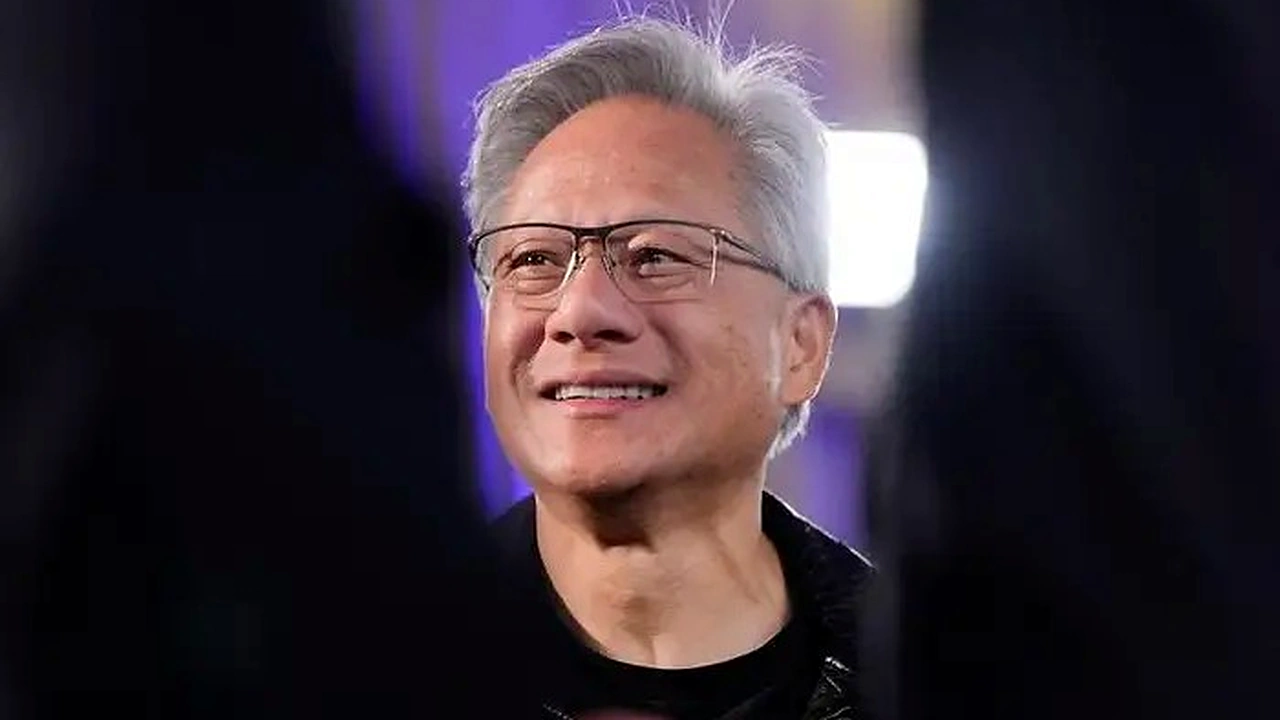
Nvidia faces one of the most consequential earnings announcements in its history on Tuesday, November 17, when the artificial intelligence chipmaker reports quarterly results for the first time since co-founder Jensen Huang resigned as chief executive. Longtime finance chief Colette Kress has taken over as interim CEO, leaving investors to assess whether the company can sustain its extraordinary growth while navigating an abrupt leadership transition.
The immediate financial stakes are enormous. Nvidia reported $96.2 billion in revenue last quarter and projected approximately $108 billion for the next, meaning the company must demonstrate continued expansion even as its board searches for a permanent leader.
But there is an important distinction in the timing. Nvidia’s fiscal third quarter ended October 25, before Huang’s resignation on November 11, so the upcoming financial results will primarily reflect operations conducted under the previous leadership rather than the performance of Kress’s new administration.
After examining Nvidia’s SEC leadership filing, financial disclosures and the broader artificial intelligence investment environment, I see five questions that could determine how investors interpret the announcement. The central issue is whether Nvidia’s financial momentum and technological advantages can remain intact without the executive who helped build the company over 33 years.
1. Can Colette Kress Establish Confidence in Nvidia’s Leadership?
Huang’s departure represents more than an ordinary executive change. He co-founded Nvidia in 1993 and became closely associated with its transformation from a graphics processor manufacturer into one of the most important suppliers of computing infrastructure for artificial intelligence.
Nvidia’s November 12 announcement confirmed that its board accepted Huang’s resignation as president, chief executive officer and director, effective November 11. Kress, who has served as CFO since September 2013, will retain her finance responsibilities while acting as interim CEO, a transition also examined in the company’s recent leadership announcement.
Kress brings substantial experience. Before joining Nvidia, she spent nearly 25 years in financial leadership roles at major technology companies, including Cisco and Microsoft, and has overseen Nvidia’s finances through much of its AI-driven expansion.
Harvey C. Jones, a technology industry veteran with more than three decades of executive and investment experience, was appointed Nvidia’s first board chairman. In the company’s official transition statement, Jones said, “Colette has helped lead NVIDIA through a period of extraordinary growth.”
The board expressed confidence in the existing management team and indicated that customer commitments and product development should continue without interruption. That provides an important counterargument to the assumption that Huang’s departure must immediately disrupt Nvidia’s business.
Nevertheless, investor confidence involves more than an experienced interim appointment. The board has not publicly established a timetable for choosing a permanent CEO, and Nvidia’s earnings discussion will offer an early opportunity to explain its leadership structure and management priorities.
I would focus on whether the company provides concrete information about executive responsibilities, succession planning and accountability for its technology roadmap. Those details would offer stronger evidence of organizational continuity than general assurances alone.
2. Can Nvidia Deliver Its $108 Billion Revenue Target?
Nvidia’s financial performance before the leadership change was remarkable. According to its SEC earnings release, second-quarter fiscal 2027 revenue reached $96.221 billion, increasing 18% from the preceding quarter and 106% from a year earlier.
Data Center revenue reached $89 billion, rising 117% year over year as demand for accelerated computing infrastructure continued to expand. Those results established the financial benchmark for the November 17 report.
Nvidia’s previous guidance projected third-quarter revenue of $108 billion, plus or minus 2%. That corresponds to a range of approximately $105.84 billion to $110.16 billion, compared with $96.221 billion in the previous quarter.
Using the company’s disclosed figures, I calculate that the $108 billion midpoint would represent approximately 12.2% sequential revenue growth, equivalent to an additional $11.78 billion in quarterly sales. These figures are calculations from management’s earlier guidance, not actual third-quarter results or a current Wall Street consensus estimate.
The financial comparison matters because Nvidia’s revenue expansion has already reached a scale where maintaining double-digit quarterly growth requires extraordinary additional demand. The company’s earlier earnings preview highlighted the importance of the November report even before the leadership transition.
An outcome within Nvidia’s guidance range would support the argument that underlying demand remained resilient during the quarter. A substantial shortfall would demand an explanation involving orders, shipments, production capacity, customer spending or another identifiable factor, rather than an unsupported assumption that the CEO change caused the weakness.
Investors should also distinguish the completed quarter from management’s next forecast. Because the reporting period ended before Huang resigned, the first meaningful financial test of leadership continuity will be the company’s outlook for future quarters and any evidence of changed customer or operational commitments.
3. Is AI Demand Strong Enough to Support Nvidia’s Growth?
Nvidia’s biggest financial opportunity is also a source of concentration risk. Data Center generated approximately 92.5% of the company’s total second-quarter revenue, based on its reported $89 billion in segment sales divided by $96.221 billion in consolidated revenue.
That concentration demonstrates how central AI infrastructure has become to Nvidia’s business. It also means the company’s performance is increasingly sensitive to the investment decisions of major cloud providers, AI developers and businesses building large computing facilities.
The company’s quarterly SEC filing provides an additional warning about customer concentration. One direct customer accounted for 16% of second-quarter revenue, while Nvidia estimated that a single AI research and deployment company contributed a meaningful amount of sales indirectly through purchases of cloud services.
Those disclosures do not establish that customer demand is deteriorating. They show why the financial condition and investment plans of a relatively concentrated group of large buyers matter to Nvidia’s future growth.
There is meaningful evidence supporting continued AI demand. Microsoft’s Azure growth reached 48% in its latest reported quarter, while Alphabet reported a sharp acceleration in Google Cloud sales, demonstrating expanding commercial activity around cloud computing.
Competition offers another indicator. AMD’s latest data-center results showed rapid revenue growth, while CoreWeave’s quarterly results demonstrated continued demand for specialized AI computing infrastructure.
However, stronger industry revenue does not mean every infrastructure investment is financially sustainable. Comparisons of major technology companies’ AI cash flows reveal that companies can experience accelerating demand while simultaneously facing increasing pressure from equipment purchases, construction and financing requirements.
This distinction is central to Nvidia’s long-term prospects. The company earns revenue by supplying computing technology, but the durability of that demand ultimately depends partly on whether its customers can justify repeated investments in increasingly expensive infrastructure.
The strongest confirmation would be continued order growth supported by actual deployments, expanding customer demand and credible forward guidance. Evidence of postponed projects, weaker utilization or significant reductions in spending commitments would challenge the assumption that AI infrastructure demand can continue expanding at its current pace.
4. Can Nvidia Expand Vera Rubin Without Sacrificing Profitability?
Revenue growth is only one measure of Nvidia’s performance. Investors also need to examine how much profit the company retains as it expands production of increasingly complex computing systems.
Nvidia reported a 75% GAAP gross margin for its second fiscal quarter and projected approximately 74% for the third, with a tolerance of 50 basis points. Its earlier financial announcement also described the Vera Rubin computing platform as ramping into full production, placing manufacturing execution and product adoption among the important questions for the next report.
The difference between 75% and 74% may appear modest, but at Nvidia’s projected sales volume it represents substantial money. At $108 billion in quarterly revenue, a one-percentage-point difference in gross margin is equivalent to approximately $1.08 billion in gross profit, assuming revenue remains unchanged.
Yet a declining margin percentage does not automatically mean declining gross profit. My calculations using Nvidia’s SEC-reported second-quarter results and third-quarter guidance show the distinction:
| Financial measure | Q2 actual | Q3 guidance midpoint |
|---|---|---|
| Revenue | $96.22 billion | $108.00 billion |
| GAAP gross margin | 75.0% | 74.0% |
| Gross profit | $72.17 billion | $79.92 billion |
Methodology: Gross profit equals revenue multiplied by GAAP gross margin. Q2 uses reported actual figures; Q3 is an illustrative calculation using management’s August guidance midpoint. Figures are rounded and do not represent a third-quarter earnings forecast independently developed by the author.
Under that scenario, Nvidia’s quarterly gross profit would increase by approximately $7.75 billion despite the lower margin percentage. The calculation provides a useful counterweight to the assumption that any reduction in gross margin necessarily indicates weakening profitability.
The uncertainty lies in whether Nvidia can achieve its projected revenue and margin simultaneously. Its SEC disclosures identify manufacturing costs, memory and component expenses, tariffs, product complexity and supply-chain conditions as factors that can influence profitability.
Vera Rubin’s production expansion therefore deserves particular attention. Investors should look for evidence that Nvidia can manufacture, deliver and support its newest systems at commercial scale while maintaining acceptable profitability.
A successful product ramp could reinforce Nvidia’s competitive position and strengthen future revenue expectations. Persistent manufacturing constraints or costs rising faster than sales would weaken that interpretation, regardless of how technologically advanced the products are.
5. Will China Restrictions and Market Uncertainty Complicate Nvidia’s Outlook?
Nvidia’s leadership transition comes while U.S. semiconductor export restrictions continue to influence which products the company can sell in China. The issue extends beyond corporate management because advanced AI processors have become central to American technology policy, international competition and national security concerns.
On January 13, the U.S. Commerce Department’s Bureau of Industry and Security announced a revised policy allowing case-by-case reviews of certain advanced semiconductor exports, including Nvidia’s H200 processors. Applications remain subject to security and compliance requirements rather than receiving automatic authorization.
Jeffrey Kessler, the U.S. under secretary of commerce for industry and security, explained the policy in the department’s official licensing announcement: “Export controls should evolve with changes in technology, while protecting national security.”
That policy framework creates both potential commercial opportunities and continuing limitations. Export authorization does not guarantee that products can be delivered to customers or accepted under China’s separate restrictions.
Nvidia’s most recent quarterly filing reported that approved H200 shipments represented less than 1% of Data Center revenue in the second quarter. The company also said restrictions had effectively prevented it from competing broadly in China’s data-center computing market.
There is an important qualification: Nvidia’s $108 billion third-quarter revenue outlook already assumed no Data Center compute revenue from China. Consequently, the immediate comparison should not treat an absence of Chinese AI-chip sales as an unexpected loss relative to that guidance.
The longer-term issue is different. Continued exclusion from a major computing market could reduce Nvidia’s growth opportunities while allowing competitors to expand their customer and software ecosystems.
For Kress and Nvidia’s eventual permanent CEO, the challenge is maintaining global growth while adapting to restrictions that the company does not control. The next earnings discussion may clarify its regional demand outlook, product plans and exposure to regulatory changes, although it cannot settle future government licensing decisions.
Market conditions add another complication. The earlier AI stock selloff demonstrated that investors can reassess technology valuations even while many underlying businesses continue expanding.
Veteran market strategist Marc Chandler, whose experience spans more than three decades, raised concerns about financial pressures accompanying the AI expansion in his November market outlook. His analysis highlighted strains in technology-related credit markets and the risks surrounding enormous infrastructure commitments.
That perspective helps explain why Nvidia’s earnings could matter far beyond its shareholders. A strong quarter could reinforce confidence in AI infrastructure demand, while weaker forward guidance might prompt broader reassessment of spending plans, financing assumptions and valuations across the technology sector.
What November 17 Will Reveal
Nvidia plans to release its third-quarter financial results at approximately 1:20 p.m. Pacific Time on Tuesday, November 17, followed by an earnings conference call at 2 p.m. Pacific. The event will be its first quarterly reporting announcement since Huang left the CEO position, although the company has not confirmed every participant expected on the call.
I would judge the announcement against five observable benchmarks: the $108 billion revenue guidance, the 74% gross-margin expectation, continuing Data Center demand, the credibility of management’s next-quarter outlook and the clarity of the company’s leadership plans.
The strongest outcome would combine financial performance consistent with or above previous expectations, credible evidence of sustained customer demand and specific assurances about operational continuity. Even that would not resolve every governance or succession question created by Huang’s sudden departure.
Conversely, disappointing results would not, by themselves, establish that his resignation damaged Nvidia’s operations, particularly because the quarter ended before he left.
That separation between financial performance and leadership uncertainty is the most important point for investors. Nvidia’s November 17 results will reveal how its business performed before Huang’s departure, while management’s explanations and future guidance will provide the first substantial evidence of how the company intends to operate without him as CEO.
The question is no longer simply whether Nvidia can continue selling extraordinary amounts of AI computing technology. It is whether the institution Huang built can preserve its competitive advantages, operational discipline and investor confidence through a leadership transition it did not expect.