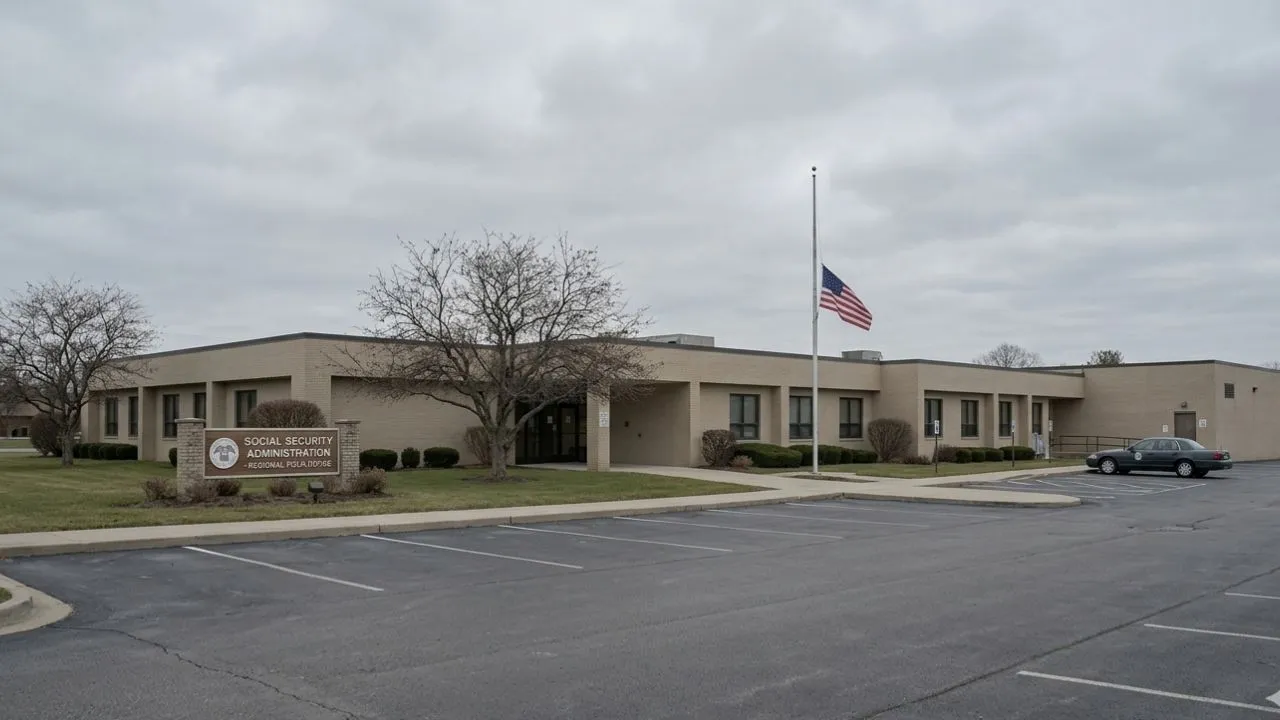
The Social Security Administration has confirmed the elimination of approximately 7,100 agency roles as part of a mandated operational contraction, directly affecting regional field office capacity for processing disability determination portfolios, per SSA administrative records.
The Social Security Administration is operating in June 2026 under a fundamentally different staffing architecture than it had twelve months ago. An operational contraction eliminating approximately 7,100 agency positions has removed a substantial share of the institutional workforce responsible for processing the agency’s most complex claim portfolios.
Social Security disability claims June 2026 backlogs are the direct arithmetic result of that reduction. The agency is processing essentially the same volume of incoming applications through a significantly smaller administrative apparatus.
Who Gets Hit First
The claims most directly affected by workforce reduction are SSDI and SSI applications, not retirement benefits. Retirement benefit calculations are largely automated through the SSA’s National Earnings Record system.
SSDI and SSI determinations require human adjudicators at multiple stages of the review process, including medical evidence evaluation, vocational analysis, and the formal initial determination step governed by federal regulatory standards.



The SSA’s disability determination process is codified under 20 CFR Part 404, which establishes the legal evidentiary standard adjudicators must apply to every claim. That regulatory standard does not change with workforce levels. What changes is the speed at which the agency can move a claim through each required step.
What the Backlog Actually Means
Before the 2026 workforce contraction, SSA field offices maintained internal performance metrics tracking average processing times across claim categories. Those legacy metrics have been retired as part of the administrative restructuring.
The agency is no longer publishing internal performance benchmarks in the format disability advocates and claimant attorneys used to track queue movement. That operational transparency gap creates a practical problem for the approximately 3.2 million Americans currently in active SSDI or SSI claim status.
They cannot use historical benchmarks to estimate where their application sits in the current queue because the benchmarks those estimates were built on no longer exist. For claimants in the initial application stage, the realistic processing window has extended meaningfully beyond the 90-day standard that was the historical norm at high-performing field offices.
For claimants who have received an initial denial and filed a Request for Reconsideration, the second-level queue is experiencing the most severe compaction because reconsideration reviews require the same adjudicator class most directly affected by the workforce reduction. The SSDI and SSI eligibility rules have not changed. The institutional capacity to evaluate claims against those rules is operating under significant pressure.
The Hearing Stage Reality
Claimants who have progressed to the Administrative Law Judge hearing stage are in a different situation. ALJ hearing capacity was less directly affected by the recent workforce contraction because Administrative Law Judges are a separate employment category from the field office workforce.
However, the pre-hearing development period, during which field staff assemble and review the medical evidence file before scheduling the ALJ, has slowed. Claims reaching the hearing docket in June 2026 are arriving with less pre-developed evidentiary packages than ALJ offices have historically received, creating preparation delays even after a hearing date is assigned.
What Applicants Can Do
Social Security disability claims June 2026 applicants have specific operational steps available to them that the SSA does not prominently advertise. First, every claimant has the right to submit a Dire Need letter if their financial or medical condition has deteriorated significantly since filing.
A verified Dire Need submission triggers a mandatory expedited review flag on the claim record. Second, claimants who submitted medical documentation at the time of filing should confirm through their Online Social Security Account whether that documentation has been formally entered into the claim record or is still sitting in an unprocessed document queue.
Third, for claimants approaching the one-year anniversary of an initial filing with no determination, a formal inquiry to the Office of the Inspector General is a legitimate escalation pathway. How the SSA transmits payment deposits through the federal ACH network once a claim is approved is a separate operational question that claimants should understand before a determination arrives.
The structural policy question underlying all of this is what the SSA’s workforce contraction means for the agency’s long-term processing capacity. The trust fund solvency timeline that fiscal agencies are projecting toward 2032 assumes a processing infrastructure capable of managing benefit terminations, redeterminations, and new claim adjudications at current volume.
An administrative architecture that is shrinking while the claimant population continues to grow in absolute terms creates a structural mismatch that the retirement of internal performance metrics does not resolve.
For claimants and their families, understanding how maximum Social Security benefits are calculated provides essential context for what is at stake in every disability determination that the SSA is now processing under reduced institutional capacity.
What You Should Do Now
- Log into your Social Security Online Account and confirm that all medical documentation submitted with your SSDI or SSI application appears in your official claim record.
- If your Social Security disability claim June 2026 has been pending beyond 90 days without an initial determination, prepare a written Dire Need letter documenting your current financial and medical status and submit it directly to your assigned field office.
- Verify your direct deposit bank account information inside your Social Security Online Account before any determination is issued. A single digit error in your routing or account number delays payment by a minimum of 30 days after a favorable determination.
- If you have legal representation for your disability claim, confirm with your attorney that your hearing development file has been transmitted to the ALJ office and that all outstanding medical records have been obtained.
- Bookmark the official SSA.gov regulatory framework as the definitive legal reference for the evidentiary standard your claim will be judged against, regardless of the current administrative environment.