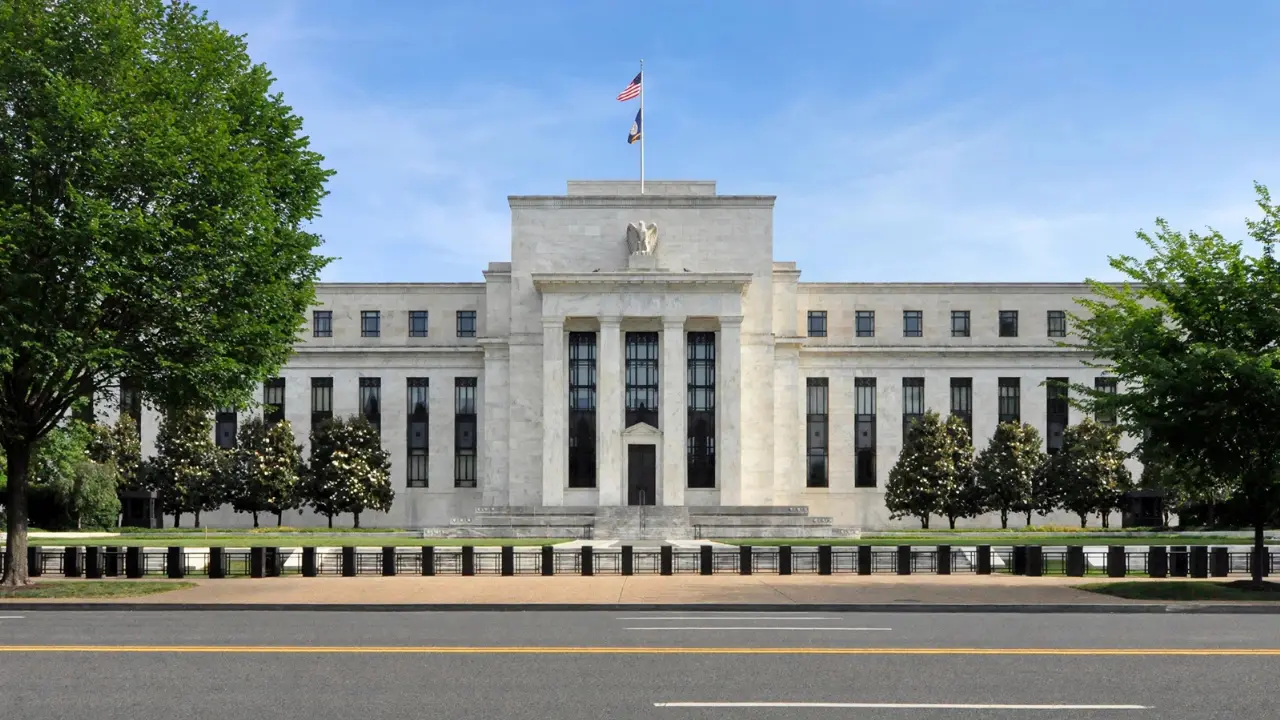


Many people see a federal payment marked approved, sent, or pending and assume the money should already be in their bank account. But those status updates don’t actually mean the funds have arrived yet. Understanding federal payment status meaning reveals how Treasury release, Federal Reserve settlement, and bank posting windows determine when the balance finally updates.
Why Payment Status Updates Often Confuse People
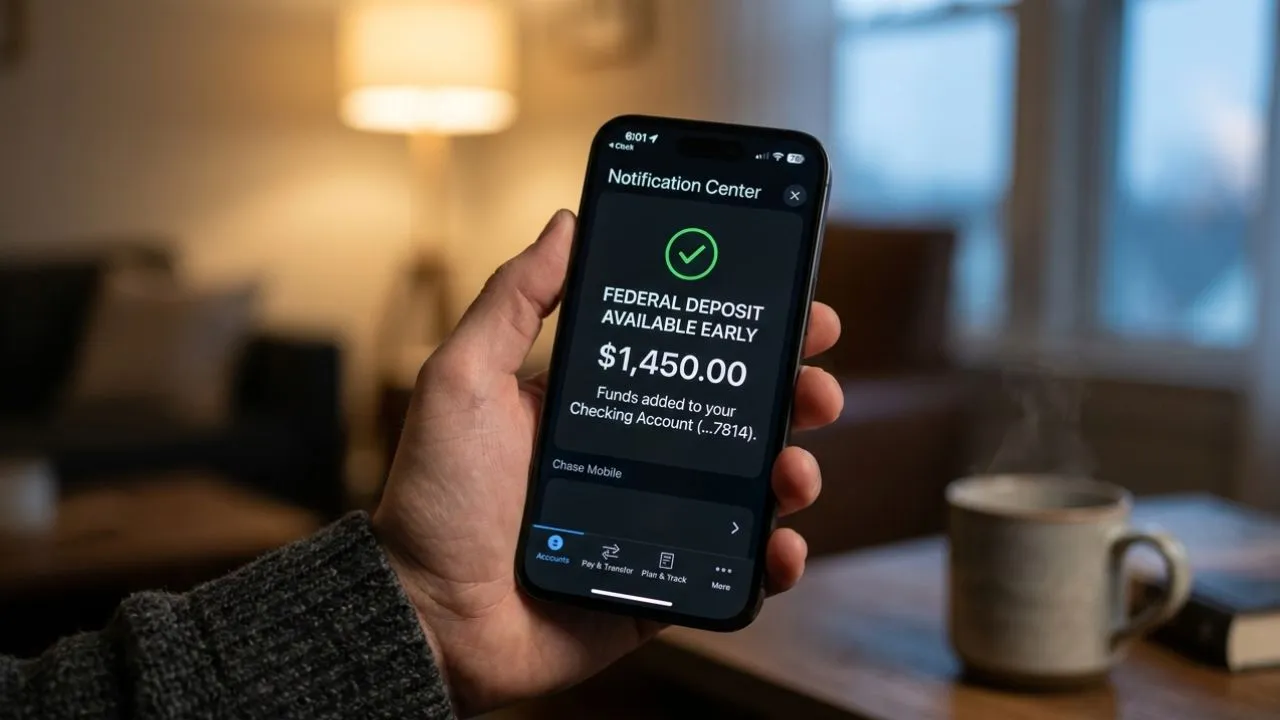
Millions of Americans check their bank accounts expecting a deposit to appear immediately after a payment status changes. A federal payment might show approved, sent, or pending inside an IRS transcript, Social Security payment notice, or banking notification. Yet when people open their banking apps, the balance still shows zero.
Understanding federal payment status meaning requires looking beyond the words displayed on a screen. These labels do not describe the moment money arrives in your bank account.
Instead, they describe different stages of the financial infrastructure that moves federal funds across institutions before deposits appear in consumer balances, as detailed in our U.S. money movement system guide.
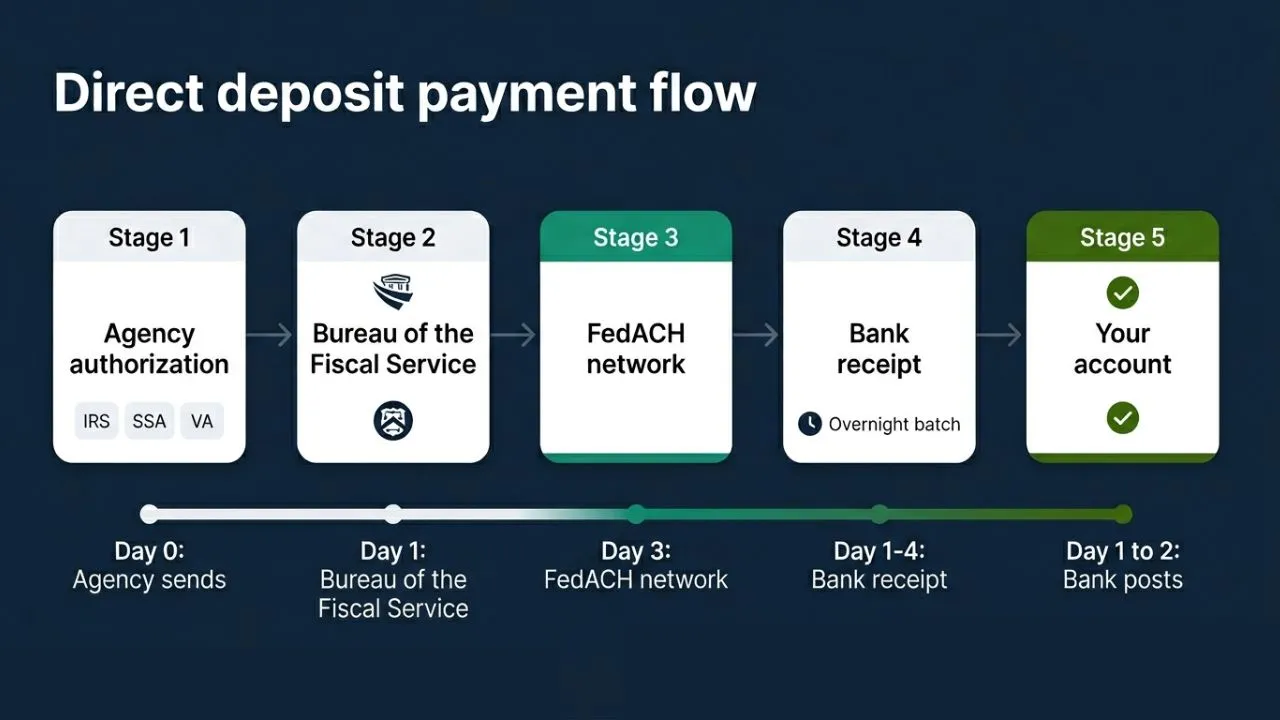
Federal payments travel through several systems before they reach personal bank accounts. The process involves government approval, Treasury payment transmission, Federal Reserve settlement, and finally the bank’s own internal posting cycle.
Each stage can occur hours apart, which explains why a payment status update does not always correspond to an immediate deposit. You can find official guidance on IRS refund processing information to see how the agency handles these initial status updates.
When people see a payment marked approved or sent, they often assume the money should already be available. In reality, the payment may still be moving through institutional clearing systems.
What Approved Means in the Federal Payment Process
The first status many people encounter is approved. When a payment is approved, it means the issuing agency has validated and authorized the transaction internally.
For example, a tax refund may be approved after the IRS completes verification of the return. Social Security payments may show approval when the monthly benefit schedule is confirmed by the Social Security payment schedule.
Approval does not mean the payment has entered the banking system yet. At this stage, the payment has only cleared the agency’s internal review process. The funds may still be waiting for Treasury systems to prepare the official payment file that will later move through the financial network.
Because of this distinction, people often see approved statuses several hours or even days before the payment begins traveling through settlement infrastructure. Approval represents authorization rather than delivery.
What Sent Means When Federal Payments Move to Banks
The next stage typically occurs when the payment status changes to sent. This label indicates the payment file has been released from Treasury systems and transmitted into the banking network. You can learn more about how the Treasury payment system manages this release through the U.S. Treasury payment processing site.
Once the payment enters this phase, it becomes part of the automated clearing infrastructure that moves funds between financial institutions. Most federal payments, including tax refunds and Social Security deposits, travel through ACH settlement timing rather than instant wire transfers.
ACH transfers operate in scheduled settlement windows. These windows occur multiple times during the day and determine when financial institutions exchange payment batches.
Because of this structure, a payment marked sent may still be traveling through the clearing system before banks finalize deposits. This stage is often where the longest visible gap occurs between a status update and a bank balance change.
Why Banks Often Show Payments as “Pending”
After a bank receives the incoming payment file, the deposit may appear as pending deposits inside the customer’s account.
Pending does not mean something is wrong with the payment. Instead, it means the bank has acknowledged the incoming funds but has not yet completed the final posting step that moves the deposit into the available balance.
Banks operate their own internal posting schedules. Many institutions process incoming deposits early in the morning during automated account update cycles. If a payment file arrives after that cycle has already run, the deposit may remain pending until the next posting window.
Because every bank operates slightly different processing times, two customers expecting the same payment may see deposits appear at completely different moments.
The Settlement Window Between Treasury and Banks
One of the most misunderstood stages in the payment process is the settlement window that occurs after Treasury releases the funds but before banks update account balances.
During this period, payment files move through Federal Reserve clearing infrastructure. Financial institutions reconcile incoming transactions against reserve balances held at the central bank, as noted in the Federal Reserve ACH system overview.
Only after this reconciliation occurs can the funds officially settle between banks, a process often analyzed through Fedwire vs ACH timing.
Once settlement completes, banks are able to finalize deposits and move them into customer accounts. This phase is invisible to most consumers, but it explains why payments marked sent do not always appear immediately. Settlement timing is one of the main reasons deposit arrivals vary throughout the day.
Why Deposits Often Appear Overnight
Federal payment releases frequently occur in the evening when Treasury systems transmit payment batches to the Federal Reserve network. Because banks process incoming files during overnight clearing cycles, many deposits appear early in the morning.
This is why people often wake up to new deposits appearing in their bank accounts between midnight and early morning posting cycles.
The funds were moving through the system overnight even though the status update occurred hours earlier. When payments arrive outside these overnight windows, the bank may delay posting until the next scheduled update cycle, which is dictated by specific bank posting times.
Why Payment Timing Changes During Weekends
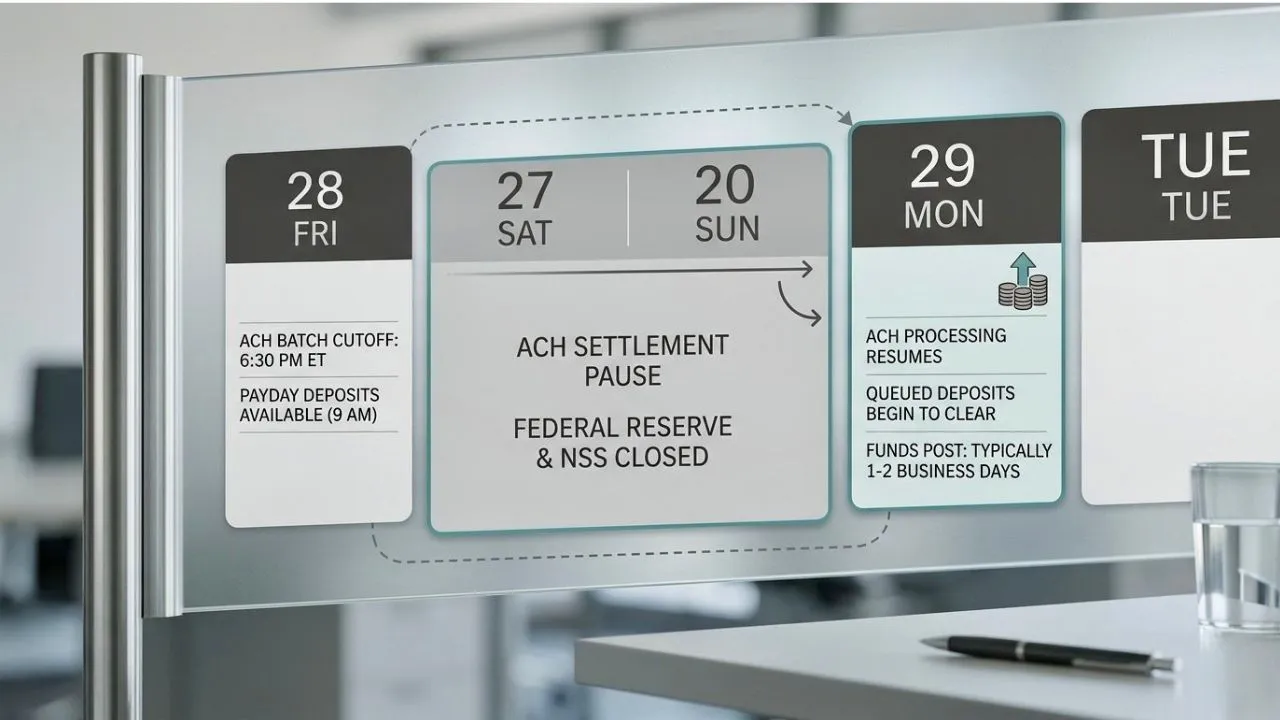
Another reason payment statuses can appear confusing involves the banking calendar. ACH settlement typically operates only on standard banking days. If a payment is released late on Friday or during the weekend, the clearing process may pause until the next business day, leading to a weekend banking slowdown.
During this time, payment statuses may already show approved or sent even though the settlement process has not resumed. Once normal banking operations begin again, the deposit usually completes shortly afterward. These timing shifts are common around federal holiday liquidity pauses or long weekends when banking schedules temporarily halt.
Why a Payment Status Update Doesn’t Guarantee Immediate Funds
The gap between payment status updates and available balance liquidity often causes unnecessary concern. In most cases, the payment is already moving through the financial infrastructure and simply waiting for the final settlement and posting stages to complete.
Until the final posting cycle occurs, the funds may not appear as available even though the payment status has already changed. Looking at the entire federal payment timeline helps explain why payment timing varies.
The journey begins when a federal agency approves a payment and authorizes Treasury to release it. Treasury then transmits the payment file into the national banking network. The Federal Reserve clears the transaction through settlement systems, and banks receive the deposit file.
Conclusion
Payment statuses like approved, sent, and pending describe progress inside the federal payment infrastructure rather than the moment money arrives in your bank account. Each label represents a specific stage within a larger process that moves funds from government agencies through the Federal Reserve and finally into personal bank balances.
Understanding federal payment status meaning helps explain why deposits sometimes appear later than expected even when payment systems already show progress. Once settlement completes and your bank reaches its next posting window, the deposit typically becomes available shortly afterward.