
The Federal Reserve held its benchmark rate steady at 3.5% to 3.75% at its March 2026 FOMC meeting, marking a second consecutive pause.
When the Fed holds or moves rates, banks adjust their reserve management strategies overnight, and those adjustments can produce marginal shifts in when your direct deposit posts to your account.
Every time the Federal Reserve makes a rate decision, millions of Americans wonder whether it will affect their paycheck, their tax refund, or their Social Security payment.
The question is reasonable. The Fed controls the cost of money between banks. Banks process your deposits. The connection seems direct. But the reality is more specific and more useful than a simple yes or no.
What You Need to Know Right Now
- A Federal Reserve rate decision does not directly delay or accelerate your individual direct deposit. The FedACH payment network operates independently of monetary policy announcements.
- Rate decisions do affect how banks manage their overnight reserves, which can produce marginal shifts of one to three hours in when deposits post during high-activity periods.
- ISO 20022, the global financial messaging standard, changes how payment data is structured between institutions. It does not delay deposits but can cause brief reconciliation pauses at banks still upgrading their systems.
- The current federal funds rate target is 3.5% to 3.75%, held steady at the March 2026 FOMC meeting. One rate cut is projected for later in 2026.
- If your deposit is late on an FOMC meeting day, the most likely cause is normal FedACH settlement timing, not the rate decision itself.
- Verify any late federal deposit at irs.gov/refunds, ssa.gov/myaccount, or through your bank’s ACH trace number process.
This article explains exactly how the Federal Reserve sets its benchmark rate, how that rate influences bank behavior during deposit processing windows, what ISO 20022 actually is and why it was blamed for late Tuesday deposits, what the current 2026 rate environment means for your money in practical terms, and what you should do when a deposit does not arrive on the day you expected it.
How the Federal Reserve Sets Interest Rates
The Federal Reserve does not set a single interest rate. It sets a target range for the federal funds rate, which is the rate banks charge each other for overnight borrowing. When one bank needs to meet its reserve requirement at the end of a business day and another bank has excess reserves, they lend to each other at or near the federal funds rate target.
The Federal Open Market Committee, known as the FOMC, meets eight times per year to review economic conditions and vote on whether to raise, lower, or hold that target range. As of the March 2026 FOMC meeting, the Fed left the federal funds rate steady at the 3.5% to 3.75% target range for a second consecutive meeting.
The Fed also published its first Summary of Economic Projections for 2026, which showed that officials maintained a median forecast for one rate cut in 2026. You can verify the current rate and review the full FOMC calendar at federalreserve.gov FOMC calendar.
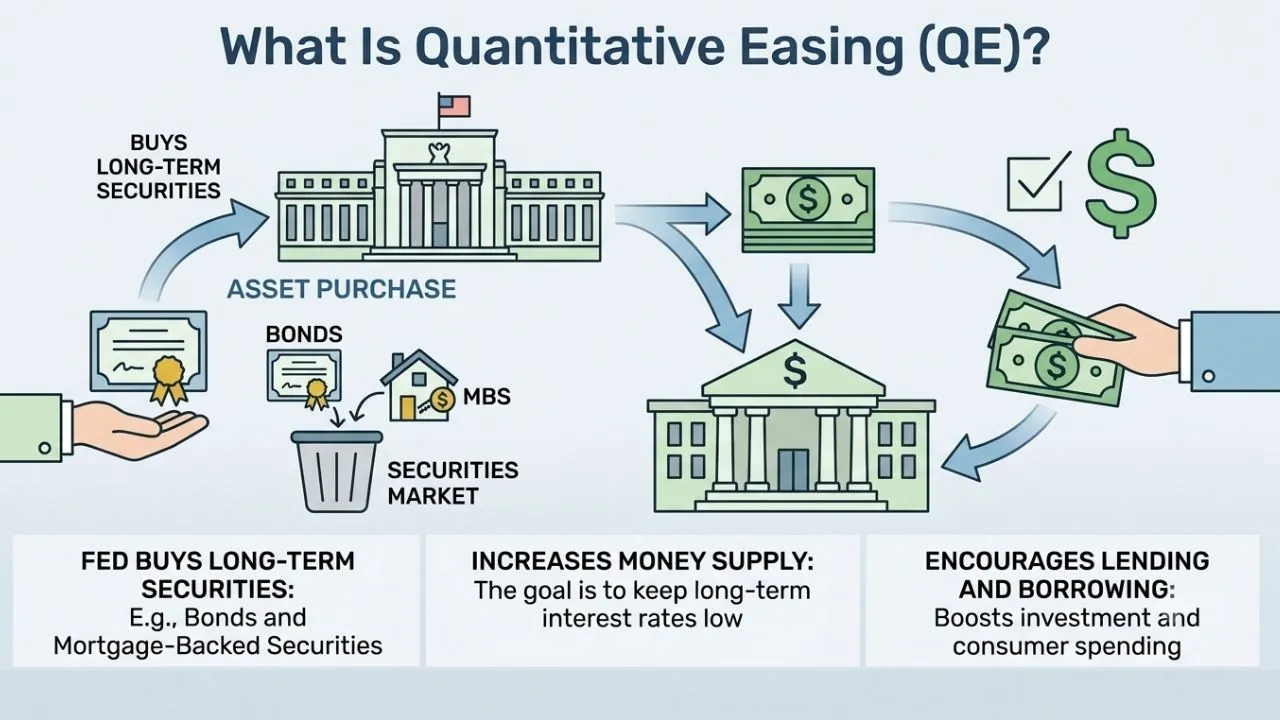
The federal funds rate is the foundation upon which nearly every other borrowing cost in the U.S. economy is built. Mortgage rates, auto loan rates, savings account yields, and the interest banks earn on reserves held at the Fed all move in relationship to the federal funds rate target.
Understanding how the Fed sets this rate is the starting point for understanding whether a rate decision can affect your deposit timing. The short answer is indirect and marginal, but the mechanism is worth knowing so you can read future headlines accurately.
How Rate Decisions Affect Banks and Deposit Processing
When the FOMC announces a rate decision, banks do not pause their payment systems to adjust. FedACH, the electronic payment network operated by the Federal Reserve Banks that carries direct deposits across the country, continues processing on its standard schedule regardless of what the FOMC voted on that afternoon.
Your employer’s payroll file was submitted to FedACH one to two business days before your pay date. That file is already in the queue. The rate decision does not touch it.
What the rate decision does affect is how banks manage their overnight reserve balances in the days following the announcement. The Board of Governors of the Federal Reserve System voted unanimously to maintain the interest rate paid on reserve balances at 3.65 percent as of January 2026.
When the rate on reserve balances changes, banks recalculate how much excess liquidity they want to hold overnight versus deploy into the payment system the following morning. In a high-rate environment, banks earn more by holding reserves. In a cutting cycle, the incentive to hold excess reserves decreases and banks tend to deploy liquidity into the payment system earlier in the processing window.
What this means for morning deposit timing
The practical effect on individual depositors is marginal but real during rate transition periods. In a rate-cutting environment, some banks post incoming ACH credits earlier in the morning processing window because the opportunity cost of holding overnight reserves has decreased.
In a rate-holding environment like the current one, bank reserve behavior is more stable and deposit timing is more predictable. The variation is typically measured in hours, not days.
A deposit that would normally post at 6:00 AM Eastern might post at 7:30 AM Eastern during a period of rate adjustment as banks recalibrate their overnight reserve positions.
For context on how these early morning processing windows work at the individual bank level, see our breakdown of early morning deposit delays, which covers exactly this timing variation in detail.
What ISO 20022 Is and Why It Was Blamed for Late Deposits
ISO 20022 is a global financial messaging standard that defines how banks and payment systems communicate structured data about transactions.
Think of it as a new universal language for payment instructions. Under the older messaging formats, a payment file contained limited fields for sender, receiver, amount, and date.
Under ISO 20022, a payment file carries richer structured data including purpose codes, legal entity identifiers, and enhanced remittance information. This richer data improves fraud detection, reduces reconciliation errors, and supports real-time payment systems.
The Federal Reserve began migrating the FedACH and FedWire systems to ISO 20022 compliance as part of a multi-year infrastructure upgrade. During active migration windows, some banks that had not yet completed their own internal system upgrades experienced brief reconciliation pauses when receiving ISO 20022 formatted files.
These pauses occurred because the receiving bank’s legacy system needed to translate the new message format before processing the payment.
The translation process added minutes to hours of processing time in some cases, which produced the late Tuesday deposit pattern that generated widespread confusion and several viral articles attributing the delay to Federal Reserve policy decisions.
The ISO 20022 and rate decision confusion
The overlap between FOMC meeting days and ISO 20022 migration activity created a false connection in public perception. FOMC meetings typically conclude on Tuesday or Wednesday afternoons. During the same period, FedACH was processing upgraded payment files on those same weekdays.
When deposits arrived late on FOMC days, many people attributed the delay to the rate announcement rather than to the ISO 20022 processing adjustment that was actually responsible.
The two events were concurrent but unrelated. ISO 20022 migration is an infrastructure upgrade, not a monetary policy action. Your deposit timing being affected by ISO 20022 is a one-time transition effect. Rate decisions produce an ongoing but marginal reserve management effect.
These are different mechanisms with different durations. For a detailed look at how FedACH settlement cycles work and why some accounts clear before others, our guide on FedACH settlement delays covers the full sequencing process.
The Current 2026 Rate Environment and What It Means for Your Deposits
The current rate environment is a holding pattern with a modest easing bias. Fed policymakers voted to leave the benchmark federal funds rate unchanged at its current range of 3.5% to 3.75%.
The FOMC’s quarterly dot plot of rate estimates showed an average estimate of rates ending the year at 3.4%, 25 basis points below the current level. That signals one quarter-point cut is the central expectation for the remainder of 2026, with timing dependent on inflation and labor market data.
For depositors, a stable holding environment is the most predictable for deposit timing. Banks are not adjusting their reserve management strategies frequently when the rate is on hold.
ACH processing runs on its standard schedule with minimal disruption from monetary policy activity. The practical implication is that your paycheck, tax refund, and federal benefit payments should arrive on their standard schedule during this rate-hold period.
The risk of marginal timing variation from reserve management activity is lower during a stable rate environment than during an active cutting or hiking cycle.
What a future rate cut would mean
When the Fed eventually cuts rates, as the current dot plot projects for later in 2026, banks will reduce the excess reserves they hold overnight because holding reserves earns less.
That means more bank liquidity flows into the payment system earlier in the morning processing window. A rate cut environment typically produces slightly earlier deposit posting times, not later ones.
If you have ever noticed your direct deposit arriving earlier in the morning during certain periods, a rate-easing environment is one contributing factor alongside normal ACH cycle variation.
For the full picture of how overnight processing cycles determine exactly when your deposit posts, see our guide on overnight deposit processing, which maps the FedACH settlement timeline from bank cutoff to account credit.
What You Should Do When Your Deposit Is Late on an FOMC Day
If your deposit does not arrive on the day you expected and that day happens to be an FOMC meeting day, the rate decision is almost certainly not the reason. The FedACH network does not pause for monetary policy announcements.
The more likely causes are a bank-specific processing delay, a weekend or holiday cutover in the settlement window, an ISO 20022 translation lag at a bank still completing system upgrades, or an issue with the originating payroll or benefits file itself.
Start by checking your bank’s pending transactions. Federal deposits from the IRS, SSA, or VA will show as a pending credit before they fully post. If you can see the pending item, the money is in the settlement pipeline and will post in the next processing window.
If there is no pending item and you are expecting an IRS refund, check your status at irs.gov refunds first. If your refund shows as sent but your bank shows nothing, the explanation is almost always a one to two day ACH settlement lag rather than a lost payment.
The full mechanics of why a refund can show sent while your balance stays at zero are covered in our guide on refund approved zero balance.
If a weekend falls between the FOMC meeting and your expected deposit date, the settlement cycle shifts to the next banking business day. Federal payments do not process on Saturdays, Sundays, or federal holidays.
A deposit expected on a Friday FOMC meeting date that was not processed by the Friday cutoff will post on the following Monday morning. The full explanation of how weekend timing displaces deposit posting is in our guide on weekend banking slowdowns.
For the broader picture of how all federal payment channels connect through the U.S. financial infrastructure, see our overview of the U.S. money movement system.
What You Should Do Now
If your deposit is late on an FOMC meeting day, check your bank’s pending transactions first. A pending credit means your rate decision deposit is in the pipeline and will post in the next processing window. For late IRS refunds, verify your status at irs.gov/refunds. The tracker confirms whether your refund has been sent and provides the expected delivery date.
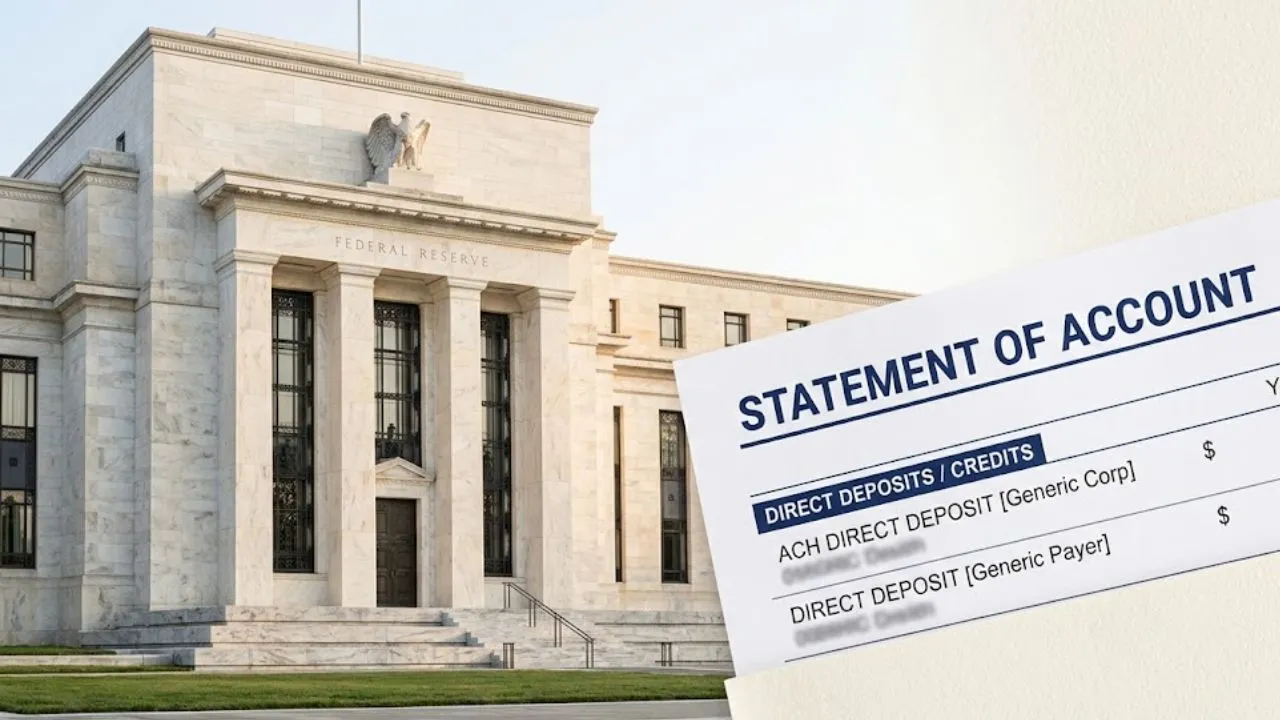
For late SSA or VA payments, call the agency directly. SSA: 1-800-772-1213. VA: 1-800-827-1000. Both can initiate an ACH trace within three business days of the scheduled payment date. If your bank confirms no incoming ACH credit is pending and your agency portal shows the payment as sent, request a payment trace through your bank using the ACH trace number from your account statement.
Do not assume a rate decision caused your deposit delay. Contact your bank and confirm whether the delay is a system-level processing issue before escalating to the originating agency. Edge case: if your bank recently migrated to ISO 20022 messaging and your deposits have been arriving later than their historical posting time, ask your bank whether their ISO 20022 upgrade is complete and whether a translation lag is affecting incoming ACH settlement.
A rate decision sets the price of money between banks. It does not set the clock on your deposit. Understanding the distinction means you can stop worrying about FOMC headlines and start asking the right questions about ACH settlement, bank reserve timing, and payment trace numbers when your rate decision deposit does not arrive on schedule.