

The Federal Reserve sets one interest rate, called the federal funds rate. That single rate determines what banks charge each other to borrow overnight.
Banks then use that cost to set what they charge you for loans and what they pay you for deposits. When the Fed raises that rate, your savings APY goes up and your mortgage rate goes up too.
The Federal Reserve sets the federal funds rate currently at a target range of 3.5% to 3.75%, confirmed by the Federal Reserve’s April 29, 2026 implementation note.
That range is the single most powerful number in American personal finance. It determines what every bank in the United States charges for mortgages, pays for savings accounts, and offers on certificates of deposit.
Understanding exactly how one Federal Open Market Committee vote in Washington reaches your bank account within days is the foundation for every financial decision involving borrowing or saving.
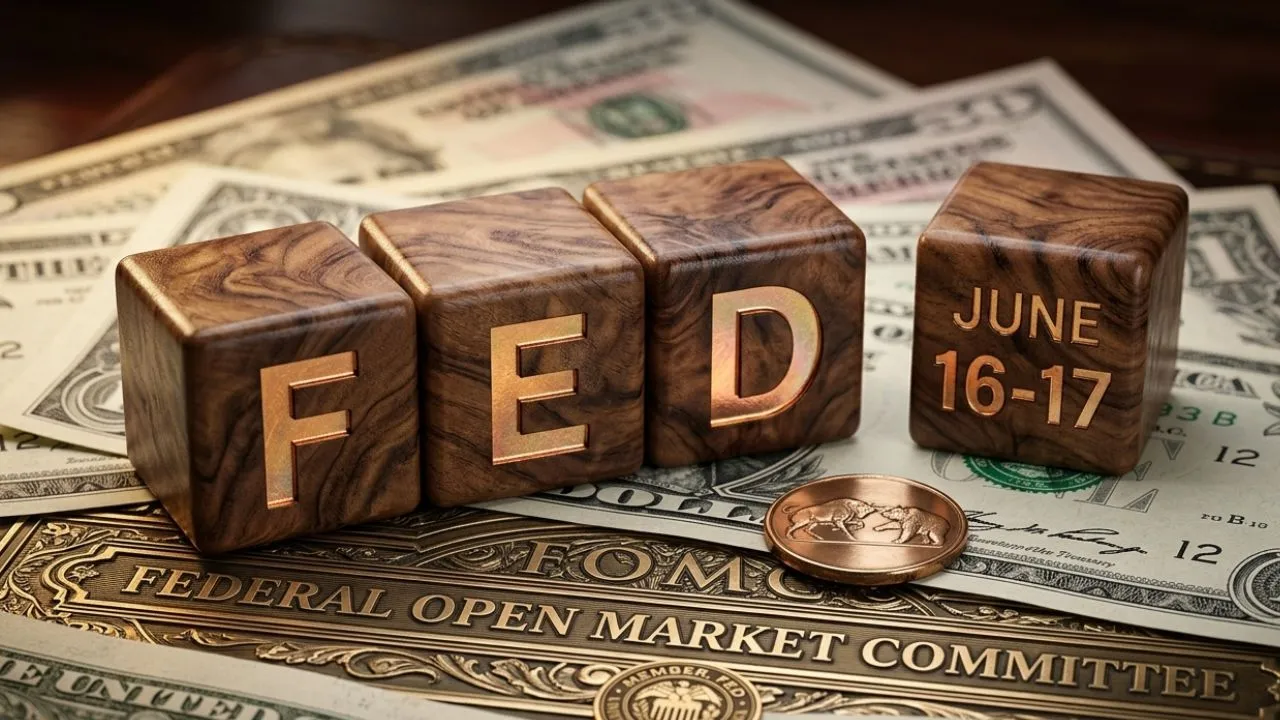
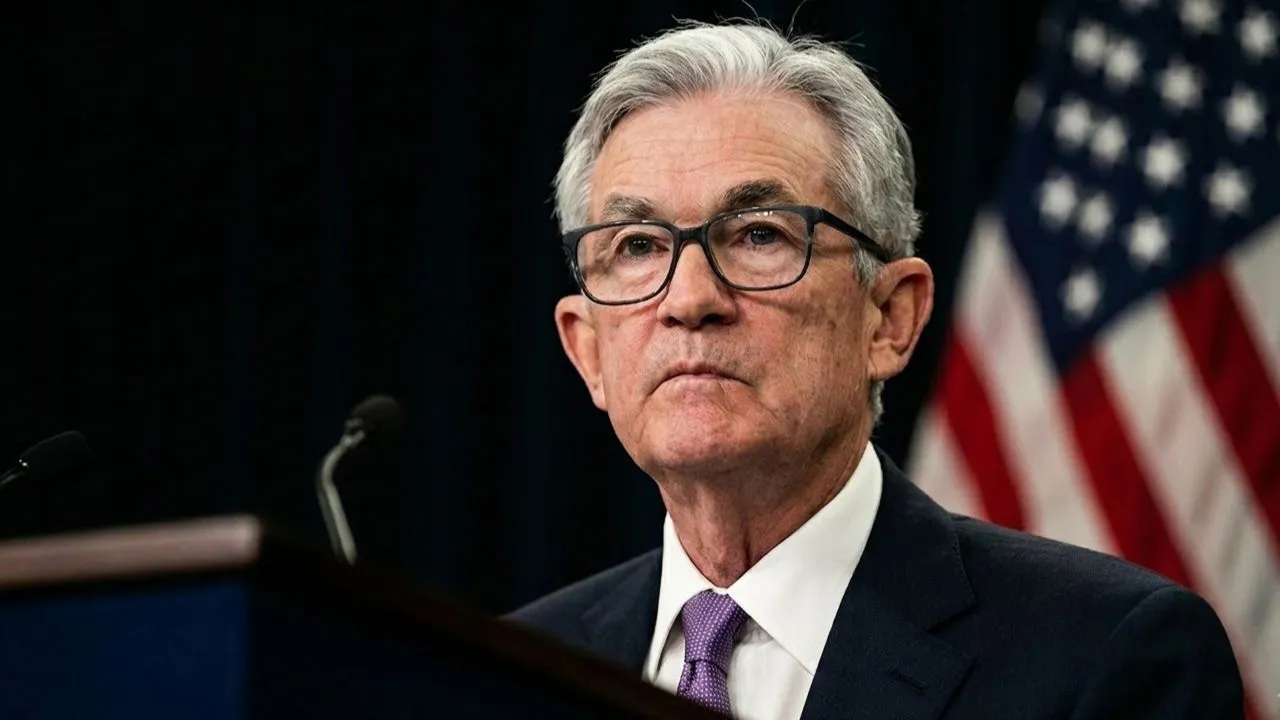
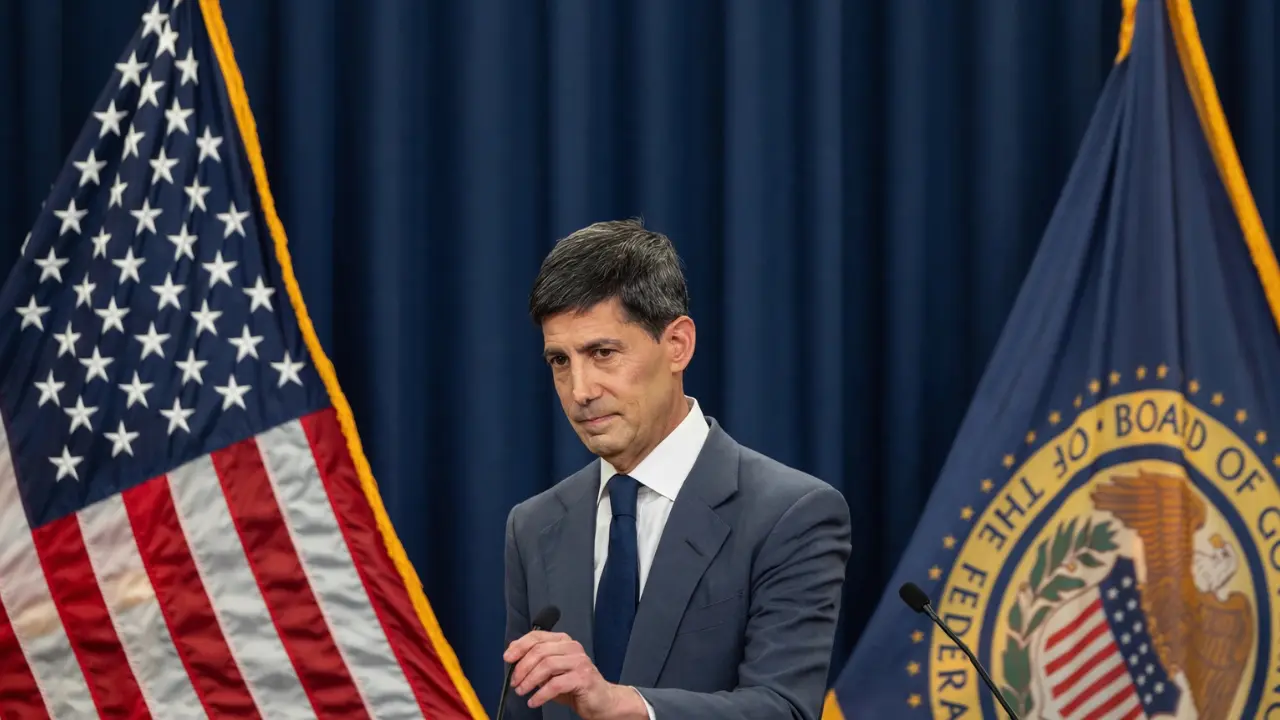
Kevin Warsh was confirmed as the 17th Federal Reserve chair on May 14, 2026 in a 54-45 Senate vote. His first FOMC meeting is June 16-17, 2026. The Warsh confirmation and what it changes is the starting point for understanding what happens next. This guide explains the permanent mechanics underneath that decision.
What the federal funds rate actually is and who sets it
The federal funds rate is the interest rate at which banks lend reserve balances to each other overnight, on an uncollateralized basis. The Federal Open Market Committee, which consists of 12 voting members including the seven Fed governors and five rotating regional bank presidents, sets the target range for this rate at its eight scheduled meetings each year, per the Federal Reserve meeting calendar.

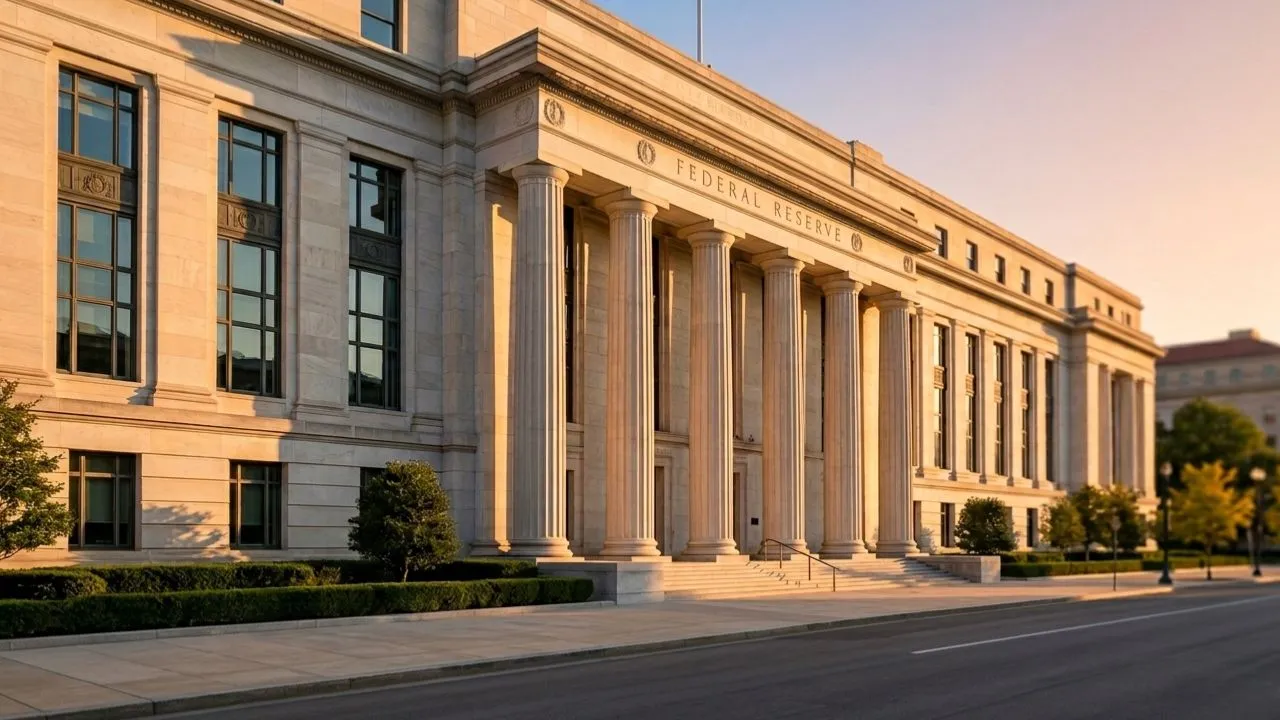
The FOMC does not directly set your savings rate or your mortgage rate. It sets the target for overnight bank-to-bank lending. Everything downstream from that single overnight rate is the transmission mechanism, the process by which one policy decision ripples through 4,000 commercial banks, thousands of credit unions, and eventually reaches the APY on your high-yield savings account and the quote on your 30-year fixed mortgage.
The U.S. money movement system guide traces the complete path from Federal Reserve action to consumer account in detail. The institutional mechanics matter because they explain why your bank does not change your savings rate on the same day the Fed votes. The transmission takes time, and the timing varies by account type.
How the Fed rate reaches your savings account in 14 to 30 days
When the FOMC votes to raise its target range, banks immediately face a higher cost for overnight borrowing from each other through the federal funds market. They also face a higher rate on reserves held at the Fed, called the interest on reserve balances rate, which the Board of Governors set at 3.65% effective April 30, 2026, per the official implementation note.
Banks that offer high-yield savings accounts compete for deposits. Those deposits give them a cheaper source of funding than borrowing overnight from other banks. When the overnight borrowing rate rises, the cost advantage of attracting deposits through higher APYs increases.
Competitive pressure causes banks to raise their deposit rates within 14 to 30 days of a Fed rate increase to retain existing deposits and attract new ones.
The transmission is not instantaneous because each bank’s internal pricing committee must calculate its new deposit cost structure, approve the rate change, update its systems, and communicate the change to customers. This internal process takes one to three weeks at most institutions. The bank posting times and deposit mechanics article explains how timing works inside individual institutions.
Online banks and fintech institutions tend to reprice faster than traditional brick-and-mortar banks, typically within seven to ten days of a Fed action. Traditional banks with large deposit bases and lower funding pressure often take the full 30 days.
Credit unions follow their own board-approval processes, which can add additional days. The practical result is that after a Fed rate hike, checking different institutions for the best APY in the two weeks following the decision is genuinely productive because not all banks move at the same speed.
How the Fed rate reaches mortgage rates before the vote even happens
Mortgage rates do not wait for the FOMC to vote. The 30-year fixed mortgage rate is priced primarily off the 10-year U.S. Treasury yield, which moves continuously based on bond market expectations of future Fed policy. The Federal Reserve H.15 Selected Interest Rates release publishes daily benchmark rates including Treasury yields that mortgage lenders use as pricing reference points.
When bond market participants conclude that the FOMC is likely to raise rates at a future meeting, they sell Treasury bonds, which pushes yields higher. Higher yields immediately translate to higher mortgage rates through the standard spread that lenders add above the Treasury benchmark.
This means mortgage rates can rise before a Fed rate hike and then stabilize or even fall slightly after the hike because the expectation was already priced in.
The CFPB explains the mortgage-Fed relationship through its consumer guide to interest rates. The practical implication for borrowers is that watching the 10-year Treasury yield daily in the weeks before a known FOMC meeting date, like June 16, gives a more accurate signal of where mortgage rates are going than waiting for the Fed announcement itself.
A 25 basis point increase in the federal funds rate typically translates to a 10 to 20 basis point increase in the 30-year fixed mortgage rate over the following two weeks. On a $400,000 loan at 7.00%, a 20 basis point rate increase raises the monthly payment by approximately $53 and the total interest cost over 30 years by approximately $19,000.
These are arithmetic outcomes of verified rate mechanics, not projections. The FRED mortgage rate historical data from the St. Louis Federal Reserve confirms the historical relationship between federal funds rate changes and mortgage rate movements across multiple rate cycles.
How CD rates price future Fed moves differently from savings accounts
Certificates of deposit are forward-looking instruments. A 12-month CD issued today is essentially a bet on where rates will be for the next 12 months. Banks price CDs using their own funding cost projections, which incorporate market expectations for Fed rate changes over the CD term. This is why CD rates sometimes move ahead of the Fed rather than behind it.
When markets expect a Fed rate hike at the next meeting, banks may raise their 6-month and 12-month CD rates before the FOMC votes because they want to lock in deposits at what they consider attractive terms before rate costs rise further. Conversely, when markets expect rate cuts, banks rush to lower CD rates before the Fed acts to avoid being locked into paying above-market rates.
The June 16 savings and CD strategy guide covers the specific tactical decisions for each account type in the current rate environment. With the federal funds rate at 3.5% to 3.75% and PPI running at 6.0% annually per BLS, the June 16 decision is genuinely uncertain and the CD timing decision is genuinely consequential.
The transmission lag: why your APY is lower than the Fed rate
One of the most common points of confusion for Americans comparing the federal funds rate to their savings APY is that the two numbers are not equal and were never designed to be.
The federal funds rate is an overnight interbank rate. Savings accounts are retail products with daily liquidity, overhead costs, FDIC insurance premiums, and profit margins built into their pricing.
The spread between the federal funds rate and the average national savings APY reflects all those costs. Per the FDIC National Rates and Rate Caps, the national average savings APY has historically tracked at 50 to 70% of the federal funds rate for traditional savings accounts and 80 to 95% for high-yield online accounts at competitive institutions.
When the federal funds rate rises from 3.5% to 3.75%, the high-yield savings market tends to respond with APY increases of 20 to 25 basis points rather than the full 25 basis point hike.
What Warsh’s June 16 decision means in this framework
Kevin Warsh’s first FOMC decision on June 16-17 operates through every mechanism described above. If he leads a vote to raise rates by 25 basis points, the federal funds target range moves to 3.75% to 4.00%.
Within 14 to 30 days, high-yield savings APYs will rise approximately 20 to 25 basis points at competitive online institutions. The 30-year fixed mortgage rate will likely rise an additional 10 to 15 basis points in the two weeks following the announcement. Six-month CD rates will move within days of the announcement as banks reprice their funding costs.
If Warsh holds rates steady, consumer rates hold near current levels. Markets currently assign meaningful probability to a hike, based on PPI at 6.0% annually and CPI at 3.8% annually per BLS. The FOMC minutes releasing May 20 at 2 PM ET contain the internal evidence that will clarify which direction June 16 is pointing.
What you should do now
- Check your current savings APY against competitive high-yield offerings. If your rate is below 4.00%, a June hike will make better options more available within 30 days.
- Review any adjustable-rate mortgage terms before June 16. Know your rate cap, your index, and your next adjustment date.
- Monitor the 10-year Treasury yield as the leading indicator for mortgage rate direction in the weeks approaching June 16.
- Use the Federal Reserve H.15 page to check current benchmark rates directly from the source rather than relying on bank marketing materials.
- Revisit CD maturities. Rolling CDs in July or August after a June hike could capture higher rates than rolling before the decision.