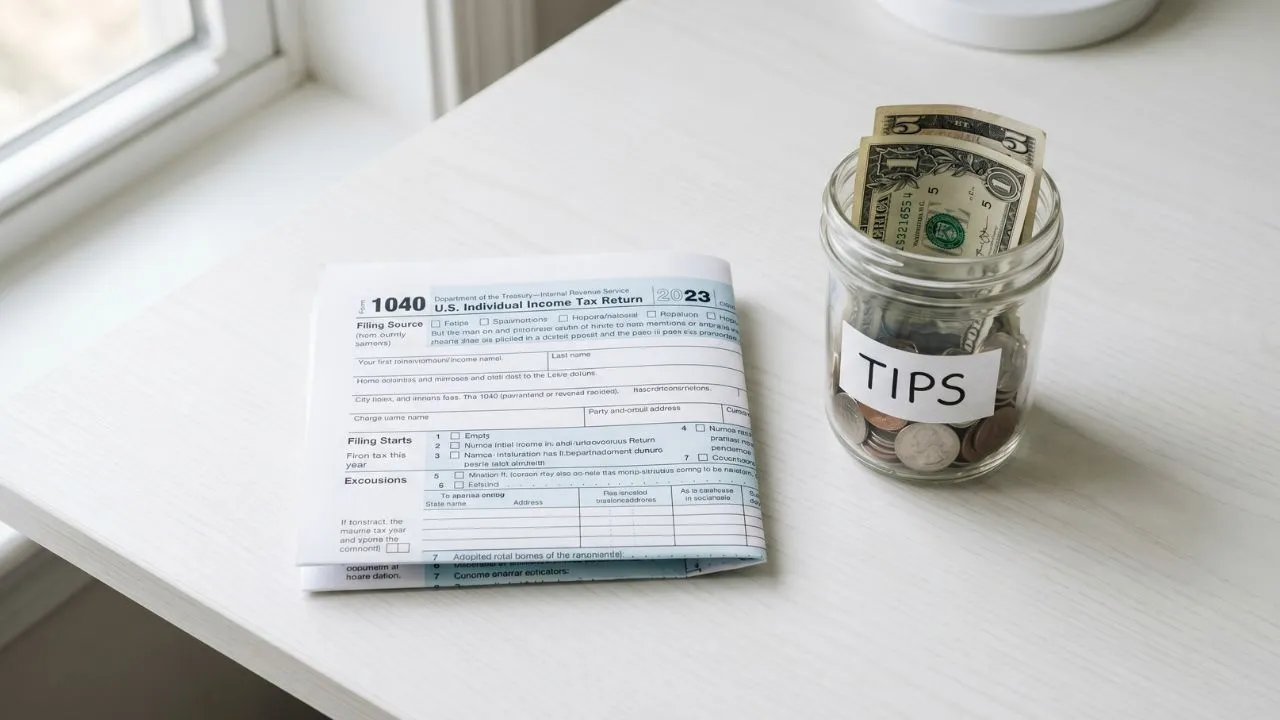


The IRS has officially confirmed the 2026 standard deduction amounts under Revenue Procedure 2025-32: $32,200 for married couples filing jointly, $16,100 for single filers, and $24,150 for heads of household.
These figures, set permanently by the One Big Beautiful Bill Act signed July 4, 2025, prevent an automatic rollback that would have dropped the deduction to roughly $8,300 for single filers. Roughly 90 percent of all U.S. taxpayers, approximately 133 million households, take the standard deduction rather than itemizing, making this the single most consequential number in the American tax code.
Every year, the IRS resets the baseline number that determines how much of your income is protected from federal tax before a single dollar of tax is calculated. That number is the standard deduction, and for tax year 2026, the One Big Beautiful Bill Act has permanently set it at the highest level in American history.
Before the OBBBA passed, the law was set to automatically revert. The Tax Cuts and Jobs Act of 2017 had doubled the standard deduction, but with a legal expiration date at the end of 2025. Without congressional action, the deduction would have returned to approximately $8,300 for single filers after inflation adjustment.
An estimated 62 percent of all U.S. tax filers would have faced a higher tax bill in 2026 if that expiration had been allowed to occur. The OBBBA prevented that outcome and went further, permanently locking in the higher baseline and then adding an additional inflation-indexed layer on top.
The Exact Numbers the IRS Confirmed for 2026
The IRS published these figures in Revenue Procedure 2025-32, the official guidance document controlling 2026 tax year parameters. The numbers are verified and sourced directly from the IRS newsroom at IRS.gov: Single filers and married filing separately: $16,100 – Married filing jointly and surviving spouses: $32,200 – Head of household: $24,150


For taxpayers age 65 or older, the OBBBA added a separate $6,000 Senior Bonus Deduction on top of these base amounts, available through 2028. A single taxpayer over 65 can stack the base $16,100, an existing additional senior amount, and the $6,000 bonus. A married couple where both spouses are 65 or older can access both bonus amounts simultaneously.
The increase from 2025 to 2026 is $700 for joint filers and $350 for single filers, reflecting the standard annual inflation adjustment built into the law.
How the Standard Deduction Actually Reduces Your Tax Bill
The standard deduction does not give you money, it removes income from the calculation entirely. Here is the practical math: if you are a single filer earning $60,000 in wages in 2026, you subtract $16,100 from that figure before the IRS begins computing what you owe.
Federal tax is assessed only on the remaining $43,900, not on the full $60,000. At a 22 percent marginal rate, that $16,100 deduction shields $3,542 from federal taxation.
For a married couple earning $90,000 combined, the $32,200 joint deduction means the IRS taxes only $57,800 of their income. The tax savings compared to the pre-OBBBA expiration baseline, where the joint deduction would have reverted to roughly $16,600, amounts to more than $3,400 in additional tax exposure that the OBBBA permanently eliminated.
When the IRS processes your 2026 tax return (filed in early 2027), the Individual Master File, the IRS’s core taxpayer database, applies the standard deduction as the first calculation step before any credits, brackets, or other offsets are applied.
The Bureau of the Fiscal Service at the U.S. Treasury then constructs the actual refund payment file and routes it through the Federal Reserve’s ACH network to your bank account.
This is why the IRS refund timeline on a 2026 return filed in early 2027 will reflect the full benefit of the higher deduction. For most filers who had correct withholding throughout the year, the deduction’s main effect is not a larger refund, it is a lower year-round tax burden baked into their paycheck withholding.
The SALT Cap, Tips, Overtime, and What Changed Beyond the Base Deduction
The OBBBA did not stop at the standard deduction. For tax year 2026, several additional provisions now affect how families prepare their returns.
The State and Local Tax (SALT) deduction cap rose from $10,000 to $40,000 for 2026, indexed at 1 percent annually. This change primarily affects taxpayers in high-tax states like New York, California, and New Jersey who itemize rather than taking the standard deduction.
For service industry workers and hourly employees, the law allows a deduction for qualified tips up to $25,000 and qualified overtime up to $12,500 for single filers ($25,000 for joint filers). These are structured as deductions, not refundable credits. The no tax on tips provision is available for tax years 2025 through 2028.
Taxpayers who itemize should also note that the OBBBA capped the tax value of itemized deductions at 35 cents per dollar for those in the top 37 percent bracket, a constraint that affects single filers earning above $640,600 and joint filers above $768,700.
For most Americans, none of those itemizing provisions matter. Approximately 90 percent of all filers will simply take the standard deduction and never engage with the SALT cap, the charitable deduction changes, or the miscellaneous expense eliminations at all.
What This Means
The standard deduction confirmed by the IRS for 2026 is the largest single tax relief mechanism available to the average American household.
What You Should Do Now
- Verify your 2026 withholding using the IRS Tax Withholding Estimator. If your employer is still withholding based on 2025 parameters, your paycheck may already reflect the right amount, but checking confirms it.
- If you are 65 or older, track the $6,000 Senior Bonus Deduction carefully, as it is scheduled to expire after 2028 unless Congress acts to extend it.
- Service workers: keep tip documentation now. The no tax on tips deduction requires records of qualified tip income separate from regular wages on your W-2.
- If your household pays significant state and local taxes and you have historically itemized, recalculate whether the new $40,000 SALT cap changes your optimal strategy for 2026.
- Check your IRS refund status for any pending 2025 returns at IRS.gov/refunds before planning around your 2026 filing.