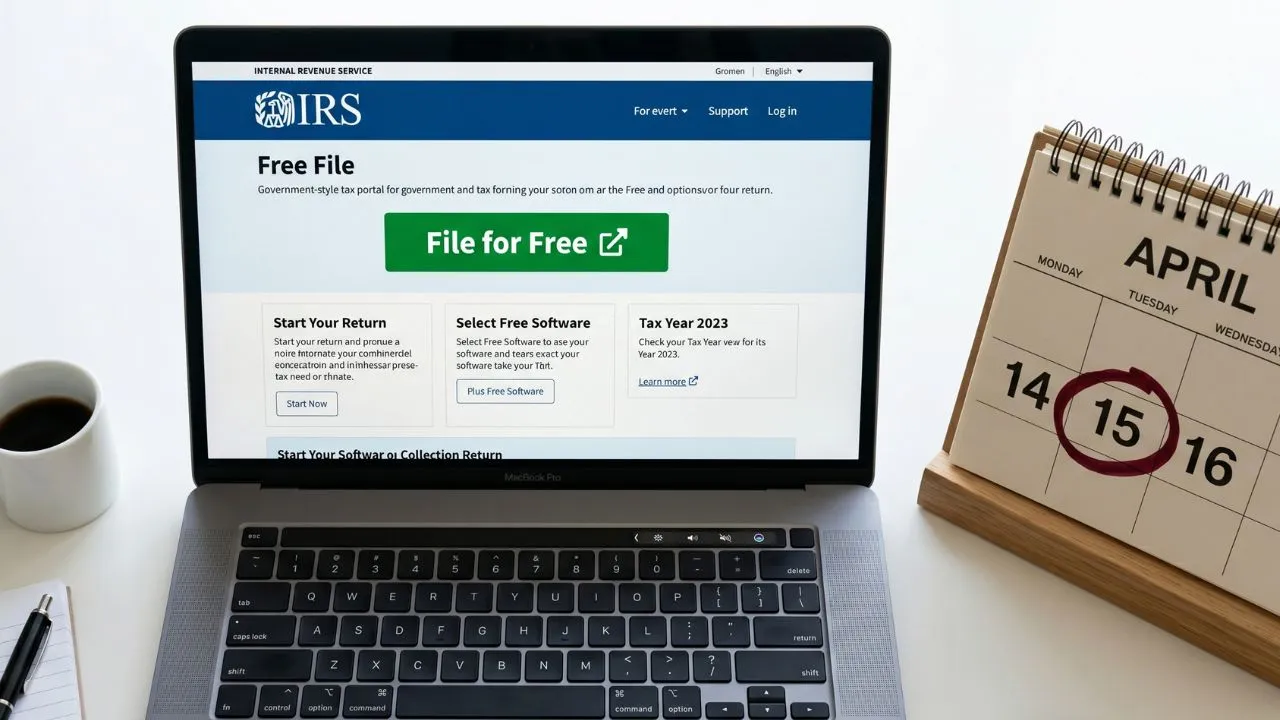


Updated: June 24, 2026 – IRS Free File 2026 lets eligible taxpayers prepare and submit their federal return at no cost through the IRS’s official partner software network. If your adjusted gross income was $84,000 or below in tax year 2025, you qualify for guided, full-featured tax preparation software through IRS Free File at zero charge.
The IRS estimates that more than 100 million American filers meet the income threshold but fewer than 3% use the program. IRS Free File is not a simplified version of commercial software. The partner programs are the same guided filing products used by paying customers.
The IRS Free File Alliance, a group of commercial tax software companies operating under a formal agreement with the IRS, provides the free access tier specifically for the income-eligible population. You file directly through the partner’s platform. Your return goes to the IRS exactly as it would through a paid filing.
Who Qualifies for Free File
The income threshold for IRS Free File in tax year 2025, filed in 2026, is an adjusted gross income of $84,000 or below. Adjusted gross income is your total income minus above-the-line deductions such as student loan interest, IRA contributions, and self-employment tax.
It is the number on Line 11 of your Form 1040 before the standard or itemized deduction is applied. If your AGI is $84,001 or higher, you do not qualify for the guided Free File software, but you do qualify for IRS Free File Fillable Forms, which is available to all filers regardless of income.
Age, filing status, and state of residence do not affect federal Free File eligibility. A married couple filing jointly qualifies if their combined AGI is $84,000 or below. A single filer at age 70 with $84,000 in Social Security and pension income qualifies.
A gig worker with $60,000 in self-employment income qualifies. What determines access is the AGI number, not the complexity of the return. IRS Free File partner software supports Schedule C for self-employment income, Schedule D for capital gains, and most common tax situations.
The IRS refund schedule 2026 shows that e-filed returns with direct deposit receive refunds in 21 days or fewer in the vast majority of cases. Filing through Free File produces the same e-filing transmission and the same refund timeline as filing through a paid commercial service. The IRS does not process Free File returns differently or more slowly.
How to Access Free File
Access IRS Free File only through the official portal at irs.gov/freefile. Do not search for Free File through a general internet search and click the first result. Commercial tax preparation companies have historically used search advertising to intercept filers searching for free filing options and redirect them to paid products.
The IRS portal is the only entry point that guarantees access to the genuinely free tier. When you arrive at irs.gov, you use the Browse All Offers tool to see which partner software programs you are eligible for based on your income, age, and state. Each partner sets its own eligibility rules within the IRS income ceiling. Some partners restrict free filing to filers below $73,000. Some offer free state returns in addition to the free federal return. Others charge separately for state filing.
The most reliable path is to use the IRS’s lookup tool, enter your AGI, age, and state, and review which partners cover your situation completely. Select a partner that covers both your federal and state return if your state has an income tax. Once you click through from the IRS portal to a partner’s platform, you are in the free filing environment.
If a partner attempts to upsell you to a paid tier during the filing process, you have the right to complete your return in the free tier by returning to the original IRS entry link.
For filers above the $84,000 AGI threshold, IRS Free File Fillable Forms at IRS Free File Fillable Forms, provides free electronic filing using blank forms you complete yourself. There is no guided interview process.
You enter numbers directly into the forms, which calculate totals automatically. Fillable Forms is appropriate for filers comfortable with the tax code who do not need software guidance. It covers all federal forms but does not include state filing.
The Step-by-Step Filing Process
Gather your documents before opening the software. You need your 2025 Form W-2 from every employer, Form 1099 for freelance income, interest, dividends, or retirement distributions, your prior-year AGI from your 2024 return to verify your identity during e-filing, and your Social Security number and the Social Security numbers of any dependents you claim.
Navigate to IRS Free File and select Browse All Offers. Enter your estimated AGI for 2025 to filter partners. Select a partner that covers your situation and click their IRS-linked entry point to enter the free environment.
The partner software will walk you through an interview-style process, asking questions about your filing status, income sources, deductions, and credits. The software calculates your tax liability or refund amount in real time as you enter information.
When you reach the credits section, review eligibility for the child tax credit eligibility rules and the Earned Income Tax Credit. The IRS earned income tax credit maximum for 2025 is $8,046 for a filer with three or more qualifying children. These are the two largest credits for working families, and the Free File software calculates both automatically based on your answers. Do not skip the credits section.
After completing the interview, review your return. Confirm your direct deposit information. Provide your bank’s nine-digit routing number and your account number exactly as they appear on a check or your bank’s account settings page.
A routing number error or account number error causes the IRS to issue a paper check instead of a direct deposit, adding two to six weeks to your refund timeline. The IRS refund wrong bank account process is slow and requires a formal trace request once the deposit fails.
Submit your return electronically. The IRS will send an email acknowledgment within 24 to 48 hours confirming your return was accepted or rejected. A rejection is almost always a data entry error, most commonly a mismatched prior-year AGI or Social Security number. Correct the flagged field and resubmit.
After You File
After your return is accepted, track your refund through the IRS Where’s My Refund tool at irs.gov/refunds or the IRS2Go mobile app. The tool updates once per day, typically overnight. It shows three statuses: Return Received, Refund Approved, and Refund Sent. When the status changes to Refund Sent, the IRS has transmitted the payment to your bank through the federal payments pipeline. Most banks post the deposit within one to five business days of that transmission date.
If your refund does not arrive within 21 days of e-filing acceptance, the IRS may be reviewing your return. The most common reasons for delays beyond 21 days include errors in the return, incomplete information, identity verification holds, and amended returns filed after the original submission. IRS Code 570 on your transcript indicates an additional action is pending and is one of the most common hold codes seen after Free File submissions that trigger automated review.
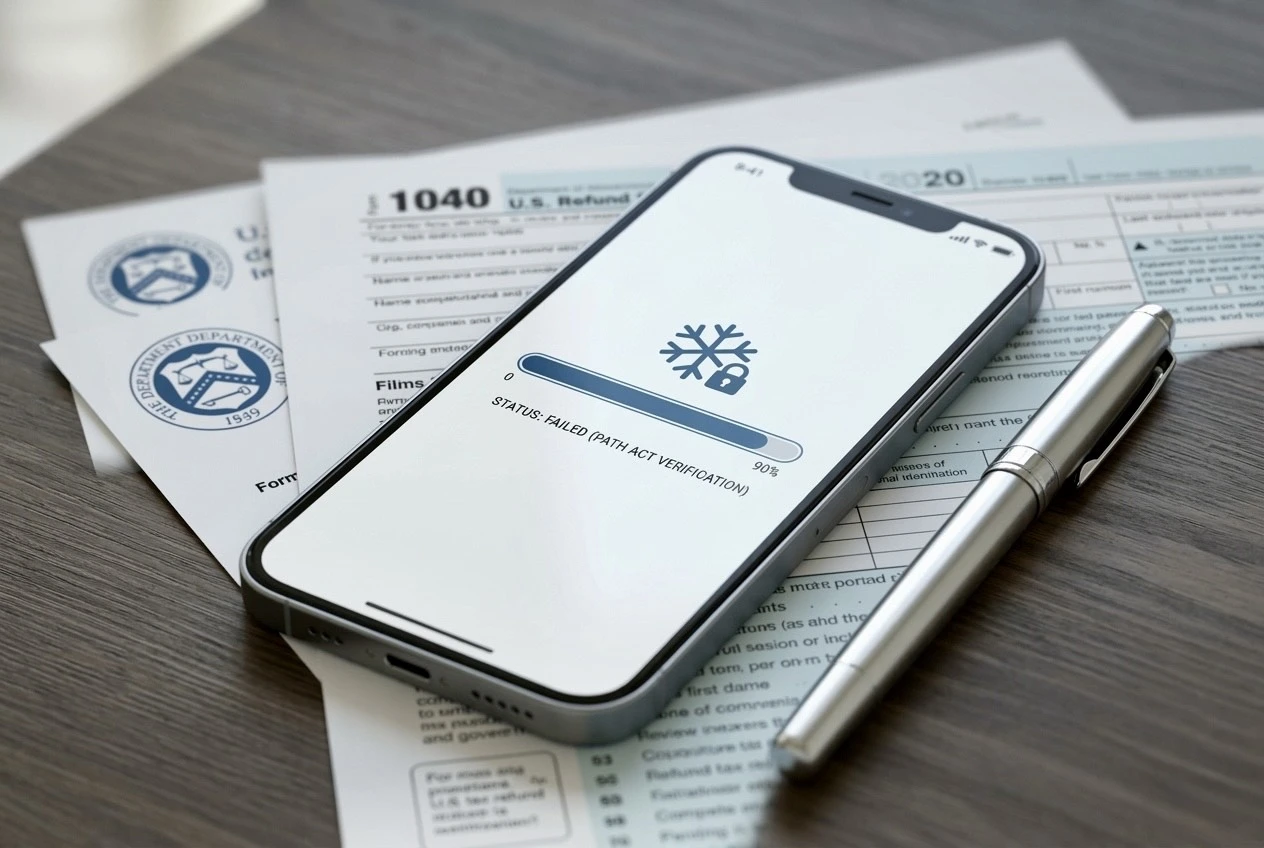
For returns involving the Earned Income Tax Credit or the Additional Child Tax Credit, the PATH Act requires the IRS to hold refunds until at least February 15. If you filed in late January and claimed either credit, this is not a problem with your return. It is a statutory hold that applies universally to EITC and ACTC refunds regardless of accuracy. Free File submitters are not exempt from the PATH Act timeline.
The IRS 21 day refund clock begins on the date the IRS accepts your return, not the date you submitted it. If the IRS takes 48 hours to acknowledge receipt, your 21-day window starts at acceptance.
Common Free File Questions
Can I use IRS Free File if I am self-employed?
Yes. Free File partners support Schedule C and self-employment tax calculations. Your AGI as a self-employed filer is your net self-employment income after the self-employment tax deduction, reduced by any other above-the-line deductions you qualify for.
Does Free File support both federal and state returns for free?
It depends on the partner. Some partners include free state filing in states that participate. Some charge for state filing separately. Confirm before selecting a partner by reading each partner’s eligibility summary on the IRS Free File page.
Is IRS Free File the same as IRS Direct File?
No. IRS Direct File was a separate pilot program the IRS launched in 2024 in limited states. IRS Free File is the long-standing partner network that has been available since 2003. As of the 2026 filing season, check irs.gov/directfile for the current status of the Direct File program.
Can I start on Free File and switch to paid software?
Yes, but if you switch, your data does not transfer automatically between platforms. If you abandon a Free File return partway through and switch to commercial software, you will need to re-enter your information.
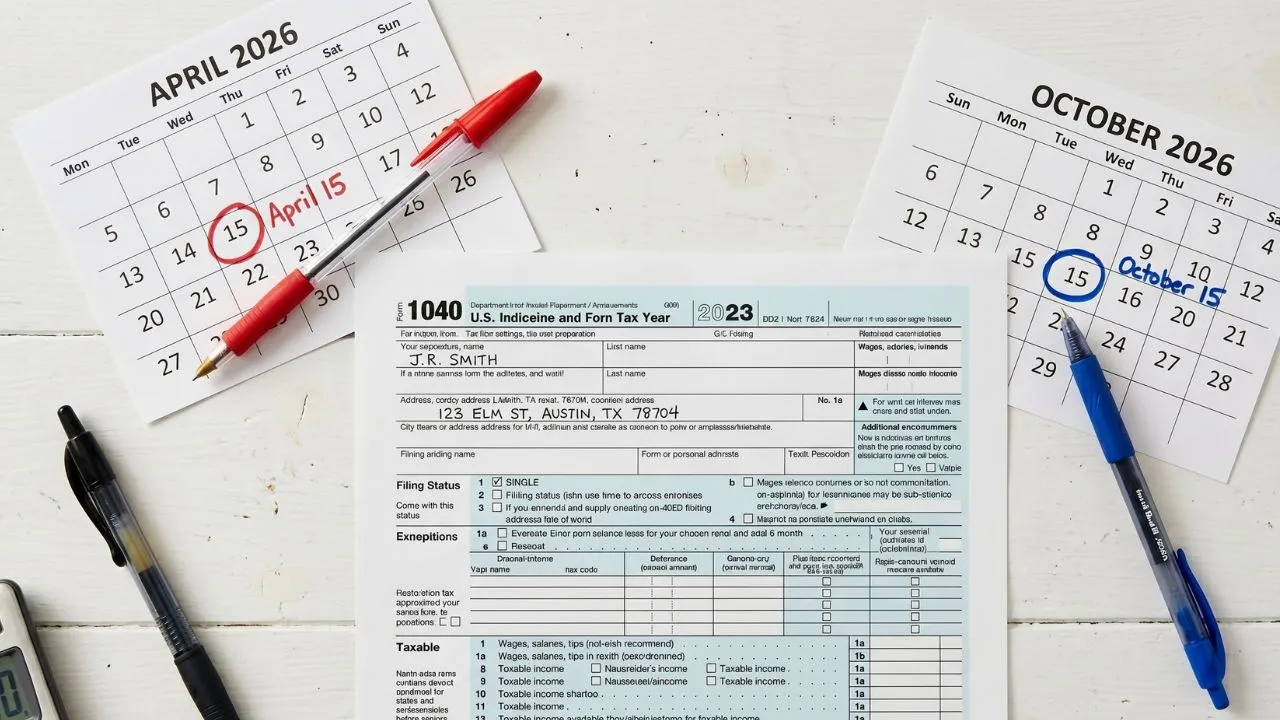
What if I already missed the IRS filing season April 15 deadline? Free File remains available through October 15 for filers who submitted Form 4868 requesting an extension. An extension gives you more time to file but does not extend the time to pay any taxes owed.
What You Should Do Now
- Confirm your 2025 adjusted gross income using your pay stubs, tax documents, or last year’s Form 1040 Line 11 to verify that you are at or below the $84,000 eligibility threshold.
- Navigate directly to IRS Free File. Do not search for Free File through a commercial search engine and click on sponsored results.
- Use the Browse All Offers tool to identify which partner program supports your income level, filing status, state requirements, and credit eligibility.
- Gather your W-2 forms, 1099s, prior-year AGI, and bank routing and account numbers before opening the filing software.
- Verify your direct deposit banking information carefully before submitting your return. A routing number error can delay your refund for weeks.
- Track your IRS Free File refund beginning 24 hours after your return has been accepted by the IRS.