
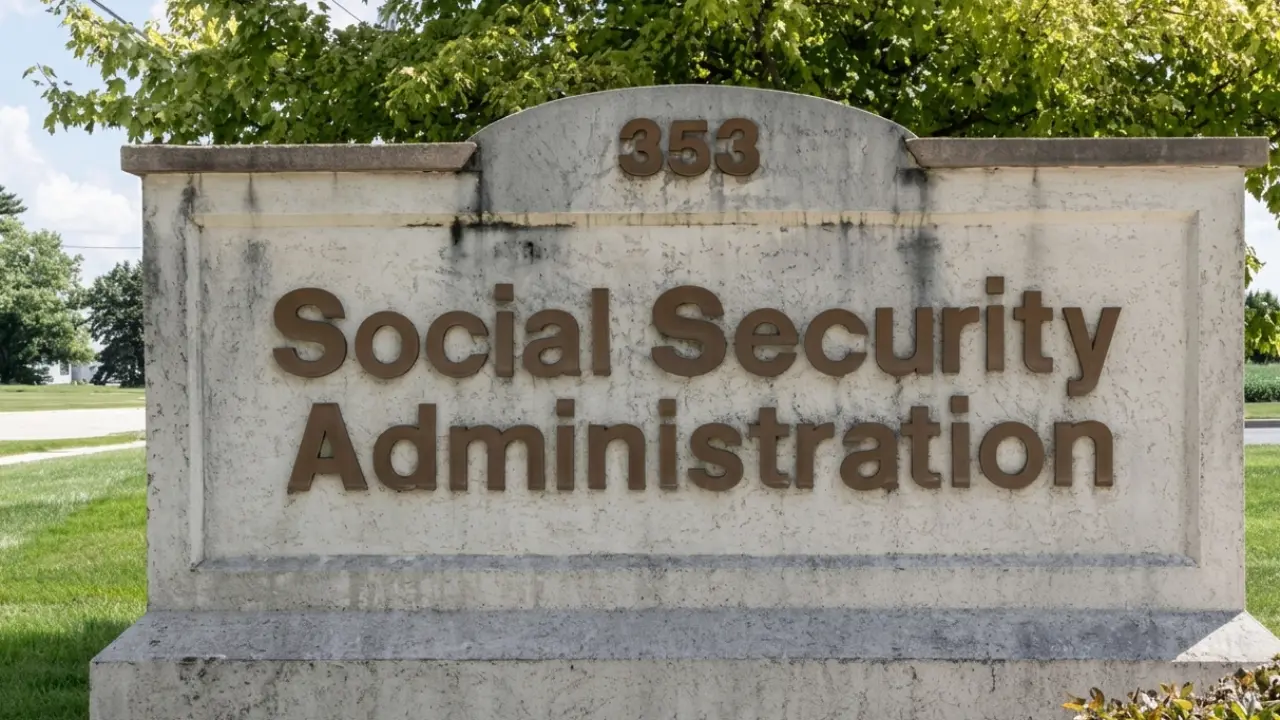
The Social Security Board of Trustees released its 2026 annual report on June 9, confirming the retirement trust fund is now projected to run dry in the fourth quarter of 2032, one quarter earlier than last year’s estimate.
The Congressional Budget Office reached a similar conclusion in its February 2026 update. No legislation addressing the shortfall has passed Congress as of this writing.
Social Security cuts explained
Social Security’s retirement trust fund is projected to be depleted in late 2032, and if Congress takes no action before then, every beneficiary would see an automatic cut of roughly 22 percent to their monthly check.
That is the central finding of the 2026 trustees report, which found the trust fund for Old-Age and Survivors Insurance depleted in 2032, with current and future beneficiaries seeing benefits cut by 22% absent congressional action. This is not a prediction of a policy choice. It is a mechanical consequence of the trust fund’s structure if nothing changes.
It helps to understand what “depletion” actually means, because it does not mean Social Security disappears. Trust fund reserves being exhausted means incoming payroll-tax revenues become the primary source of funding, and benefits continue being paid, though full scheduled benefits could not be maintained indefinitely without legislative action.
In plain terms, the checks keep arriving. They would simply be smaller than what current law promises, sized to match what payroll taxes alone can cover in that year.
The trust fund’s math has actually worsened over the past year, not just its depletion date. The trustees’ estimate of the program’s 75-year funding shortfall grew 16 percent since last year, from 3.82 percent of taxable payroll to 4.42 percent.
That figure matters more than the single depletion date, because it reflects how much larger the eventual fix will need to be the longer Congress waits.
Why the timeline moved up
Two forces pushed the depletion date earlier this year. The chief actuary at the Social Security Administration noted that the 2025 tax law signed by President Trump would have material effects on the trust funds because it changes how Social Security benefits are taxed at the federal level, reducing incoming revenue.
Separately, the Congressional Budget Office’s projection reflects an updated inflation outlook that could push COLA increases higher in coming years, which raises the cost side of the ledger at the same time revenue is falling.
Retirees currently receive an average benefit of roughly $2,071 a month, based on figures the SSA published earlier this year. A 22 percent reduction on that average would translate to several hundred dollars a month disappearing from a typical retiree’s budget. Married couples, who often depend on two benefit checks, would feel a proportionally larger dollar loss.
Research from the nonpartisan Committee for a Responsible Federal Budget found average monthly benefit cuts near $500, with losses higher than that in 29 states.
This is worth repeating precisely, because precision is the whole point of separating fact from speculation here: this is not something happening today, and it is not guaranteed to happen at all. It is what current law dictates will happen in 2032 if Congress passes no legislation between now and then. Congress has closed similar gaps before, most recently in 1983, and could do so again.
What Congress is actually debating
Multiple proposals are on the table, though none has advanced to a floor vote as of this writing. Lawmakers recently reintroduced the Social Security 2100 Act, which would raise benefits by 2 percent, adjust the minimum benefit, and change the inflation measure used to calculate annual increases.
Separately, the WEP GPO repeal, passed as the Social Security Fairness Act, already restored full benefits to public-sector retirees who previously had them reduced, though that change added cost to the same trust fund now facing depletion.
None of these proposals, individually or combined, has been scored as fully closing the long-term shortfall. That is the practical meaning of “legislative gridlock” in this story: several ideas exist, none commands enough votes, and the clock keeps running regardless.
What retirees can watch for
The most useful thing a current or near-future retiree can do right now is separate what is confirmed from what is projected. The 2027 COLA estimate currently sits at 3.8 percent according to the Senior Citizens League, and that figure is unrelated to the 2032 depletion question.
It affects how large your check is next year. Following the 2027 COLA estimate is a separate, shorter-term tracking exercise from watching the trust fund timeline itself.
For anyone within roughly five to ten years of claiming, it is reasonable to build a household budget around two scenarios rather than one: current scheduled benefits, and a reduced benefit roughly 20 percent lower starting in the early 2030s.
This does not require panic or an immediate change in claiming strategy. It requires the same kind of contingency planning a household would apply to any long-range, currently-projected but not-yet-certain expense.
Anyone who wants to see exactly how the numbers were calculated can read the trust fund projection directly, or go straight to the source document itself, the 2026 Trustees Report, which lays out the actuarial assumptions behind every figure cited above.
This kind of federal accounting sits inside the broader system of how money actually moves through Washington and into household bank accounts, a process Investozora maps in detail in its money movement system article.
Households that are also reassessing where they live in retirement should know that state tax treatment of Social Security benefits varies significantly, which we cover separately in our piece on states taxing benefits.
And because trust fund solvency and Federal Reserve policy are more connected than they appear, readers following this story should also see how Fed rate impact on Treasury yields feeds back into the government’s own borrowing costs.
What retirees should do now
The most productive response to this story is a calm one. Retirees and near-retirees should request their most recent Social Security statement directly from the SSA to confirm their own projected benefit, review their household budget against a scenario where that benefit is 20 to 22 percent lower starting in 2032.
And avoid making any irreversible claiming decision based on this projection alone, since Congress has more than six years to act before the depletion date arrives. Anyone with a financial advisor should raise this specific scenario in their next planning conversation rather than assuming it will resolve itself.
Methodology: This article combines figures from the 2026 OASDI Trustees Report published by the Social Security Administration and Treasury Department, the Congressional Budget Office’s February 2026 baseline, Congressional Research Service analysis, and Committee for a Responsible Federal Budget modeling of benefit-cut scenarios. All figures were independently reviewed against these primary sources as of publication.