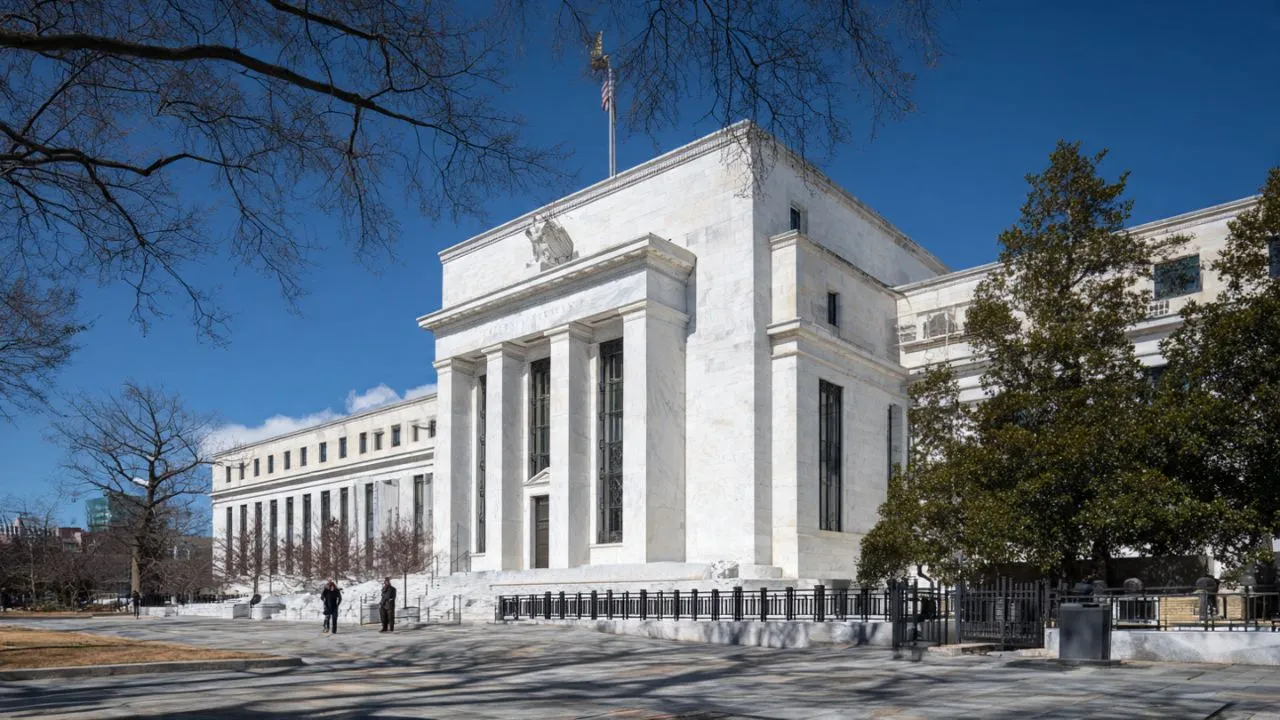
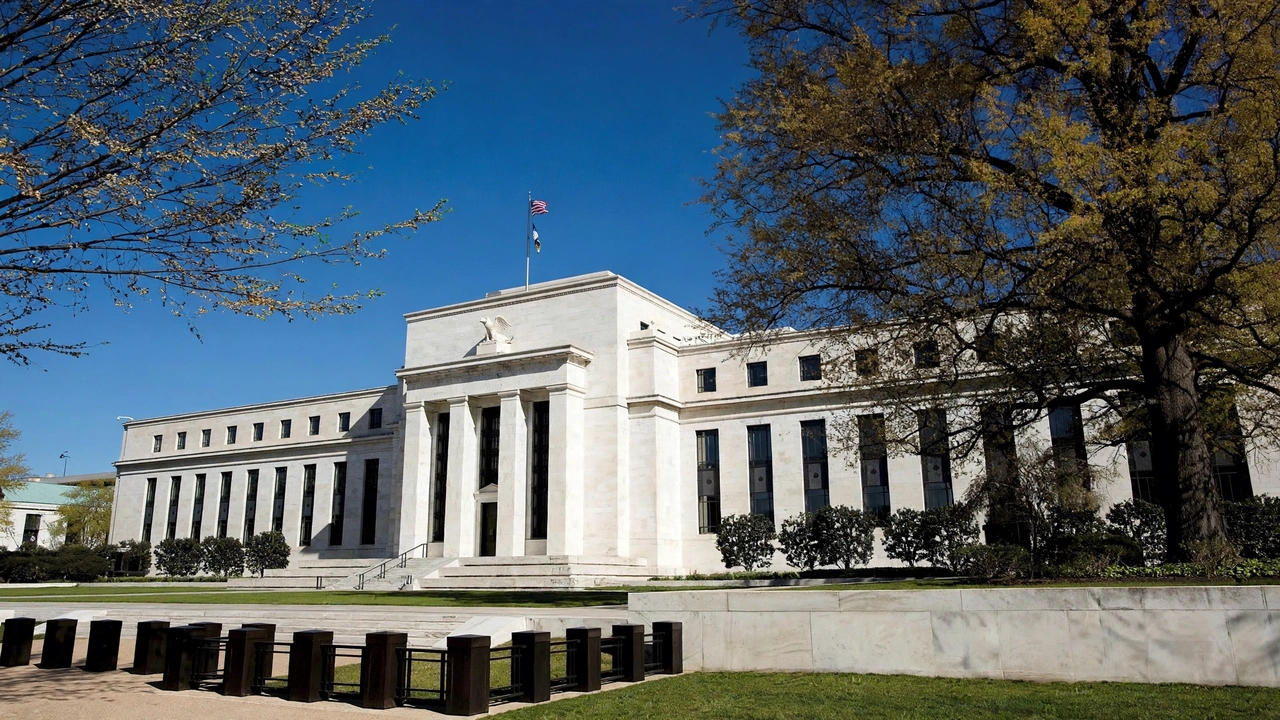
The System Open Market Account, usually called SOMA, is the Federal Reserve System’s main portfolio of securities and certain other assets used in monetary policy operations.
The Federal Open Market Committee sets policy, while the Federal Reserve Bank of New York’s Open Market Trading Desk carries out FOMC instructions involving SOMA. In simple terms, SOMA is the portfolio through which many of the Fed’s balance-sheet decisions become real market transactions.
Understanding SOMA also helps explain the difference between the Federal Reserve’s policy decisions, its balance sheet, quantitative easing, quantitative tightening, reserve management, and day-to-day market operations.
Investozora’s broader Federal Reserve policy guide explains the policy system as a whole, while SOMA is the part focused mainly on the portfolio and operations used to carry out those decisions.
What SOMA Means
SOMA stands for System Open Market Account. According to the New York Fed’s official SOMA holdings description, the account contains dollar-denominated assets acquired through open market operations. It also contains the Federal Reserve System’s foreign currency reserves, which are held in investments denominated in euros and Japanese yen.
For most readers, however, the important part of SOMA is its large portfolio of U.S. Treasury securities and agency securities. Those assets sit on the asset side of the Federal Reserve’s balance sheet.
The New York Fed says SOMA securities serve several purposes. They can support the management of reserve balances, help the Federal Reserve pursue its macroeconomic objectives, and provide collateral for currency in circulation and other Federal Reserve liabilities.
This makes SOMA different from a normal investment portfolio. The Federal Reserve is not buying securities simply to earn a return. The portfolio exists mainly because of the Fed’s responsibilities for monetary policy, reserve management, currency, and financial-market operations.
Readers who want to understand where SOMA fits into the broader institution can use Investozora’s Federal Reserve balance sheet explainer, which looks at both the assets the Fed holds and the liabilities created against them.
Who Controls SOMA
Three parts of the Federal Reserve system have different roles in SOMA management. The Federal Open Market Committee makes the key monetary policy decisions. It determines the stance of policy and gives operating instructions to the Open Market Trading Desk at the Federal Reserve Bank of New York.
The New York Fed’s monetary policy implementation guide explains that the Desk then carries out those directives in financial markets. The Federal Reserve Bank of New York is therefore the operating arm, not an independent policymaker in this process. The FOMC has selected the New York Fed as the Reserve Bank responsible for executing transactions for SOMA.
The Open Market Trading Desk conducts the actual operations. Depending on the FOMC directive, those operations can include buying Treasury securities, rolling over maturing securities, reinvesting principal payments, conducting repo or reverse repo operations, or carrying out other authorized transactions.
The distinction matters:
- FOMC: decides policy.
- New York Fed: implements the FOMC’s market instructions.
- Open Market Trading Desk: executes transactions.
- SOMA: holds the securities and other assets connected with those operations.
SOMA itself does not “decide” monetary policy.
What SOMA Holds
SOMA’s domestic securities portfolio is dominated by U.S. Treasury securities and agency mortgage-backed securities. The New York Fed’s SOMA holdings database reported approximately $6.369 trillion of domestic securities as of August 19, 2026. The reported holdings included:
- about $537.8 billion of Treasury bills;
- about $3.602 trillion of Treasury notes and bonds;
- about $20.0 billion of Treasury floating-rate notes;
- about $276.1 billion of Treasury Inflation-Protected Securities;
- about $2.3 billion of federal agency securities;
- about $1.923 trillion of agency mortgage-backed securities; and
- about $7.5 billion of agency commercial mortgage-backed securities.
Using those official figures, Treasury securities represented about 69.6% of the reported domestic SOMA portfolio and agency-related securities represented about 30.4%. Those percentages are Investozora calculations from the New York Fed’s published holdings and may change as the portfolio changes.
The holdings database is updated regularly, so the exact portfolio size should not be treated as permanent. The more durable point is that Treasury securities make up the majority of SOMA, with a very large agency MBS position remaining from earlier Federal Reserve asset-purchase programs.
Investozora’s dedicated Federal Reserve MBS holdings guide explains why mortgage-backed securities became such a large part of the Fed’s portfolio and how those holdings differ from Treasury securities.
How Operations Work
Open market operations are transactions conducted to implement FOMC policy. The New York Fed’s Treasury securities operating framework explains that the Desk may buy or sell Treasury securities for SOMA as needed to carry out FOMC directives. The Desk can also roll over maturing Treasury holdings at Treasury auctions.
An outright purchase normally adds securities to SOMA. When the transaction settles, it also affects Federal Reserve liabilities, including reserve balances in the banking system. A sale works in the opposite direction: SOMA securities decline and reserves can be drained from the system.
Not every SOMA-related transaction represents a major change in monetary policy. Some operations are conducted simply to maintain reserves at an appropriate level, reinvest maturing securities, maintain operational readiness, or support smooth market functioning. That distinction has become especially important under the Fed’s ample-reserves operating framework.
SOMA And Reserves
The modern Federal Reserve does not manage the federal funds rate mainly by making small daily adjustments to the supply of reserves as it did under the older scarce-reserves system.
Instead, the banking system operates with an ample quantity of reserves. The Federal Reserve relies heavily on administered interest rates, especially interest on reserve balances, or IORB, along with standing market facilities to keep overnight rates within the FOMC’s target range.
The New York Fed explains in its monetary policy implementation framework that changes in SOMA can still be important because the size of the balance sheet affects the supply of reserves. This means SOMA and interest-rate policy work together rather than acting as interchangeable tools.
For example, the FOMC may leave its federal funds target range unchanged while directing the Desk to buy Treasury bills to maintain an ample level of reserves. Such purchases can increase SOMA holdings without meaning that the Fed has launched a new quantitative easing program. That difference is critical when interpreting Federal Reserve headlines.
Reserve Purchases Explained
Reserve management purchases are designed primarily to maintain enough reserves for the Federal Reserve’s operating framework to function effectively.
The FOMC’s July 2026 implementation instructions directed the Desk, when appropriate, to increase SOMA securities holdings through Treasury bill purchases and, if necessary, purchases of other Treasury securities with remaining maturities of three years or less in order to maintain an ample level of reserves.
The New York Fed further explains that the size of monthly reserve management purchases is based on projected reserve demand and supply together with money-market conditions. These purchases should not automatically be described as quantitative easing.
The purpose matters. Reserve management purchases are aimed at maintaining the operating supply of reserves. Quantitative easing is normally intended to provide additional monetary accommodation by putting downward pressure on longer-term interest rates and broader financial conditions.
Investozora’s quantitative easing explainer goes deeper into how large-scale asset purchases are used when the Fed intentionally wants to ease financial conditions.
QE And SOMA
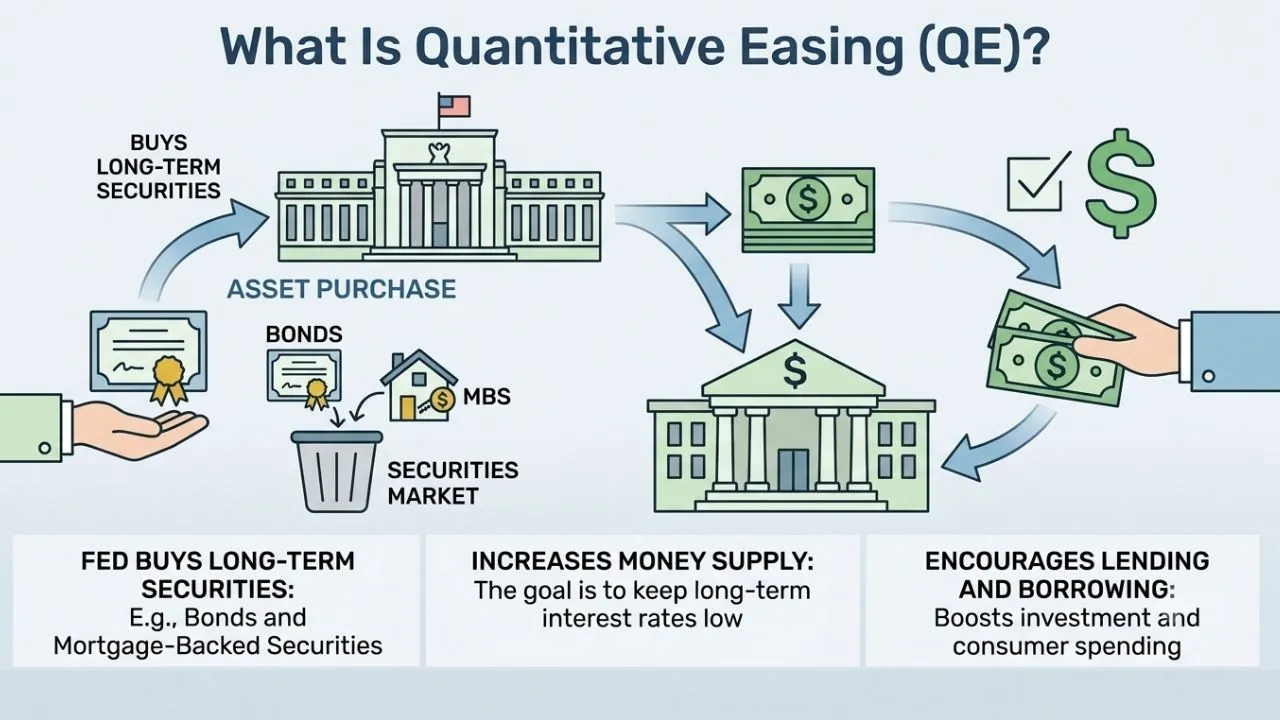
Quantitative easing can cause SOMA to expand sharply because the Federal Reserve purchases large quantities of securities. When the Fed buys Treasury securities or agency MBS under a large-scale asset purchase program, those assets are added to SOMA. The corresponding expansion in the Federal Reserve balance sheet also increases certain liabilities, most importantly reserve balances under normal settlement mechanics.
The goal of QE is broader than simply adding reserves. By purchasing longer-term securities and removing some of those assets from private portfolios, the Federal Reserve can influence longer-term yields and broader financial conditions.
That is why the composition of SOMA matters as well as its total size. A portfolio concentrated in longer-duration Treasury securities and mortgage-backed securities can have different market effects from a portfolio built mainly around short-term Treasury bills for reserve management.
SOMA therefore tells readers not only how large an important part of the Fed’s balance sheet is, but also what kinds of securities the Federal Reserve is holding.
QT And SOMA
Quantitative tightening, or QT, normally reduces SOMA holdings over time. Instead of immediately selling the entire portfolio, the Federal Reserve has often allowed securities to mature without fully replacing them. This is commonly called balance sheet runoff.
The New York Fed’s 2025 Open Market Operations report states that the balance-sheet runoff that began in 2022 ended effective December 1, 2025. The report says the SOMA portfolio had declined by more than $2 trillion over that runoff period.
After runoff ended, Federal Reserve policy shifted toward maintaining an ample level of reserves rather than continuing to shrink the securities portfolio indefinitely.
That historical change is important when reading older articles about QT. Descriptions of the 2022–2025 runoff policy should not be treated as the Federal Reserve’s current operating instruction in 2026.
For a fuller explanation of the runoff process, Investozora’s quantitative tightening guide explains how maturing securities, reinvestments, reserve balances, and balance-sheet reduction fit together.
Treasury Rollovers Work
A Treasury security held in SOMA eventually reaches maturity. The Federal Reserve then needs to follow the FOMC’s current instructions on whether that principal should be reinvested.
A SOMA Treasury rollover occurs when principal from a maturing Treasury security is reinvested into newly issued Treasury securities. The New York Fed’s Treasury rollover FAQ explains that the Desk submits noncompetitive bids at Treasury auctions so the replacement securities settle when the existing securities mature.
Under the current policy framework described in the July 2026 implementation instructions, the Desk is directed to roll over at auction all principal payments from Federal Reserve Treasury holdings. This prevents normal Treasury maturities from automatically shrinking the portfolio.
Agency securities are treated differently under the same directive. Principal payments from Federal Reserve agency securities are being reinvested into Treasury bills rather than back into agency securities. Over time, that policy can gradually shift the composition of SOMA toward Treasury securities even if the total portfolio does not change by the same amount.
Repos And SOMA
SOMA is often discussed alongside repo and reverse repo operations, although these tools serve different purposes from outright securities holdings. A repurchase agreement allows the Desk to temporarily provide cash to eligible counterparties against securities. A reverse repo works in the opposite direction, with eligible counterparties placing cash with the Federal Reserve against securities.
These transactions can help the Federal Reserve control overnight money-market rates and support smooth market functioning without permanently changing the portfolio in the same way as an outright purchase or sale.
Investozora’s Federal Reserve reverse repo facility guide explains how the reverse repo facility fits into the Fed’s broader interest-rate control system. The New York Fed also conducts securities lending from SOMA. Its official securities lending program description says Treasury and agency debt securities can be lent temporarily to primary dealers to support smooth clearing in those markets.
SOMA And Rates
One of the biggest mistakes readers can make is assuming every increase or decrease in SOMA directly equals a change in the federal funds rate. The FOMC sets a target range for the federal funds rate. Under the ample-reserves framework, administered rates such as IORB play the central role in keeping overnight rates within that range.
SOMA supports that framework by helping determine the amount and composition of assets on the Fed’s balance sheet and, through balance-sheet mechanics, the quantity of reserves and other liabilities.
A change in the policy rate can therefore occur without a major change in SOMA. Likewise, SOMA can grow because of reserve management purchases while the target range remains unchanged.
Readers trying to understand the rate-setting side separately can use Investozora’s guide to how the Federal Reserve controls interest rates, which explains the federal funds target, IORB, and other implementation tools.
Why SOMA Matters
SOMA matters because it connects an FOMC policy decision to actual transactions in the financial system. When the FOMC decides to expand, maintain, reinvest, restructure, or reduce securities holdings, those decisions affect the Federal Reserve’s balance sheet.
They can also affect reserve balances, Treasury and mortgage markets, longer-term interest rates, liquidity, and broader financial conditions depending on the type and purpose of the operation. But readers should avoid treating every SOMA movement as a signal about the economy.
A Treasury bill purchase made to maintain ample reserves is not necessarily a signal that policymakers have become more concerned about growth. A small operational test is not automatically a policy change. A rollover of maturing securities is different from a new discretionary asset-purchase program.
The New York Fed explicitly notes that it sometimes conducts small-value exercises to maintain operational readiness and that these operations do not represent changes in the stance of monetary policy. The safest way to interpret SOMA is therefore to ask two questions: What transaction occurred, and why did the FOMC authorize it?
What To Watch
Readers following SOMA do not need to track every individual security. The most useful official sources are the New York Fed’s weekly SOMA holdings data, FOMC implementation instructions, Treasury and agency operation schedules, and the annual Open Market Operations report.
Watch for changes in:
- total Treasury holdings;
- Treasury bill holdings;
- agency MBS holdings;
- reinvestment instructions;
- reserve management purchases;
- repo and reverse repo terms;
- the federal funds target range;
- IORB;
- FOMC balance-sheet policy; and
- official language about whether reserves remain ample.
A change in one item does not always mean a change in the overall monetary policy stance. The reason behind the change is just as important as the number itself.
What is Federal Reserve SOMA?
SOMA is the System Open Market Account, the Federal Reserve System portfolio that contains securities and other assets connected with open market operations. Its domestic holdings are mainly U.S. Treasury securities and agency mortgage-backed securities.
The New York Fed executes SOMA transactions under directives from the FOMC. SOMA is therefore the portfolio used in monetary policy implementation, not the committee that decides monetary policy.
Who owns SOMA securities?
SOMA is an account of the Federal Reserve System rather than the personal portfolio of the New York Fed. The New York Fed executes and manages transactions because the FOMC has selected it to perform that function.
The holdings are allocated across the Federal Reserve Banks according to Federal Reserve accounting arrangements. The New York Fed’s operational role should therefore not be confused with separate ownership of the portfolio.
Is SOMA quantitative easing?
No. SOMA exists whether or not the Federal Reserve is conducting quantitative easing. QE can expand SOMA through large-scale securities purchases designed to ease financial conditions, but reserve management purchases, reinvestments, rollovers, and other operations can also change SOMA. The purpose and FOMC directive must be examined before calling a SOMA increase QE.
Does SOMA affect rates?
Yes, but the relationship is not one-for-one. SOMA affects the Federal Reserve balance sheet, reserve supply, and potentially broader financial conditions, while the federal funds rate is controlled mainly through the Fed’s policy framework and administered rates in the current ample-reserves system.
Large-scale asset purchases can also influence longer-term yields. A change in SOMA therefore needs to be interpreted together with the FOMC’s stated objective.
Where can SOMA data be checked?
The Federal Reserve Bank of New York publishes official SOMA holdings data and makes historical data available for download. The database shows securities by type and provides detailed holdings information.
Readers should also check the latest FOMC implementation instructions because the portfolio numbers alone do not explain why holdings are changing. Using the holdings data together with the operating directive gives a much clearer picture of current policy.
The Bottom Line
The Federal Reserve’s SOMA is the securities portfolio through which many balance-sheet and open-market policy instructions are carried out. The FOMC decides the policy, the New York Fed’s Open Market Trading Desk executes the instructions, and SOMA records the securities and other assets associated with those operations.
Its size matters, but size alone does not tell readers whether monetary policy is tightening or easing. Portfolio composition, reserve conditions, reinvestment rules, administered interest rates, and most importantly the FOMC’s stated purpose all need to be considered together.
As of September 7, 2026, the Federal Reserve is operating under an ample-reserves framework, Treasury principal payments are being rolled over, agency principal payments are being reinvested into Treasury bills, and the Desk is authorized to make reserve management purchases when appropriate.
The next review of this explanation should be triggered by a new FOMC implementation directive, a material change in balance-sheet policy, or a change in the New York Fed’s SOMA operating framework.