
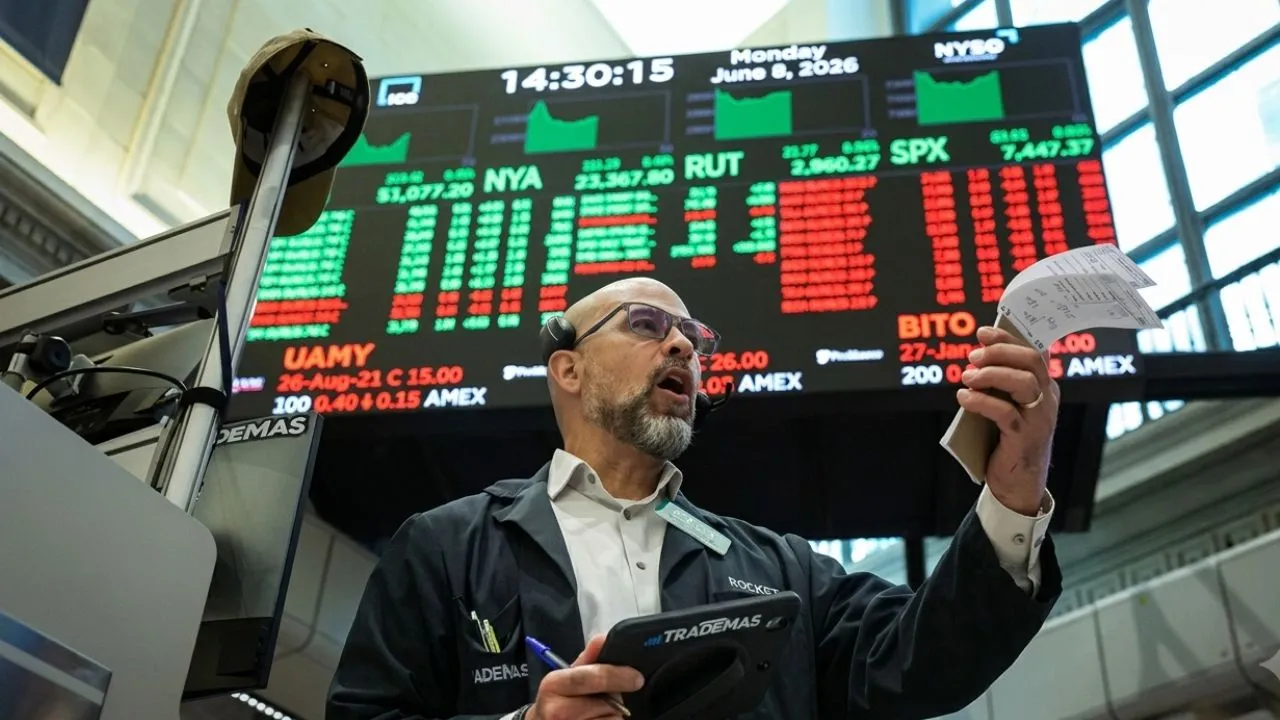
The Dow Jones Industrial Average closed at a record $52,900.07 on July 2, its latest in a string of all time highs this year, while barely a mile away in trading terms the Nasdaq Composite slid for a second straight session as semiconductor names absorbed some of the sharpest selling of the summer. That split screen, blue chip records beside chip stock routs, is not noise.
It is the visible edge of what Jeremy Grantham, the GMO co founder who publicly called the top of the dot com bubble in 2000 and warned ahead of the 2007 housing collapse, now describes as the biggest investment bubble in American history. Grantham’s warning, delivered on Steven Bartlett’s Diary of a CEO podcast and echoed days later on CNBC, is specific rather than vague.
He estimates a peak to trough decline of roughly 70 percent is possible for the artificial intelligence sector’s highest flying names, a figure drawn from a valuation framework that has correctly flagged every one of the market’s prior major bubbles before they reversed.
He is careful to separate his view of the technology from his view of its price. Artificial intelligence, he has said, is genuinely transformative. The problem is that nearly everyone already knows that, and prices have moved to reflect a certainty that no technology, however powerful, has ever fully delivered on schedule.
A Split Market Emerges
The real economy rotation now underway explains the gap between the Dow’s record close and the Nasdaq’s stumble better than any single headline can. Money that spent the first half of 2026 chasing chipmakers and hyperscale data center names has begun shifting toward the steadier, profitable, dividend paying companies that make up the blue chip index, a pattern traders have started calling the great rotation.
By most accounts that is a healthy sign for a bull market now in its fourth year rather than an alarming one on its own. What makes it worth watching closely is the size of what it is rotating out of.
The SpaceX IPO signal that Grantham himself pointed to, a debut that valued the rocket company at roughly $2 trillion against an addressable market he pegged at a quarter of global economic output, is exactly the kind of euphoric marker he says tends to appear near market peaks, regardless of how good the underlying business eventually turns out to be.
Where The Money Actually Goes
Investors chasing the story can verify the underlying ownership shifts themselves rather than relying on secondhand commentary. Institutional filings tracked through the SEC EDGAR system show exactly which large holders have adjusted positions in the most AI exposed names over recent quarters, a level of transparency retail investors rarely use even though it is free and public.
The pattern lines up with Grantham’s central complaint, that the biggest technology companies have collectively committed hundreds of billions of dollars in capital spending toward AI infrastructure while the corporate profits data tracked federally shows that spending has not yet shown up as broad based productivity gains across the wider economy.
Hyperscaler capital expenditure is estimated at roughly 1.6 percent of national output this year, a share that would need to generate enormous returns quickly to justify the valuations currently attached to the companies building it.
The Bond Market Is Talking
Stocks are not the only market pricing in uncertainty about what happens next. The Fed rate projections released after Warsh’s first meeting as chair turned more hawkish than expected, and that shift has rippled through fixed income in ways that matter for anyone holding growth stocks on borrowed conviction.
An inverted yield curve has historically been one of the more reliable recession signals available, and while the curve is not currently inverted, the bond market shifts since Warsh’s hawkish comments in Sintra have pushed short duration yields higher in a way that raises the cost of leverage many AI infrastructure buildouts depend on.
The 10 year yield sat above 4.4 percent in late June, a level that makes future cash flows from unprofitable but richly valued companies worth meaningfully less in present value terms than a year earlier.
Anyone building a fuller picture should also watch the PCE inflation report the Fed weighs most heavily, since a hotter than expected print would only add to the Fed policy impact already working its way through both stock and bond valuations.
Liquidity Beneath The Surface
Every dollar chasing AI infrastructure ultimately has to be financed, and much of that financing runs through the same government liquidity system most retail investors never think about until it seizes up.
The liquidity trap risk that bond strategists have flagged in recent weeks stems partly from how much short duration Treasury supply the government has issued to fund itself, tracked through the Treasury account balance that swings by hundreds of billions of dollars depending on tax receipts and auction schedules.
Add in the recurring debt ceiling mechanics debate that resurfaces every time Washington approaches its borrowing limit, and it becomes clear why institutional investors watch government cash flow data with the same intensity they watch corporate earnings.
What History Suggests
None of this guarantees Grantham is right about timing. He himself has said the window for a reversal could be anywhere from two weeks to two years, a spread wide enough to frustrate anyone looking for a precise exit signal.
His own firm was early by roughly two years calling the dot com top in the late 1990s, losing half its assets under management to clients who chased the mania higher before eventually being proven right.
What his framework does offer is a way to separate genuine technological progress from the price investors are currently paying for exposure to it, a distinction history suggests gets lost during every great bubble built around a genuinely important idea, from railroads in the 1840s to the internet in 2000.
Readers tracking how the Fed’s own balance sheet tightening interacts with market liquidity, alongside the basics of quantitative easing explained and how reversing it removed the cheap money Grantham blames for inflating valuations since 2010, will have a clearer sense of why liquidity mattered as much as any single technology in building today’s price levels.
Reading The Daily Signals
For investors who want a real time gauge rather than a monthly one, the daily Treasury statement published each business day shows exactly how much cash is moving through the federal government’s own accounts, a granular window into liquidity conditions financial media rarely mention.
Combined with a working knowledge of the Treasury bills guide covering how short duration government debt prices against Fed policy expectations, that data offers a far more grounded read on market stress than watching a single index chart.
A Market Worth Watching Closely
The Dow’s record close and the Nasdaq’s stumble are not contradictory signals. They are the same signal read from two sides of the same market, one where investors are beginning to ask whether the extraordinary returns of the past three years can survive a Fed that no longer sounds interested in making money cheap again.
Grantham has been early before and he may be early again. But his warning sits inside the same capital movement system that connects Fed policy, Treasury yields, and equity valuations into a single loop, and investors who only watch one part of that loop tend to be the last to notice when the others start moving.