

Something fundamental is changing inside the American stock market. It is not a crash. It is not a correction. It is a quiet, deliberate shift in where the largest pools of institutional capital are moving and understanding that shift is one of the most important things a serious investor can do right now.
For two years, the dominant trade on Wall Street was simple: buy artificial intelligence. Buy the companies building it, buy the chips powering it, buy the cloud infrastructure running it.
The so-called Magnificent Seven, a group of mega-cap technology companies including Nvidia, Microsoft, Apple, Alphabet, Amazon, Meta, and Tesla, collectively represented roughly 40.5% of the entire S&P 500’s weight at peak concentration.
A handful of stocks were effectively setting the direction for the entire American equity market. The Federal Reserve rate policy that shaped borrowing costs throughout this period made high-multiple technology names the default institutional trade.
That era is not over. But it is evolving into something more demanding, and the capital flows are responding accordingly.
The pivot is grounded in official economic data. The U.S. Bureau of Economic Analysis released its Q1 2026 third estimate on June 25, 2026, confirming that real gross domestic product grew at an annual rate of 2.1%.
That figure represents a meaningful rebound from the 0.5% growth recorded in Q4 2025. An economy expanding above trend does not need speculative technology multiples to justify equity valuations.
It rewards companies that generate real cash flow from physical operations, factories, pipelines, power grids, and logistics networks. The full GDP growth data is publicly available at BEA.gov for direct verification.
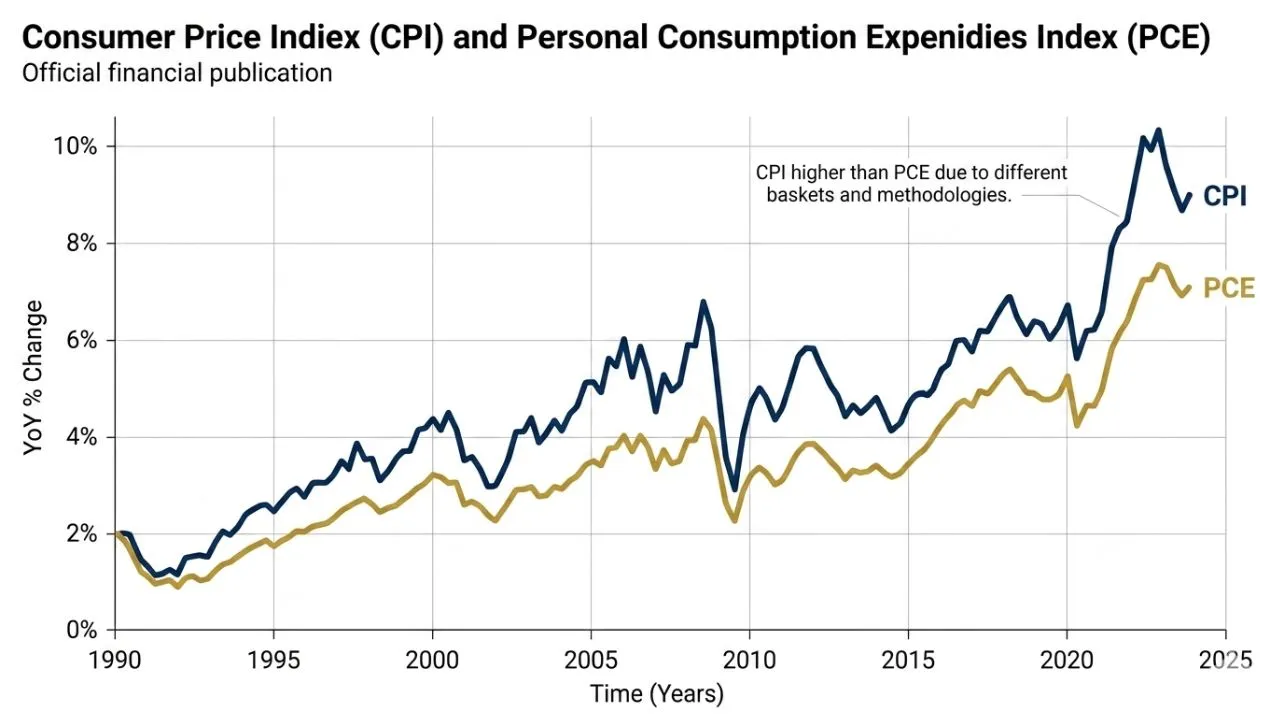
Alongside that GDP number sits a figure that changes the calculus for equity selection. The BEA Price Index held at 3.5% for Q1 2026. Nominal growth with persistent input cost pressure does not reward companies that are still spending heavily on AI infrastructure without proving a return.
It rewards companies that are already generating margin expansion from operations.
That distinction is what portfolio managers are now pricing into the market. The consumer price index methodology published by the BLS provides the complementary inflation measurement framework that institutional desks use alongside BEA data to calibrate sector allocation.
The internal evidence inside the S&P 500 itself is striking. At the peak of AI concentration in 2025, fewer than 30% of individual S&P 500 constituents were outperforming the cap-weighted index over any 30-day window.
As of late June 2026, approximately 65% of index constituents are outperforming the cap-weighted benchmark. Market breadth of that magnitude signals a genuine structural rotation rather than a surface-level sector rebalancing. Aggregate weight of the top ten S&P names has compressed from roughly 40.5% to approximately 37.0%.
The primary beneficiaries of this rotation are companies that power physical infrastructure. Industrial manufacturers producing grid equipment, heavy generators, and construction machinery are being repriced as baseline utility assets rather than discretionary capital goods.
Energy producers with disciplined capital spending and multi-year cost reduction targets are attracting the institutional inflows that previously went to cloud and semiconductor names.
This realignment connects directly to the massive electrical demand that AI data centers are placing on the American power grid, creating a second-order investment thesis: the companies that benefit most from AI buildout are increasingly the ones selling electrons and steel rather than software licenses.
The prime rate mechanics that govern corporate borrowing costs make capital discipline in these energy and industrial sectors even more valuable under current rate conditions.
At the portfolio strategy level, institutional desks are converging on a concept called shareholder yield, defined as the combined return from dividends, net share buybacks, and debt reduction.
With the cost of capital remaining elevated, a direct consequence of Fed rate decisions that have defined the macroeconomic environment since 2022, pure growth multiples are harder to justify.
Companies that return cash to shareholders while expanding operating margins are seeing consistent institutional accumulation. This is why major consumer defensive names are appearing alongside traditional technology holdings in institutional portfolios that would have been exclusively growth-oriented eighteen months ago.
The earnings backdrop supports the rotation thesis quantitatively. Goldman Sachs has set an S&P 500 price target of 8,000, based on an estimated 2026 earnings per share of $340.
Barclays has upgraded its 2026 EPS estimate to $337, raising its year-end index target to 7,800, which represents a 21% expansion from 2025’s $279 baseline. Neither institution is citing simple speculative multiple expansion as the driver; both point to actual, hard profit delivery.
Crucially, while Goldman notes that AI infrastructure remains a key engine, that growth is no longer just about software lines, it is heavily concentrated in the physical hardware, industrial manufacturing, and utility grids required to power it.
The S&P 500 earnings upgrade cycle, in other words, is transitioning from a narrative hype story into a tangible, physical-economy execution story. The Fed dot plot projections show that rate expectations through 2027 remain a central input to how institutional desks model those earnings multiples.
For readers who track federal payment systems and the domestic economy, this rotation has practical relevance beyond portfolio allocation. A broader earnings recovery across industrials and energy supports employment in sectors that generate the payroll income flowing through ACH settlement windows into American bank accounts every week.
The U.S. money movement system that processes those wages operates at greater stability when economic activity is distributed across multiple sectors rather than concentrated in a single industry vertical.
Workers in industrial and energy sectors receiving those paychecks through Varo direct deposit and similar fintech rails are the downstream human expression of the macro rotation happening at the institutional level.
The market is also sending a message about accountability. In 2024 and 2025, mentioning artificial intelligence on an earnings call was sufficient to expand a company’s stock multiple regardless of demonstrated revenue impact.
In mid-2026, approximately 21% of S&P 500 companies now report measurable AI-driven enterprise benefits. The market is rewarding only the subset of those companies showing genuine return on invested capital.
Software and IT services firms that cannot demonstrate immediate margin improvement from AI deployment are experiencing valuation corrections. The shift from narrative to execution metrics is the defining characteristic of this new market phase.
The Federal Reserve independence framework that keeps monetary policy insulated from political pressure is itself a structural condition that gives institutional investors the rate-path confidence to make multi-year sector rotation decisions.
The Treasury General Account balance and overall federal liquidity conditions shape the macro environment in which this rotation is occurring. Federal spending flows that support Social Security beneficiaries tracked by the Social Security COLA history, IRS refund recipients tracked by the IRS refund pipeline, and taxpayers navigating the IRS refund offset rules are all downstream expressions of the same underlying macroeconomic expansion the BEA confirmed on June 25.
When GDP grows at 2.1% and the price index holds at 3.5%, that combination of nominal growth and controlled inflation describes an economy where the federal government’s payment obligations remain fully fundable and the private sector’s cyclical earnings can genuinely expand.
The Treasury yield curve is reflecting this confidence, with spreads narrowing in a pattern consistent with broadening economic expansion rather than recession risk. This is what a healthy market transition looks like at the institutional level.
It is not a rotation driven by fear. It is a rotation driven by the arithmetic of earnings growth, capital discipline, and the natural broadening that occurs when an economic expansion matures beyond its initial speculative phase.
The Magnificent Seven trade is giving way to something larger and more durable: a market rewarding the entire physical infrastructure of the American economy, one earnings report at a time.