The G20 and the Shanghai Cooperation Council held their respective summits against an increasingly difficult geopolitical and trade backdrop. Washington sought support for a harder approach toward Chinese exports while continuing to threaten sanctions against countries and companies involved in trade with Iran or in facilitating Iranian commerce, including through airlines.
The G20 was unable to produce a joint statement. Much of the press coverage attributed the failure to China. Still, the contrast with 2025 is worth noting: even when the United States boycotted the G20 meeting that year, the remaining members were able to agree on a statement.
The Shanghai Cooperation Council moved in the opposite direction, expressing solidarity with Iran. At a minimum, that suggests Washington’s effort to economically isolate Tehran may not be producing the comprehensive chokehold its architects intended.
The market response has been clearest in energy. October WTI rose 9.2% last week and finished above $90 a barrel. November Brent advanced 8.5% and settled above $95. Yet the jump in crude did not generate a comparable rise in sovereign yields. Benchmark 10-year G7 rates were broadly stable, moving only around 1.5-2.0 basis points in either direction. The interaction between oil, inflation expectations and Treasury yields remains one of the more important cross-market relationships to watch.
Foreign exchange produced its own surprise. The yen’s sharp rally looked less like direct intervention and more like aggressive short covering, perhaps involving large institutional pools of capital and pension funds reducing exposures. The important technical point is that the dollar has now tested the JPY155 area repeatedly without breaking it decisively. That was true after the April-May intervention, after the late-July operations and again during last week’s yen surge.
Several events now compete for the market’s attention. Germany’s state election in Saxony-Anhalt could produce a strong result for the AfD and potentially reverberate through the German political establishment. The European Central Bank meets with the market strongly expecting another rate increase.
At the end of the week, the United States reports August CPI, the final major inflation reading before the September 15-16 FOMC meeting. A firm inflation report, or even one that merely fails to slow convincingly, could lift Fed hike odds ahead of the September 16 decision.
The unusual feature of the current setup is that tightening expectations are present simultaneously in the United States, euro area, Japan, Canada and Australia while oil is again exerting upward pressure on inflation. That creates an environment in which relative policy expectations, rather than the simple direction of global rates, may continue to dominate foreign exchange.
USA
Drivers: The 30-day rolling correlation between changes in the Dollar Index and changes in the U.S. two-year Treasury yield stands near 0.52. It had been considerably stronger around the mid-June FOMC meeting, when it approached 0.80.
The August employment report delivered an outsized increase in nonfarm payrolls and initially pushed the two-year yield sharply higher. Yet the move could not be sustained. As the pre-weekend session progressed, the two-year yield retreated toward the middle of its range and the Dollar Index surrendered most of its initial advance.
That reaction is significant. Strong employment data ordinarily would have been expected to reinforce the dollar through higher short-term yields, particularly with the Federal Reserve’s September meeting approaching. Instead, markets appeared reluctant to extend the move. The changing relationship between the labor data and policy expectations is examined more broadly in Investozora’s jobs report coverage.
Fed funds futures ended the week pricing slightly more than 15 basis points of tightening for September. After Fed Chair Kevin Warsh’s Jackson Hole remarks, the market had finished with a little more than 14 basis points discounted. In other words, even the strong payroll report produced only a modest net increase in conviction.
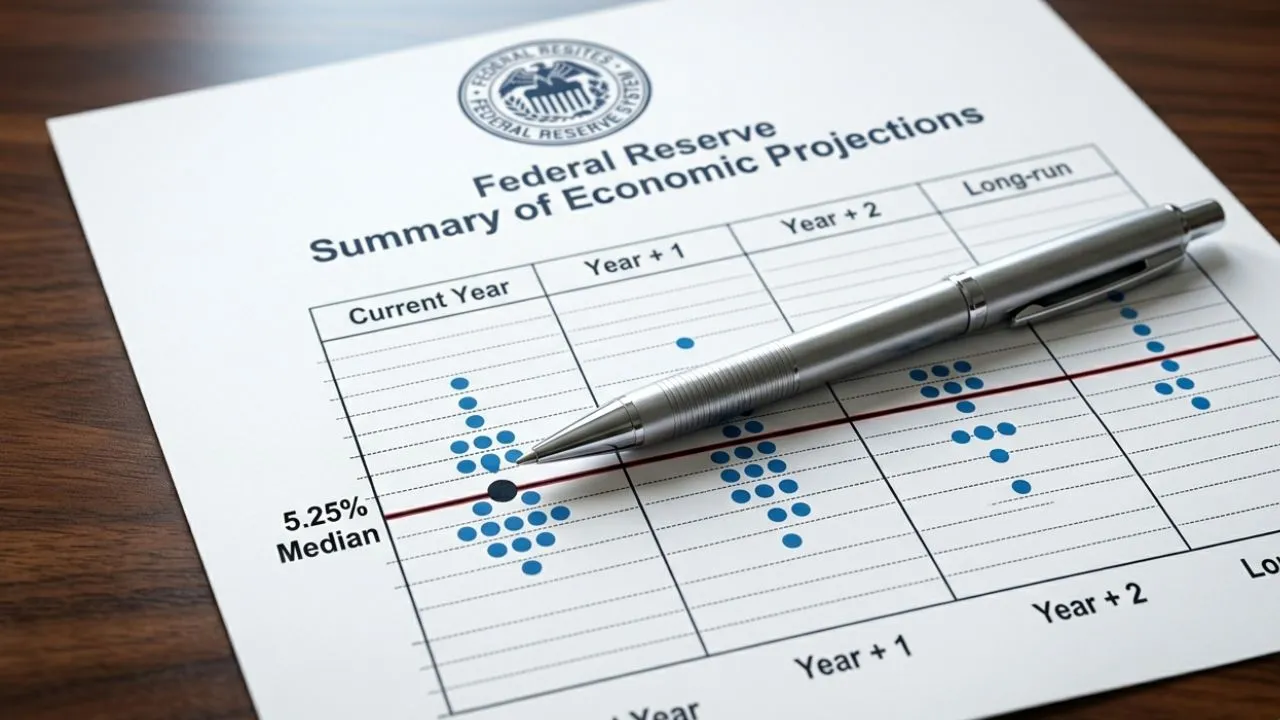
Data: The inflation readings at the end of the week are the most important U.S. releases remaining before the September 15-16 FOMC meeting. A number of Fed officials whose June dot indicated that they believed another rate increase might be necessary this year have effectively established a condition for standing down: they want to see further progress on inflation.
Headline CPI has already slowed on a year-over-year basis for two consecutive months and appears likely to have eased slightly again in August. Because of the base effect, a 0.2% monthly increase would allow the year-over-year rate to fall to approximately 3.3% from 3.4%.
The recent trend has been notable. Headline inflation peaked at 4.2% in May before beginning its latest decline. Core inflation has followed a similar trajectory. The year-over-year core CPI rate has fallen during the past two months from 2.9% to 2.5%. If core prices rose 0.2% in August, matching their average monthly increase this year, the annual rate could ease further to around 2.4%.
Core CPI has not been below that level in more than five years. The policy significance is straightforward. Another clear decline in both headline and core inflation would make it more difficult for officials inclined toward another increase to justify moving immediately. A firmer report, however, could quickly revive expectations that the September meeting will produce a hike.
Prices: Our constructive Dollar Index view initially performed well. DXY climbed slightly above 99.85 during the first half of last week, its strongest level in roughly two and a half weeks. The picture changed abruptly when the yen short squeeze accelerated. The Dollar Index fell to around 98.85 on Thursday, establishing a new low for the week.
Perhaps more telling was what occurred after the U.S. employment report. Despite stronger-than-expected job growth, DXY could not rise above Thursday’s roughly 99.60 high.
The near-term Dollar Index outlook therefore favors consolidation rather than an immediate directional breakout. Monday’s U.S.-Canada holiday reduces the early-week impulse, while the ECB decision on Thursday and U.S. CPI on Friday create two obvious event risks later in the week.
EMU
Drivers: Two developments stand out in the euro area. The first is political. The Saxony-Anhalt state election could see the AfD score an important victory and perhaps win its first state election. Winning the most votes would be politically important, but the more consequential question is whether the party performs strongly enough to obtain an outright majority.
Elsewhere in Germany, the political firewall around the AfD has largely prevented other major parties from cooperating with it. One consequence has been the creation of coalition arrangements that can be cumbersome and, at times, unstable.
The election also occurs while Marine Le Pen leads Mélenchon in polling for a hypothetical French runoff, underscoring the broader pressure facing Europe’s traditional political center.
Chancellor Friedrich Merz’s position deserves attention. Merz had long criticized Angela Merkel from the right and attempted to shift the CDU toward a more conservative position. Yet as the CDU moved right, the AfD appeared to move further still. A sufficiently strong AfD result in Saxony-Anhalt could therefore carry implications beyond the state itself and potentially affect Merz’s authority as chancellor.
The second consideration is monetary policy. There is little doubt in the market that the ECB will raise rates by a quarter point, taking the deposit rate to 2.50%, while acknowledging that inflation risks have shifted to the upside. The swaps market strongly favors the September increase and is also assigning meaningful probability to another move, potentially as soon as the first quarter of 2027.
Data: The ECB meeting on September 10 is effectively the week’s central euro-area event. A 25-basis-point increase is close to being fully anticipated. The deposit rate would rise to 2.50%. The more interesting question concerns communication after the decision.
There is little reason to think the ECB as an institution is prepared to follow the American experiment of withdrawing much of its forward guidance and making its reaction function less transparent. The market is already assigning a greater than 70% probability to another rate increase before year-end, which gives policymakers considerable flexibility.
The ECB staff may also need to revise its medium-term inflation projections upward. The relevant estimates discussed in the market are around 2.3% for 2027 and 2.0% for 2028.
Against that backdrop, President Christine Lagarde need not promise another increase. She could simply indicate that the Governing Council’s work may not yet be complete. That would preserve the ECB’s optionality while validating the market’s expectation that September may not represent the end of the tightening cycle.
Prices: Except for the midweek weakness, the euro spent much of last week inside the range established on August 28, when Chair Warsh spoke at Jackson Hole. That range was approximately $1.1580-$1.1660.
The euro briefly fell to almost $1.1565 in the middle of the week before recovering. Its resilience after the stronger U.S. employment report was noteworthy, especially given the initial rise in U.S. short-term yields.
The $1.1575 region corresponds approximately to the 38.2% retracement of the euro’s advance from the late-July low near $1.1355 to the August 20 high around $1.1710.
Even so, the technical correction may not have run its course. Momentum indicators continue to fall, and the broader consolidation phase may persist before the euro can establish a more durable directional move.
PRC
Drivers: Beijing’s management of the exchange rate has produced an extraordinarily stable yuan. Realized volatility over the past month has been below roughly 1.4%, while three-month volatility has been around 1.7%. Those are historically subdued readings for the currency.
Yet stability has not meant immobility. Chinese authorities have allowed the yuan to appreciate by a little more than 4% this year. That makes it the sixth-strongest emerging-market currency in 2026. Only two G10 currencies have outperformed it: the Norwegian krone, up about 8.4%, and the Australian dollar, up roughly 7.9%.
The result is a managed appreciation rather than a freely floating surge, consistent with Beijing’s preference for limiting volatility while still allowing the exchange rate to adjust.
Data: China’s August trade figures and inflation data are the principal releases to watch. Monthly reserve figures have lost some of the market significance they once possessed because China increasingly uses other channels to recycle its current-account surplus. These include sovereign wealth funds as well as direct and portfolio investment.
The trade surplus itself remains a much larger geopolitical issue. Both Europe and the United States are increasingly concerned about China’s growing export surplus. Many emerging-market countries occupy the opposite side of that relationship because they supply China with commodities and raw materials.
China’s July imports were approximately 27.5% higher than a year earlier. Exports rose nearly 24% year over year and continue to be dominated by manufactured goods across both lower- and higher-value segments of the production chain.
That is where the international tension lies. Higher U.S. tariffs and efforts to restrict Chinese goods entering the American market create additional pressure on Europe and other countries to consider similar defensive measures.
China’s August CPI and PPI figures are scheduled for early September 9. The broad inflation picture is unlikely to change materially. Measured consumer inflation remains extremely weak. Headline CPI has increased only around 0.5% from a year earlier.
Part of the disinflation reflects weak domestic demand, but falling food prices have also played an important role. Core inflation is hovering near 1.0%. Producer prices, meanwhile, had been gradually moving away from deflation. The conflict involving Iran and the associated increase in energy prices have accelerated that process.
Prices: The dollar fell to almost CNH6.7050 before the weekend. That is the lowest level since January 2023, when USD/CNH reached approximately CNH6.6975. The median forecast in Bloomberg’s survey calls for the dollar to finish the year around CNH6.70. That appears too conservative. We suspect the dollar could end the year closer to CNH6.65 against the offshore yuan, and perhaps somewhat below that level.
Japan
Drivers: Markets do not always behave this way, but surprises generally produce larger reactions than outcomes that have been fully anticipated. That principle is especially relevant for the Bank of Japan.
The market has moved to the view that another BOJ rate increase later this month is about as fully discounted as a central-bank decision can become. Swaps pricing also points toward hawkish guidance suggesting that another increase could follow before year-end.
The consequence is that the September hike itself may not generate the greatest reaction. Failure to deliver it could prove considerably more disruptive. Intervention remains another important consideration.
Indicative options-market pricing is consistent with reports that some long-dollar positions have been paired with long put structures. Those hedges would cushion losses if Japanese authorities intervened and the yen strengthened abruptly.
Data: The BOJ meeting concludes on September 18. With a rate increase so heavily discounted, its absence would probably be more destabilizing than its delivery. That reduces the immediate importance of much of Japan’s ordinary economic calendar. Even so, July labor earnings and trade-related data deserve attention.
June real cash earnings rose a revised 2.2% from a year earlier, stronger than the initially reported 1.6%. The improvement in real wages has not translated into a comparable acceleration in household consumption. The July earnings figures will be released on September 8, the same day as the revisions to second-quarter GDP.
In the preliminary GDP estimate, private consumption was flat. Japan’s July current-account report is another data point worth watching. The continued trade deficit is notable. The yen remains undervalued by many conventional measures, yet Japan has not returned to a sustained merchandise trade surplus.
At the same time, net exports accounted for roughly half of Japan’s growth in the current GDP estimate, illustrating the difference between the trade balance itself and the contribution of net trade to changes in output.
Prices: JPY155 remains the critical downside level for USD/JPY. Japanese intervention in April and May failed to push the dollar sustainably below that threshold. The joint intervention operations in late July also failed to break it. Last week’s sharp yen rally produced the same result: JPY155 held again.
That repeated defense gives the level considerable technical importance. On the upside, we suspect the dollar may struggle in the JPY157.00-JPY157.25 region. For now, that leaves a potentially important near-term range between approximately JPY155 and JPY157.25.
UK
Drivers: Sterling remains highly sensitive to the broader direction of the U.S. dollar. The correlation between changes in sterling and the Dollar Index has been approximately -0.80 to -0.83 over the past 30, 60 and 100 trading sessions.
The relationship with the euro is somewhat weaker but remains relatively stable, with correlations generally between 0.65 and 0.75. Short-term rates also matter, although not necessarily in the way a simple domestic-rate model might imply.
Sterling’s correlation with changes in the U.S. two-year yield has been approximately -0.25 over 30 sessions, -0.48 over 60 sessions and -0.60 over 100 sessions. The pound is less strongly correlated with changes in U.K. short-term rates, though that relationship is also inverse.
The correlation between sterling and changes in the U.S.-U.K. two-year yield differential is less negative than the relationship with changes in either country’s short-term yields separately. Taken together, the evidence continues to suggest that the dollar side of the exchange rate remains the dominant short-term influence.
Data: The United Kingdom reports July GDP and the accompanying details on September 11. June output grew by 0.3%. The World Cup and unusually hot weather are thought to have helped activity during that month.
The economy appears to have cooled since then. After expanding by 0.4% quarter over quarter in Q2, the median forecast in Bloomberg’s survey anticipates only a 0.1% increase in Q3.
The Bank of England meets on September 17. The swaps market assigns only around a 10% probability to a rate increase at that meeting. That does not mean the market believes the tightening cycle is finished. A rate hike is fully priced by year-end, and another is discounted by the end of the first quarter of 2027.
Prices: Sterling’s decline from the August 21 high near $1.3675 extended to approximately $1.3475 in the middle of last week. A potential base may have formed there. The first requirement for an improvement in the technical tone is a sustained move back above the $1.3550 area. Even that may not be enough.
The $1.3575-$1.3600 zone appears more technically important and could represent a more meaningful resistance area. Momentum indicators are still falling. The trendline connecting the June and July lows is projected to come in around $1.3550 toward the end of the coming week, reinforcing the importance of that level.
Canada
Drivers: The Bank of Canada’s hawkish hold helped produce a sharp recovery in the Canadian dollar during the middle of last week. Canada’s overnight target rate is now below the Federal Reserve’s policy rate by the widest margin since the late 1990s.
Yet USD/CAD continues to respond more closely to changes in the two-year interest-rate differential than to moves in either U.S. or Canadian yields considered separately. Over the past 30 sessions, the correlation between changes in USD/CAD and the U.S. two-year yield has been slightly below 0.35.
Over 60 sessions, it has been just under 0.37. The correlation with Canada’s two-year yield has been around -0.38 over 30 sessions and approximately -0.25 over 60 sessions. The stronger relationship is with the two-year yield spread itself.
The correlation between changes in USD/CAD and changes in the U.S.-Canada two-year differential is slightly above 0.70 over both the 30- and 60-session periods. That is closer to what conventional interest-rate theory would lead one to expect.
Data: Canada has no major government economic reports scheduled in the coming week. The Bank of Canada met last week and kept its overnight target rate unchanged at 2.25%.
Despite the trade shock affecting the Canadian economy, investors continue to expect that the central bank’s next move will be higher rather than lower. The market has fully priced approximately two rate increases over the next eight months. That expectation helps explain why the Canadian dollar responded positively to the Bank’s decision even without an immediate hike.
Prices: The divergence between U.S. and Canadian employment data supported the Canadian dollar earlier in August. The latest divergence, however, worked against it ahead of the weekend. The Canadian dollar was the weakest G10 currency in the pre-weekend session, losing a little more than one-third of one percent.
That followed strong gains on Wednesday and Thursday, when the currency benefited from the Bank of Canada’s hawkish hold and broad U.S. dollar weakness. USD/CAD reached a low around CAD1.3765 last week.
That level is worth remembering because the dollar had settled at roughly CAD1.3760 immediately before the U.S.-Canada trade talks collapsed. The dollar then rebounded ahead of the weekend and recovered slightly above CAD1.3870.
That area corresponded to the 61.8% retracement of the Wednesday-Thursday decline. Initial resistance is around CAD1.39. Last week’s high was near CAD1.3940. A convincing break above that level would bring CAD1.40 into view.
Australia
Drivers: Over the past 30 sessions, changes in the Australian dollar have been more strongly related to the broad U.S. dollar than to changes in either U.S. or Australian two-year yields individually. The correlation with the Dollar Index is approximately -0.65. The correlation with changes in the U.S. two-year yield is around -0.32. The relationship with Australia’s two-year yield is positive at roughly 0.32.
The 30-day correlation between AUD/USD changes and the two-year yield differential stands near 0.45. The Australian dollar’s correlation with gold is stronger still at almost 0.57. Those relationships help explain why the Aussie has been able to strengthen even while global rate expectations remain elevated.
Data: Australia’s domestic calendar is relatively light. The main releases consist of confidence surveys from several banks and the Melbourne Institute’s Consumer Expectations survey. The Reserve Bank of Australia does not meet until September 29.
Even without a near-term meeting, recent economic data have materially changed market expectations. Second-quarter GDP was stronger than expected. Inflation has been somewhat hotter than forecast. Private-sector credit growth has also been strong.
Together with recent official commentary, those developments have encouraged investors to increase the probability assigned to another RBA hike. The market now puts the chance near 66%. That compares with slightly below 50% at the end of the previous week.
As recently as August 25, markets assigned only around a 12% probability to a hike. A move in the cash rate to 4.60% is now fully discounted by year-end in the futures market. That is a substantial repricing over a very short period.
Prices: The Australian dollar fell to approximately $0.7120 during the middle of last week. Although that was its weakest level since August 21, AUD/USD still remained above its 20-day moving average. The subsequent recovery was impressive. The Aussie climbed to approximately $0.7215 before the weekend, its strongest level since the middle of May.
It also produced an outside-up week. AUD/USD traded both below and above the previous week’s range and then settled above that range. Initial resistance may be found near $0.7250. The more significant objective remains the four-year high established in May around $0.7280.
Mexico
Drivers: Changes in USD/MXN continue to show a stronger relationship with broader emerging-market currency performance than with the Dollar Index itself. Over the past 30 days, the correlation between USD/MXN and the JPMorgan Emerging Market Currency Index has been approximately -0.80.
Its correlation with the Dollar Index is closer to 0.65. Interest rates also matter. The exchange rate has a roughly 0.45 correlation with changes in the U.S. two-year yield. Its correlation with Mexico’s two-year yield is lower, at around 0.30. That leaves the peso influenced by a combination of broad emerging-market sentiment, U.S. rates and Mexico’s own domestic policy outlook.
Data: Mexico reports August vehicle production and export figures near the start of the week. Industrial production will be released toward the end of the week. The most important high-frequency release, however, is August CPI in the middle of the week.
Headline inflation may rise on a year-over-year basis for the first time since March. In July, headline CPI fell to 3.12%. That was its lowest level since the pandemic and put inflation close to the middle of Banco de México’s 2%-4% target range. Core inflation has been more persistent.
It fell below 4% in July for the first time since April. The core rate has been declining gradually from its January peak, which was slightly above 4.50%. It may have eased marginally again in August.
The distinction between headline and core inflation therefore remains important: the headline measure is already close to the center of the target range, while underlying inflation is taking longer to normalize.
Prices: The dollar rebound we anticipated against the peso stalled in the MXN17.05-MXN17.07 area. USD/MXN subsequently recorded a bearish outside-down session on September 3. Follow-through selling before the weekend pushed the pair to approximately MXN16.8625.
That is its lowest level since the run-up to Mexico’s presidential election in mid-2024. The price action also reinforced the ceiling that has developed during the past three weeks. On a weekly basis, the dollar has now recorded a lower high against the peso for eight consecutive weeks.
On a net basis, the dollar has advanced in only one of the past seven weeks. It is difficult to identify substantial chart support immediately below current levels. Nevertheless, we suspect there may be room for USD/MXN to move toward MXN16.80 next.
The peso’s strength is therefore not simply a one-week move. It reflects one of the more persistent directional trends currently visible among the major emerging-market exchange rates.
The week ahead brings several separate events, but they are linked by a common theme. Inflation has not disappeared as a policy constraint, higher oil prices have increased the risk that disinflation slows, and several central banks are either preparing to tighten further or are being priced by markets as likely to do so.
The ECB’s September 10 decision appears the most certain of the immediate moves. The BOJ’s September 18 hike is so heavily anticipated that failing to deliver could create the larger surprise. The Federal Reserve remains more finely balanced, making the August CPI report particularly consequential ahead of September 15-16.
In currencies, JPY155 remains pivotal for dollar-yen, the euro continues to consolidate around the range established after Jackson Hole, the Australian dollar is testing increasingly important upside levels, and the Mexican peso continues to press the dollar toward territory not seen since 2024.
With crude above $90 for WTI and $95 for Brent, central banks are once again being asked to judge whether renewed energy pressure is temporary or whether it will interrupt the progress made on inflation. That question, more than any single data release, is likely to define the next stage of the global rates and foreign-exchange adjustment.
Disclaimer: Opinions and information presented are the author’s and may change with market conditions. This material is for informational purposes only, does not constitute investment advice, and should not be relied upon for investment decisions. This analysis was originally published by Marc Chandler at Marc to Market and has been adapted for Investozora.