Labor Day fell on Monday, September 7, 2026, and it changed the normal banking calendar for ACH payments and some direct deposits. The Federal Reserve was closed for the holiday, and regular FedACH settlement did not run on its normal business-day schedule.
However, that does not mean every payment was automatically delayed until Tuesday. Payroll timing depends on when the sender submitted the payment, its settlement date, and when the receiving bank makes the money available.
For many workers, the most important rule is simple: if a regular payday would have fallen on Labor Day, employers commonly moved the payment to Friday, September 4. Other deposits scheduled after the holiday could appear beginning Tuesday, September 8, depending on the payment file and the bank’s posting policy.
Labor Day Schedule
Labor Day 2026 was a federal holiday on Monday, September 7. The Federal Reserve’s official 2026 holiday schedule lists September 7 as the Labor Day closure, while the Office of Personnel Management also identifies September 7 as the federal holiday.
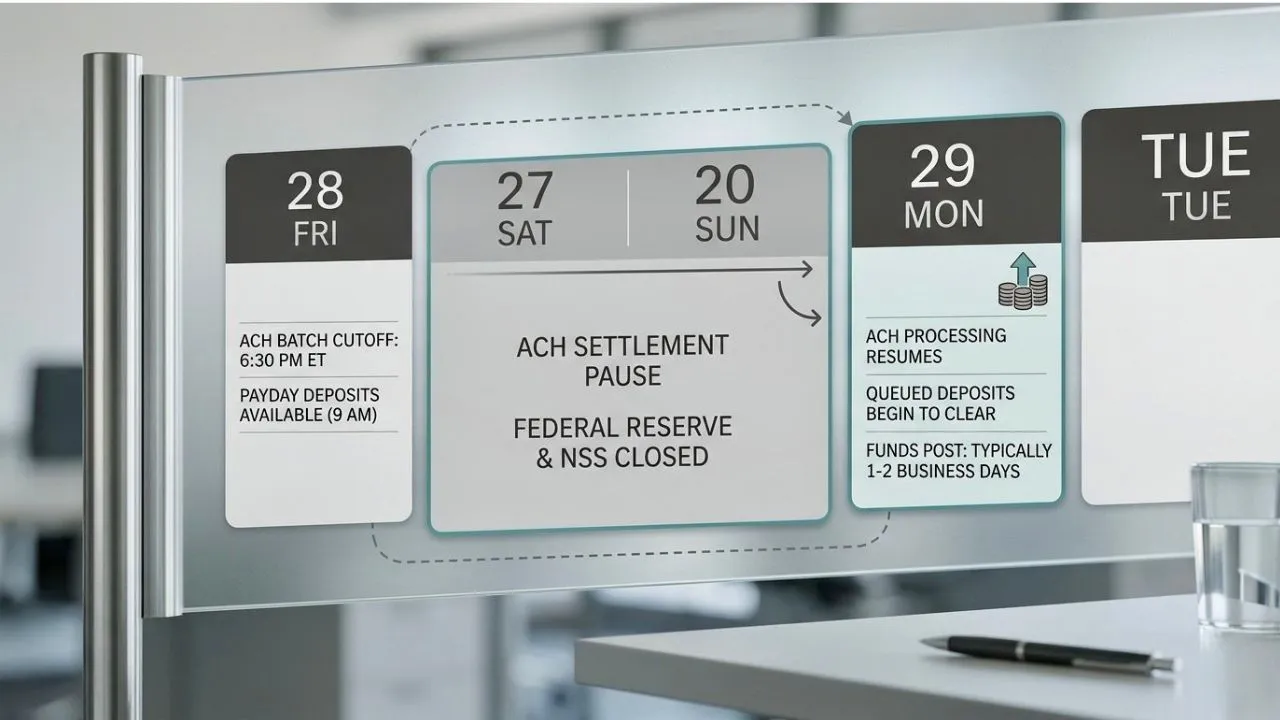
The important dates around the holiday were:
- Friday, September 4: Last normal weekday before Labor Day weekend.
- Saturday, September 5: FedACH holiday-period processing ended at 3 a.m. ET.
- Sunday, September 6: Weekend.
- Monday, September 7: Labor Day; Federal Reserve Financial Services were closed except for services such as FedNow.
- Monday, September 7 at 5:30 p.m. ET: FedACH processing resumed.
- Tuesday, September 8: First normal banking business day after Labor Day.
The Federal Reserve says the first part of the holiday processing interruption began at 3 a.m. ET on September 5, with FedACH processing restarting at 5:30 p.m. ET on September 7. A later file delivery began at 8:15 p.m. ET.
Readers who want the broader calendar can also check Investozora’s Federal Reserve holidays and 2026 deposit schedule, which explains how other federal holidays can affect payment processing during the year. The internal payment calendar supplied for Investozora includes this page as the site’s dedicated Federal Reserve holiday resource.
Direct Deposit Timing
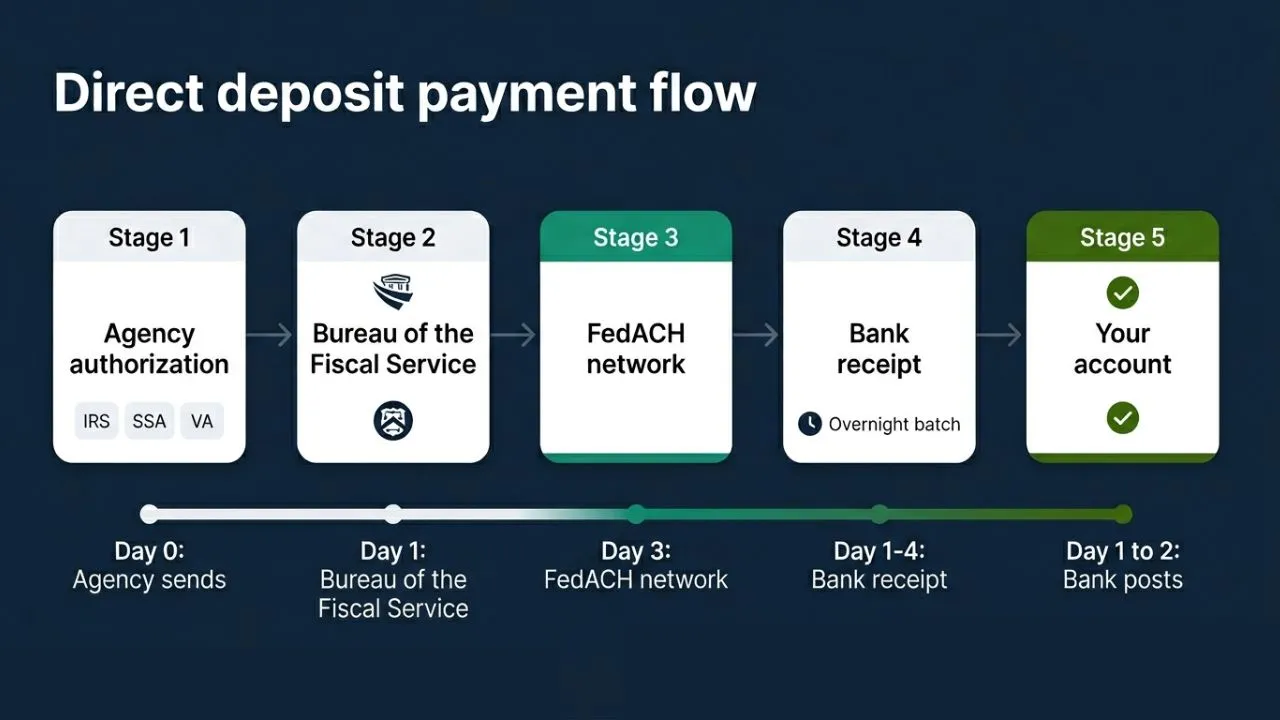
Direct deposit normally travels through the Automated Clearing House, or ACH, network. ACH does not settle payments like a normal business day on weekends or federal holidays because settlement depends on Federal Reserve operating days.
Nacha, which administers the rules of the ACH Network, says the network processes payments during business days and that settlement occurs while the Federal Reserve settlement service is open. Nacha also describes a common payroll practice: when payday would otherwise fall on a weekend or holiday, employers generally pay on the prior Friday.
That means a worker whose normal payday was Monday, September 7 may have received the deposit on Friday, September 4, if the employer adjusted payroll for the holiday.
But this is an industry practice, not a promise that every employer follows exactly the same timetable. Payroll agreements, state rules, employer procedures, payroll providers, and the timing of the ACH file can affect when money is sent.
Investozora’s guide to same-day ACH processing windows explains the processing side in more detail, while the site’s direct deposit processing guide covers why deposits may appear overnight rather than at one universal hour. Both resources are part of Investozora’s federal-payments coverage.
Friday Or Tuesday
For most Labor Day timing questions, Friday versus Tuesday is the key distinction.
If a scheduled Monday payday was moved ahead because of Labor Day, Friday, September 4 was the logical adjusted payment day under the standard practice described by Nacha. Nacha specifically notes that payroll Direct Deposits due on the Friday before Labor Day are generally available by 9 a.m. on that Friday.
If the sender did not arrange an earlier effective payment date, normal settlement activity could instead fall after the holiday. Tuesday, September 8 was the first ordinary banking business day following Labor Day.
This is why two people who normally get paid on the same day can see different results. One employer may submit payroll early enough for Friday settlement, while another payment may move through the system after the holiday.
The same issue can occur with tax refunds, government payments and other ACH credits. The sender’s official payment date should always be checked first before assuming that a bank has delayed the deposit.
Early Deposit Rules
Some banks and financial apps advertise early direct deposit. That can make holiday timing look confusing because the money may appear before the official settlement date.
Nacha explains that some banks and credit unions make payroll money available early by advancing their own funds after receiving information about an incoming Direct Deposit. In other words, the bank may give the customer access before final ACH settlement occurs.
That is why one person may see money on Wednesday or Thursday while another person with the same official Friday payday does not see it until Friday.
Early availability should not be treated as a guaranteed payment date. It depends on the financial institution receiving the payment information and choosing to make the funds available before settlement.
Investozora’s early direct deposit guide explains that distinction, while its bank direct deposit timing guide focuses on why posting hours vary among banks and fintech accounts. Those pages are included in Investozora’s federal-payment internal-link set.
FedNow Stayed Open
Labor Day did not shut down every Federal Reserve payment service. The FedNow Service operates every day of the week, including weekends and Federal Reserve holidays, according to the Federal Reserve’s FedNow operating schedule. That makes it different from normal ACH settlement.
However, this does not mean a normal payroll Direct Deposit automatically moves through FedNow when ACH is closed. Payroll must actually be sent through a payment rail that supports that transfer. For ordinary direct-deposit questions, the relevant system is still usually ACH.
Social Security Payments
Labor Day did not move the main September 2026 Social Security payment dates because the scheduled September payments did not fall on September 7.
The Social Security Administration’s official 2026 calendar shows:
- September 1: SSI payment
- September 3: Social Security for certain beneficiaries, including people covered by the older payment schedule
- September 9: Second-Wednesday payment
- September 16: Third-Wednesday payment
- September 23: Fourth-Wednesday payment
SSA explains that people who began receiving Social Security before May 1997, or who receive both Social Security and SSI, generally receive Social Security on the third of the month and SSI on the first. Other Social Security payment dates generally depend on the beneficiary’s birth date.
Readers looking specifically for this month’s dates can see Investozora’s September 2026 Social Security payment schedule. The page appears in Investozora’s Social Security resource group alongside its broader 2026 Social Security payment dates guide.
Missing Deposit Steps
If a direct deposit was expected around Labor Day and still has not arrived, first confirm the official payment date. An early-deposit estimate shown by a banking app is not necessarily the same as the sender’s actual payment date.
Next, check whether the employer, government agency, payroll company or other sender shows the payment as issued. If it has not been sent, the receiving bank cannot post it.
If the sender confirms that the payment was transmitted, contact the bank or credit union and ask whether an incoming ACH credit is pending. Investozora’s guide to a pending direct deposit explains common reasons a payment can appear pending or arrive later than expected.
Holiday timing is often the explanation for a one-business-day shift, but a missing payment should not automatically be blamed on Labor Day if the official payment date has already passed and the sender confirms that the money was released.
Do direct deposits process on Labor Day?
Normal ACH settlement does not operate on Labor Day the same way it does on a regular Federal Reserve banking day. FedACH processing for Labor Day 2026 ended early Saturday and restarted Monday evening.
Some banks may still display previously received deposits or make funds available early. FedNow also remained open, but ordinary payroll direct deposits normally use ACH.
Will payday come early?
It can. Nacha says the common industry practice for a payday that falls on a weekend or holiday is to pay employees on the prior Friday. For Labor Day 2026, that meant some Monday paydays were moved to Friday, September 4. Your employer’s payroll schedule is the best source for your exact payday.
Can deposits arrive Tuesday?
Yes. Tuesday, September 8 was the first normal banking business day after Labor Day 2026. A payment that was not set up for earlier settlement could therefore appear after the holiday.
The exact timing still depends on when the sender submitted the payment and when the receiving institution posts it. A Tuesday arrival does not automatically mean the payment was incorrectly delayed.
Does Labor Day delay Social Security?
Labor Day itself did not change the scheduled September 2026 Social Security dates. SSA’s calendar placed September payments on September 1, 3, 9, 16 and 23 rather than on September 7.
Beneficiaries should check their own payment category because not everyone receives Social Security on the same day. SSA provides the official annual schedule for confirming the date.
Why did someone get paid earlier?
Banks do not all handle early direct deposit the same way. Some institutions may make incoming payroll funds available before final ACH settlement once they receive advance payment information.
Another institution may wait until the actual settlement or payment date. As a result, two workers with the same employer and payday can sometimes see the money at different times.
The Bottom line
Labor Day 2026 interrupted normal ACH settlement, but it did not create one universal direct-deposit delay. A Monday, September 7 payday was commonly moved to Friday, September 4, while payments not arranged for early settlement could move after the holiday, with Tuesday, September 8 becoming the next normal banking business day.
The safest way to determine an individual payment’s timing is to start with the sender’s official payment date and then check the receiving bank’s posting policy.