The Federal Reserve’s new interest-rate settings took effect Thursday, September 17, raising the interest rate paid on reserve balances to 3.90% as the central bank put this week’s quarter-point policy increase into operation.
The Federal Reserve Board voted unanimously to raise the interest on reserve balances, known as the IORB rate, from 3.65% to 3.90%, according to the Fed’s September 16 monetary policy implementation note. The new rate became effective September 17.
The change is separate from, but directly connected to, the Federal Open Market Committee’s decision Wednesday to raise its target range for the federal funds rate by 0.25 percentage point to 3.75%–4.00%. The FOMC approved that decision unanimously, saying inflation remained elevated and that the increase would support a return toward its 2% inflation goal.
Investozora has separately covered the Fed’s September increase in the federal funds target range. The development taking effect Thursday is the operational side of that decision: the rates and standing facilities the Federal Reserve uses to keep overnight money-market rates aligned with the FOMC’s new target. The September 17 implementation changed four important settings:
- Interest on reserve balances rose from 3.65% to 3.90%.
- The standing overnight repo rate increased from 3.75% to 4.00%.
- The overnight reverse-repo offering rate increased from 3.50% to 3.75%.
- The primary credit rate charged through the Fed’s discount window increased from 3.75% to 4.00%.
All four changes were 0.25 percentage point, matching the size of the FOMC’s increase in its federal funds target range. The overnight reverse-repo facility retained its $160 billion daily limit for each counterparty. The IORB rate matters because it is one of the Federal Reserve’s main tools for translating an FOMC interest-rate decision into actual short-term financing conditions.
Banks and other eligible institutions maintain reserve balances in accounts at Federal Reserve Banks. The Fed pays interest on those balances at the rate set by the Board of Governors.
According to the Fed’s official explanation of interest on reserve balances, raising IORB puts upward pressure on short-term market interest rates because banks have less reason to lend funds elsewhere at rates substantially below what they can receive from the Federal Reserve.
The change from 3.65% to 3.90% therefore does not mean ordinary checking or savings accounts automatically begin paying 3.90%. IORB applies to reserve balances maintained by eligible institutions at Federal Reserve Banks. Consumer savings rates, money-market yields, loan rates and other financial products are set separately, although Fed policy can influence those rates through broader money-market and credit conditions.
The new 3.90% setting also shows that the Fed preserved the relative position of IORB inside its federal funds target range. Before Thursday, the target range was 3.50%–3.75% and IORB was 3.65%. The IORB rate therefore stood 0.15 percentage point above the bottom of the range and 0.10 point below the top.
After the September increase, the range is 3.75%–4.00% and IORB is 3.90%, again 0.15 percentage point above the lower bound and 0.10 point below the upper bound. That comparison is an Investozora calculation based on the Federal Reserve’s current and previous official policy settings.
The unchanged positioning matters because the Fed is not introducing a new implementation framework. It moved the operating rates upward together while continuing what the FOMC describes as an ample-reserves system.
Under that framework, the Fed supplies enough reserves that it does not need to fine-tune their quantity every day to control the federal funds rate. Instead, administered rates such as IORB, together with the overnight reverse-repo and standing repo facilities, help keep short-term market rates within the FOMC’s chosen range.
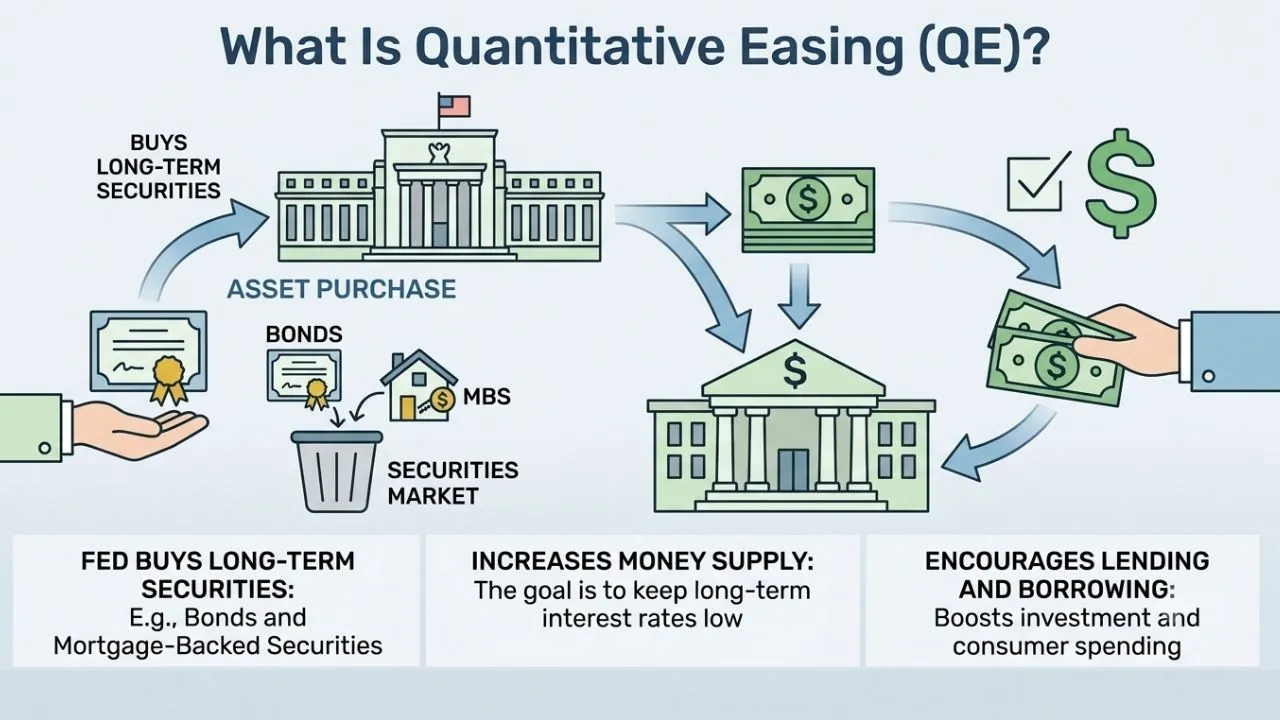
The Fed also directed the New York Fed’s Open Market Desk to conduct operations as necessary beginning September 17 to maintain the federal funds rate between 3.75% and 4.00%. The Desk will continue purchasing Treasury bills and, when needed, other Treasury securities with three years or less remaining to maturity to maintain an ample level of reserves.
Principal payments from Fed Treasury holdings will continue to be rolled over at auction, while principal payments from agency securities will continue to be reinvested in Treasury bills. One distinction is important for readers following the Fed’s rates closely: the 3.90% IORB rate is not the same number as the effective federal funds rate.
The FOMC sets a target range, the Board sets IORB as an administered rate, and actual federal funds transactions between market participants determine the effective federal funds rate. The Fed uses IORB and its other facilities to influence that market rate and keep it inside the target range rather than setting every overnight transaction directly.
Before the September decision took effect, the Federal Reserve’s H.15 data showed the effective federal funds rate at 3.63% on September 15, inside the previous 3.50%–3.75% range.
The next important evidence will be where overnight rates trade under the new settings. If the implementation framework works as intended, the effective federal funds rate and other short-term money-market rates should adjust upward while remaining controlled within the new range.
For now, the confirmed September 17 development is straightforward: the Fed’s quarter-point policy increase is no longer only an announcement from Wednesday’s FOMC meeting. The operational rates used to implement that decision have now moved higher, led by the increase in interest on reserve balances from 3.65% to 3.90%.