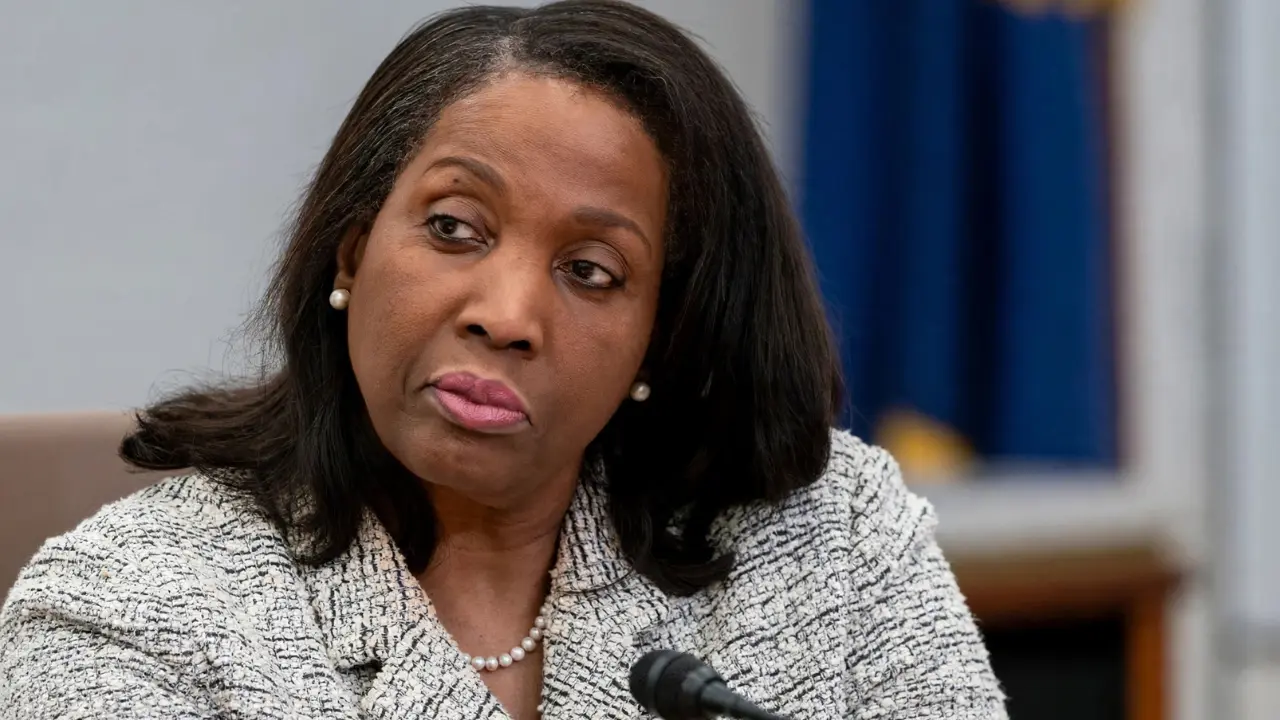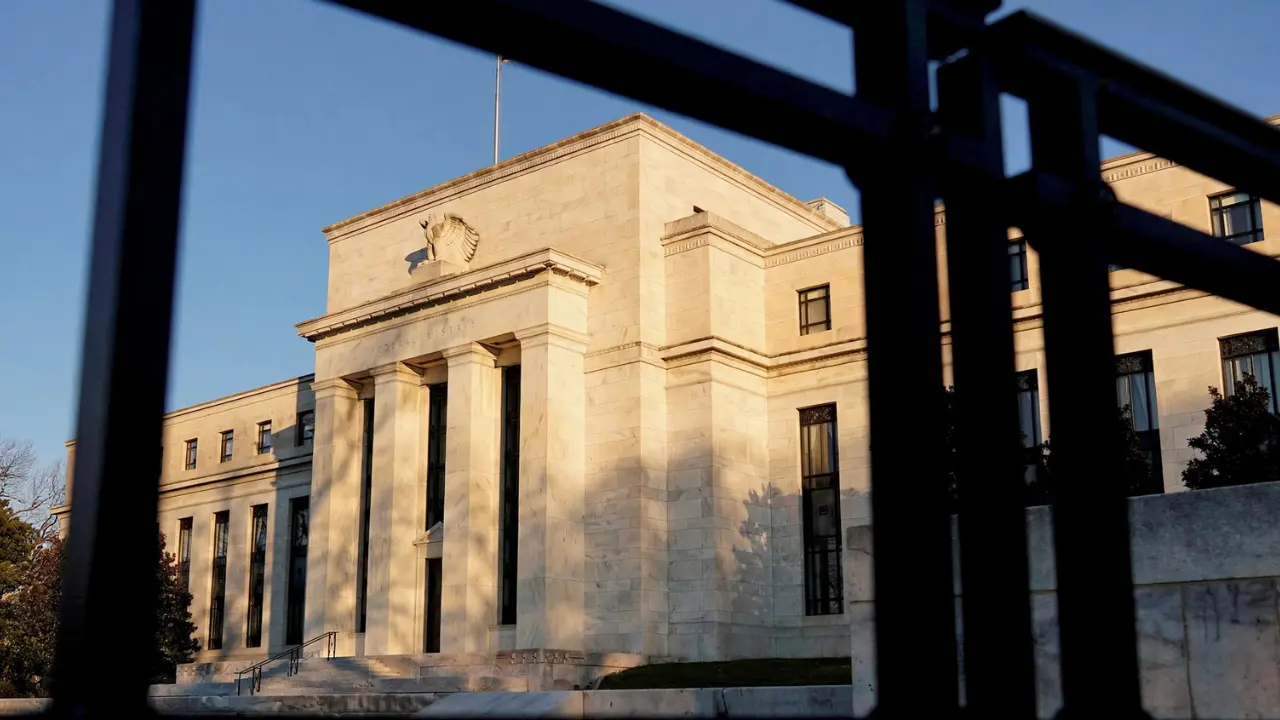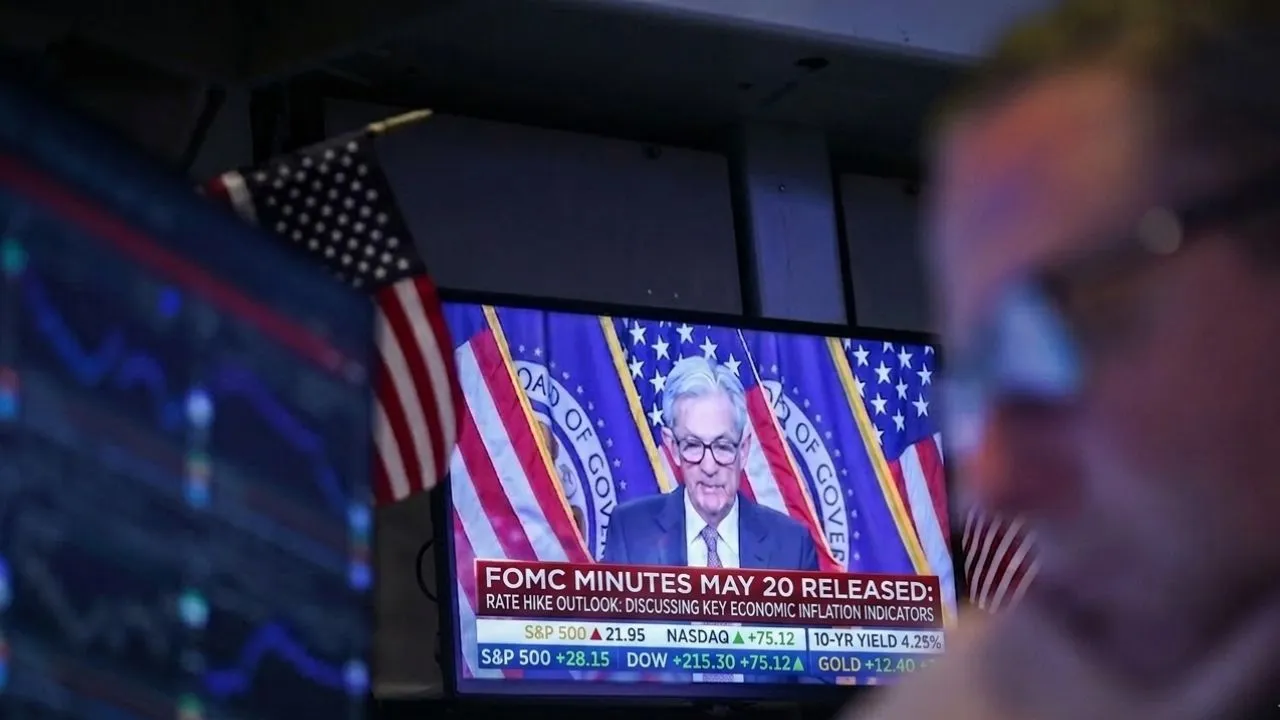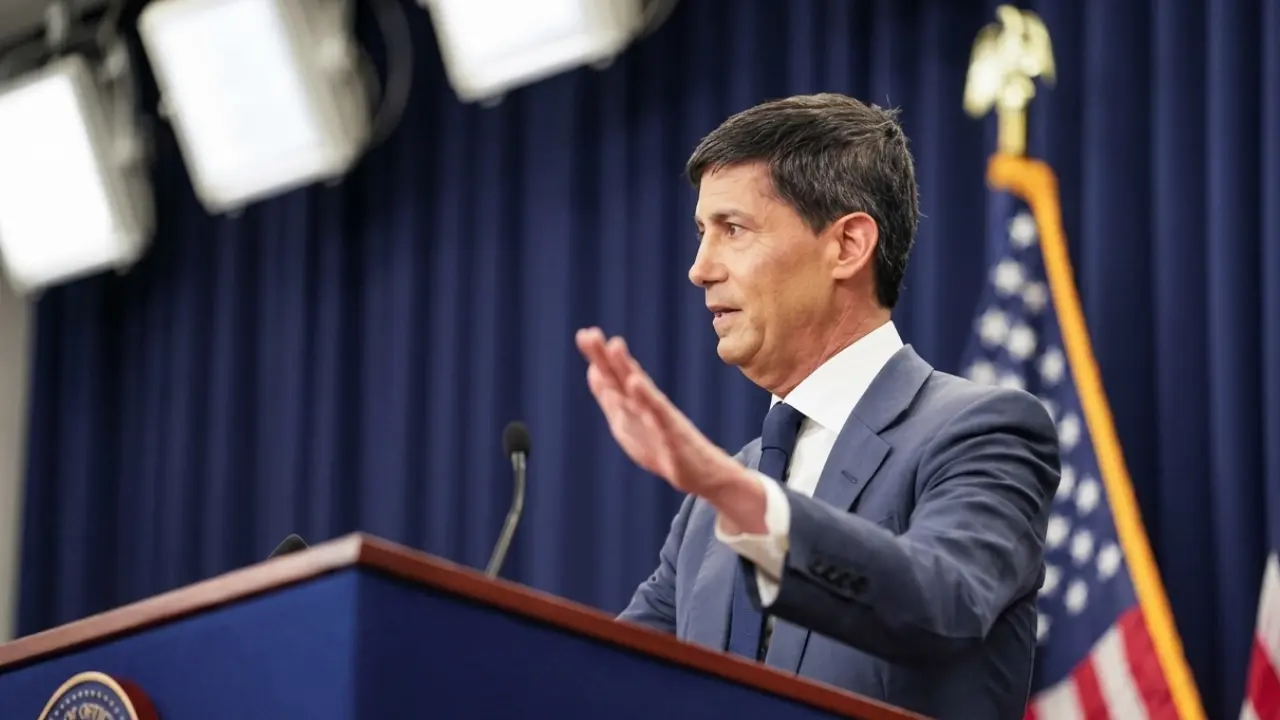

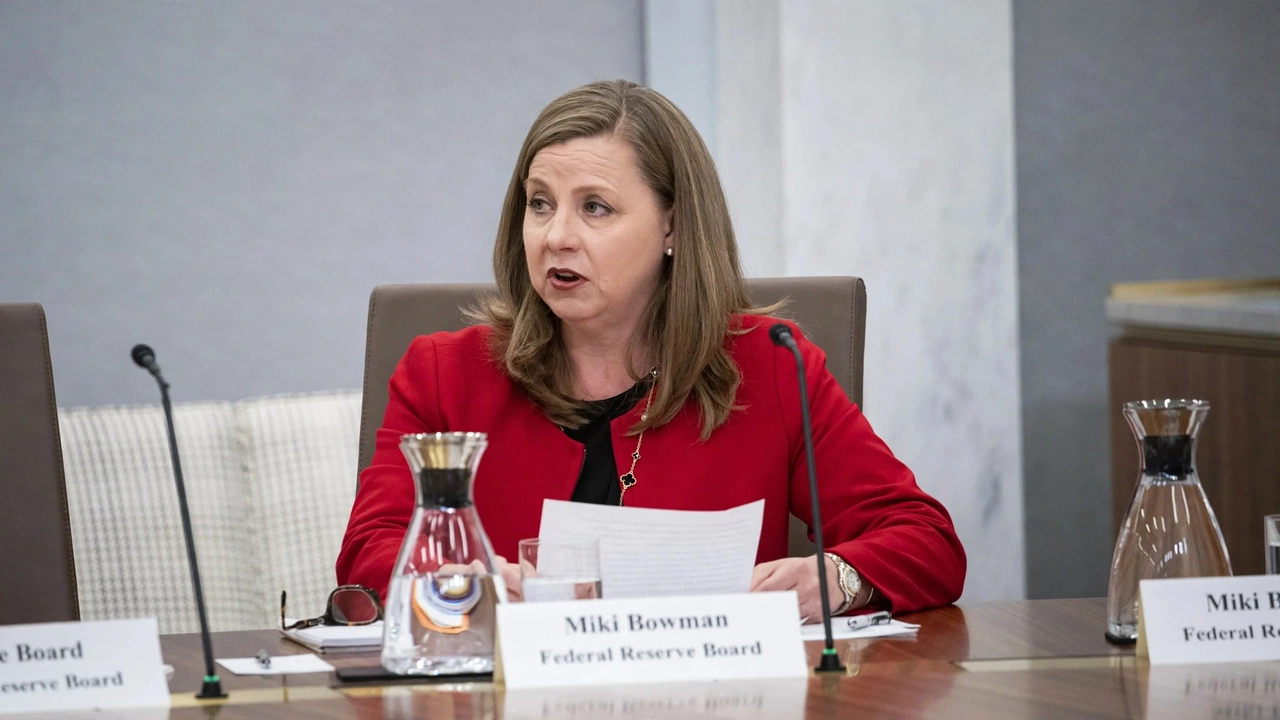
Federal Reserve supervisors knew, or should have known, about major vulnerabilities at Silicon Valley Bank as early as March 2022, according to initial findings from a new independent review described Friday by Fed Vice Chair for Supervision Michelle Bowman.
The finding pushes the supervisory timeline back roughly a year before SVB failed in March 2023 and, more importantly, changes part of the explanation for why regulators did not intervene more forcefully.
In her September 18 speech announcing the initial findings, Bowman said the preliminary review found supervisors “knew, or should have known” about vulnerabilities involving SVB’s securities losses, highly uninsured and concentrated deposit base, and lack of operational readiness to borrow from the Federal Reserve’s discount window.
But the underlying Starling Advisory Group report has not been publicly released. The Federal Reserve describes Bowman’s announcement as the initial findings, and Bowman herself refers to a “preliminary report.”
That means the public record currently allows verification of what Bowman says the review concluded, but not an independent examination of Starling’s evidence, interviews, methodology or supporting documentation. That limitation matters because several of the new conclusions differ materially from the Federal Reserve’s own 2023 postmortem.
Risks Were Visible Earlier
The March 2022 date is significant, but it is not disconnected from the supervisory record already made public. The Fed’s complete April 2023 review shows that SVB’s estimated unrealized securities losses increased sharply during the first quarter of 2022.
Federal Reserve data included in that report put the combined estimated unrealized loss on held-to-maturity and available-for-sale securities at about $8.34 billion in 2022’s first quarter, compared with approximately $1.12 billion at the end of 2021.
The losses expanded to about $13.16 billion in the second quarter and $18.72 billion in the third quarter before ending 2022 at about $17.69 billion. That provides an important distinction.
Bowman’s announcement does not establish that all of the conditions eventually present at SVB’s failure had already reached their final magnitude in March 2022. Instead, she says supervisors knew or should have known about the underlying vulnerabilities by then. The earlier Federal Reserve record independently shows that the bank’s interest-rate exposure was already deteriorating rapidly during that period.
The 2023 review also says SVB removed interest-rate hedges in March 2022. Those hedges could have limited some exposure to rising rates, but management was focused on protecting earnings if rates instead declined. The report found that removing the hedges extended the duration of the securities portfolio and worsened SVB’s economic-value-of-equity risk during 2022.
By April, SVB presented supervisors with an interest-rate-risk gap assessment showing weaknesses including limited scenarios, behavioral-model deficiencies, data-quality problems and weak governance. The 2023 review says supervisors did not document supervisory concerns, change ratings or revise the 2022 supervisory plan in response.
Taken together, those records give independent support to the broader proposition that meaningful warning signs were observable by spring 2022, even though Starling’s unpublished evidence for selecting March specifically cannot yet be independently tested.
What Changed From 2023
The largest difference between the two reviews is not whether Federal Reserve supervision failed. Both say it did. The April 2023 review, overseen by then-Vice Chair for Supervision Michael Barr, concluded that supervisors failed to fully appreciate SVB’s vulnerabilities and then failed to make the bank fix identified problems quickly enough.
It described the supervisory process as overly deliberative, consensus-driven and too focused on accumulating additional evidence before acting. Bowman’s initial findings substantially agree on that operational failure. She says supervisors failed to act promptly despite risks they knew or should have known.
The disagreement is over why. The 2023 review concluded that the Federal Reserve’s tailoring framework following the 2018 Economic Growth, Regulatory Relief, and Consumer Protection Act, together with a shift in supervisory policy, impeded effective supervision by lowering requirements, increasing complexity and encouraging a less assertive approach. The report also acknowledged that higher requirements might not have prevented SVB’s failure.
Bowman says Starling reached the opposite conclusion on causation: according to her account, supervisory delays were not caused by regulatory tailoring or by a directive from the former vice chair for supervision to reduce supervisory intensity.
Instead, Bowman identifies what she describes as a long-standing culture of risk aversion. She says staff were reluctant to act unless they could be certain an intervention was correct, while unclear “decision rights” left examiners uncertain about who had authority to resolve difficult supervisory judgments.
That is the most consequential change between the two accounts: the failure to act is largely common ground, while the institutional explanation for that failure has changed.
Earlier Reports Support Parts
The Federal Reserve’s Office of Inspector General reached its own conclusions in September 2023. Its Material Loss Review of Silicon Valley Bank found that the supervisory approach failed to evolve with SVB’s rapid growth and complexity, that the transition between supervisory portfolios was poorly handled and that examiners should have scrutinized more closely the effects of rising rates on SVB’s investment securities.
The OIG also documented the underlying bank-level problems: rapid growth, heavy dependence on uninsured deposits, long-duration securities and insufficient management controls.
Those findings do not independently prove Starling’s explanation that risk-averse supervisory culture was the principal reason action stalled. But they reinforce the narrower point that regulators had access to substantial warning signals before the bank’s collapse.
Federal Reserve surveillance records provide another example. The 2023 review says SVB began failing an internal earnings surveillance screen in the first quarter of 2022. A first-half 2022 monitoring report classified the bank as high risk on deposit mix and competition, while a June 2022 Fed analysis placed SVB among banks with the largest unrealized securities losses relative to common-equity Tier 1 capital.
For readers looking at how supervision fits within the central bank rather than the Fed’s better-known interest-rate role, Investozora’s guide to how the Federal Reserve System works provides the broader institutional structure. That article is among Investozora’s Federal Reserve authority resources.
Social Media Finding Changes Too
Bowman also challenged another part of the post-SVB narrative. The 2023 Federal Reserve review said the combination of social media, a networked depositor base and digital banking technology may have fundamentally changed the speed of bank runs, while stopping short of establishing that social media alone caused SVB’s collapse.
Bowman says Charles River Associates, working at Starling’s request, reached a more specific conclusion: social media did not trigger or accelerate the SVB run, and 96% of social-media discussion analyzed appeared only after the bank’s failure had become inevitable.
That is potentially a major information gain, but it also carries the same verification limitation as the rest of the Starling work. Neither the complete Starling report nor the underlying Charles River analysis is currently available through the Fed’s public materials, so the methodology behind the 96% figure cannot yet be independently reproduced from the published record.
What Remains Unproven
The new review does not erase the failures already established in the 2023 Federal Reserve and OIG investigations. SVB had an unusually concentrated funding model, exceptionally high uninsured deposits, large interest-rate exposure and serious risk-management weaknesses, while Federal Reserve supervisors failed to respond with sufficient speed and force. Those points are supported across multiple official records.
What remains unresolved publicly is Starling’s evidentiary case for its more specific conclusions, particularly why March 2022 is the decisive date, how it separated the effects of regulatory tailoring from supervisory culture, and how the social-media analysis determined the point at which SVB’s failure became inevitable.
Bowman said the report is the first in a series. Until the underlying review and supporting analysis are released, those questions cannot be independently reconstructed from the public record.
What the available documents already show, however, is narrower but important: by early 2022 SVB’s interest-rate and funding vulnerabilities were becoming measurable, supervisors were receiving increasingly significant warning signals, and decisive supervisory intervention still did not follow.