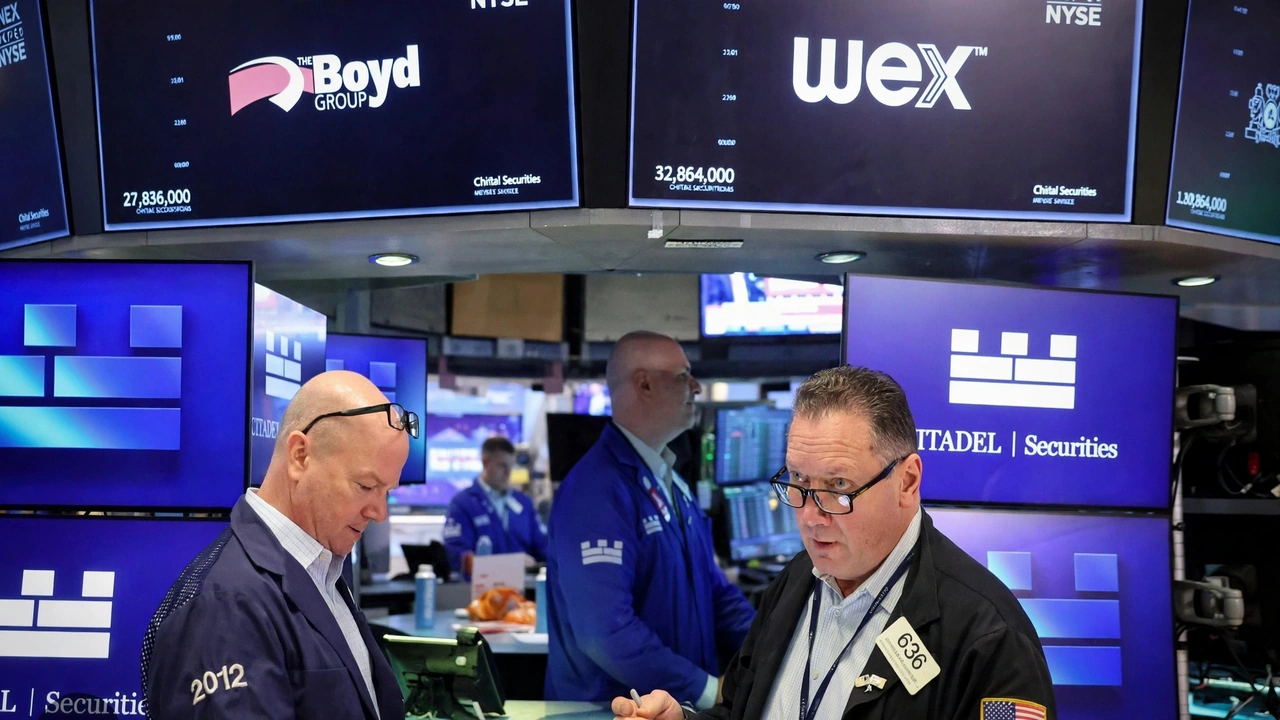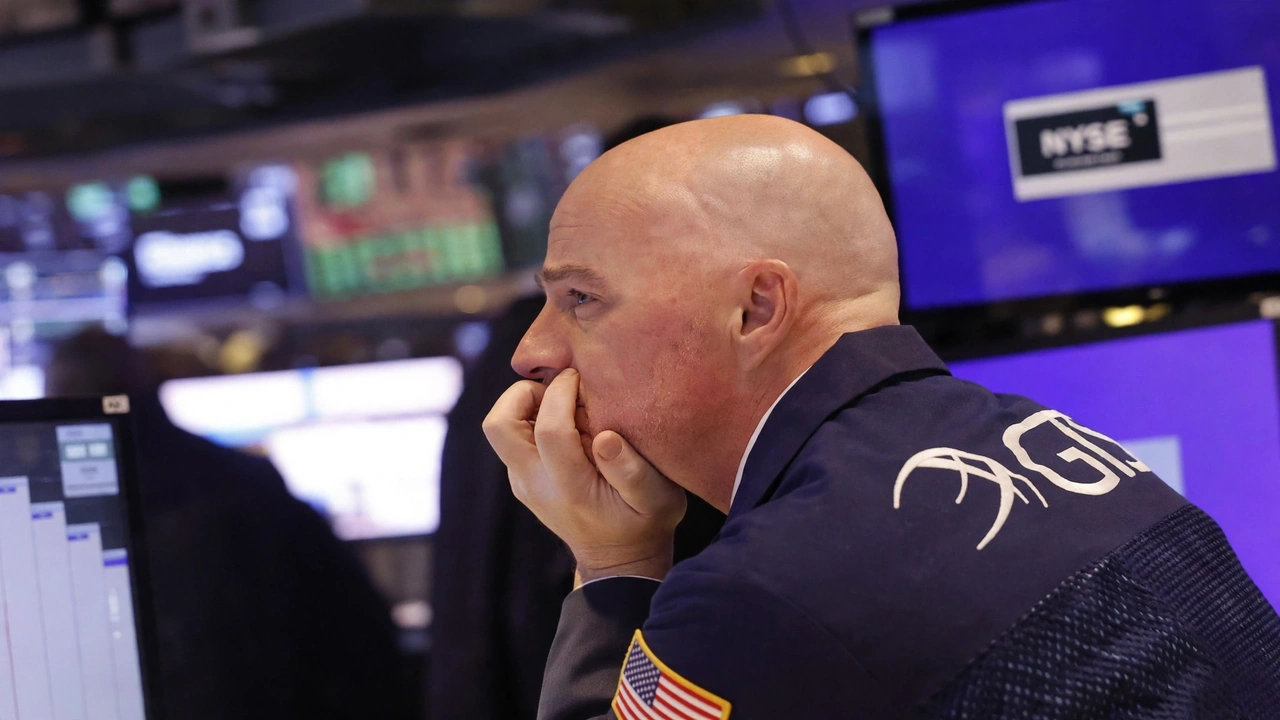


U.S. stocks fell sharply on Monday, November 16, 2026, as the Nasdaq Composite dropped 2.49% to 24,509.76, returning to correction territory amid widespread technology-stock losses. The index shed 626.51 points from Friday’s close of 25,136.27, according to Nasdaq closing data published by the Federal Reserve Bank of St. Louis.
Nvidia (NVDA) shares fell 4.12% to $156.14, extending the chipmaker’s recent losses. The S&P 500 declined 1.92% to 7,416.59, while the Dow Jones Industrial Average lost 1.41% to 51,608.17.
Nasdaq Returns to Correction Territory
Monday’s close left the Nasdaq Composite approximately 11.20% below its October 6 record closing high of 27,599.89, according to historical index records. A correction is conventionally defined as a decline of at least 10% from a recent peak, placing the threshold at approximately 24,839.90 for that record.
The Nasdaq had already crossed the threshold on November 5, when it closed at 24,315.00 during an earlier technology selloff. It recovered above that level by November 9 before falling back below it on Monday.
The return to correction territory followed a brief improvement in technology shares, including a 1.6% Nasdaq gain during the November 11 AI stock rebound. Earlier weakness had also affected the Nasdaq-100, which suffered a sharp October decline. These movements illustrate how quickly market direction has changed, although a correction designation alone cannot predict whether further losses or a sustained recovery will follow.
Nvidia and Technology Stocks Fall
Nvidia’s decline came after several turbulent trading sessions, including a previous share-price divergence between Nvidia and rival Advanced Micro Devices. Uncertainty surrounding the company’s leadership transition remained part of the market backdrop ahead of its November 17 earnings announcement.
Semiconductor shares and other technology companies also declined on Monday, extending pressure beyond Nvidia. The broader AI spending outlook remains important as investors evaluate whether infrastructure investment can support future earnings.
A separate development came from the U.S. Commerce Department, whose Bureau of Industry and Security announced new export restrictions addressing remote access to advanced American computing technology through overseas data centers. The announcement coincided with the technology-sector selloff but does not establish how much of any individual stock’s decline resulted from the new rule.
Federal Reserve Chair Kevin Warsh also discussed the opportunities and economic uncertainties surrounding advanced technology in his November 16 opening remarks. Together, these developments added important policy context without proving a single cause for Monday’s market losses.
What the Selloff Means for Investors
The decline was broader than the Nasdaq, with the S&P 500 closing series confirming losses across the wider large-company market. U.S. Treasury securities showed a different pattern: the government’s daily yield data put the 10-year constant-maturity yield at 5.12% on Monday, down from 5.15% on Friday.
That three-basis-point decline demonstrates that the equity selloff did not coincide with a simultaneous increase in the benchmark Treasury yield. Investors holding technology-heavy funds may experience different results from those with broader portfolios, depending on their actual holdings and exposure.
What Happens Next
Attention now turns to Nvidia’s November 17 quarterly results, which will provide a clearer measure of the company’s operating performance than share-price movements alone. The company’s upcoming report raises important earnings questions concerning revenue, profitability, customer demand and leadership.
Investors will also be watching whether the Nasdaq stabilizes after its return to correction territory or whether further selling spreads across the market. The distinction between Monday’s futures and the confirmed regular-session close is important as trading resumes Tuesday.
Futures, premarket prices and overnight quotations can change substantially before the next official closing observation. For now, the confirmed November 16 result shows a broad stock-market decline, renewed Nasdaq correction territory and significant pressure on Nvidia shares.