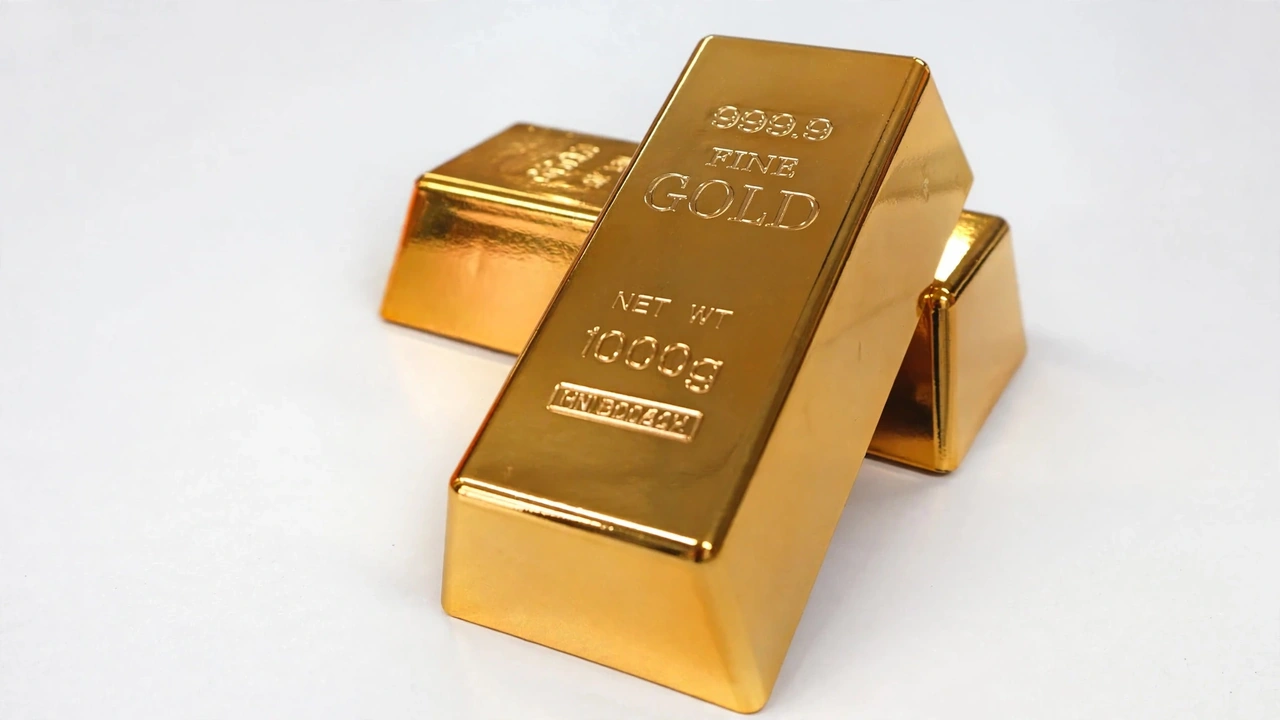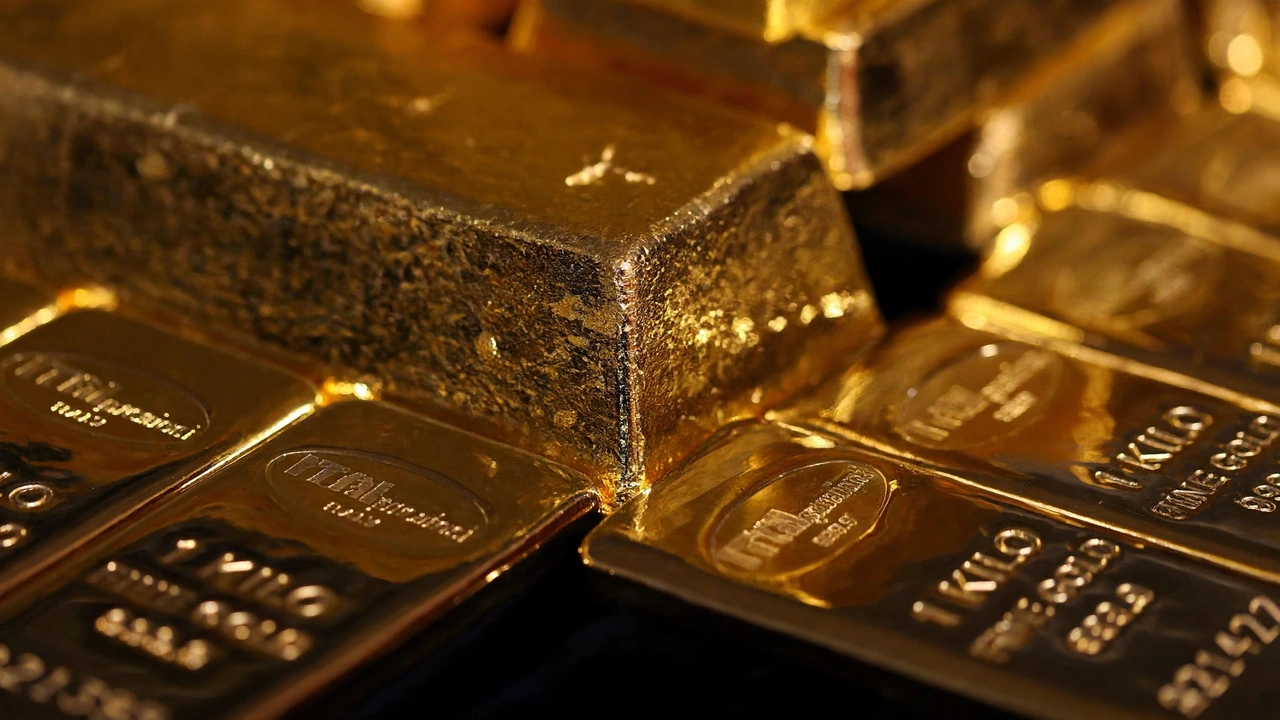

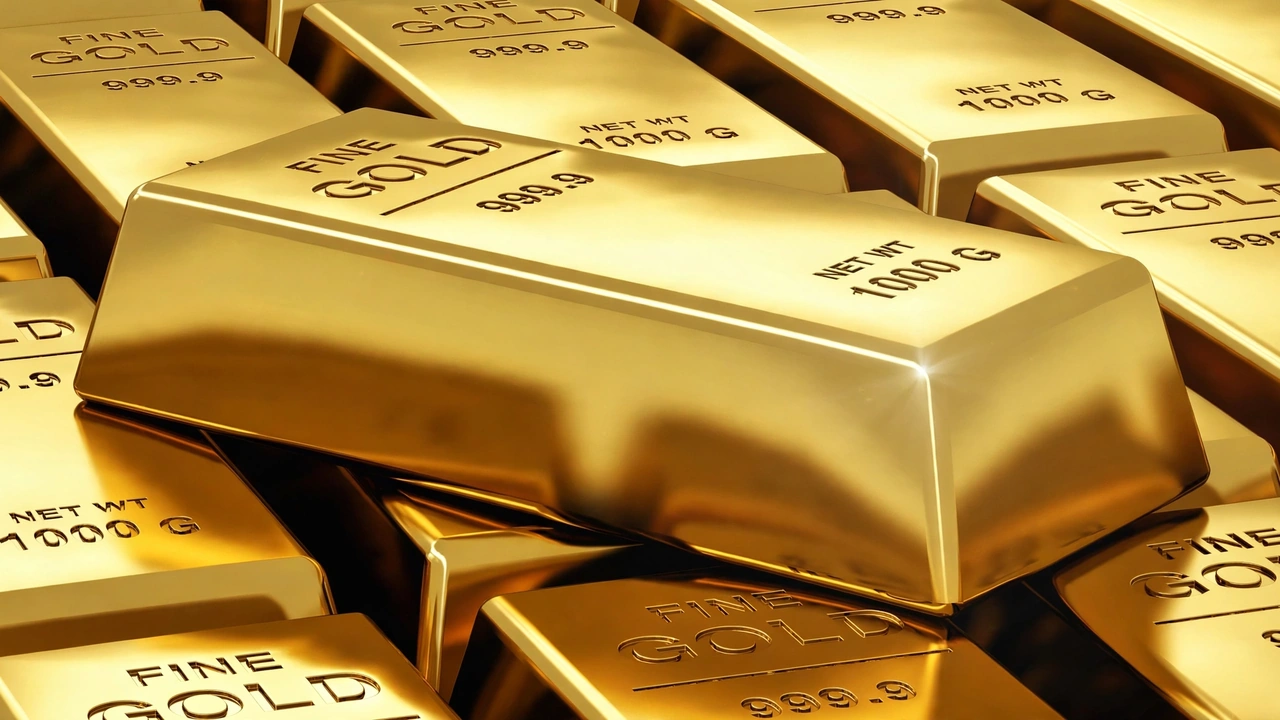
Gold prices rebounded on Tuesday, November 17, 2026, recovering modestly after falling to their lowest level in more than a year as investors weighed a stronger U.S. dollar and expectations of further Federal Reserve interest-rate increases. Spot gold rose 0.5% to $3,874.41 per troy ounce at 6:34 a.m. GMT (1:34 a.m. Eastern), while U.S. gold futures for December delivery advanced 0.6% to $3,876.70. The gains offered limited relief to bullion investors following Monday’s selloff, but gold remained close to its lowest level since October 2025.
The immediate question is whether Tuesday’s rebound signals a meaningful recovery or merely a temporary pause in a larger decline. Gold’s latest advance followed a difficult stretch in which higher bond yields, persistent U.S. inflation and expectations of tighter monetary policy weakened its appeal relative to interest-bearing assets. For investors holding bullion, gold-backed exchange-traded funds or precious-metals-related investments, the distinction matters because a positive trading session does not necessarily reverse accumulated losses.
Gold Rebounds After Monday’s Selloff
Gold’s recovery followed a sharp decline on November 16, when spot bullion fell toward $3,830 an ounce, its lowest level since October 2, 2025, according to Reuters. The metal had traded near $3,840 earlier Monday, extending a retreat driven partly by dollar strength and growing expectations that U.S. borrowing costs would remain elevated. The November 16 decline established the immediate backdrop for Tuesday’s rebound.
The move back to $3,874.41 represented an increase of approximately $44 per ounce, or about 1.2%, from Monday’s roughly $3,830 intraday low. That comparison measures the recovery from the previous session’s lowest observed price, not Tuesday’s reported day-on-day percentage gain of 0.5%. The distinction matters because a rebound from an intraday low can appear larger than the change measured against the market’s previous reference price.
A broader comparison reveals how much ground bullion has lost despite Tuesday’s improvement. On November 10, Reuters recorded spot gold at $4,124.42 per ounce at 6:18 a.m. GMT, shortly before the release of U.S. inflation data. Comparing that observation with Tuesday’s $3,874.41 quotation produces a decline of $250.01 per ounce, or approximately 6.1%, over seven calendar days. These are comparable early-session spot-market observations rather than official daily closing prices, but they show that the latest bounce has recovered only a small fraction of the decline.
Gold’s November 10 price also provides useful context for investors evaluating the recent change in market sentiment. The metal was trading above $4,100 before inflation data strengthened the argument for additional Federal Reserve tightening, while subsequent sessions brought renewed selling pressure. The weekly gold decline illustrates how quickly the market shifted from testing higher prices to defending levels below $3,900.
Why Higher Interest Rates Still Matter
The primary pressure on gold comes from expectations for U.S. monetary policy, the strength of the dollar and the returns available on competing assets. Gold does not pay interest, so rising yields on Treasury securities can increase the opportunity cost of holding bullion. A stronger dollar can also make dollar-denominated gold more expensive for purchasers using other currencies, although exchange-rate changes and local-market conditions determine the final cost.
Official U.S. Treasury figures help establish the extent of the recent interest-rate pressure. The Treasury yield data show the 10-year nominal Treasury yield rising from 4.98% on November 10 to 5.12% on November 16, an increase of 14 basis points. These are end-of-day government yield observations, not Tuesday’s live bond-market quotations, and their movement does not independently prove what caused gold prices to fall.
The rise in inflation-adjusted yields provides another important comparison. Treasury’s real yield data show the 10-year real yield increasing from 2.78% on November 10 to 2.92% on November 16, also a 14-basis-point rise. Real yields help investors compare the inflation-adjusted returns available from government securities with an asset such as gold that generates no contractual income. Understanding the distinction between Treasury yields and inflation-protected securities is especially important when inflation fears and interest-rate expectations move together.
The latest U.S. inflation figures provide a reason policymakers remain concerned about price pressures. The Bureau of Labor Statistics reported in its October inflation report that consumer prices increased 0.4% in October after rising 0.6% in September, while prices excluding food and energy rose 0.3% for a third consecutive month.
Some October annual inflation comparisons were unavailable because the agency lacked corresponding October 2025 index data, meaning the report provided an incomplete picture of year-over-year inflation. The combination of persistent monthly core inflation and expectations of tighter policy has complicated gold’s traditional role as an inflation hedge, a distinction also explored in the October inflation figures.
The Federal Reserve’s Next Move
Federal Reserve Governor Christopher Waller intensified attention on December’s interest-rate decision in a November 10 speech. In his November 10 remarks, Waller indicated support for a quarter-percentage-point increase and said a larger half-point move should be considered if core consumer inflation remained around 0.3% or higher. The subsequent inflation reading met that condition, but Waller’s position represented an individual policymaker’s assessment rather than a committee decision or guarantee of a larger increase.
The Federal Reserve’s October policy statement kept the federal funds target range unchanged at 3.75% to 4%, with two policymakers dissenting in favor of an increase. That decision helps explain why investors have been watching both inflation figures and officials’ comments for clues about the next adjustment. The distinction between current policy and future expectations is essential because market prices can respond to anticipated decisions long before the Federal Reserve acts, as outlined in the rate decision guide.
According to Reuters’ November 17 report, futures-market pricing assigned a probability of approximately 95.4% to a quarter-point December increase and 4.6% to a half-point move at the time of its market observation. These estimates are market-implied probabilities rather than official Federal Reserve forecasts, and they can change substantially as traders adjust positions. The debate over the appropriate size of the next increase remains relevant to gold because further upward revisions to expected interest rates could sustain pressure on bullion, even when temporary rebounds occur.
Silver Rises Faster as Precious Metals Recover
Other precious metals also gained during Tuesday’s early trading, although their advances differed in scale. Reuters reported spot silver climbing 1.1% to $47.50 per ounce, while platinum rose 1.2% to $1,467.29 and palladium gained 0.8% to $976.58. Silver’s reported percentage advance was more than twice gold’s 0.5% gain, demonstrating that the rebound extended beyond bullion but was not uniform across precious metals.
The comparison is meaningful because these metals share some investment-market influences while also responding to different industrial and supply-demand conditions. Silver, platinum and palladium have industrial uses that can make their price movements sensitive to manufacturing demand and other factors that do not affect gold in the same way. Their simultaneous advances therefore provide evidence of a broader precious-metals recovery during the reported session, but do not establish a single cause or guarantee that the gains will continue.
What the Rebound Means for Investors
For investors holding physical gold, Tuesday’s improvement increases the quoted market value of their holdings relative to the previous session, but actual resale proceeds depend on purity, weight, dealer spreads, transaction costs and local currency movements. A one-ounce bullion holding has an indicative spot-market value of about $3,874 at the reported quotation, before premiums, discounts or fees. Jewelry buyers and sellers should not treat that wholesale reference as a guaranteed retail purchase or resale price.
Gold-backed exchange-traded funds provide another form of exposure, although their market prices and returns can differ from the spot price because of fund expenses, trading conditions and product structure. Gold-mining stocks introduce additional company-specific risks, including operating costs, production performance and financing conditions, so a modest bullion rebound does not automatically imply a matching increase in mining shares.
Investors comparing gold with income-producing securities may also find it useful to understand how inflation-protected bonds operate, rather than assuming all inflation-sensitive assets respond alike. The latest rebound also illustrates why gold’s relationship with inflation is more complicated than its reputation as a safe-haven asset might suggest.
Inflation can increase demand for assets perceived as stores of value, but it can also encourage the Federal Reserve to raise interest rates, strengthening the dollar and raising returns on competing investments. The direction of gold prices depends on which influences dominate at a particular time, alongside investment flows, geopolitical uncertainty and physical demand.
What Could Move Gold Prices Next?
Investors are now looking toward the publication of the Federal Reserve’s October 27–28 meeting minutes, scheduled for Wednesday, November 18, at 2 p.m. Eastern, according to the central bank’s November release calendar. The minutes may provide additional context about policymakers’ inflation concerns, the reasons behind October’s decision and the range of views within the committee. They will describe discussions from an earlier meeting rather than announce a new interest-rate decision.
A more cautious interpretation of future tightening could ease some pressure on gold if Treasury yields or the dollar weaken, while renewed expectations of aggressive rate increases could have the opposite effect. Neither scenario is established by Tuesday’s small advance, and market reactions will also depend on subsequent economic data and developments outside monetary policy. Investors evaluating the rebound should therefore distinguish a confirmed change in price from a forecast about its direction.
For now, gold’s move back toward $3,874 represents a measurable recovery from Monday’s more-than-one-year low, not evidence that the broader decline has ended. The metal remains approximately 6.1% below its November 10 early-session quotation, while recent government data show that U.S. Treasury yields have risen materially over the same period. Whether the rebound develops into a sustained recovery will depend on subsequent trading, monetary-policy expectations and the changing balance between demand for gold and returns on competing assets.