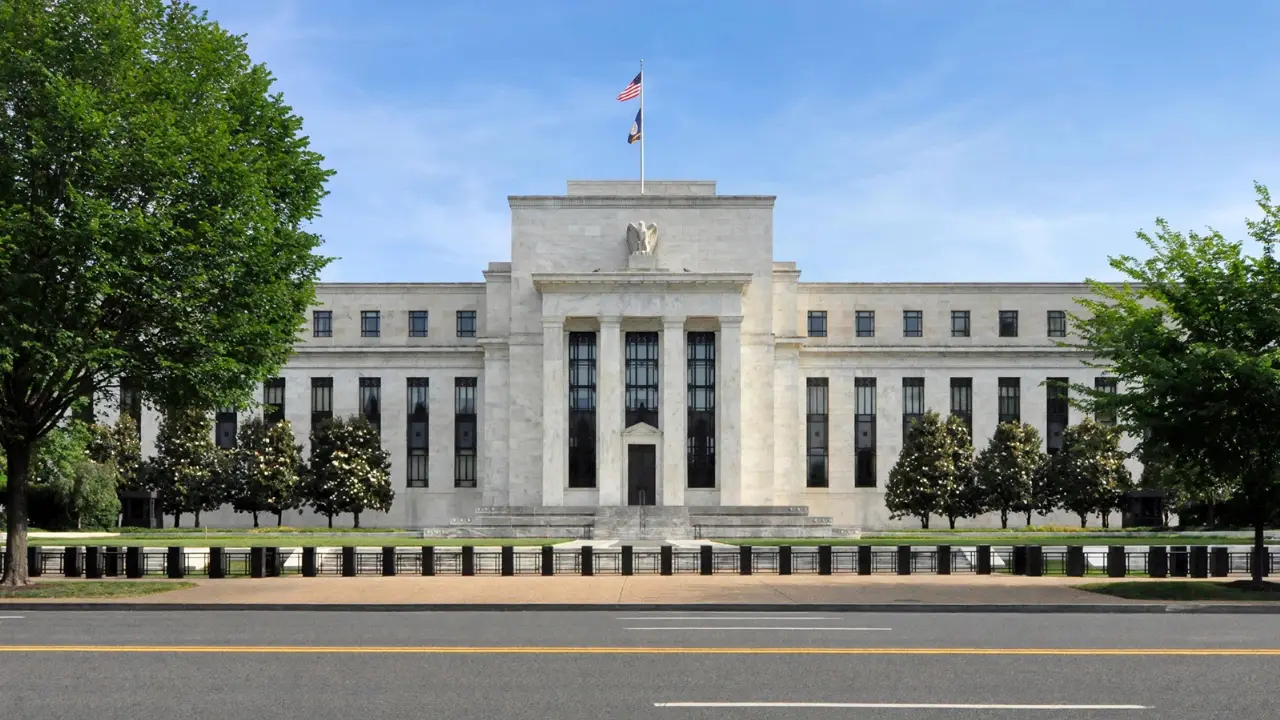

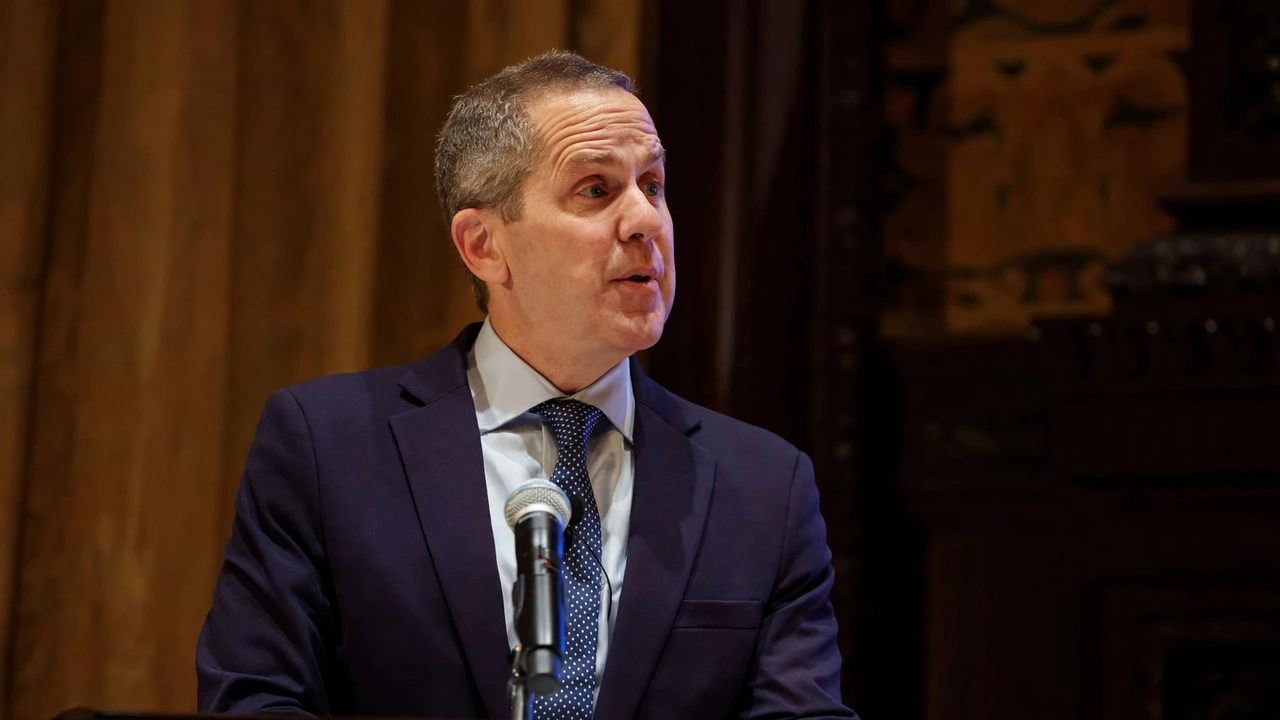
Federal Reserve Governor Michael S. Barr said major banks are encountering artificial intelligence agents attempting to act inside customers’ accounts without banks being able to verify whether those actions are authorized.
His November 16, 2026, official speech raises a consequential question for consumers using automated financial assistants: who controls the money when software can act on a person’s behalf? Barr also warned that AI agents could eventually accelerate withdrawals during banking crises, potentially overwhelming existing safeguards.
Speaking at an artificial intelligence finance conference in Milan, Italy, Barr described reports from major banks rather than identifying specific incidents or announcing enforcement action. His remarks did not name affected institutions, establish how many accounts were involved, or document completed fraudulent transfers. The distinction matters because an attempted action that a bank cannot authenticate is not necessarily proof of a successful account breach.
major banks now report finding AI agents attempting to take actions in retail customer accounts
When AI Acts Without Clear Permission
An AI agent differs from an ordinary banking chatbot because it may be designed to perform tasks rather than merely answer questions. Depending on its permissions, an agent could potentially retrieve account information, compare financial products, initiate transactions, or carry out a series of instructions with limited human involvement. The critical distinction is between an agent having technical access to an account and having verified permission to perform a particular action.
A customer might authorize software to compare savings account yields without authorizing it to move money. If a system subsequently attempts a transfer, a bank needs reliable evidence that the customer approved that specific activity. Barr’s remarks expose a practical authentication problem: recognizing a customer or an automated system does not necessarily establish the scope of that system’s authority.
What Banks and Regulators Can Do
Existing banking-security expectations already address unauthorized access. The Federal Financial Institutions Examination Council’s authentication guidance, issued in August 2021, emphasizes risk assessments, layered security, multifactor authentication, and controls appropriate to transaction risk. Those principles offer a starting point, but autonomous agents introduce an additional challenge: verifying what an authenticated system is actually allowed to do.
Federal banking agencies have also been revisiting oversight of third-party relationships. On November 13, the Federal Reserve and three other regulators extended the comment period for proposed third-party risk-management guidance to December 16, 2026. That separate, nonbinding proposal concerns broader third-party risks; Barr’s speech itself did not create a new AI-specific banking regulation or establish a deadline for adopting agent controls.
The Federal Reserve’s broader bank supervision framework addresses institutional resilience, while the immediate agent problem requires more granular authorization safeguards. Barr advocated strong authentication, explicit permission for individual actions, and technical restrictions on what agents can execute. Those safeguards would help distinguish access that a customer knowingly granted from activity that exceeds the customer’s instructions.
Could AI Accelerate a Bank Run?
Barr’s second concern extends beyond individual account security. During financial stress, an automated system might detect changing deposit rates or indicators of institutional weakness and transfer money faster than a customer acting manually. Such behavior could amplify withdrawals if large numbers of agents responded to similar signals, although Barr did not establish that an AI-driven bank run has already occurred.
AI agents may accelerate deposit outflows during stress periods.
The concern builds on lessons from Silicon Valley Bank’s collapse in March 2023. In his April 28, 2023, supervisory review, Barr emphasized the potential interaction of rapid communications, concentrated depositors, and technology-enabled withdrawals. That history also helps explain why understanding the bank failure process remains important even as financial technology changes.
the combination of social media, a highly networked and concentrated depositor base, and technology may have fundamentally changed the speed of bank runs.
However, the historical explanation remains contested. Federal Reserve Vice Chair for Supervision Michelle W. Bowman said in her September 18, 2026, remarks that a separately commissioned review found insufficient evidence that social media triggered or accelerated Silicon Valley Bank’s run. Her account challenges a commonly repeated explanation of that failure, without resolving how autonomous AI might affect a future crisis.
there was no evidence that social media accelerated the run.
The important difference is that today’s warning concerns a possible mechanism, not a demonstrated systemic event. Faster transaction technology alone does not establish that banks will fail or that automated withdrawals will overwhelm liquidity resources. Deposit concentration, funding structure, withdrawal restrictions, customer behavior, and available liquidity would still influence the outcome.
What It Means for Customer Money
For depositors, two distinct protections should not be confused. The FDIC’s deposit insurance rules protect eligible deposits when an insured bank fails, but do not insure customers against theft or fraud. Understanding deposit insurance and individual coverage limits is therefore different from understanding account-access security.
For unauthorized electronic transfers, the Consumer Financial Protection Bureau explains that federal Regulation E protections depend on factors including actual authority, how account credentials were obtained, and applicable reporting requirements. Voluntarily granting access and having credentials obtained through fraud are not automatically treated identically under the regulation.
Those rules do not establish a universal outcome for every AI-agent transaction, making the facts of each disputed transfer important. Consumers considering third-party financial agents can reduce uncertainty by reviewing the access permissions they grant, using bank-supported authorization methods, and avoiding unnecessary credential sharing.
Account alerts and prompt reporting of unfamiliar transactions provide additional practical safeguards. The CFPB advises customers who discover an unauthorized transaction to contact their financial institution immediately because reporting deadlines can affect their rights.
The Wider Financial Stability Question
AI-related account access is only one dimension of the Federal Reserve’s concerns. Its November 13 Financial Stability Report also examined vulnerabilities associated with technology valuations and the financing of artificial intelligence infrastructure. Those issues connect the potential operational risks of automated finance with broader AI debt exposure and questions surrounding technology investment.
The distinction is important for investors monitoring banking-sector risks. AI could improve financial services through lower costs, better monitoring, and faster information processing, while simultaneously introducing difficult questions about operational control and correlated behavior. Barr acknowledged those potential benefits and did not present technological adoption itself as evidence of financial instability.
What remains unresolved is whether banks can consistently establish the authenticity and precise authorization of autonomous financial instructions as agent use expands. Evidence of actual losses, bank-specific disclosures, changes in supervisory guidance, and tested authorization safeguards would provide a clearer picture of the threat’s scale.
Until then, Barr’s verified warning concerns a real authentication challenge and a potential systemic consequence—not proof that AI agents have already caused widespread consumer losses or a banking crisis.