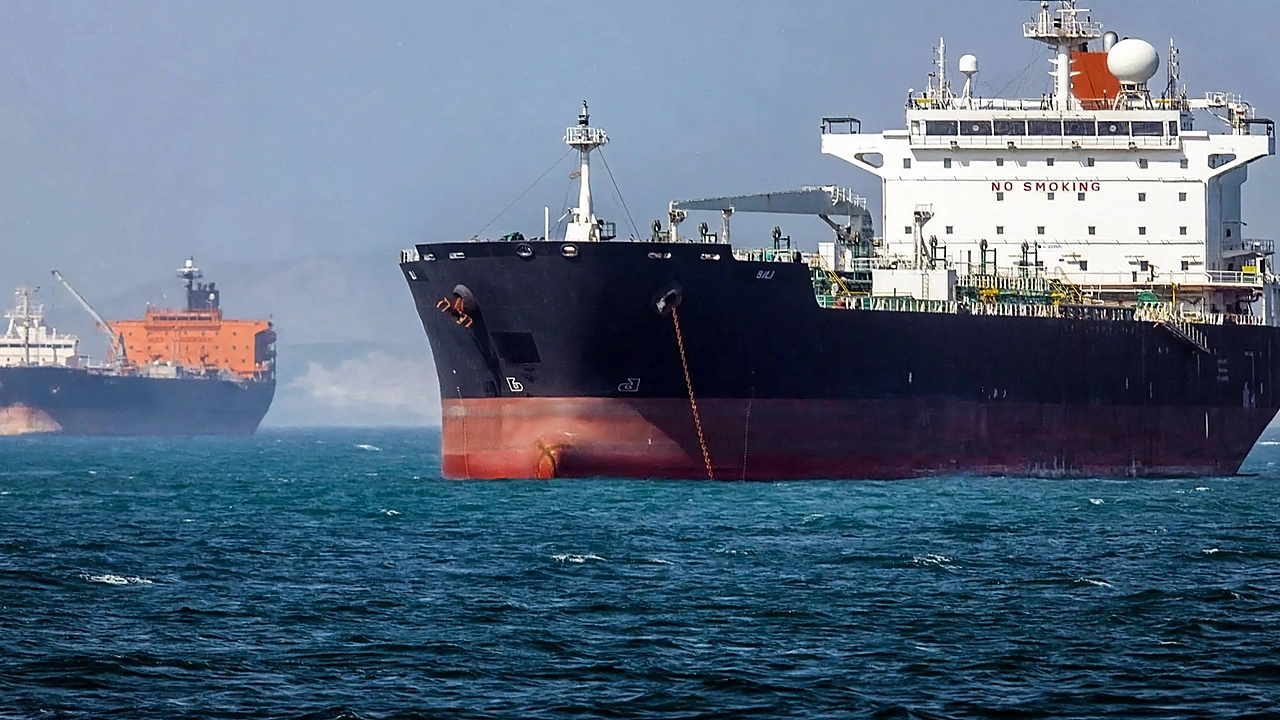


Federal Reserve researchers have found that oil futures prices may overstate investors’ expectations for future crude oil prices during major geopolitical supply disruptions, challenging the assumption that futures contracts provide a direct forecast of where oil prices will settle.
In an October 9 research note, economists Erik Heitfield, Yang-Ho Park and Erfan Danesh examined how supply shortages, risk premiums and deteriorating market liquidity affect the information contained in West Texas Intermediate (WTI) crude oil futures.
Their analysis found that estimated risk premiums have turned negative during the Middle East conflict, meaning futures contracts may trade above the prices investors actually expect oil to reach when those contracts expire.
The distinction matters for economic forecasting. A futures price is an observable market transaction price, but it also reflects the cost and value of transferring risk. Treating that price as an unbiased forecast can therefore misrepresent the market’s underlying expectations, particularly during an unusually severe supply shock.
Oil Futures Show Unusual Distortions
The researchers examined WTI futures data extending back to 2000, including earlier periods of disruption such as the COVID-19 oil market collapse and the beginning of Russia’s invasion of Ukraine.
The latest conflict produced an unusually steep downward slope in the futures curve, a condition known as backwardation, in which oil available for immediate delivery commands a higher price than contracts for later delivery.
The researchers found that the implied economic value of immediate physical oil availability, measured through net convenience yields, temporarily approached the highest levels in their approximately 26-year dataset. Their Table 2 provides a comparison of estimated risk premiums across three futures maturities.
| Contract Maturity | Middle East Conflict | Early Ukraine Conflict |
|---|---|---|
| 3 months | −5.4% | −1.5% |
| 6 months | −4.3% | −1.3% |
| 1 year | −7.6% | −4.5% |
Source: Federal Reserve, October 9, 2026, Table 2. Figures represent model-estimated risk premiums, not observed future price declines.
The estimates are more negative across all three maturities during the Middle East conflict than during the early Ukraine conflict. However, the researchers explicitly caution that the unusual severity of current backwardation requires extrapolating their model beyond much of the historical experience used to estimate it.
Consequently, the figures should not be interpreted as precise predictions of how far crude prices will fall. The findings also add context to the oil supply disruptions that have affected physical crude markets, where immediate availability and future delivery contracts can carry substantially different economic values.
Why Futures Prices Can Mislead
The research identifies two related mechanisms: the demand for protection against rising oil prices and the changing relationship between oil investments and the wider economy.
Oil producers typically face financial losses when crude prices decline. Selling futures allows them to lock in prices and reduce that exposure. Airlines, refiners and other major energy consumers face the opposite risk: higher oil prices increase operating costs, encouraging them to buy futures as protection.
During a severe supply disruption, demand for protection against higher prices can become especially valuable. That demand may lift futures prices relative to the expected price of oil at delivery.
The researchers also examine the role of oil as a financial hedge. When oil prices rise because global economic activity is strengthening, oil investments may move in the same direction as equities. But when prices rise because physical supply has been disrupted, higher energy costs can weaken economic activity and pressure stocks.
Under those circumstances, a long position in oil can provide protection against broader economic losses. The study reports that the historical correlation between daily oil and equity returns since 2000 was positive at approximately 0.18, while recent returns had become strongly negatively correlated.
This shift supports the researchers’ interpretation that oil futures may have acquired greater value as a hedge against macroeconomic risk. That additional hedging value can produce a negative expected return for investors holding long futures positions, even when the contract price exceeds their expected future spot price.
Oil Market Liquidity Remains Weak
A separate finding concerns the ability of investors to trade oil futures without significantly affecting prices. The researchers measured top-of-book market depth, which represents the number of contracts available at the best quoted buying and selling prices.
Their Figure 3 shows that market depth deteriorated across futures contracts ranging from the nearest maturity to contracts extending one to two years ahead.
Unlike several earlier market disruptions, when liquidity recovered relatively quickly, the latest episode showed depressed market depth for more than five months through the July 2026 endpoint of the liquidity dataset.
Reduced liquidity matters because fewer available contracts can increase the compensation required by investors and market makers to absorb trading risk. This creates another reason why observed futures prices may differ from expected future spot prices.
The finding also places an important limit on interpreting the research as a current market snapshot. Although the note was published on October 9, its liquidity analysis does not establish trading conditions on that publication date.
The Price Gap Versus Premium
An Investozora calculation using the study’s reported futures prices and model-estimated risk premiums reveals a distinction that is easy to overlook. For the Middle East conflict period, Table 2 reports an average spot price of $91.89 per barrel and a one-year futures price of $71.99.
Spot-to-futures gap
$19.90
Per barrel
Relative price gap
21.7%
Of average spot price
The 21.7% difference measures how far the average one-year futures price stood below the contemporaneous average spot price. It does not measure the market’s expected one-year oil price decline.
The model’s estimated one-year risk premium, meanwhile, was −7.6%. That is a separate statistical estimate based on the relationship between futures prices and subsequent spot prices in the historical sample.
The two measures answer different questions. The first describes the shape of the observed futures curve. The second estimates the compensation, potentially negative, associated with holding futures contracts. Conflating them would incorrectly treat the entire downward slope of the futures curve as either an expected price decline or a risk premium.
There is also a material uncertainty surrounding the model estimates. Table 2 reports a standard error of 8.0 percentage points for the one-year Middle East conflict estimate, larger than the absolute estimated premium of 7.6%.
That does not invalidate the researchers’ broader finding, which draws on economic theory and regression evidence. It does, however, caution against presenting the one-year point estimate as a precisely established market expectation.
The analysis also relies on an extrapolation during an unusually extreme market episode. The authors acknowledge that the degree of backwardation during March through May was nearly unprecedented in their historical dataset.
How Earlier Fed Research Compares
The October 9 paper follows a related September 3 study by Alex Haag, Colin J. Hottman and Amanda Tinkham. That earlier study examined whether commodity futures could predict future spot prices more accurately than simple alternatives, including forecasts based on unchanged prices, recent momentum and mean reversion.
Using monthly data across 12 commodities, the researchers found that futures often performed particularly well relative to alternative methods when futures prices differed substantially from spot prices. But they also emphasized that futures prices were not generally unbiased forecasts.
The October research addresses a more specific question: why might futures prices systematically differ from investors’ expectations during a major geopolitical supply shock?
Rather than simply evaluating forecasting errors, it estimates how the slope of the futures curve is associated with risk premiums and examines the role of deteriorating liquidity.
These are complementary findings, not a formal revision or withdrawal of the September study. Futures prices can outperform simple forecasting alternatives while still containing a risk premium that makes them an imperfect direct measure of expected prices.
The new analysis therefore strengthens the case for separating the forecasting information in futures prices from the financial compensation embedded in those prices.
Implications for Inflation and Rates
Oil futures are relevant beyond commodity trading because future energy prices can influence assumptions about inflation, business costs and economic growth.
A sustained rise in crude prices can increase transportation and production costs, potentially contributing to consumer inflation. Conversely, a reversal of a temporary supply shock could reduce some of that pressure. These relationships are particularly important when assessing Federal Reserve policy and the extent to which energy-driven inflation may persist.
For policymakers and forecasters, the new research suggests that using the futures curve mechanically as a path for future oil prices may introduce a measurement problem when risk premiums are unusually negative.
A higher futures price does not necessarily indicate that investors expect an equally high future spot price. Part of that price may instead reflect demand for financial protection against a severe economic disruption. The distinction also matters when interpreting energy inflation pressures and their potential influence on monetary-policy expectations.
This does not establish that the Federal Reserve will change its inflation projections or interest-rate decisions. The October paper is staff economic research, not a Federal Open Market Committee policy statement or an announced change in official forecasting procedures.
The authors’ findings also do not establish where oil prices will trade in three, six or twelve months. Future supply conditions, geopolitical developments, demand and financial-market behavior remain uncertain.
The central implication is narrower but important: during an extreme oil supply shock, the market price of protection against higher oil prices can differ materially from the market’s underlying expectation of where crude prices will eventually settle. For analysts interpreting inflation risks and the interest rate outlook, that distinction may be as important as the direction of the futures curve itself.