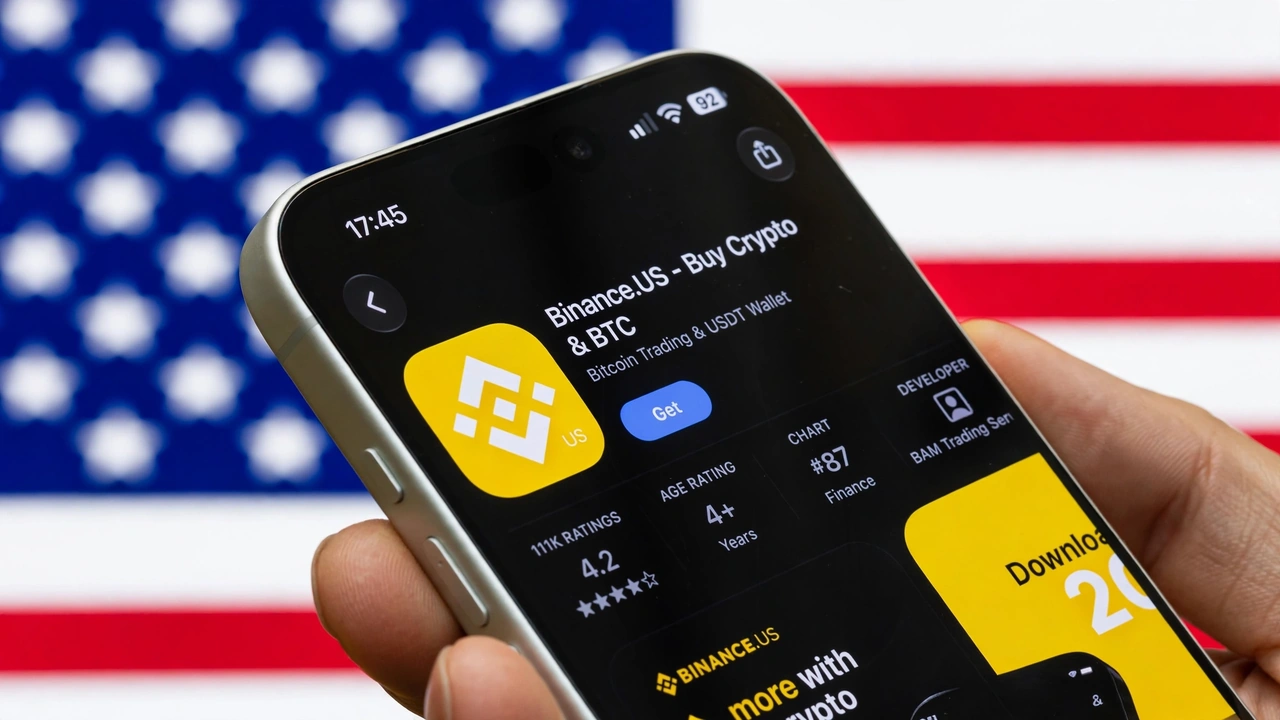


Four fake cryptocurrency trading platforms allegedly helped steal more than $37 million from over 1,500 American investors by making fraudulent investments look like legitimate trading opportunities. The U.S. Securities and Exchange Commission charged eight entities on November 19, 2026, alleging that they operated a coordinated scheme that moved from one platform to another between August 2024 and May 2026. The alleged operation combined social media advertisements, private investment groups, fabricated regulatory credentials and trading applications that displayed investments investors did not actually own.
The most revealing finding is that the alleged fraud did not simply depend on convincing people to buy cryptocurrency. According to the SEC’s federal court complaint, the operators first established trust through conventional stock-market advice before persuading investors to move their savings into purported crypto investments. Some entities even submitted real government filings, which were then presented to investors as proof of regulatory approval despite providing no such assurance.
The SEC identified four trading platforms: Tech Brokerage Asset Alliance Ltd., IdeaCrypto Exchange LLC, RealSimple Crypto Exchange Inc. and Essential Crypto Exchange. Each was paired with an organization presenting itself as an investment adviser, creating eight defendant entities in total. The regulator alleges that these operations were connected rather than four unrelated scams, with substantially similar methods, overlapping infrastructure and a recurring pattern of shutting down one operation before another emerged.
The first pairing involved Advisor WeChat Capital and Tech Brokerage Asset Alliance, operating approximately from August through December 2024. HB Wealth Advisors and IdeaCrypto Exchange followed between January and July 2025, before Convergent Wealth Advisors and RealSimple Crypto Exchange operated from approximately July through December 2025. The final identified pairing, Associated Wealth Advisors and Essential Crypto Exchange, operated approximately from January through May 2026, according to the complaint.
The regulator’s allegations describe a repeated sequence that began with advertisements promoting supposed investment expertise. Interested users were directed into WhatsApp groups and private conversations, where individuals claiming to be experienced financial advisers offered personalized stock recommendations. These interactions helped establish credibility before the supposed advisers began encouraging investors to sell existing holdings and purchase cryptocurrency through the associated trading platform.
The alleged advisers sometimes recommended ordinary U.S.-listed stocks before shifting attention toward purported initial exchange offerings, or IEOs. These offerings were presented as opportunities to buy digital assets before their broader market launch, often with suggestions that the investments could generate greater returns than conventional stocks. The SEC alleges that the investment opportunities being promoted were fabricated and that the supposed crypto assets underlying the offerings did not exist.
This distinction matters because investors were not merely taking the ordinary risk that a digital asset might lose market value. According to the complaint, the platforms were designed to create the appearance of ownership and profitable trading while investor funds were diverted elsewhere. The difference between genuine crypto market movements and fabricated account balances is central to understanding why these alleged transactions amounted to fraud rather than unsuccessful speculation.
The money trail provides a clearer picture of the operation’s scale. The SEC identified approximately $35.54 million in cryptocurrency deposits and another $1.90 million in fiat currency, bringing the alleged total received from investors to $37,445,800. That means approximately 94.9% of the reported total involved cryptocurrency deposits, while the remaining 5.1% involved traditional currency, based on calculations from the figures in the complaint.
The largest reported cryptocurrency accumulation occurred through IdeaCrypto Exchange, which received at least $13.64 million, representing approximately 38.4% of the four platforms’ combined identified cryptocurrency deposits. RealSimple Crypto Exchange received at least $10.36 million, Tech Brokerage Asset Alliance received at least $7.32 million, and Essential Crypto Exchange received at least $4.22 million. These figures describe amounts the SEC traced to platform-associated accumulation addresses, not independently established profits or the amount ultimately recoverable by investors.
The figures also expose an important limitation in the evidence. The SEC’s four platform-specific cryptocurrency amounts add up to $35,542,322, one dollar below the separately reported cryptocurrency subtotal of $35,542,323, apparently reflecting a minor reporting or rounding difference. Adding the SEC’s stated cryptocurrency subtotal to its $1,903,477 fiat figure produces the reported $37,445,800 total, which is the appropriate overall figure to use without claiming precision beyond the regulator’s accounting.
The complaint also describes how funds moved after investors transferred cryptocurrency to addresses supplied by the purported advisers. Investor deposits were aggregated through addresses on the Ethereum network before being routed through intermediary wallets and cross-chain bridges toward common destinations on the Tron network. The SEC cites these shared transaction pathways, along with recurring advertising methods and website connections, as evidence that the four operations belonged to a broader coordinated scheme.
Investors nevertheless saw what appeared to be functioning trading accounts. The applications displayed deposits, purported cryptocurrency purchases and rising investment values, even though the SEC alleges that the underlying trading did not occur. When investors attempted to withdraw their supposed profits, operators demanded additional fees paid separately in cryptocurrency, creating another opportunity to collect money before communications and websites eventually disappeared.
The financial consequences extended well beyond speculative trading accounts. One investor allegedly lost nearly $500,000 after obtaining money from a retirement account, a family member and a neighbor. Another lost approximately $850,000, including funds connected to liquidating a 401(k) account, while a third reportedly lost close to $1.6 million after putting assets including a home and an IRA into the scheme.
These examples show why the consequences could be more severe than the initial cryptocurrency deposits suggest. Money drawn from retirement savings, family borrowing and property sales may involve lasting financial damage, but the complaint does not establish the complete long-term outcome for every victim. The three examples illustrate the scale of individual losses without proving that all 1,500-plus investors experienced similar financial consequences.
One particularly significant element of the alleged scheme involved the misuse of authentic regulatory systems. According to the complaint, all four crypto trading platform defendants registered as money services businesses with the Treasury Department’s Financial Crimes Enforcement Network, or FinCEN. Some defendants also submitted SEC filings and then used the resulting public records to suggest that regulators had examined, approved or supervised their operations.
Those claims exploited a distinction that is easy for an ordinary investor to misunderstand. FinCEN’s registration guidance explicitly states that appearing in its database is not government certification or an endorsement of legitimacy, and that the agency does not verify the information submitted by registrants. A genuine registration entry therefore cannot, by itself, establish that a cryptocurrency trading platform is trustworthy or that the investment it offers actually exists.
The SEC describes a similar tactic involving its electronic filing system. Tech Brokerage Asset Alliance obtained an SEC filing identifier and submitted a Form D, which representatives allegedly cited as evidence that the company was registered and closely monitored by the agency. Convergent Wealth Advisors and Essential Crypto Exchange also submitted Forms ADV claiming exempt reporting adviser status, with information the SEC alleges was false or misleading.
The regulator says some investors were additionally shown counterfeit SEC certificates. These documents allegedly combined government branding and filing references to create an impression of official approval that the underlying records did not provide. The SEC subsequently removed the relevant Tech Brokerage Form D and Forms ADV associated with Convergent Wealth and Essential Crypto from its website, according to the agency’s November 19 announcement.
For prospective investors, this makes independent verification more complicated than simply finding a company name in a government database. Checking an investment adviser’s registration is still important, but the existence of a filing must be distinguished from registration status, authorization to conduct a particular activity and actual regulatory approval. Investors should also verify that the person contacting them genuinely represents the firm identified in official records rather than an impersonator using its name.
The alleged coordination between the four operations provides another significant finding. The complaint identifies nearly identical promotional material, recurring investment competitions between supposed financial advisers, similar fee arrangements and overlapping information used to register websites. In one instance, a successor organization allegedly left the name of a preceding operation on its website, while blockchain transaction records indicated shared pathways for moving deposited funds.
Those details support the SEC’s contention that the scheme repeatedly changed its outward identity while preserving much of its underlying structure. But the evidence also has limits: the agency says the entities were likely operated by individuals overseas, without establishing the identities and locations of every person behind the alleged network. Regulatory cooperation across borders and shared financial infrastructure do not independently establish where each participant operated or who ultimately controlled every wallet.
The case adds to a broader pattern of enforcement actions involving fraudulent investment platforms. In a separate matter, the SEC charged two entities over an alleged crypto fraud scheme involving approximately $130 million, demonstrating that the agency has investigated other large cryptocurrency-related allegations. Those cases should not be treated as parts of the same network without evidence connecting their operators, transactions or victims.
The concern is also consistent with warnings about fraud affecting household finances more generally. Federal Trade Commission figures showed that older adults reported approximately $3 billion in fraud losses during 2025, although those losses cover different types of fraud and cannot be added directly to this case without addressing overlap and differing reporting methods. The wider fraud loss figures provide context for the financial risks while leaving the specific number of older victims in the SEC’s case undetermined.
The SEC’s investor education office had already warned in December 2025 that investment group chats can serve as an entry point for scams. Its investor alert describes warning signs including unsolicited investment recommendations, impersonated experts, fabricated profits and demands for additional payments before withdrawals can proceed. Those behaviors closely resemble the mechanisms alleged in the November 2026 complaint.
For someone approached by an unfamiliar adviser, a particularly important warning sign is pressure to move assets from an established account into a trading application selected by that adviser. The risk becomes more serious when the person requesting the transfer controls the group chat, supplies the destination wallet and insists that official-looking documents establish legitimacy. As with other financial scams, urgency and claims of exclusive access can make independent verification harder precisely when the potential financial commitment is increasing.
Investors can use the SEC’s official background checker to research investment professionals and verify contact information independently. They should be cautious about unsolicited instructions to transfer cryptocurrency to unfamiliar wallets and should not assume that an account showing profits proves the funds remain available. Anyone who suspects investment fraud can preserve transaction records and communications and submit information through the SEC’s complaint process.
The November 19 action is a civil enforcement case, not a criminal conviction or a final court finding against the defendants. The SEC is seeking injunctions, disgorgement of allegedly ill-gotten gains, prejudgment interest and financial penalties, but its filing does not establish how much money authorities will ultimately recover or whether affected investors will receive compensation. Those questions will depend on further legal proceedings and any subsequent recovery efforts.
The central lesson of the allegations is that a fake investment can appear legitimate long before anyone is asked to transfer cryptocurrency. Professional-looking websites, stock recommendations, real government filing numbers and convincing trading applications allegedly worked together to lower investors’ skepticism before their money was moved beyond their control. The SEC’s case will test those allegations in court, while the evidence already documented highlights a critical distinction for investors: finding an official record is not the same as verifying that an investment is real.