

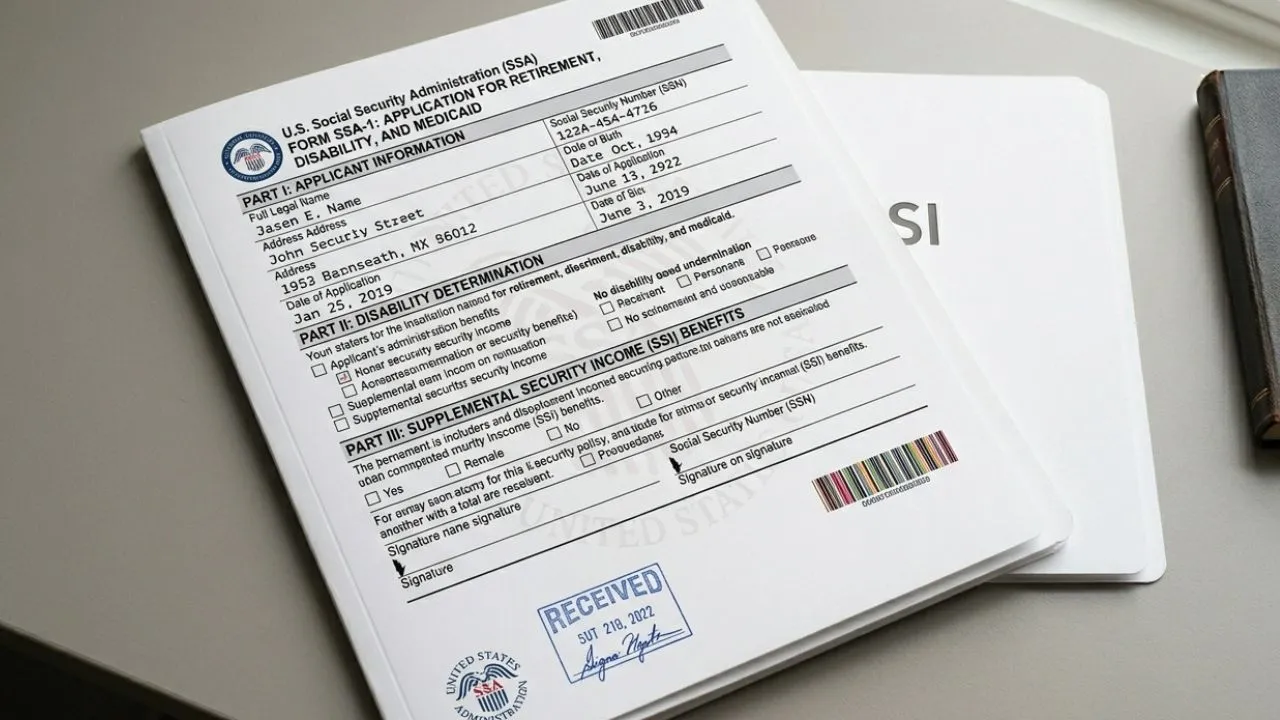
SSDI and SSI are two completely separate federal benefit programs administered by the Social Security Administration. SSDI pays you based on your past work history and payroll tax contributions.
SSI pays you based on your current financial need, regardless of work history. One check can be significantly larger than the other depending entirely on which program you qualify for.
SSDI and SSI: The Core Structural Difference
SSDI, formally called Social Security Disability Insurance, is a Title II program under the Social Security Act. It is an earned insurance benefit. You qualify because you paid into the Social Security system through FICA payroll taxes during your working years. Your SSDI payment amount is calculated from your lifetime earnings record, exactly like a retirement benefit.
The SSA calculates your Primary Insurance Amount (PIA) using your Average Indexed Monthly Earnings (AIME) and applies statutory bend points to produce your monthly benefit figure.

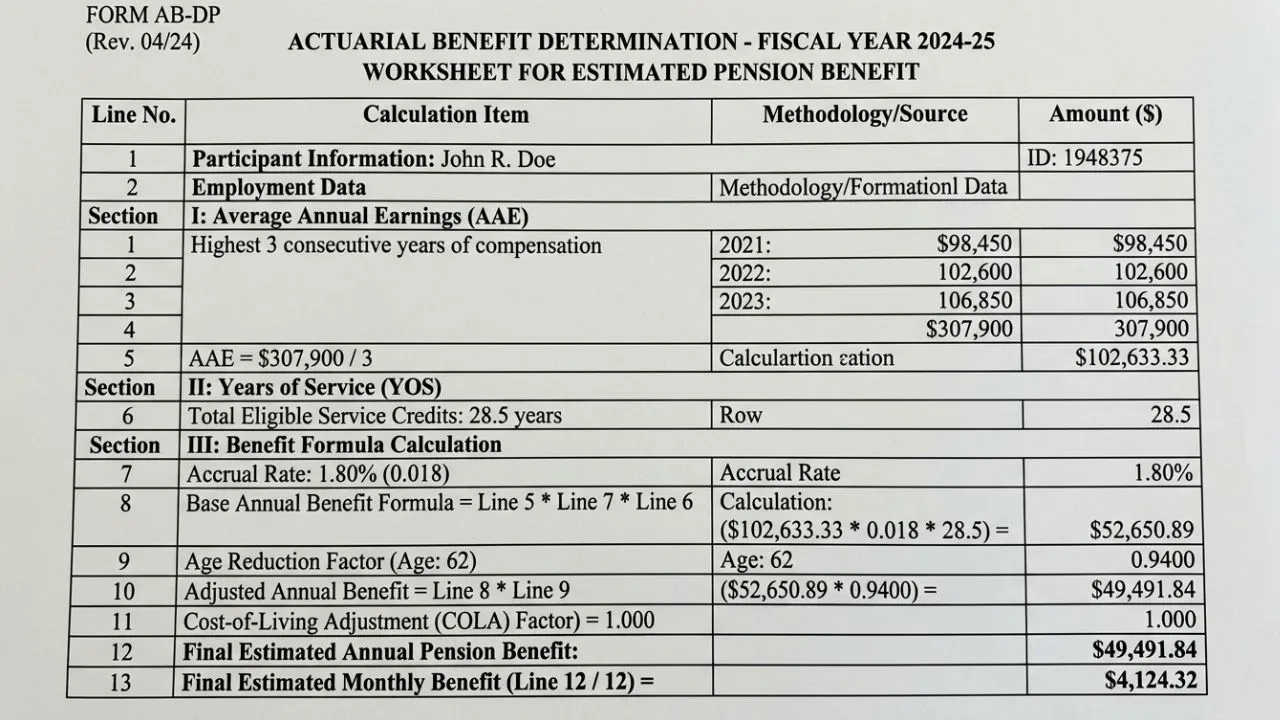
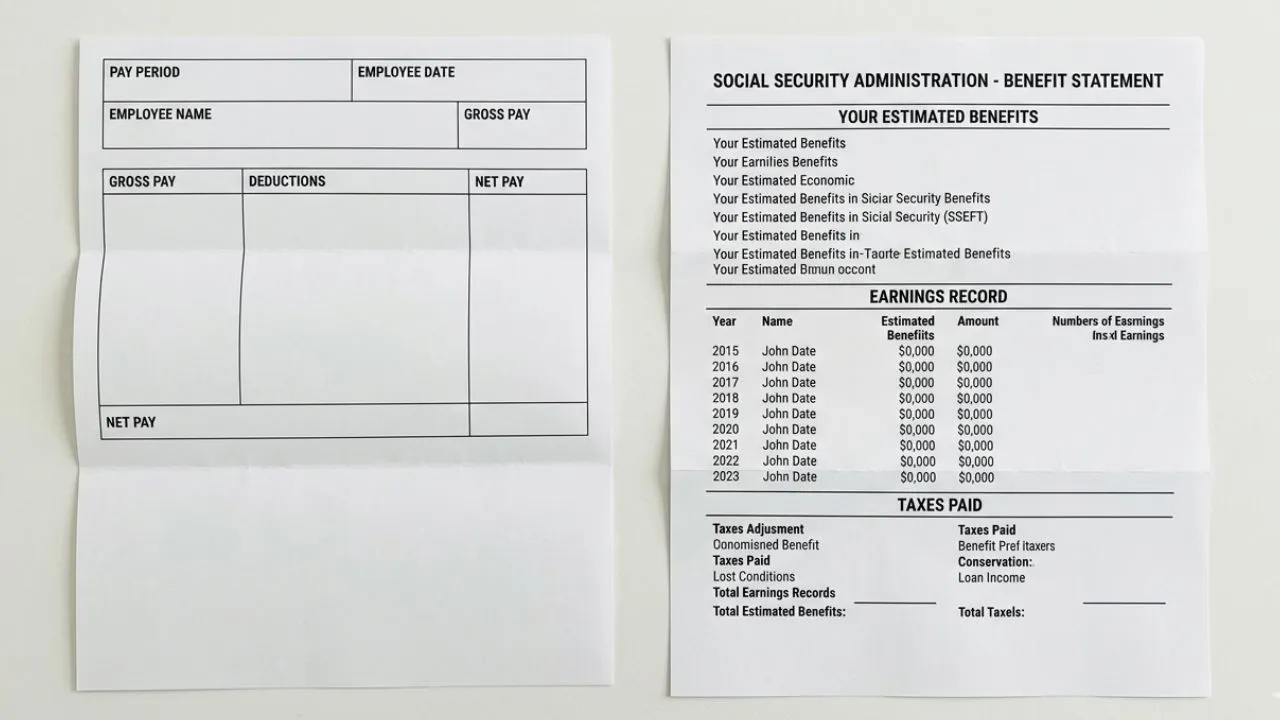
SSI, formally called Supplemental Security Income, is a Title XVI program. It is a needs-based welfare benefit funded through general federal tax revenues, not payroll taxes. You do not need any work history to qualify for SSI.
You qualify because your income and assets fall below federally defined poverty thresholds. As of 2026, the federal SSI benefit rate is $967 per month for an individual and $1,450 per month for an eligible couple.
The SSA administers both programs, but the Treasury funds them differently. SSDI payments flow from the Disability Insurance Trust Fund, a dedicated payroll tax reserve. SSI payments draw from Congressional appropriations in the general federal budget. This distinction determines the long-term solvency risk profile of each program and why Congress debates them separately.
SSDI Eligibility: Work Credits and Medical Standards
SSDI eligibility requires satisfying two independent tests simultaneously. You must pass the medical test, and you must pass the insured status test. Failing either one disqualifies you regardless of how severe your condition is.
The SSDI Medical Standard
The SSA defines disability for SSDI purposes as the inability to engage in any substantial gainful activity by reason of a medically determinable physical or mental impairment. The impairment must have lasted or be expected to last at least 12 continuous months, or be expected to result in death.
As of 2026, the SSA substantial gainful activity threshold is $1,550 per month for non-blind applicants and $2,590 per month for blind applicants. Earning above these thresholds disqualifies you from SSDI at the initial application stage.
The SSA uses a five-step sequential evaluation process to determine disability. Step one asks whether you are currently working above SGA. Step two asks whether your impairment is severe. Step three checks whether your condition matches or medically equals an impairment listed in the SSA’s official Listing of Impairments, commonly called the Blue Book.
Steps four and five analyze your residual functional capacity and determine whether you can perform past work or any other work that exists in the national economy.
The SSDI Work Credits Requirement
Every year you work and pay FICA taxes, you earn Social Security work credits. As of 2026, one work credit is earned for every $1,810 in covered earnings, according to SSA’s annual credit schedule. The maximum you can earn is four credits per year. SSDI requires a minimum of 40 credits to qualify under the standard rule, with 20 of those credits earned in the 10 years immediately before you became disabled.
This is called the 20/40 rule. Younger workers require fewer total credits because they have had less time to accumulate them. Workers disabled before age 31 may qualify under a special rule requiring only 6 credits in the 3 years before disability onset.
The SSDI and SSI payment schedule explains the precise calendar mechanics of when approved benefits reach your bank account, including the Wednesday payment cycle governed by your birth date.
SSI Eligibility: Income, Assets, and Categorical Rules
SSI has no work credit requirement. It has financial eligibility requirements. You must be aged 65 or older, blind, or disabled. You must also meet strict income and resource limits.
The SSI Income Test
The SSA defines countable income broadly under SSI rules. It includes earned income from wages, unearned income from sources like Social Security retirement benefits, and in-kind support such as food or shelter provided by others.
As of 2026, the SSI income exclusion rules allow you to exclude the first $20 of most income per month, the first $65 of earned income per month, and half of earned income above $65. Only countable income, income remaining after exclusions, reduces your SSI benefit dollar for dollar. If your countable income equals or exceeds $967 for an individual, your SSI benefit reduces to zero.
The SSI Resource Test
SSI limits your countable resources to $2,000 for an individual and $3,000 for a couple. These limits have not been updated by Congress since 1989 and have significantly eroded in real purchasing power terms. Countable resources include bank account balances, stocks, bonds, and most personal property above an exempt threshold.
The SSA excludes your primary home regardless of value, one vehicle used for transportation, household goods and personal effects, and life insurance with a face value under $1,500.
SSI and Non-Citizen Eligibility
SSI imposes additional citizenship and residency requirements. Most non-citizens must meet specific immigration status criteria to qualify. Refugees, asylees, and certain other categories of qualified aliens may receive SSI for a limited period after entry. Undocumented immigrants do not qualify for SSI under current federal law.
Payment Amounts: Why SSDI Checks Are Larger
SSDI payment amounts vary significantly by individual. As of 2026, the average SSDI monthly payment is approximately $1,537, according to SSA statistical data. The maximum SSDI benefit for a newly approved worker at full retirement age in 2026 is $4,018 per month.
Your specific SSDI amount depends entirely on your lifetime AIME and how the SSA’s three-tier bend point formula applies to your earnings record. The SSA benefit calculation methodology is explained in full detail for all benefit categories.
SSI, by contrast, pays a flat federal benefit rate. As of 2026, that rate is $967 per month for an individual. Some states add a supplemental payment on top of the federal rate. California, New York, and Massachusetts are among the states with the highest combined state and federal SSI benefit totals. The SSA pays the federal portion. State agencies administer their own supplements separately.
The gap between SSDI and SSI payments exists because SSDI replaces a portion of your prior wage income while SSI provides a minimum income floor. A worker who earned $80,000 per year before disability will receive a substantially higher SSDI check than the federal SSI rate.
Concurrent Benefits: Receiving Both SSDI and SSI
Some individuals receive both SSDI and SSI simultaneously. This is called concurrent benefit eligibility. It occurs when a person qualifies medically for SSDI but their monthly SSDI payment amount is low enough that they also fall below the SSI income threshold. The SSA treats the SSDI payment as unearned income for SSI calculation purposes.
After applying the $20 general exclusion, the remaining SSDI amount reduces SSI dollar for dollar. The combined payment rarely exceeds the SSI federal benefit rate by a significant margin for concurrent recipients. Medicare eligibility follows SSDI after a 24-month waiting period. Medicaid eligibility follows SSI automatically in most states.
The federal payments explained guide details how both Medicare and Medicaid interact with SSDI and SSI benefit delivery through the Treasury’s payment infrastructure.
Can I work while receiving SSDI?
Yes, under limited conditions. The SSA provides a Trial Work Period of 9 months within a rolling 60-month window during which you can test your ability to work without losing SSDI. As of 2026, any month in which you earn more than $1,110 counts as a Trial Work Period month. After the 9-month trial, you enter a 36-month Extended Period of Eligibility. Earning above the SGA threshold in any month of the EPE suspends your SSDI for that month.
Does SSI affect my future Social Security retirement benefit?
SSI does not build Social Security work credits. Receiving SSI while not working does not add to your earnings record. However, if you work while receiving SSI under earned income exclusion rules, those wages do accumulate work credits for future retirement or SSDI purposes.
How long does SSDI approval take?
The initial determination takes 3 to 6 months in most cases. Approximately 65 percent of initial claims are denied. The reconsideration and Administrative Law Judge appeal levels add an additional 12 to 24 months in most field offices. Total time from application to approval at the ALJ level averages 18 to 36 months as of 2026. SSDI back pay is paid as a lump sum upon approval, covering the period from the established onset date minus the mandatory 5-month waiting period.
Understanding whether you qualify for SSDI, SSI, or both determines the dollar amount you receive and the health insurance program you access.
What you should do now
- Check your Social Security work credits at SSA Account. Confirm you have sufficient credits before applying for SSDI.
- Review SSI resource limits before applying. If your bank accounts exceed $2,000, you may need to spend down resources to countable levels before SSI eligibility activates.
- Gather medical documentation before applying. The SSA requires medical records from the past 12 months at minimum. Missing records are the primary cause of initial denials.
- Apply online for SSDI at Apply SSDI. SSI applications require an in-person or phone interview with your local SSA field office.
- Track your application status using the SSA portal. Learn how the SSA Process evaluates cases through a five-step sequential review system.
The difference between SSDI and SSI is not semantic. It is a structural financial divide governed by entirely separate federal statutes, funding mechanisms, and payment formulas. Knowing which side of the line you fall on is the single most important step in accurately projecting your household income during a period of disability.