
U.S. homebuilder confidence fell to its lowest level in more than 14 years in October as rising mortgage rates and construction costs weakened demand, prompting a growing share of builders to reduce prices to attract buyers.
The National Association of Home Builders (NAHB)/Wells Fargo Housing Market Index dropped three points to 29 from 32 in September, according to the October survey released Monday, October 19. It was the weakest reading since June 2012.
The decline extended beyond the headline index. All three measures of housing-market conditions deteriorated, with prospective buyer traffic and expectations for sales over the next six months each falling five points.
The findings suggest that builders are confronting weaker demand even as they increasingly offer discounts and other incentives to keep prospective buyers engaged.
Buyer Traffic Declines Sharply
The index measuring current sales conditions slipped two points to 33 in October, while sales expectations for the next six months dropped five points to 32. The measure of prospective buyer traffic declined five points to 18.
That traffic reading was the lowest since April 2012, excluding the initial pandemic disruption in April 2020, according to NAHB Chief Economist Robert Dietz.
The weakening outlook reflects mounting pressure on homebuyers from mortgage borrowing costs and affordability constraints. NAHB Chairman Bill Owens said mortgage rates had climbed well above 7% in recent weeks, while rising gasoline prices and broader inflation had further discouraged prospective buyers.
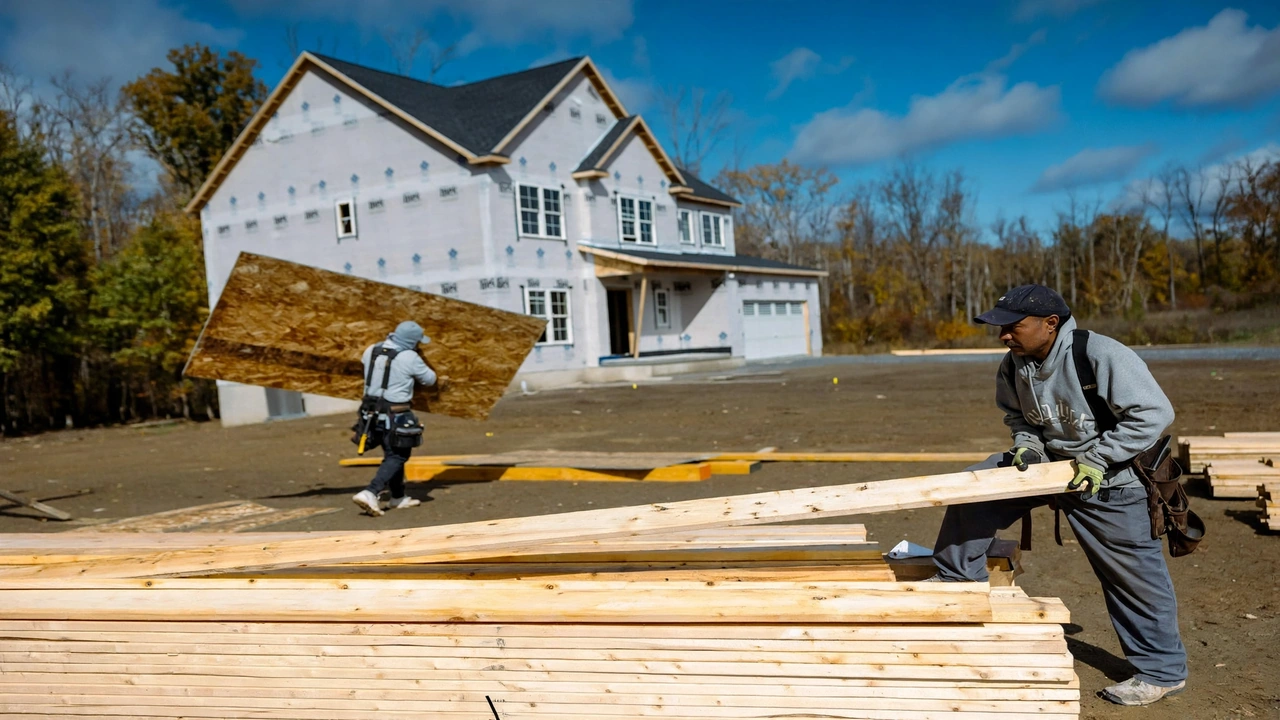
Builders also face higher financing expenses, costly construction materials and elevated diesel prices. Owens said more than one-third of builders reported immigration enforcement activity in their local markets during the previous month, contributing to construction delays and discouraging some legal workers from reporting to job sites.
U.S. Homebuilder Confidence — September vs. October 2026
NAHB/Wells Fargo HMI component indices, seasonally adjusted
| Component | September 2026 | October 2026 | Change |
|---|---|---|---|
| Overall | 32 | 29 | −3 |
| Current sales | 35 | 33 | −2 |
| Future sales | 37 | 32 | −5 |
| Buyer traffic | 23 | 18 | −5 |
Source: NAHB September 16 and October 19, 2026. Index points, not percentages.
NAHB/Wells Fargo Housing Market Index.

The simultaneous declines in current sales, future expectations and buyer traffic indicate that the October deterioration was not confined to one measure of housing sentiment.
More Builders Cut Prices
The latest survey revealed a further increase in the share of builders offering price reductions. NAHB reported that 43% of builders cut home prices in October, compared with 38% in September. That was the highest share recorded during the 2020–2026 period.
The average price reduction remained at 6% for the seventh consecutive month. Meanwhile, 65% of builders reported using sales incentives, slightly below September's 66%. October marked the 19th consecutive month in which at least 60% of builders offered incentives.
These figures reveal an important distinction: builders are reducing prices more frequently, but the average reported discount has not increased. The growing prevalence of price cuts suggests more builders are responding to affordability pressures rather than relying exclusively on incentives such as mortgage-rate buydowns.
For prospective buyers, the data indicate that discounts and financing incentives remain common in the new-home market. However, the survey does not establish that home prices are falling nationally or that comparable discounts are available in every local market.
Regional Confidence Falls Nationwide
Builder sentiment weakened across all four major U.S. regions, according to the October release. Based on three-month moving averages, confidence in the Northeast declined one point to 38. The Midwest dropped three points to 40, while the South slipped one point to 30.
The West recorded a two-point decline to 26, the weakest regional reading. Although the Midwest remained the strongest region in the survey, its confidence index also deteriorated. NAHB highlighted the region's relative resilience in construction activity, noting that single-family building permits were up 2.9% on a year-to-date basis.
The regional figures illustrate how housing-market pressures are spreading geographically, even as underlying construction activity and market conditions differ across regions.
What the Index Measures
The Housing Market Index is based on a monthly survey of single-family homebuilders conducted by NAHB. The survey assesses current sales conditions, expected sales over the next six months and prospective buyer traffic. The results are combined into a seasonally adjusted index ranging from zero to 100.
Readings above 50 indicate that more builders view market conditions favorably than unfavorably. October's reading of 29 therefore signals widespread pessimism about the market for newly constructed single-family homes.
However, the index measures sentiment rather than actual home sales, construction starts or changes in property values.
The latest results also highlight a divergence between builder confidence and actual construction activity. Government data for August showed a rebound in single-family housing starts, even as the broader outlook remained difficult. Investozora previously examined the August housing starts figures.
The combination suggests that existing construction projects and new building activity can continue even when confidence about future sales deteriorates.
What Comes Next
October's decline creates another challenge for the housing industry as elevated mortgage rates and construction expenses continue to constrain affordability.
The results could reinforce caution among builders considering new developments, but the survey does not establish how many projects will be delayed or canceled.
Financing conditions will remain an important consideration. Changes in Treasury yields and mortgage markets can affect borrowing costs for both buyers and developers, although mortgage rates do not move automatically with individual Federal Reserve decisions.
Investozora's earlier reporting on mortgage rate pressures provides additional context for the affordability challenges affecting homebuyers. Attention now turns to upcoming housing sales, construction and financing data for evidence of whether deteriorating sentiment is translating into weaker activity.
The next NAHB/Wells Fargo Housing Market Index is scheduled for November 17, 2026, at 10 a.m. Eastern Time. That release will provide another indication of whether builder confidence is stabilizing or continuing to weaken.