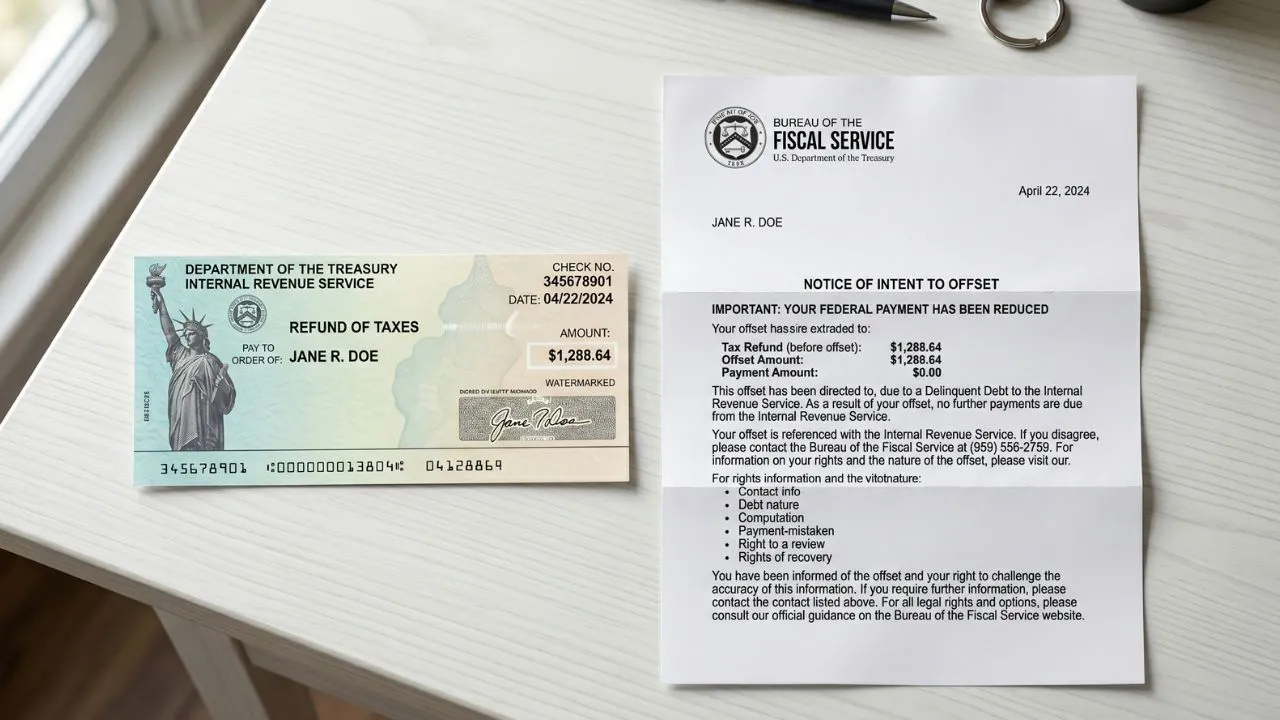


Federal government appropriations lapses follow a documented institutional pattern governed by the Ant deficiency Act and agency-specific contingency plans filed with the Office of Management and Budget.
This article explains the permanent mechanics of how any funding lapse affects direct deposits, payroll processing, and ACH settlement for the federal workforce, using the February 2026 DHS lapse as the documented case study. Verified agency procedures are published at dhs.gov.
When a federal agency enters a lapse in appropriations, the disruption that follows is not random. It is procedural, documented in advance, and governed by a statute most affected workers have never read.
The federal payment freeze that results from a funding lapse follows a mechanical sequence that begins the moment Congressional authorization expires and does not resolve until a new appropriation or continuing resolution is signed into law.
Understanding that sequence removes the uncertainty and replaces it with a clear picture of what is happening to your money, why it is frozen, and precisely when it will move again.


The February 2026 lapse at the Department of Homeland Security is the documented case study this article uses to explain the permanent institutional mechanics. The DHS formally entered a lapse in appropriations on February 14, 2026, after Congress failed to pass either a full-year appropriation or a continuing resolution before the funding deadline.
According to the agency’s published contingency procedures, exactly 22,862 employees were designated for immediate furlough. The remaining 249,065 employees were classified as either exempt or excepted from furlough and were required to continue reporting to work without active pay authorization.
The Antideficiency Act Governs Every Lapse
The legal foundation beneath every federal payment freeze is the Antideficiency Act, codified at 31 U.S.C. §1341. This statute prohibits any federal officer or employee from authorizing or incurring an obligation exceeding the amount authorized by a current appropriation.
When an appropriation expires and no replacement has been enacted, the agency loses the legal authority to obligate funds for any non-excepted purpose. Payroll processing for furloughed employees is an obligation. Without appropriation authority, that obligation cannot be executed.
This is why the freeze is not a technical glitch, not a banking error, and not something a supervisor can override. The payroll system does not malfunction during a shutdown. It operates exactly as designed. The ACH credit instruction file that would normally transmit payroll to the Federal Reserve for settlement cannot be legally generated for furloughed employees without an active appropriation.
The money exists in the Treasury. The system is functional. The authorization to move it is legally absent. Understanding how federal payment authorization flows through the Treasury before reaching a bank account clarifies why a legal hold upstream produces a deposit freeze downstream.
Who Gets Paid and Who Does Not
The distinction between furloughed and excepted employees is the most consequential classification a federal worker faces during an appropriations lapse. Furloughed employees are sent home and are prohibited from performing any work, including checking government email. Their pay is legally frozen until a new appropriation restores authorization, at which point backpay is guaranteed by statute under the Government Employee Fair Treatment Act of 2019.
Excepted employees are those whose work is deemed necessary to protect life and property. At DHS, this classification covered the overwhelming majority of the workforce during the February 2026 lapse: Transportation Security Officers at every commercial airport in the country, United States Secret Service agents assigned to protection details, United States Coast Guard personnel on active maritime operations, and Customs and Border Protection officers at every port of entry.
All 161,000-plus personnel in this category were required to continue working. Their pay was also legally frozen at the time of the lapse. They accumulated pay entitlements that the Treasury was legally prohibited from disbursing until appropriation authority was restored.
This creates the specific type of financial pressure that a shutdown imposes on its largest cohort: workers performing demanding, high-stakes jobs without active paychecks, relying on the statutory guarantee of eventual backpay while meeting current financial obligations in real time.
The direct deposit timing mechanics that normally deliver these paychecks through the ACH network operate correctly in every technical sense during a lapse. The legal authorization to generate the payment file is the missing element, not the banking infrastructure.
How the ACH Pipeline Responds to a Payment Freeze
Federal payroll for the civilian workforce routes through the National Finance Center or the Defense Finance and Accounting Service, depending on the agency, before entering the ACH network through the Treasury’s Bureau of the Fiscal Service.
The Bureau transmits ACH credit files to the Federal Reserve, which settles them into receiving banks on the designated payroll date. This pipeline is the same infrastructure that carries Social Security deposits, IRS refunds, and VA benefits to consumer accounts every week.
During an appropriations lapse, the payroll authorization step at the originating agency is blocked. The Bureau of the Fiscal Service never receives the file. The Federal Reserve never processes the settlement. The receiving bank never posts the credit. From the worker’s perspective, a direct deposit that arrived reliably every two weeks simply does not appear.
The banking app shows no pending transaction because no transaction was submitted to the network. This is categorically different from a deposit that was submitted and is processing. There is nothing in the pipeline to track. The full US payment infrastructure operates correctly throughout this period. The freeze lives entirely in the authorization layer above it.
Mandatory payments that do not require annual appropriation authority are unaffected. Social Security retirement and disability benefits are funded through a permanent appropriation and continue without interruption during any agency-level or even a full government shutdown.
The Social Security payment schedule operates on its confirmed calendar regardless of Congressional funding disputes. Similarly, Medicare payments to providers and IRS tax refunds on returns already approved before the lapse continue to process through their respective pipelines.
The Legislative Resolution Window
A federal payment freeze ends through one of two mechanisms: a full-year appropriations act or a continuing resolution that restores spending authority at a specified level, typically the prior year’s funding rate. The timeline between lapse and resolution is governed entirely by Congressional scheduling and negotiation dynamics.
During the February 2026 DHS lapse, the relevant constraint was the Presidents’ Day Congressional recess, which removed the legislative calendar’s primary resolution window until representatives returned on February 23.
This type of calendar-driven extension is a documented feature of modern shutdown mechanics. A lapse that begins on a Friday before a recess period can extend substantially longer than a lapse that begins mid-session, not because the policy dispute is more intractable, but because the physical mechanism for resolution, a floor vote in both chambers, is unavailable while Congress is in recess.
Workers and households affected by a lapse have no practical leverage over this timeline. The Treasury General Account that holds the funds remains solvent throughout. The authorization to move those funds is the variable.
Once a continuing resolution or new appropriation is signed, the Bureau of the Fiscal Service restores payroll processing authority to the affected agency. The backpay obligation is executed through the standard ACH cycle, typically within one to two business days of authorization restoration.
Excepted employees who worked without pay receive full compensation for every hour worked during the lapse. Furloughed employees receive backpay for the lapse period under the Government Employee Fair Treatment Act. The federal payment processing timeline after a lapse resolution follows the standard ACH settlement sequence from that point forward.
What You Should Do Now
Confirm your employment classification immediately. If you are a federal employee at an agency experiencing a funding lapse, determine whether you are designated as furloughed or excepted. Your agency’s human resources office is required to provide this designation in writing before any furlough takes effect.
Document your hours if you are an excepted employee required to work without active pay. Maintain a personal record of every day and hour worked during the lapse period. This documentation supports your backpay claim if any administrative dispute arises upon resolution.
Contact your mortgage servicer, auto lender, and credit card issuers proactively. Most major lenders have formal federal employee shutdown assistance programs that defer payments, waive late fees, and suspend reporting to credit bureaus during documented government funding lapses. These programs require a proactive request. They are not automatic.
Do not submit new loan applications during an active federal payment freeze. Mortgage underwriters, personal loan processors, and auto lenders use current income verification as a primary qualification criterion. An active lapse that has frozen your payroll will show as income interruption on bank statement reviews and can delay or disqualify a pending application.
Monitor the Office of Management and Budget for agency-specific guidance. The OMB publishes official shutdown guidance for all federal agencies through whitehouse.gov/omb, including which positions are excepted, which are furloughed, and the legal basis for each classification in each agency’s contingency plan.
Understand that your backpay is legally guaranteed. The statutory guarantee under the Government Employee Fair Treatment Act of 2019 means that every dollar of pay frozen during a lapse will be disbursed once appropriation authority is restored. The federal payment freeze is a timing disruption, not a loss of compensation.