
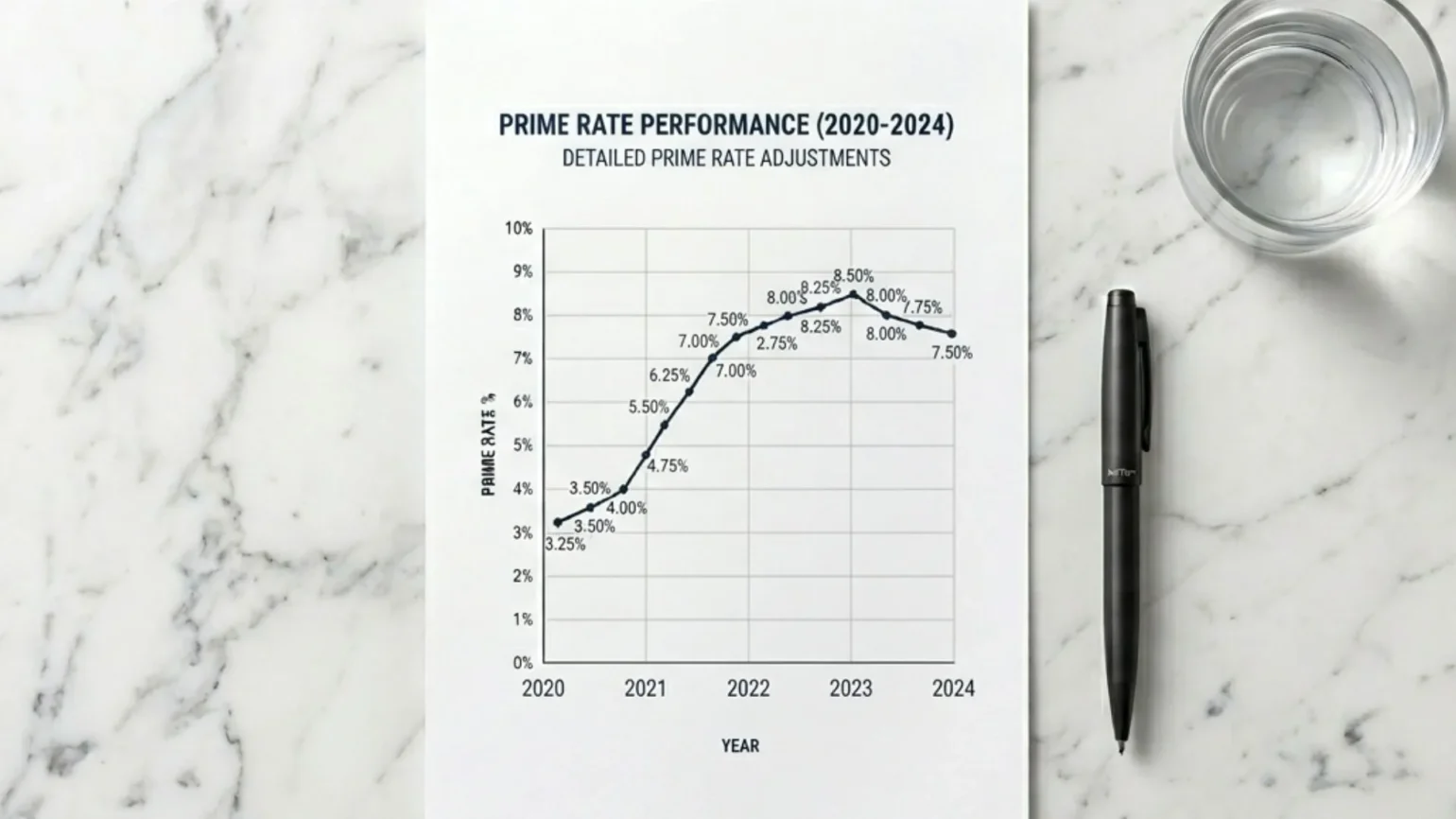
Updated: June 24, 2026 – The prime rate is the baseline lending rate American banks use as a reference point for consumer and business loans, and it moves in direct lockstep with Federal Reserve policy. When the Fed raises or lowers the federal funds target range, the prime rate adjusts by the exact same amount on the same day. As of June 2026, the prime rate is 7.5%, reflecting the current federal funds target range of 4.25% to 4.50% under Chair Kevin Warsh’s first rate decision on June 16.
The prime rate is always exactly 3 percentage points above the federal funds target rate’s upper bound. This relationship has held consistently since the 1990s when major U.S. banks standardized the spread. The Wall Street Journal publishes what is known as the consensus prime rate, updated whenever at least 23 of the 30 largest U.S. banks change their posted prime rate following a Fed decision. Because all major banks adjust immediately after a Fed announcement, the WSJ prime rate and the banks’ individual posted rates align within hours of any FOMC action.
What the Prime Rate Is
The prime rate is not set by the government or the Federal Reserve directly. It is a convention maintained by commercial banks, anchored to the Fed’s policy rate by market practice. The Federal Reserve controls inflation through the federal funds rate, which is the overnight rate banks charge each other to borrow reserves. When the Fed adjusts that rate, every lending institution that prices its products off the prime rate adjusts its consumer rates simultaneously.
The federal funds rate is the rate on overnight loans between depository institutions. The prime rate is the rate banks publicly quote to their most creditworthy commercial customers. Consumer loan products that float with the prime rate are priced at prime plus a margin. A credit card with an interest rate of prime plus 12% carries a rate of 19.5% when prime is 7.5%.
A home equity line of credit priced at prime plus 1% carries a rate of 8.5%. When the Fed moves the federal funds rate by 25 basis points, every floating-rate product tied to prime moves by the same 25 basis points.
The Federal Reserve interest rate is the primary lever the Fed uses to slow inflation or stimulate growth. When inflation is above the Fed’s 2% target, the Fed raises the federal funds rate, which raises prime, which raises the cost of borrowing across the economy.
Higher borrowing costs suppress consumer spending and business investment, which reduces demand and slows price increases. When the economy is weak, the Fed cuts the federal funds rate, which lowers prime, which lowers borrowing costs, which stimulates spending and investment.
How the Fed Sets the Funds Rate
The Federal Open Market Committee, which consists of the seven members of the Federal Reserve Board of Governors and five regional Federal Reserve Bank presidents on a rotating schedule, meets eight times per year to review economic conditions and vote on the target range for the federal funds rate. The FOMC does not directly set the prime rate. It sets the federal funds rate target, and market convention translates that into the prime rate.
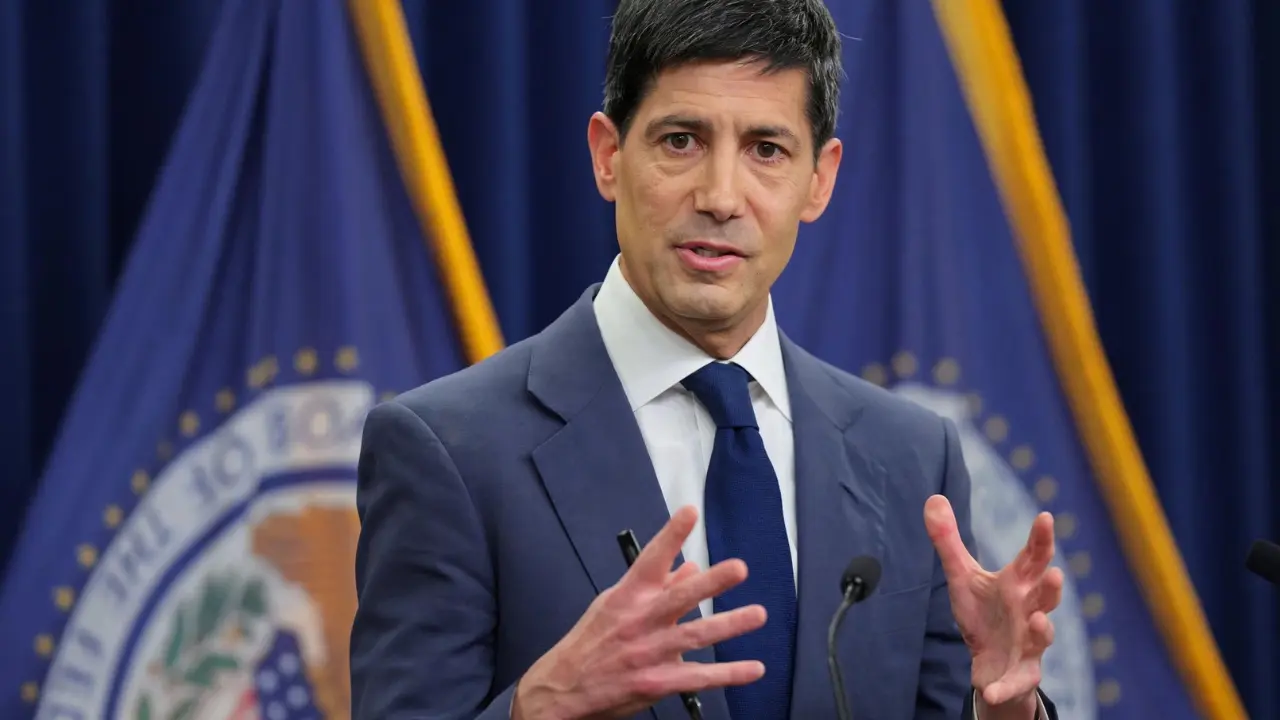
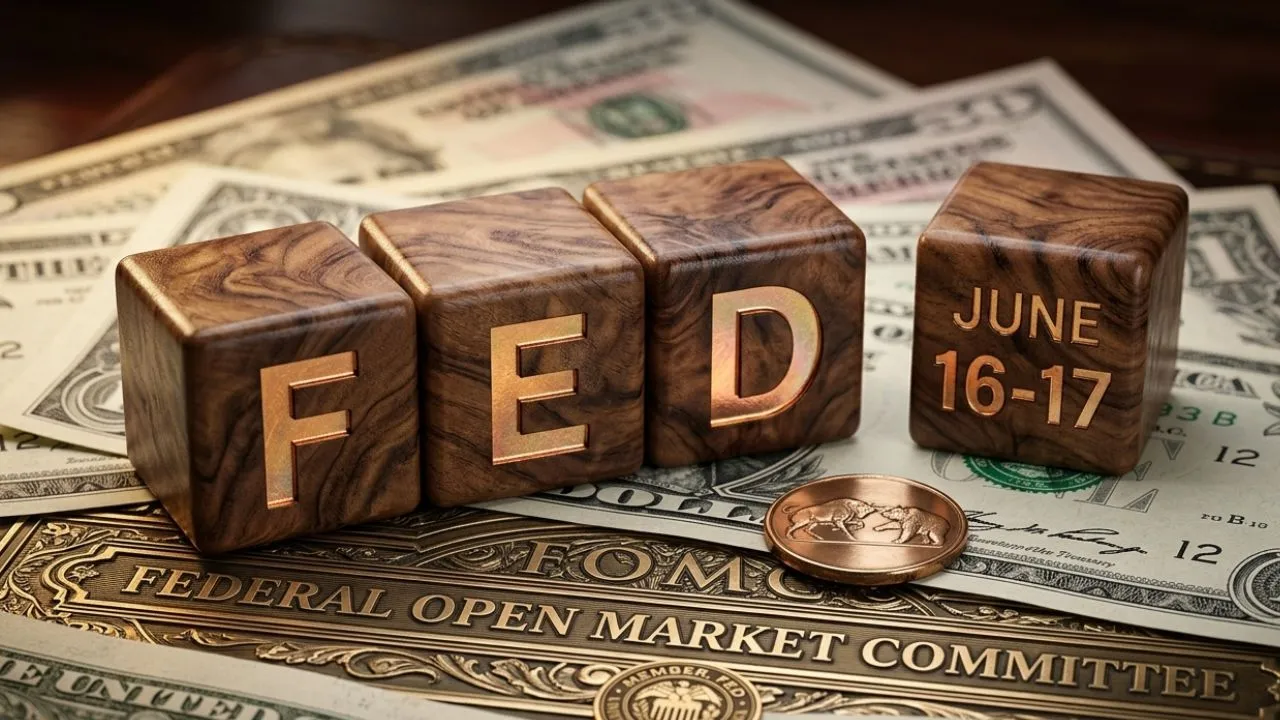
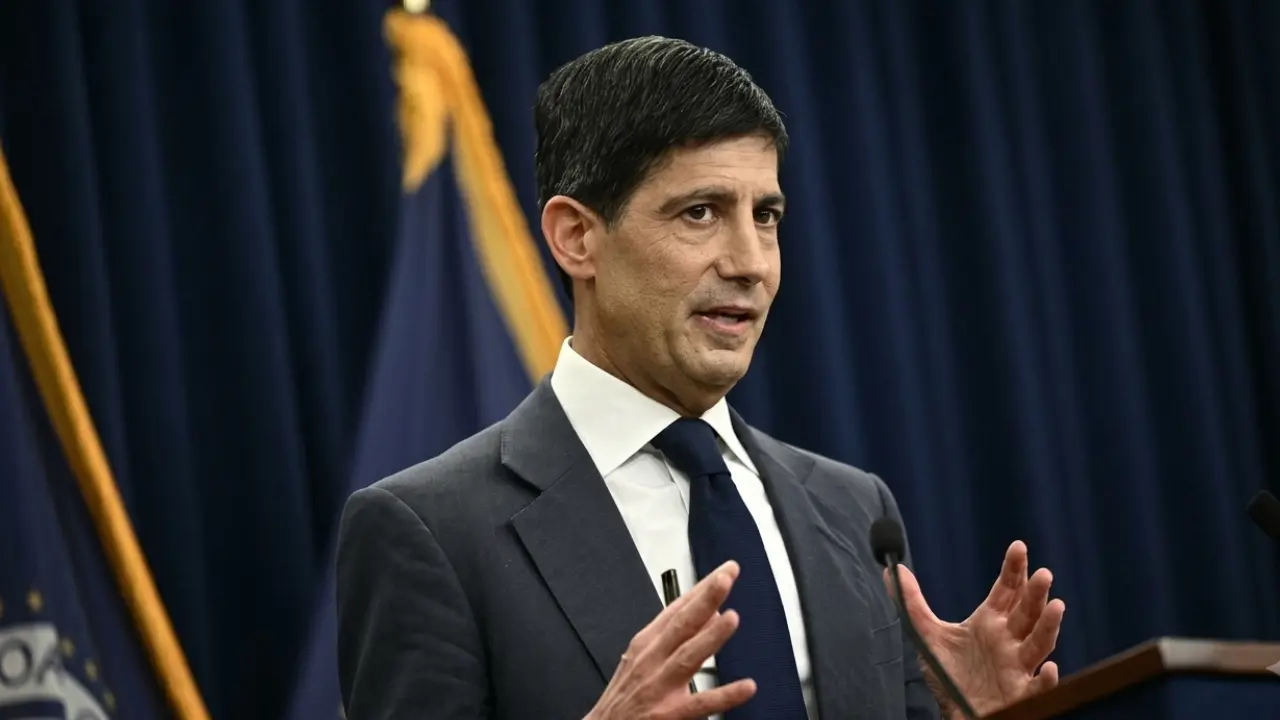
Under Chair Kevin Warsh, the FOMC held its first rate decision meeting on June 16, 2026. Understanding Warsh Fed policy requires recognizing that he has historically favored faster rate normalization and greater balance sheet discipline than his predecessor. The June 16 decision reflected the FOMC’s current assessment of inflation against labor market conditions, with the dot-plot projections updated for the first time under Warsh’s leadership.
The FOMC meeting schedule 2026 includes eight scheduled meetings. Between meetings, the prime rate does not change unless the FOMC holds an emergency inter-meeting rate adjustment, which is rare and reserved for acute financial system stress events like the March 2020 emergency cuts during the COVID-19 market crisis.
Loan Products That Move With Prime
The prime rate directly affects four major consumer financial products. Home equity lines of credit are almost universally priced at prime plus a bank-specific margin. A HELOC opened when prime was 3.25% and priced at prime plus 0.5% was charging 3.75% at origination. At today’s prime rate of 7.5%, the same HELOC now charges 8.0%.
The payment on a $100,000 HELOC balance has increased by more than $450 per month from that original rate environment. HELOC borrowers carry the full impact of every Fed rate increase without any fixed-rate protection. The fed rate hike mortgage impact is most direct for variable-rate home equity products.
Credit card rates are set at prime plus a margin that reflects the card’s risk tier. Premium rewards cards from major issuers typically carry prime plus 11 to 14 percentage points. At today’s prime rate, this produces purchase APRs ranging from 18.5% to 21.5% before penalty rates apply. The average U.S. credit card APR crossed 22% during the 2022 to 2023 rate-hike cycle and has remained elevated because prime has not returned to its pre-2022 levels.
Small business loans priced at variable rates move directly with prime. A business line of credit at prime plus 2% that a small business opened at a total rate of 5.25% in 2021 now carries a rate of 9.5%. This has been a primary driver of small business borrowing cost stress across the 2024 to 2026 period.
Student loan rates for federally issued loans are set annually by Congress based on the 10-year Treasury yield, not the prime rate. Private student loans, however, frequently use prime-based variable rates. If you hold private student loan debt at a variable rate, your interest rate has moved with every FOMC decision since origination.
What Today’s Prime Rate Means for Savings
The prime rate’s rise is not only a cost story. Higher prime rates raise the yields banks are willing to offer on deposit products. When the federal funds rate is low, banks have no pressure to compete for deposits by offering high yields. When the funds rate is high, banks can earn more by deploying deposits, and competitive pressure pushes savings rates higher.
The savings account rate after Fed decisions shows this relationship clearly. High-yield savings accounts from online banks moved from under 0.5% APY in 2021 to over 5% APY at the peak of the tightening cycle. The current rate environment positions deposit savers favorably compared to the decade following the 2008 financial crisis, when the Fed held rates near zero and savings accounts earned effectively nothing.
The Fed interest rules savings yield relationship works the same way in reverse. If and when the FOMC begins a rate-cutting cycle, prime will fall by the same increment as each cut, and high-yield savings rates will compress in response.
Frequently Asked Questions About Prime Rate
What is the prime rate right now?
As of June 2026, the prime rate is 7.5%, set at the federal funds target range upper bound of 4.50% plus the standard 3-percentage-point bank spread.
How often does the prime rate change?
The prime rate changes only when the Federal Reserve adjusts the federal funds rate at an FOMC meeting or in an emergency inter-meeting action. It does not change between FOMC decisions.
Does the prime rate affect my fixed-rate mortgage?
No. Fixed-rate mortgage rates are set at origination and do not change regardless of what happens to the prime rate. Only variable-rate products are affected by prime rate movements.
How can I see the current prime rate?
The Wall Street Journal publishes the consensus U.S. prime rate. The Federal Reserve also publishes the prime rate in its H.15 Selected Interest Rates statistical release at federalreserve.gov.
Is the prime rate the same as the federal funds rate?
No. The prime rate is always 3 percentage points higher than the federal funds target rate. The federal funds rate is the rate banks charge each other for overnight loans. The prime rate is the rate banks quote as a reference for consumer and business lending.
The federal reserve rate decision deposit timing impact flows from the FOMC announcement through the banking system within hours. By the time markets close on the day of an FOMC rate decision, prime has adjusted and variable-rate loan notices have already been queued by major lenders. For deeper context on how monetary policy transmits through the payment infrastructure into consumer accounts, the US money movement system framework covers the full federal-to-consumer transmission path.
What You Should Do Now
- Identify every loan or line of credit you carry and determine whether the interest rate is fixed or variable. Variable-rate products tied to the prime rate have historically moved with FOMC decisions.
- Review your HELOC, credit card, and business credit line statements for current APRs. Compare them with the rates listed in your original loan agreements to understand your cumulative rate-increase exposure.
- If you carry variable-rate debt, evaluate whether refinancing into a fixed-rate product at current rates could reduce your risk exposure ahead of future Federal Reserve actions.
- Monitor the relationship between the prime rate and savings yields. If you hold uninvested cash, today’s elevated savings rates may represent an opportunity that could diminish once the Federal Reserve begins cutting rates.
- Track the next FOMC meeting schedule date to anticipate potential prime-rate adjustments and plan credit decisions accordingly.