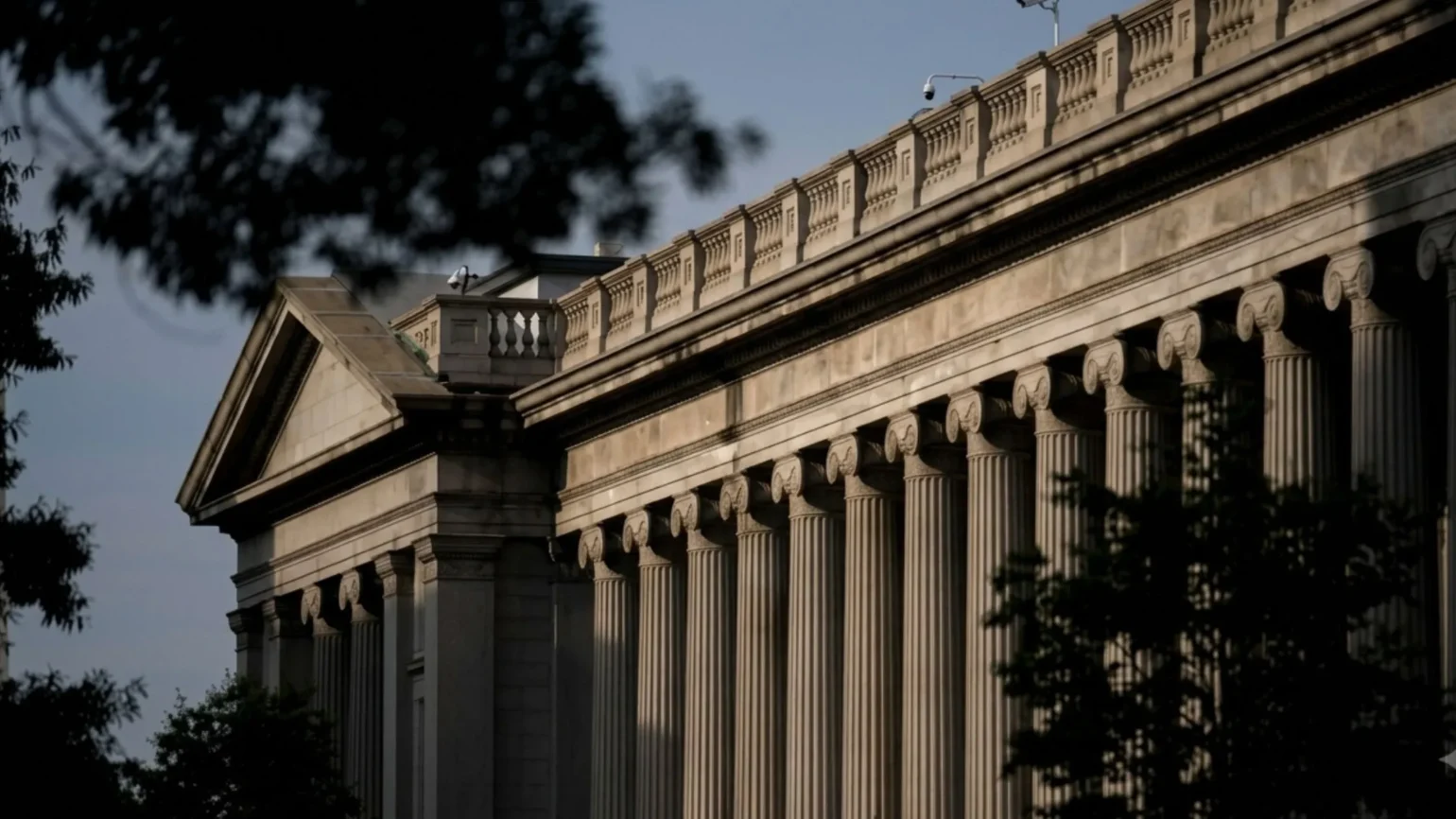
Updated: June 26, 2026 – The Treasury General Account is the U.S. government’s primary checking account, held at the Federal Reserve Bank of New York. Every federal expenditure, from Social Security payments to military payroll to IRS refund deposits, flows out of this account.
When the TGA balance is high, the federal government can meet all payment obligations without constraint. When the balance falls, it signals that the Treasury is managing cash carefully and that liquidity in the broader financial system may be affected.
The TGA sits at the intersection of federal fiscal policy and monetary system mechanics. The Federal Reserve, which holds and administers the account, publishes the daily TGA balance as part of its H.4.1 statistical release.
The Treasury Department publishes daily TGA data through the Daily Treasury Statement at fiscal.treasury.gov. These two sources together provide a real-time window into the cash position of the United States government.
For most of the year, TGA mechanics operate in the background of financial markets and federal payment systems. They become front-page issues when the TGA balance approaches low levels, typically during debt ceiling standoffs, when the Treasury deploys extraordinary measures to extend the payment window without congressional action.
The current state of the TGA has direct implications for the U.S. money movement system and for the downstream timing of federal payments to beneficiaries, contractors, and refund recipients.
How the TGA Works
The Treasury collects revenue through tax payments, tariff receipts, bond issuance proceeds, and other federal income. All of this revenue flows into the TGA. When the Treasury spends, issuing Social Security payments, funding agency operations, paying interest on the national debt, funds flow out of the TGA. The net daily cash position is the difference between inflows and outflows.
The TGA is not a simple deposit account in the commercial sense. The Federal Reserve does not pay interest on TGA balances. Instead, the Treasury manages its cash by distributing funds to Treasury Tax and Loan accounts at commercial banks, drawing them back to the TGA as needed for payment execution. This two-tier structure prevents the TGA from accumulating so much cash that it would drain bank reserves from the commercial banking system on large deposit days.
When tax payments flood the TGA on April 15 or quarterly estimated tax dates, the Treasury typically moves excess cash to commercial depositaries to avoid destabilizing bank reserve levels.
When the Treasury needs cash for large payment runs, it recalls funds from those depositaries back to the TGA. The Federal Reserve executes these transfers through the Fedwire funds settlement system, which settles in real time and ensures the TGA is funded before payment files are released.
TGA Balance and Bank Reserves
The relationship between TGA balance changes and commercial bank reserve levels is one of the most direct but least publicly understood channels of monetary mechanics.
When the TGA balance rises, as it does after a major tax collection period, commercial bank reserves fall by an equal amount. When the TGA balance falls, as happens when the Treasury makes large payment runs, commercial bank reserves rise by the same amount.
This dynamic means that a TGA drawdown is expansionary for commercial bank liquidity. When the Treasury pays Social Security benefits, IRS refunds, and federal contractor invoices, it is effectively moving money from the government’s Fed account into the commercial banking system. Reserve balances at commercial banks increase, which provides additional capacity for lending and for overnight interbank funding markets.
Conversely, TGA replenishment through large tax collection events or Treasury bill auctions extracts liquidity from the commercial banking system. After a major T-bill auction, the Treasury draws investor funds from commercial bank accounts into the TGA. Bank reserves fall.
Short-term funding market pressures can increase during heavy Treasury issuance periods if reserve levels fall below system-wide needs. The Treasury yield curve reflects these supply and demand pressures across maturities.
This liquidity channel explains why Treasury announcement of cash management plans, particularly the quarterly financing announcements from the Office of Debt Management, are carefully monitored by money market participants, primary dealers, and the Federal Reserve itself. The Treasury extraordinary measures framework extends the payment window when the TGA cannot be refilled through normal borrowing due to the debt ceiling.
TGA and Debt Ceiling Mechanics
The TGA becomes the most watched number in Washington and on Wall Street during debt ceiling standoffs. When Congress imposes the statutory debt limit, the Treasury cannot issue new securities to replenish the TGA through bond sales.
Instead, the Secretary of the Treasury declares a debt issuance suspension period and begins deploying extraordinary measures, accounting actions that free up borrowing capacity without technically crossing the statutory limit.
During an extraordinary measures period, the TGA balance declines every day that expenditures exceed receipts. The Treasury publishes a daily rundown of available extraordinary measures capacity alongside the TGA balance.
The date on which the TGA reaches zero and extraordinary measures are exhausted is known as the X-date, the point at which the government would technically be unable to meet all payment obligations on time.
The TGA has never reached zero because Congress has consistently raised or suspended the debt limit before the X-date arrived. However, the drawdown toward zero has real-time effects on payment scheduling.
The Treasury prioritizes payments in a specific order during low-balance periods, and federal agencies coordinate with the Bureau of the Fiscal Service on payment timing to manage outflows. The debt ceiling and Treasury strategy explains how these constraints affected federal payment execution in 2025 and 2026.
The Treasury General Account mechanics article provides the foundational overview of how the account was established, its legal basis, and its relationship to the Federal Reserve’s balance sheet.
TGA Drawdowns and Federal Payment Timing
For Social Security beneficiaries, IRS refund recipients, and federal contractors, TGA mechanics matter because they govern whether the Bureau of the Fiscal Service can release payment files on schedule. All federal disbursements originate from the TGA. A payment file cannot be released if the TGA does not have sufficient balance to fund it.
In practice, the TGA maintains a cash buffer above zero under normal conditions. The Treasury targets a cash balance of approximately $750 billion to $1 trillion or more during non-constrained periods. This buffer absorbs intraday payment volatility and provides a cushion against revenue shortfalls.
During debt ceiling constrained periods, the Treasury manages the TGA balance more aggressively. Large recurring payments like Social Security deposits and IRS refund batches are funded exactly when needed rather than in advance. This just-in-time funding approach preserves TGA balance for as long as possible while ensuring required payments are not delayed.
The Daily Treasury Statement payment timing analysis tracks TGA balance changes against federal payment schedules published by the Bureau of the Fiscal Service.
Where can I see the current TGA balance?
The Bureau of the Fiscal Service publishes the TGA balance daily through the Daily Treasury Statement at fiscal.treasury.gov. The FiscalData.Treasury.Gov portal also provides historical TGA data with downloadable datasets going back decades.
Why does the TGA balance matter to the stock market?
Large TGA drawdowns inject liquidity into the commercial banking system, which can lower short-term interest rates and support risk asset valuations. Large TGA buildups, as happened in mid-2023 after the debt ceiling was resolved and Treasury issued a large supply of T-bills, drain reserves from commercial banks, which can tighten short-term funding markets. The federal reserve balance sheet and TGA dynamics interact as offsetting forces in the market’s reserve supply equation.
Can the TGA ever go negative?
No. The Federal Reserve does not extend overdraft credit to the Treasury on the TGA. If the TGA balance reached zero, the Treasury would suspend disbursements until additional revenue arrived or the debt ceiling was resolved to permit new issuance. This is the core mechanism behind the X-date concern during debt ceiling standoffs.
How does the TGA affect Social Security payment timing?
Social Security payments are funded from the Social Security trust fund, which holds Treasury special issue securities. When SSA benefit payments are due, the trust fund redeems those securities, which credits the TGA, and the Bureau of the Fiscal Service immediately releases the payment file to the ACH network. This redemption-and-release sequence means SSA payments are generally insulated from routine TGA fluctuations but are theoretically at risk during a true X-date scenario. The Social Security trust fund administration explains the trust fund-to-TGA redemption sequence in detail.
What happens to the TGA when the Fed raises interest rates?
Higher interest rates increase the Treasury’s cost of debt service, which raises daily outflows from the TGA for interest payments. Higher rates also affect the Treasury’s cash flow timing because the composition of outstanding debt shifts, higher short-term rates make T-bill rollovers more expensive. However, the TGA balance itself is a cash management tool independent of the interest rate environment; the Federal Reserve’s rate decisions affect the cost of maintaining TGA levels through borrowing, not the mechanics of the account itself.
Edge Cases and Economic Signals
The TGA is sometimes described as a hidden lever in monetary policy because its balance dynamics complement or offset the Federal Reserve’s reserve management operations.
During the Federal Reserve’s quantitative tightening phase, which involves shrinking the Fed’s securities portfolio, the decline in bank reserves from QT can be offset or amplified by TGA balance changes.
A large TGA drawdown during QT can cushion reserve levels; a large TGA buildup can accelerate reserve tightening. The quantitative tightening mechanics explains how the Fed’s balance sheet interacts with TGA dynamics.
For institutional investors and money market funds, the TGA drawdown schedule is a key input to overnight funding rate forecasts. Periods of heavy Treasury bill issuance to rebuild the TGA after a debt ceiling resolution are associated with upward pressure on short-term rates and reduced repo market liquidity. The Treasury bill and note mechanics article explains the market structure through which TGA replenishment occurs.
What You Should Do Now
- Bookmark the Daily Treasury Statement to monitor Treasury General Account (TGA) balance trends during periods of fiscal uncertainty.
- Follow Treasury’s quarterly financing announcement published eight business days before each calendar quarter’s auction schedule to anticipate major TGA replenishment periods.
- Review the federal reserve settlement windows to understand how TGA outflows translate into bank reserves on payment settlement days.
- If you are a Social Security beneficiary or expecting a federal payment, check the Bureau of the Fiscal Service payment schedule for authoritative disbursement dates.
- Monitor the SSA payment dates to confirm your specific payment Wednesday and cross-reference it with TGA balance conditions during any period of debt ceiling uncertainty.