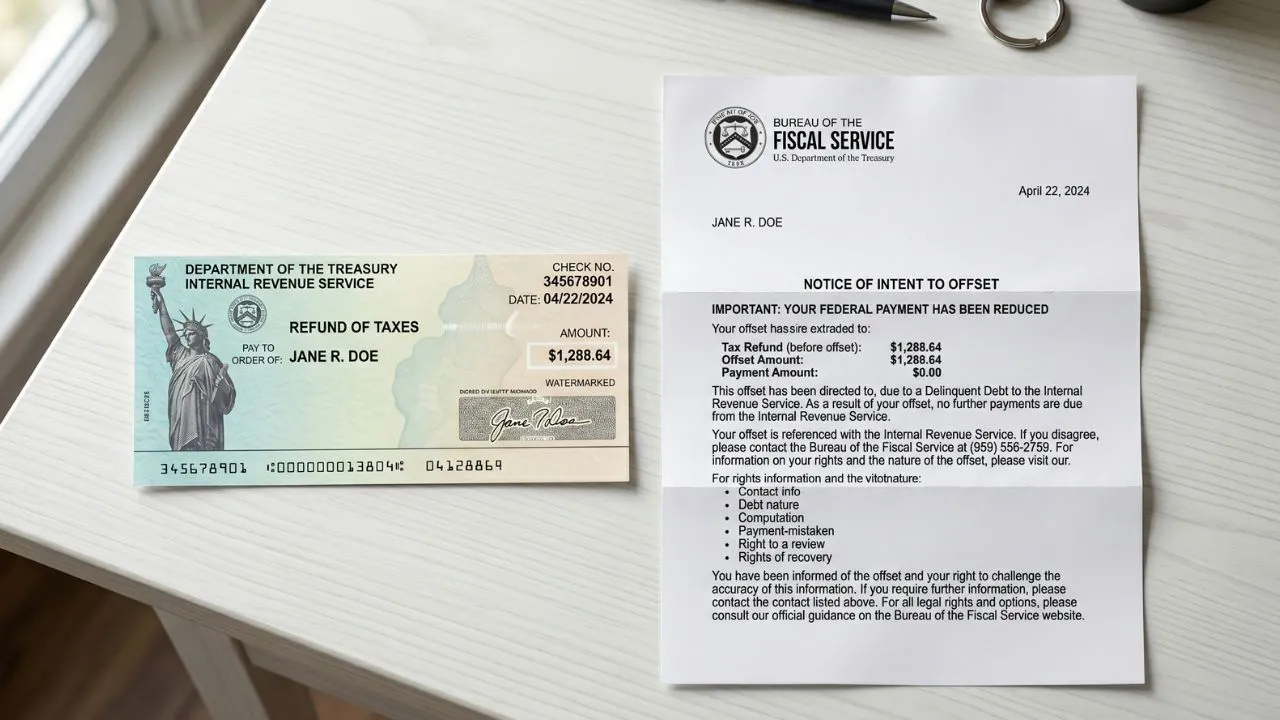

A Treasury Offset Program hardship appeal is usually not filed with Treasury itself. If losing a federal payment would create serious financial hardship, you generally must contact the creditor or servicing agency that referred the debt to TOP. That agency not the TOP call center, decides debt disputes, repayment relief, and whether an offset can be prevented or refunded.
That distinction is easy to miss. The Treasury Offset Program is the federal system used to reduce certain federal or state payments when an eligible delinquent debt has been referred for collection.
The Bureau of the Fiscal Service operates TOP, but the agency that says you owe the debt generally remains responsible for resolving disputes about the debt and considering relief available under its own rules. For broader context on Treasury’s role in federal finances and payments, see Investozora’s guide to the U.S. Department of the Treasury.
Can financial hardship stop a Treasury Offset Program offset?
Sometimes, but there is no single nationwide TOP hardship exemption or universal Treasury hardship-appeal form for individual debtors. The result depends on what debt you owe, which agency referred it, whether the offset has already happened, and what relief that creditor agency is authorized to provide.
Treasury’s own guidance directs debtors who want to question or dispute a debt to the servicing or creditor agency. For debts handled through Treasury’s Cross-Servicing program, a debtor may also be considered for a repayment agreement or another form of financial relief based on ability to pay, generally after submitting a financial statement and supporting documentation.
That means “hardship appeal” is best understood as a searcher’s shorthand. Depending on the situation, the actual remedy may be an administrative review of the debt, an ability-to-pay request, a repayment arrangement, another form of agency relief, an IRS Offset Bypass Refund, or an injured-spouse allocation.
Who should you contact about a TOP hardship or appeal?
Contact the agency responsible for the particular remedy you need, because Treasury’s TOP staff do not decide every type of dispute or hardship request. The fastest path depends on why you are challenging the offset.
| Your Situation | Who Generally Handles It | What You Are Asking For |
|---|---|---|
| You do not owe the debt, the amount is wrong, or it was already paid | Creditor or servicing agency | Debt dispute or administrative review |
| You owe the debt but cannot afford the collection | Creditor agency or Cross-Servicing, when applicable | Ability-to-pay arrangement or other available financial relief |
| Your refund would be applied to your own prior federal tax liability and you face significant economic hardship | IRS, with TAS assistance where appropriate | Offset Bypass Refund before the offset |
| Your joint tax refund was taken for a debt owed solely by your spouse | IRS | Form 8379, Injured Spouse Allocation |
| TOP already took the payment for another agency’s debt | Creditor agency shown on the offset notice | Correction, adjustment, or refund if the agency determines one is appropriate |
Treasury’s automated TOP system can help identify whether a debt has been referred and which agency is connected to it. The Bureau of the Fiscal Service lists the TOP automated voice response number as 800-304-3107. But identifying the debt and deciding whether the debt is valid or whether hardship relief applies are different functions.
Who is eligible for a Treasury Offset Program hardship appeal?
There is no single TOP hardship eligibility test that applies to every debt. Eligibility must be determined under the creditor agency’s rules or under the specific relief program being requested.
This is important because inability to afford an offset and disputing whether a debt is legally owed are not the same issue. A debtor might acknowledge that the debt exists but ask for an arrangement based on ability to pay.
Another debtor might argue that the balance is incorrect, was already paid, belongs to someone else, or otherwise should not have been certified for offset. Treasury’s Cross-Servicing resources provide separate procedures for debt disputes and financial statements used when seeking payment arrangements or other financial relief.
If the debt is being serviced through Cross-Servicing, Treasury says the referring agency determines the debt amount and what collection tools may be used, while in most cases the agency allows Cross-Servicing to establish payment arrangements based on the debtor’s ability to pay.
What notice and appeal rights do you have before a Treasury offset?
For a debt being referred into TOP, federal due-process rules generally require advance notice and an opportunity to address the debt before referral. Treasury’s current TOP guidance says the creditor agency must send notice at least 60 days before sending the debt to TOP, explaining the debt, the planned referral, and the debtor’s opportunities to pay, make a payment agreement, or dispute the debt.
Treasury’s official due-process guidelines distinguish among different collection methods. They identify 60 days before referral for TOP and 60 days before a tax-refund offset, while procedures and timing can differ for other collection tools such as administrative offset, salary offset, or administrative wage garnishment.
For federal nontax debts collected through a tax-refund offset, 31 CFR § 285.2 requires the creditor agency to provide at least 60 days for the debtor to present evidence that all or part of the debt is not past due or legally enforceable and to consider evidence submitted by the debtor before certification.
The important practical rule is to follow the deadline and instructions on your actual notice rather than assuming every type of offset has the same appeal procedure.
How do you request hardship relief or appeal a TOP debt?
Start with the creditor agency, identify exactly what you are challenging, and submit the request under that agency’s procedure before the applicable deadline whenever possible. TOP itself is primarily the offset mechanism, not a universal appeals office.
- Identify the creditor agency. Check your pre-offset or offset notice. If you do not know which agency referred the debt, use Treasury’s TOP automated system at 800-304-3107.
- Decide whether you are disputing the debt or asking for hardship relief. If the debt is wrong, challenge its existence, amount, or enforceability. If the debt is valid but payment would cause financial difficulty, ask what ability-to-pay or hardship options the agency offers.
- Read the notice for its deadline and required method. The general TOP referral process includes advance due-process rights, but the exact agency procedure matters.
- Submit evidence that directly supports your request. For a dispute, explain what you believe is wrong and provide supporting records. For Cross-Servicing ability-to-pay relief, Treasury provides financial-statement procedures and requires supporting documentation for consideration of a payment agreement or other financial relief.
- State the remedy you are requesting. For example, ask the agency to correct the balance, review the debt, establish an affordable payment arrangement, or consider whatever financial-relief procedure applies to the debt.
- Ask whether the TOP referral or collection will be suspended while the request is reviewed. Do not assume that simply sending a hardship letter or entering a payment agreement automatically prevents future offsets; the effect depends on the applicable agency and collection rules. Treasury specifically tells Cross-Servicing debtors to ask whether offset will continue while payments are being made.
- Keep proof of everything submitted. Retain the notice, supporting records, correspondence, dates, confirmation numbers, and copies of anything sent so you can document the procedural history if further review becomes necessary.
- Follow the creditor agency’s next-level review procedure if relief is denied. There is no universal second-level “TOP hardship appeal” that applies to every federal or state debt; further review rights depend on the underlying debt and agency.
A useful written request should clearly identify the debt and notice, explain whether you dispute the debt or are requesting financial relief, state the specific result you are seeking, and attach the records required by the agency. A vague statement that the offset would be difficult financially may not give the agency enough information to evaluate the request.
Does filing a hardship request automatically stop a Treasury offset?
No. You should not assume that submitting a hardship request, dispute, or payment-plan request automatically freezes every TOP offset. The creditor agency’s rules, the status of the referral, and the type of collection action determine what happens next.
For Cross-Servicing debts, Treasury expressly warns that a debtor making payments may still be subject to collection through offset and instructs debtors to speak with a debt recovery analyst about whether offset will continue.
This makes timing important. If you receive a pre-offset notice and believe the debt is incorrect or you need relief, address it with the creditor agency before waiting for the payment itself to disappear.
What happens if Treasury already took your payment?
If a TOP offset has already occurred, contact the creditor agency identified in the offset notice rather than asking TOP to decide whether the debt should be refunded. IRS guidance states that only the agency owed the debt can honor a hardship request to prevent a TOP offset or refund an offset because of hardship circumstances.
Treasury also requires post-offset information identifying the agency that requested the offset so the debtor can contact that agency about the debt. A post-offset challenge therefore follows a different practical path from trying to resolve the debt during the advance-notice period.
If your issue is specifically that an expected tax refund was reduced, Investozora’s guide to why a Treasury offset reduced your refund explains the payment-side mechanics separately.
Is an IRS Offset Bypass Refund the same as a TOP hardship appeal?
No. An IRS Offset Bypass Refund, or OBR, is a separate and much narrower hardship procedure. It may allow the IRS to issue some or all of a refund that would otherwise be applied to the taxpayer’s own prior federal tax liability when the taxpayer is experiencing significant economic hardship.
The distinction is crucial: an OBR generally does not let the IRS bypass a TOP obligation owed to another federal or state agency. IRS internal guidance specifically instructs employees not to use OBR procedures to bypass a Treasury Offset Program obligation, and current Taxpayer Advocate Service guidance describes OBR relief in the context of a prior federal tax liability.
Timing also matters. The hardship request generally needs to be addressed before the refund is applied to the federal tax debt. Taxpayers who believe an IRS tax offset not another agency’s TOP debt, will cause significant economic hardship can review the Taxpayer Advocate Service’s current Offset Bypass Refund guidance.
For the broader rules governing refund offsets, see Investozora’s IRS tax refund offset guide.
Is injured spouse relief a hardship appeal?
No. Injured spouse relief addresses ownership of a joint tax refund, not financial hardship. If a joint refund was or is expected to be applied to a legally enforceable debt owed by the other spouse, the potentially affected spouse may use IRS Form 8379, Injured Spouse Allocation, to claim their share of the joint refund.
The form can be filed with a joint return or, in appropriate circumstances, after an offset has occurred. The IRS, not the TOP call center processes Form 8379 and determines the injured spouse’s share under the applicable rules. This is why a joint-refund case should not be treated as an ordinary hardship request simply because losing the refund creates financial difficulty.
Does a payment plan prevent future TOP offsets?
Not necessarily. A payment arrangement can resolve one part of the collection problem without automatically removing the debt from all offset activity. Treasury’s Cross-Servicing guidance says debtors who are making payments should specifically ask whether collection through offset will continue.
If avoiding a future offset is important, ask the agency or debt recovery analyst directly whether the arrangement changes the debt’s TOP status and obtain the answer in a form you can document. Do not assume that an accepted monthly payment automatically guarantees that a tax refund, federal benefit, or another eligible payment will be untouched.
What if you never received the offset notice?
Contact the creditor agency immediately and ask for the notice and the records supporting the debt. Federal rules require agencies to make the required notification or reasonable attempt to notify, but nonreceipt of a post-offset notice does not by itself establish that an otherwise valid offset must be reversed.
The next question is therefore not simply whether the letter reached you, but whether the agency complied with the notice and due-process requirements governing the particular debt and collection method. That determination is fact-specific and may require review under the creditor agency’s procedures.
How long does a TOP hardship appeal take?
There is no single processing time for every TOP hardship or debt appeal. Treasury’s system involves many creditor agencies, and the applicable review process depends on the type of debt and the remedy being requested.
Do not rely on a generic online promise that every hardship request will be decided within a specific number of days. Follow the timeframe given by the agency handling your case and, when timing is critical, ask whether the debt remains active in TOP while the review is pending.
Can hardship get an offset refunded after it has happened?
Possibly, but there is no automatic right to a refund merely because the offset created hardship. For a TOP debt owed to another agency, IRS guidance says the creditor agency is the one that can honor a hardship request to prevent an offset or make a refund of an offset because of hardship circumstances.
Whether the creditor agency actually has authority to return the money, and whether the facts satisfy its rules, depends on the underlying debt and program. This is why the offset notice and creditor-agency contact information are central to the post-offset process.
What are the biggest mistakes to avoid?
The most common procedural mistake is treating TOP as though it were the creditor. Treasury can identify an offset and the referring agency, but the underlying debt dispute normally belongs with that agency.
Other costly mistakes include waiting until after the offset to act, confusing an IRS OBR with relief from a non-IRS TOP debt, assuming a payment plan automatically stops offsets, or filing Form 8379 as though it were a general hardship form.
Understanding the payment chain can also help explain why a refund can be approved by the IRS yet arrive for a smaller amount. Investozora’s guide to what happens in the Treasury payment system before a deposit explains the broader federal payment process.
Can TOP remove a debt because of hardship?
TOP itself generally does not decide whether an underlying debt should be removed because of financial hardship. The Treasury Offset Program mainly processes eligible offsets after a creditor agency refers a debt for collection.
If the offset would create serious financial difficulty, contact the agency that owns or services the debt and ask about hardship relief, an ability-to-pay review, repayment options, or other available remedies. Whether relief is available depends on that agency’s rules and the type of debt involved.
Is there a federal Treasury hardship form for every TOP debt?
No, there is no single federal Treasury hardship form that applies to every debt in the Treasury Offset Program. Different agencies may have their own hardship applications, financial statements, dispute procedures, or repayment-request forms.
Treasury does provide specific forms and financial-review procedures for certain debts handled through its Cross-Servicing program. Always follow the instructions provided by the agency responsible for your particular debt rather than looking for one universal TOP hardship form.
Can I appeal the amount of the debt?
You may be able to challenge the amount of a debt if you believe the balance is incorrect, already paid, not past due, or otherwise not legally enforceable. The exact appeal or review process depends on the agency that referred the debt and the type of obligation involved.
For certain federal nontax debts referred for tax-refund offset, 31 CFR § 285.2 provides an opportunity to submit evidence before the debt is certified for offset. Supporting documents such as payment records, account statements, or agency correspondence can be important when disputing the amount.
Who do I call if I do not know which agency took my refund?
If you do not know which agency caused the offset, Treasury’s TOP automated voice response system at 800-304-3107 can help identify information connected to the debt. Once you know the creditor agency, contact that agency directly for questions about the balance, dispute rights, hardship options, or a possible refund.
TOP can generally tell you which agency received the offset, but it does not usually decide whether the underlying debt is correct. Keep your offset notice available when calling because it may contain useful identifying information.
Can the IRS reverse a TOP offset for another agency because I have a hardship?
Generally, the IRS cannot independently reverse another agency’s TOP offset simply because the taxpayer is experiencing financial hardship. When a debt belongs to another federal or state agency, that creditor agency generally controls whether hardship relief, an adjustment, or a refund of the offset is available.
IRS hardship procedures such as an Offset Bypass Refund apply to different circumstances and should not be confused with relief from another agency’s TOP debt. If another agency received your refund, contact that agency directly and ask what hardship-review or refund procedures it offers.
The bottom line
Treasury Offset Program hardship appeals are less about finding one Treasury form and more about identifying which agency controls the debt and which remedy actually matches your situation.
TOP performs the offset, but the creditor agency generally controls disputes about the debt and most hardship-based relief. IRS Offset Bypass Refunds and injured-spouse claims are separate procedures with their own eligibility rules.
If you receive an advance notice, act before its deadline: identify the creditor, determine whether you are disputing the debt or requesting financial relief, submit the required evidence, and ask whether collection through TOP will continue during the review. If the payment has already been offset, use the agency identified in the notice as the starting point for any correction or hardship-refund request.