Every business day, the U.S. Treasury publishes a document that shows exactly how much cash the federal government has on hand, how much came in, and how much went out.
It is one of the most transparent pieces of federal financial reporting in existence, and it is also one of the least understood outside of financial and policy circles.
What Is The Daily Treasury Statement
The Daily Treasury Statement summarizes the U.S. Treasury’s cash and debt operations for the federal government on a modified cash basis, with deposits reported as received and withdrawals reported as processed.
It is published by the Bureau of the Fiscal Service, a division of the Department of the Treasury, and it functions as the government’s daily checkbook register, showing the opening cash balance, all deposits and withdrawals during the day, and the closing balance carried into the next business day.
Who Publishes It And Where To Find It
The Daily Treasury Statement draws on information from Federal Reserve Banks, Treasury Regional Financial Centers, Internal Revenue Service centers, and various electronic systems, with Treasury’s operating cash maintained in an account at the Federal Reserve Bank of New York.
The statement is typically available by 4:00 p.m. the following business day on the Bureau of the Fiscal Service’s website and on the Treasury’s broader fiscal data platform.
The dataset fully migrated to the Fiscal Data website as of November 1, 2023, where it is available for download in multiple machine-readable formats, including CSV, JSON, and XML, replacing the older Excel and text formats previously offered.
What The Statement Actually Contains
The Daily Treasury Statement presents a summary of the operating cash balance, deposits and withdrawals of operating cash, public debt transactions, inter-agency tax transfers, and income tax refunds issued.
This means a single day’s statement can show, in remarkable detail, how much came in from individual and corporate tax deposits, how much went out in Social Security payments, how much new debt was issued to cover the difference, and how much cash remained at the end of the day.
Because the report uses a modified cash basis rather than an accrual accounting method, it reflects money that has actually moved rather than obligations that have simply been incurred but not yet paid, which is an important distinction from other federal budget reporting.
The Treasury General Account
As of the October 1, 2021 statement, all references to what was previously called the Federal Reserve Account throughout the Daily Treasury Statement were renamed the Treasury General Account, commonly abbreviated TGA.
The Treasury General Account functions as the federal government’s primary operating checking account, held at the Federal Reserve Bank of New York, and its daily opening and closing balances are among the most closely watched figures in the entire statement, since they represent how much spendable cash the government has on hand at any given moment.
When the TGA balance runs low relative to expected near-term obligations, it can signal upcoming Treasury borrowing needs or, in more extreme cases involving the debt ceiling, genuine concern about the government’s ability to meet its obligations without additional borrowing authority.
For more on how this connects to broader federal borrowing capacity, see Investozora’s guide to the debt ceiling mechanics that directly affect how the Treasury General Account is managed during periods of constrained borrowing.
How Weekends And Holidays Are Handled
Transactions occurring on weekends and federal holidays are included on the next business day’s Daily Treasury Statement, since the report itself is only published on days the federal government is open for business.
This means a single Monday statement, following a weekend, can reflect a larger-than-usual batch of transactions compared with a typical midweek statement, simply because it is capturing activity that accumulated over the closed period rather than reflecting a genuine spike in one day’s actual government activity.
Readers analyzing trends in the data should account for this weekly pattern rather than treating every statement as representing an equivalent 24-hour period of activity.
Income Tax Refunds Within The Statement
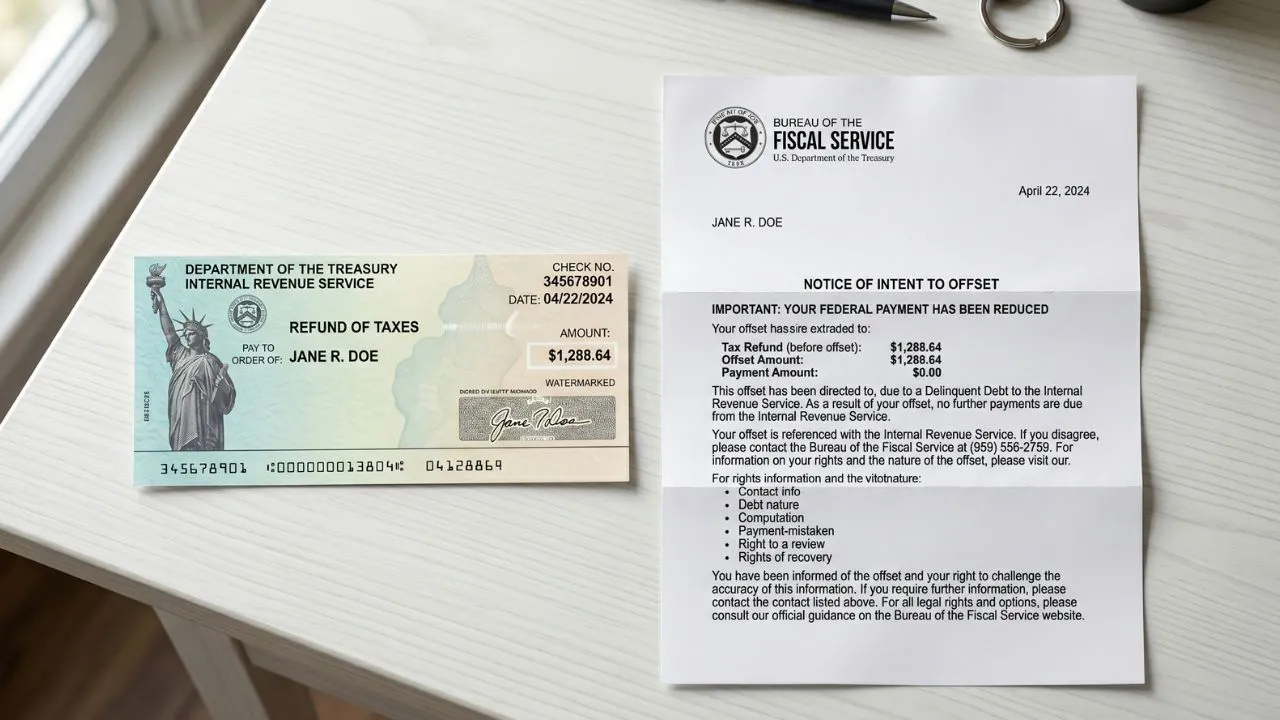
Income tax refunds issued, both by check and by electronic funds transfer, are one of the specific categories tracked within the Daily Treasury Statement, which means the statement effectively provides a real-time, day-by-day accounting of how much money the IRS is sending back to taxpayers throughout tax season.
This data allows outside analysts, journalists, and policy researchers to track refund volume trends without waiting for the IRS’s own periodic filing season updates, since the Treasury data is published daily rather than in occasional summary reports.
For readers tracking their own individual refund rather than the government-wide totals, Investozora’s complete IRS refund guide covers the personal-level process in full detail.
How This Differs From The Monthly Treasury Statement
Money flowing into the Treasury is known as receipts, and money flowing out is known as outlays; a surplus occurs when total receipts exceed outlays, and a deficit occurs when outlays exceed receipts.
The Monthly Treasury Statement reports these same broad categories of government receipts and outlays, but on a monthly rather than daily basis, and it is based on agency-level reporting rather than the more granular, near-real-time cash movement tracked in the daily version.
A separate, more comprehensive annual publication, the Combined Statement of Receipts, Outlays, and Balances, serves as the official detailed record of federal government finances, published annually under legislative mandate.
Together, these three reports form a layered system: the Daily Treasury Statement for near-real-time cash tracking, the Monthly Treasury Statement for a monthly summary aligned with the federal budget process, and the annual combined statement for the complete official historical record.
Public Debt Transactions Tracked Daily
Beyond simple cash flow, the Daily Treasury Statement also tracks public debt transactions, meaning the daily issuance and redemption of Treasury securities used to finance any gap between government spending and revenue.
This daily debt data connects directly to the broader Treasury auction schedule that determines when new bills, notes, and bonds are sold to investors, since each auction settlement shows up as an entry in the statement on its settlement date.
Readers interested in how these individual securities work can find a more detailed breakdown in Investozora’s guide to Treasury bills, notes, and bonds.
Why This Data Matters Beyond Government Insiders
While the Daily Treasury Statement was originally designed as an internal accounting and transparency tool, it has become a genuinely useful resource for financial market participants, journalists, and researchers tracking the real-time state of federal finances.
Because the Treasury General Account balance directly affects broader financial market liquidity, changes in that balance, driven by tax collection cycles, large spending events, or Treasury borrowing decisions, can have ripple effects on short-term interest rates and money market conditions.
Understanding these dynamics connects directly to the broader Treasury General Account explainer that covers how this specific account interacts with the broader financial system beyond simple government bookkeeping.
A Practical Example Of Reading The Statement
Consider a hypothetical Wednesday statement during mid-April tax season. The deposits section would likely show a large inflow from individual income tax payments, reflecting the concentrated wave of filing activity around the April deadline.
The withdrawals section might simultaneously show a steady stream of income tax refunds being issued via electronic funds transfer, alongside routine outlays for Social Security benefits, Medicare payments, and interest on the public debt.
The difference between that day’s total deposits and total withdrawals determines whether the Treasury General Account balance grew or shrank, which in turn affects how much new debt, if any, the Treasury needs to issue in the near term to maintain its target cash buffer.
How This Connects To The Broader Payment System
The Daily Treasury Statement is essentially the accounting ledger behind the much larger physical infrastructure that actually moves federal payments, including the ACH and Fedwire systems that carry tax refunds, Social Security benefits, and federal payroll from the Treasury General Account into individual bank accounts across the country.
For the complete picture connecting this daily accounting record to the physical movement of federal money, see Investozora’s guide to how U.S. money moves through the government’s core payment rails.
Is the Daily Treasury Statement the same thing as the federal deficit or national debt figure reported in the news?
No, these are related but distinct concepts that are often confused with one another. The Daily Treasury Statement tracks the government’s actual cash position and daily transaction flow, essentially a checkbook register, while the national debt refers to the cumulative total of all outstanding federal borrowing built up over the government’s entire history, and the deficit refers to the difference between receipts and outlays over a specific budget period, typically a fiscal year.
A single day’s Daily Treasury Statement can show a cash surplus on a day with heavy tax collection even during a year when the government is running an overall annual deficit, since these measures operate on very different time scales and capture different aspects of federal finances.
How current is the data in the Daily Treasury Statement, and can I see today’s numbers right now?
The statement is generally available by 4:00 p.m. the business day following the activity it reports, meaning there is roughly a one-day lag between when transactions actually occur and when the corresponding statement is published.
This means you cannot see the exact real-time cash balance at this precise moment, but you can see a very recent, detailed snapshot that is typically no more than one business day old.
This lag is standard practice for government financial reporting and reflects the time needed to collect and reconcile data from multiple federal agencies and Federal Reserve Banks before publishing a finalized statement.
Why does the Treasury General Account balance sometimes swing dramatically from one week to the next?
Large swings in the Treasury General Account balance typically reflect predictable seasonal patterns tied to the federal government’s revenue and spending calendar, rather than random or concerning volatility.
Tax filing deadlines, particularly the April individual filing deadline and quarterly corporate estimated tax due dates, tend to produce large inflows that temporarily boost the account balance, while major recurring outlays, such as monthly Social Security payment dates or large interest payments on the public debt, can produce corresponding drawdowns.
Debt ceiling periods represent a notable exception to this normal pattern, since the Treasury may be forced to draw the account balance down further than usual, using so-called extraordinary measures, when it cannot issue new debt to replenish the account through normal Treasury auctions.
Can an ordinary person actually use this data for anything practical, or is it only useful for economists?
While the Daily Treasury Statement was originally built as an internal government accounting tool, it is publicly available and genuinely useful to a wider audience than just professional economists.
Financial journalists use it to report on real-time trends in tax collection or federal spending, researchers use it to study historical patterns in government cash management, and increasingly sophisticated individual investors use Treasury General Account trends as one input when thinking about short-term Treasury bill supply and money market conditions.
For most everyday readers, the statement is less about direct personal application and more about transparency, since it makes the government’s day-to-day financial operations fully visible to anyone who wants to look, rather than being hidden inside internal accounting systems.