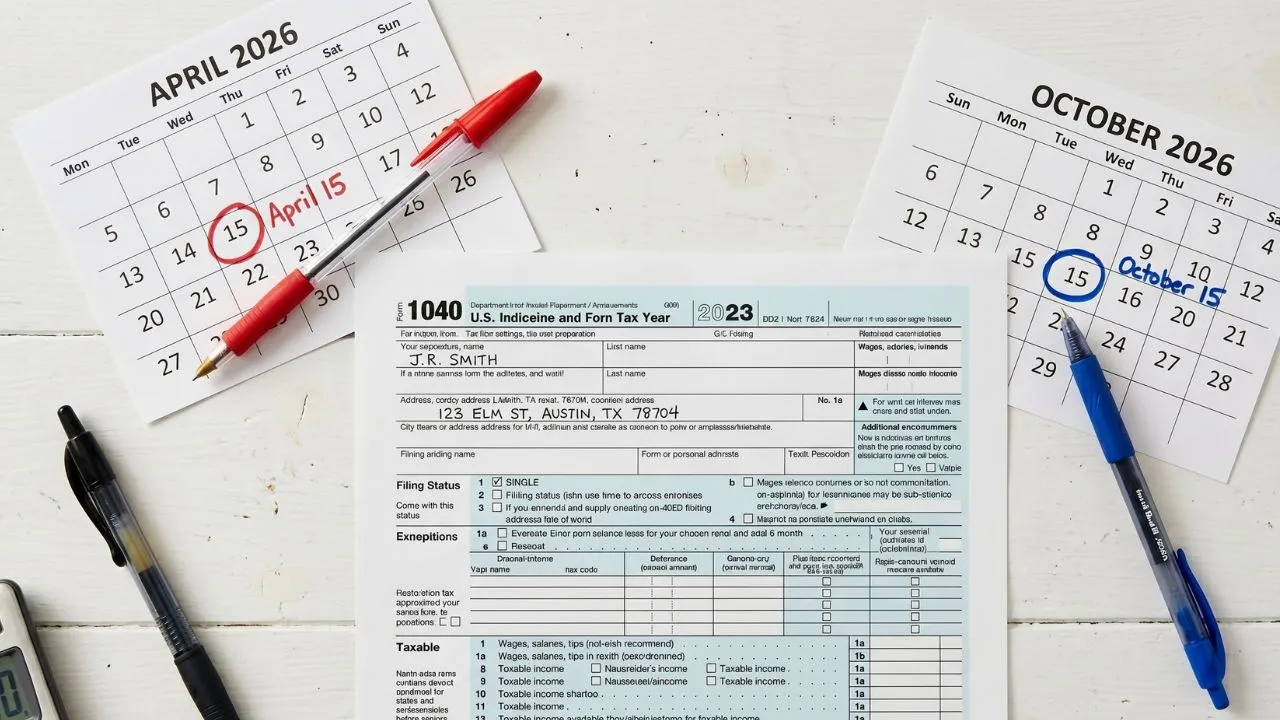


Filing a return is only the first half of getting your tax refund. The second half, understanding how the IRS actually processes and delivers that money, is where most of the confusion and anxiety around refunds comes from. This guide walks through the entire path a refund takes, from the moment you file to the moment it lands in your bank account.
How Long Does It Take To Get An IRS Tax Refund
Most IRS tax refunds are issued within 21 days of the return being accepted for e-filed returns using direct deposit, while paper returns generally take four to eight weeks after the IRS receives them.
The 21-day clock starts when the IRS accepts your return, not when you submit it to your tax software, and e-filed returns are typically accepted within 24 to 48 hours of submission.
Returns that require additional review, identity verification, or that are flagged for any reason will take longer than this standard window, sometimes significantly longer depending on the specific issue involved.
The 2026 Filing Season Timeline
The IRS opened the 2026 filing season for electronic filing on January 26, 2026, and began issuing the first direct deposits by mid-February. This opening date matters for anyone hoping to file as early as possible, since returns submitted before the IRS officially opens for the season are simply held in a queue and processed once filing officially begins, rather than being processed ahead of schedule.
Returns claiming the Earned Income Tax Credit or the Additional Child Tax Credit continue to be held until after February 15 by law, regardless of how early in the season they were filed.
For the 2026 season specifically, the IRS expected most refunds tied to those two credits to be available in bank accounts or on debit cards by March 2, 2026, for taxpayers who chose direct deposit and had no other issues with their return.
Why The PATH Act Holds Certain Refunds
The Protecting Americans from Tax Hikes Act of 2015, commonly called the PATH Act, requires the IRS to hold the entire refund, not just the portion tied to the credit itself, for any return claiming the Earned Income Tax Credit or the Additional Child Tax Credit.
If a filer’s total refund is $5,000 and $2,000 of that comes from the Earned Income Tax Credit, the IRS holds the full $5,000, not just the $2,000 credit portion.
This law was designed to give the IRS additional time to verify income and prevent fraudulent claims before releasing refunds tied to these specific credits, which have historically been targeted for identity theft and improper claims.
Once the mid-February hold lifts, normal 21-day processing applies from that point forward. For a deeper look at how the Additional Child Tax Credit specifically works, see Investozora’s comparison of the Child Tax Credit versus ACTC.
Direct Deposit Is Now Effectively Required
In accordance with Executive Order 14247, the IRS began phasing out paper tax refund checks starting September 30, 2025, meaning most taxpayers must now provide their bank routing and account numbers to receive a refund through direct deposit.
Taxpayers who qualify for an exception to this requirement can review and select the appropriate exception through their IRS Individual Online Account, but for the large majority of filers, direct deposit information is now a practical necessity rather than simply the fastest option.
Across government payments generally, paper checks and money orders are far more likely than electronic payments to be lost, stolen, altered, or delayed, which is the underlying rationale behind this shift. For more on how this executive order is reshaping refund delivery for filers without a bank account, see Investozora’s guide to the paper check phase-out.
How To Check Your Refund Status
The IRS offers three primary tools for tracking a refund: the Where’s My Refund online tool, the IRS2Go mobile app, and the IRS Individual Online Account, which provides the most complete view of a taxpayer’s account activity.
Where’s My Refund displays one of three statuses: Return Received, Refund Approved, or Refund Sent, and it updates once daily, typically overnight, so checking multiple times within the same day will not produce new information.
The tool generally becomes available within 24 hours of e-filing, or roughly four weeks after mailing a paper return, and it requires a Social Security number, filing status, and the exact refund amount shown on the return to access status details.
What Actually Happens Behind The Scenes
When a return is filed, the IRS first checks it for basic accuracy, matching personal details like name, Social Security number, and reported income against its own records before formally accepting the return into processing.
Acceptance is not the same as approval; it simply confirms the return has entered the queue for review. From there, more than nine out of ten e-filed refunds are processed and approved within the standard 21-day window, based on IRS filing season performance data.
Through March 20, 2026, over 80 percent of refunds had been issued in less than 21 days, with an average refund amount of $3,571, and more than 98 percent of refunds were issued electronically via direct deposit out of 57 million total refunds issued that season.
Once approval is finalized, the refund moves into the actual payment stage, which relies on the same underlying federal payment infrastructure used for other government disbursements.
Common Reasons Refunds Get Delayed
Several routine issues can push a refund beyond the standard 21-day window. A misspelled name, an incorrect Social Security number, or income that does not match employer-reported W-2 or 1099 data can all trigger manual review.
The IRS may also flag a return for additional identity verification if it suspects potential fraud, which requires the taxpayer to respond to a specific notice before processing can continue.
Incorrect direct deposit information, such as a closed bank account or a mistyped routing number, can also delay or reroute a refund, sometimes converting it to a paper check even for filers who requested direct deposit.
Mailed paper returns inherently take longer across the board, generally requiring up to twelve weeks of processing before the standard 21-day clock even begins, compared with the 24-to-48-hour acceptance window for e-filed returns.
Understanding The CP53E Notice
Taxpayers who receive a CP53E notice generally have 30 days from the date on the notice to take action, and if they do not act within that window, the IRS will issue a paper check approximately six weeks after the notice was originally issued.
This notice typically appears when the bank account information provided on a return was incorrect or was rejected by the receiving bank, and it does not mean the refund has been denied; it means the refund is on hold specifically until the taxpayer responds.
Given how easy it is to mistake a CP53E notice for a scam or a more serious IRS problem, understanding what it actually represents can save significant time and stress. Investozora’s dedicated guide to the CP53E refund notice covers exactly what steps to take upon receiving one.
When A Refund Is Smaller Than Expected
A refund that arrives smaller than the amount shown on the original return has usually been reduced through the Treasury Offset Program, which redirects part or all of a refund to cover certain past-due debts, including federal tax debt, state tax debt, defaulted student loans, and past-due child support.
This is a separate process from a processing error, and the details of any offset are provided directly by the Bureau of the Fiscal Service rather than by the IRS itself.
For a full explanation of exactly how this process works for one of its most common categories, see Investozora’s guide to child support refund offsets, which walks through the certification, notice, and dispute process in detail.
Filing For A Refund After An Extension
Taxpayers who filed Form 4868 and are due a refund face essentially no penalty risk for filing later in the year, since penalties are calculated only on unpaid tax, and there is no unpaid tax when the government owes the taxpayer money.
Refunds claimed through an extended return generally follow the same 21-day processing standard as any other e-filed return once actually submitted, though filing later in the year, particularly after the peak of tax season has passed, can sometimes result in faster processing due to lower overall system volume. For the complete rules governing the extended deadline itself, see Investozora’s guide to the October 15 extension deadline.
Free Filing Options
The IRS offers Free File to eligible taxpayers, providing brand-name tax preparation software at no cost, and 2026 marked the fortieth anniversary of electronic filing as a whole.
IRS leadership specifically encouraged taxpayers to use e-file rather than paper filing, and to select direct deposit rather than a paper check, as the two most effective ways to speed up both return processing and refund delivery.
For taxpayers weighing free filing options against paid tax software, Investozora’s IRS Free File guide breaks down eligibility requirements and how the program compares to commercial alternatives.
What To Do If Your Refund Is Delayed Beyond 21 Days
The IRS generally asks taxpayers not to call about a delayed refund until at least 21 days have passed for an e-filed return, or six weeks for a mailed paper return, since call center representatives typically cannot access more information than what is already shown in the Where’s My Refund tool during that initial window.
Once that threshold has passed, contacting the IRS directly, or checking for any mailed notices requesting additional information, is the appropriate next step.
Refunds tied to identity verification holds specifically require the taxpayer to respond to the notice before any further processing can occur, so checking mail carefully during a refund delay is just as important as checking the online status tool.
Does filing my return earlier in the season guarantee a faster refund?
Filing early does not accelerate processing beyond the standard 21-day window once a return has actually been accepted, since the clock starts at acceptance rather than at submission, and acceptance generally happens within 24 to 48 hours for e-filed returns regardless of exactly when during the season they are filed.
Filing early can help avoid one specific issue: returns submitted before the season officially opens are held in queue and only processed once filing begins, so there is no advantage to submitting before the IRS opens for the season.
What early filing does reliably provide is a head start relative to other filers, meaning an early return generally reaches the front of the processing queue sooner than one filed closer to the April deadline, even though the underlying 21-day standard itself does not change.
Why does Where’s My Refund still show “Return Received” after several weeks?
A status that remains on “Return Received” for an extended period usually indicates the return has not yet moved into the approval stage, which can happen for several reasons, including a PATH Act hold for Earned Income Tax Credit or Additional Child Tax Credit claims, a flag requiring identity verification, or a discrepancy between reported income and third-party records like W-2 or 1099 forms.
The tool itself does not always explain why a return is taking longer than the standard window, which is one of the more frustrating aspects of the tracking process for filers experiencing a delay.
If 21 days have passed for an e-filed return with no status change, checking the mail for any IRS notices requesting additional information is typically more productive than repeatedly checking the online tool, since notices often explain the specific reason processing has stalled.
What is the difference between a refund being “approved” and a refund being “sent”?
Refund Approved means the IRS has finished reviewing the return and has confirmed the exact refund amount, but the payment itself has not yet been transmitted to the taxpayer’s bank or the U.S. Postal Service.
Refund Sent means the IRS has actually transmitted the payment, either as a direct deposit instruction to the taxpayer’s bank or as a physical check placed in the mail, though there is typically still a short delay after this status appears before the funds are actually visible in a bank account, since the receiving bank needs to process the incoming transfer.
For direct deposit specifically, funds generally appear within a few business days of the Refund Sent status appearing, though the exact timing can vary depending on the receiving bank’s own posting schedule.
Can I change my direct deposit information after I’ve already filed?
No, once a return has been filed and accepted, the direct deposit information on that return generally cannot be changed. If the account information was incorrect or the account has since been closed, the deposit attempt will typically be rejected by the receiving bank and returned to the IRS, which usually results in a mailed notice, such as a CP53E, and a paper check being issued after a waiting period rather than a corrected direct deposit.
This is one of the most important reasons to carefully verify routing and account numbers before submitting a return, since there is no straightforward way to redirect an already-filed refund to a different account once processing has begun.
Understanding The Full Payment Path
An IRS refund does not travel directly from the IRS to a bank account; it moves through the broader federal payment system, tracked in real time through the Daily Treasury Statement and settled through the same ACH network used for payroll and other electronic payments.
For the complete picture of how this fits into the country’s broader money movement infrastructure, see Investozora’s guide to how U.S. money moves from federal agencies into individual bank accounts.