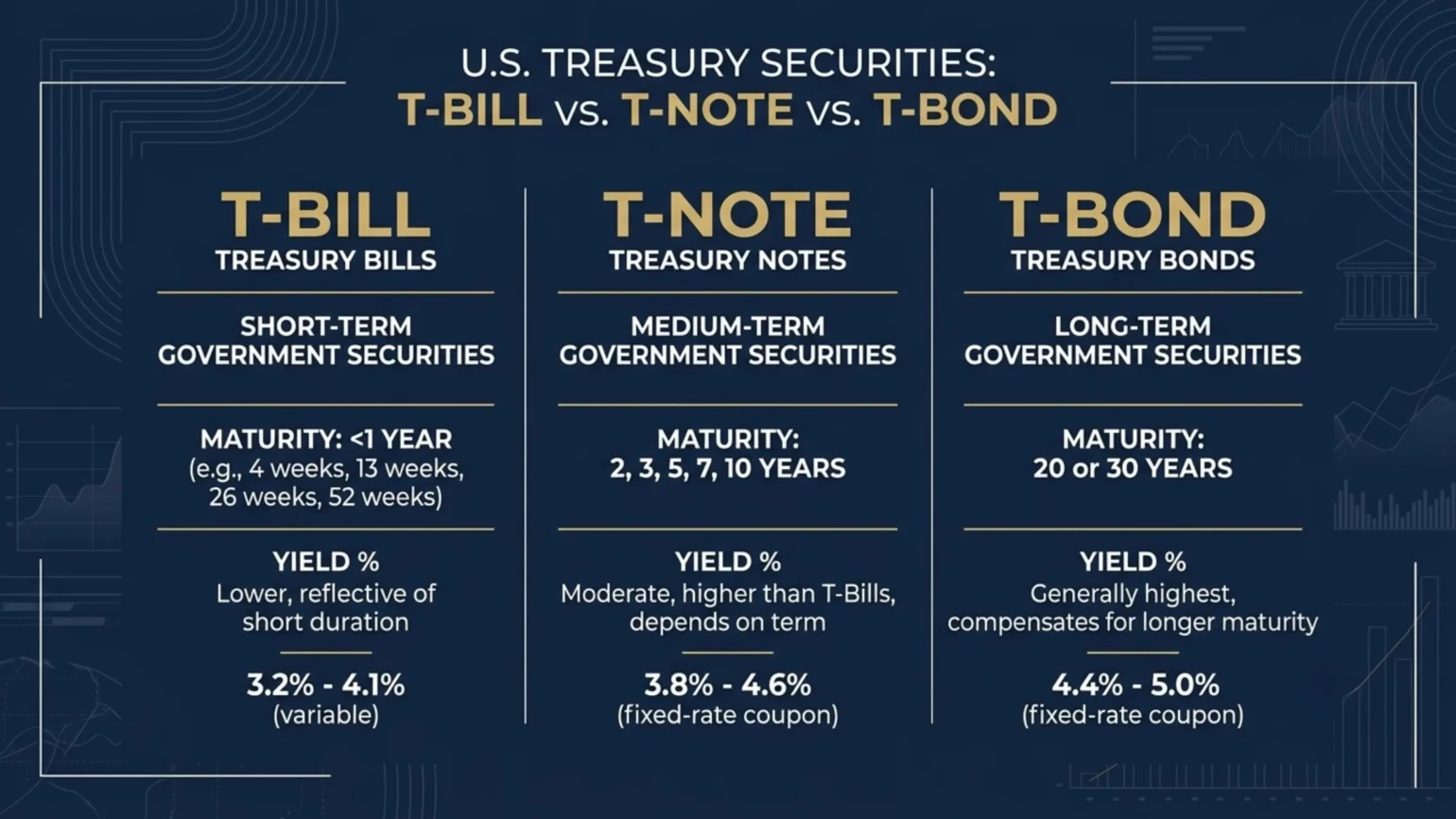

The U.S. Treasury sold $44 billion of seven-year notes on Thursday, September 24, with the auction clearing at a 5.085% high yield, the highest level for the maturity since April 1993, according to Treasury auction records and contemporaneous historical reporting. The new notes carry a 5.000% coupon, settle September 30, 2026, and mature September 30, 2033. The security’s CUSIP is 91282CRM5.
The result marked a substantial increase from the previous seven-year auction on August 27, when Treasury sold the same $44 billion amount at a 4.512% high yield. The difference is 0.573 percentage point, or 57.3 basis points, calculated by Investozora from the two auction yields. TreasuryDirect provides the underlying auction-results database through its Auction Search, while its current auction pages explain that notes are issued through regularly scheduled auctions.
The auction’s bid-to-cover ratio was 2.42, down from 2.50 in August. In the allocation of competitive awards, indirect bidders received 57.2%, direct bidders 30.3%, and primary dealers 12.5%. These categories describe how accepted competitive awards were allocated; indirect bidders should not automatically be treated as foreign investors.
The auction is part of Treasury’s regular borrowing program. Investors evaluating how Treasury securities are sold can see Investozora’s U.S. Treasury auction process and bidding guide for background on competitive and noncompetitive bidding.
The historical comparison is notable because Treasury discontinued seven-year-note issuance after April 1993 and later reintroduced the maturity in 2009. That means the September 24 result is best described as the highest auction yield since the final pre-discontinuation period, rather than as a continuous annual auction record.
For readers tracking the Treasury curve, the next relevant question is whether elevated auction yields persist across subsequent maturities and auctions. A single auction establishes the rate paid on that issue; it does not by itself establish the direction of future Treasury yields.