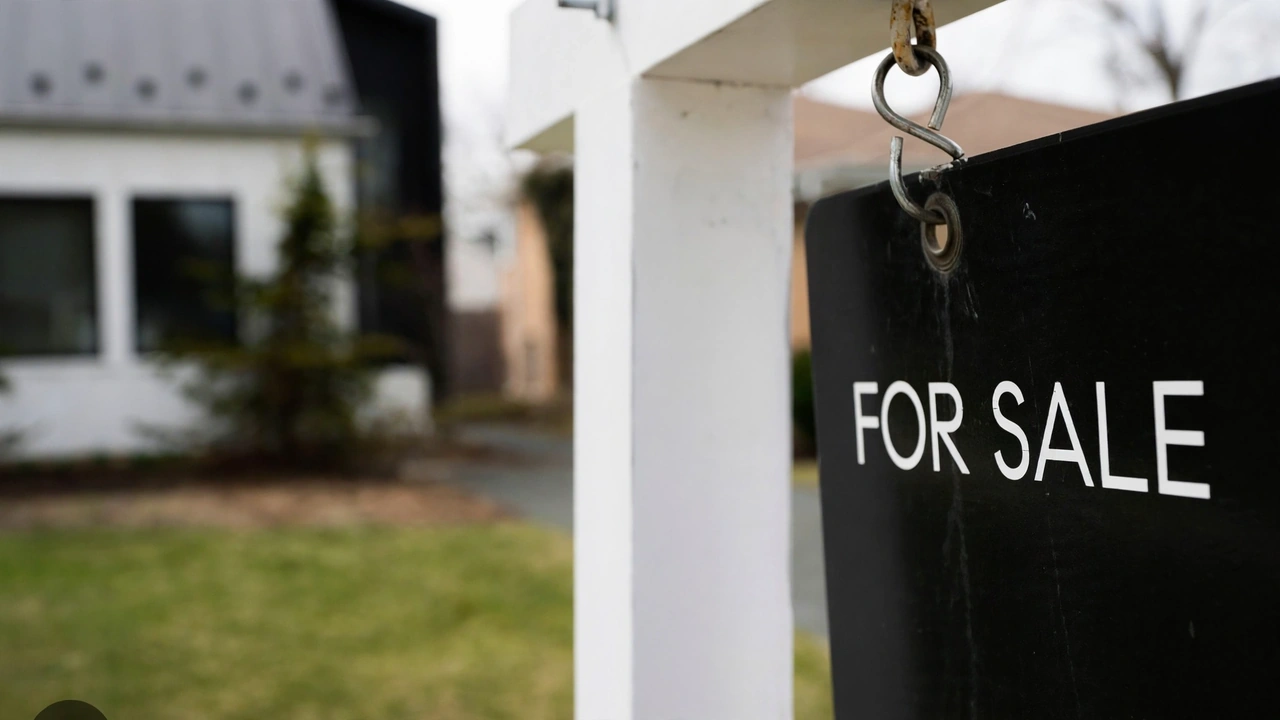
U.S. mortgage rates fell for the first time in eight weeks, with the average 30-year fixed rate declining to 7.32% in Freddie Mac’s latest survey, easing borrowing costs after a steep climb since late August.
The October 22 survey showed the 30-year fixed mortgage rate falling from 7.40% the previous week, an eight-basis-point decline. The 15-year fixed rate also decreased, slipping three basis points from 6.71% to 6.68%.
The decline provides some relief to prospective homebuyers, but the national average remains well above its level a year earlier, when the 30-year rate was 6.19% and the 15-year rate stood at 5.44%. Freddie Mac Chief Economist Sam Khater said the lower 30-year average offered prospective buyers some relief.
The latest reading interrupts a sustained increase in mortgage rates. Freddie Mac’s historical rate data show that the 30-year average stood at 6.66% on August 27, reached 6.95% on September 17 and climbed to 7.40% by October 8.
That trajectory was already evident in Investozora’s earlier coverage of the September rate increase and the previous 6.76% reading. Despite the latest decline, the 30-year average remains 66 basis points above its August 27 level and 113 basis points higher than Freddie Mac’s year-earlier comparison.
For borrowers, the difference is measurable. Based on standard 30-year amortization, Investozora calculates that a $400,000 mortgage at 7.32% would require approximately $2,748 in monthly principal and interest, compared with $2,770 at 7.40%.
That represents savings of about $22 per month, or $262 over 12 payments, assuming the same loan amount and repayment period. At the year-earlier average of 6.19%, the same hypothetical mortgage would require approximately $2,447 monthly. The difference compared with today’s survey rate is roughly $300 per month.
These calculations exclude property taxes, homeowners insurance, mortgage insurance and closing costs. They illustrate borrowing-cost differences rather than guaranteed savings available to existing homeowners. The movement also matters because mortgage rates do not respond mechanically to Federal Reserve interest-rate decisions.
Long-term Treasury yields, mortgage-backed securities pricing, inflation expectations and lender-specific conditions influence mortgage costs. Investozora’s explanation of the mortgage-rate mechanism examines how monetary policy transmits through financial markets.
The distinction between Fed and Treasury rates is important: a change in the federal funds target does not automatically produce an equivalent change in 30-year mortgage rates.
The Consumer Financial Protection Bureau has also documented how mortgage-market spreads influence borrowing costs. Investozora’s existing coverage of Treasury yield movements provides additional context for how government-bond pricing affects household financing.
Freddie Mac’s survey is based on thousands of mortgage applications submitted through its Loan Product Advisor system. Its benchmark focuses on conventional, conforming home-purchase loans for borrowers with excellent credit and a 20% down payment.
Consequently, the published averages are not guaranteed rates for individual applicants. Borrowers comparing lenders should also distinguish the advertised interest rate from the annual percentage rate, which incorporates certain additional borrowing charges. The CFPB’s APR explanation outlines that difference.
The agency also recommends comparing multiple loan offers rather than relying on a single advertised rate. The next Freddie Mac weekly survey is scheduled for Thursday, October 29, according to its publication calendar.
That release will provide the next comparable national measurement of whether the latest decline extends or proves temporary. It will not, by itself, establish the borrowing rate available to every household.