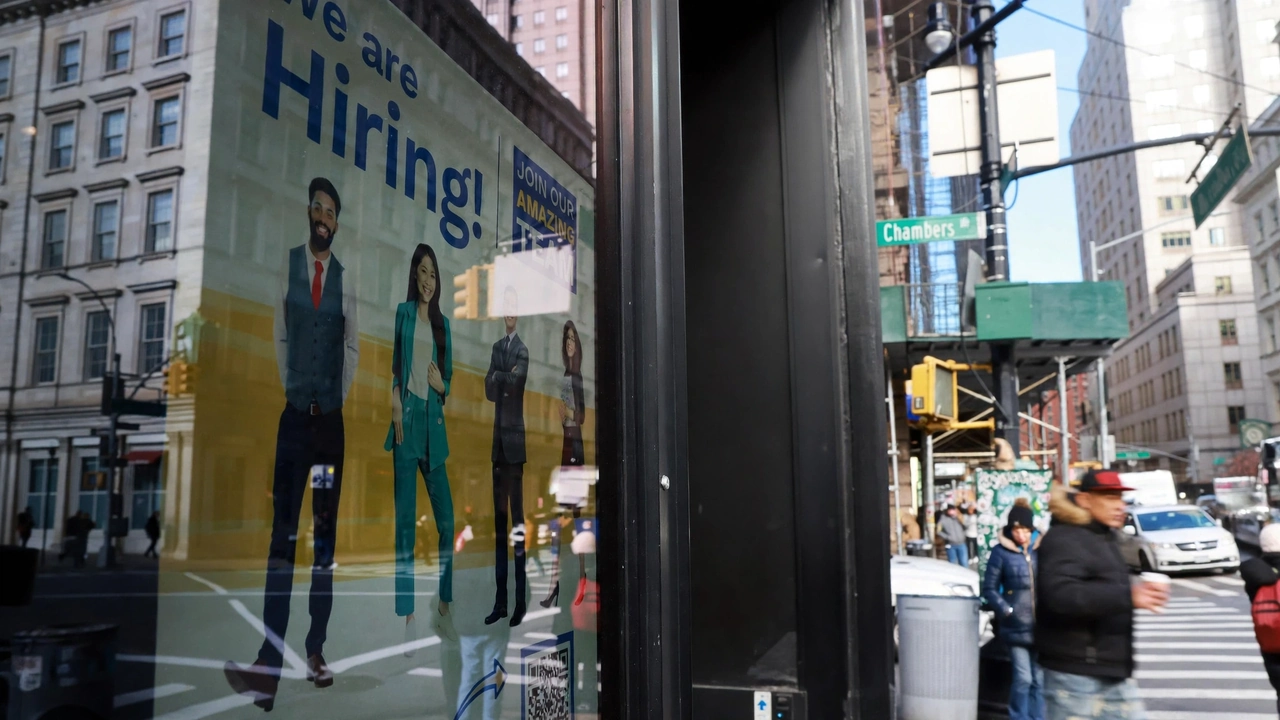
U.S. employers added 165,000 jobs in October 2026, while the unemployment rate declined to 4.1% from 4.2% in September, according to the October jobs report released Friday, November 6, by the Bureau of Labor Statistics. The payroll increase was well above September’s upwardly revised gain of 60,000 and the average monthly increase of 48,000 over the preceding 12 months.
Hiring was led by professional and business services, health care, and transportation and warehousing, offering a stronger employment picture after several months of uneven growth. The improvement also included substantial revisions to earlier payroll estimates. August employment gains were revised upward from 133,000 to 186,000, while September’s increase was raised from 29,000 to 60,000, adding a combined 84,000 jobs to previously reported employment growth.
Those changes significantly improve the picture presented by the original September payroll report, although they also demonstrate why initial monthly employment estimates should not be treated as final. Professional and business services added 70,000 jobs in October, compared with an average monthly increase of 15,000 over the preceding year.
The gains included 33,000 positions in professional, scientific, and technical services, 28,000 in administrative and support services and related activities, and 9,000 in company management. Health care added another 42,000 jobs, including 16,000 in hospitals and 11,000 in home health care services, according to the government’s industry employment data.
Transportation and warehousing employment increased by approximately 25,000, driven largely by 17,000 additional jobs among couriers and messengers. Manufacturing also added 19,000 jobs, including gains in computer and electronic products, machinery, and primary metals, while construction employment changed little.
The improvement across several industries contrasts with the slower conditions reflected in earlier labor market data, but October’s stronger result does not establish that every industry or local labor market experienced better hiring. The household survey showed that the unemployment rate eased by 0.1 percentage point to 4.1%, with approximately 7.07 million people unemployed.
The number of employed Americans increased by 463,000 to 163.62 million, while the labor force expanded by 421,000 to 170.68 million. Labor force participation edged up to 61.9% from 61.8%, meaning the lower unemployment rate occurred alongside an increase in the number of people working or actively seeking employment, according to the official household survey tables.
Not every measure improved. The number of people working part time for economic reasons increased by 339,000 to approximately 4.84 million, including workers who wanted full-time positions but faced reduced hours or could not find full-time work. About 1.96 million people remained unemployed for at least 27 weeks, representing 27.6% of all unemployed people, illustrating why a lower headline unemployment rate does not necessarily mean finding satisfactory work has become easier for everyone.
Wages increased alongside employment, with average hourly earnings for private nonfarm employees rising 14 cents, or 0.4%, to $38.00 in October. Earnings were 3.1% higher than a year earlier, while the average workweek remained unchanged at 34.4 hours. These are nominal earnings figures, not inflation-adjusted measures of household purchasing power, a distinction that also matters when examining recent real wage trends and broader inflation pressures.
The stronger payroll result follows other measures showing a mixed employment environment. September’s job openings and hiring figures track worker movement rather than net payroll growth, while the separate private payroll estimate from ADP measures a different employment population using a different methodology.
These indicators can provide useful context, but their headline changes should not be combined or compared as though they were identical measures. The employment figures also matter to the Federal Reserve, which evaluates labor market conditions alongside inflation and other economic evidence when setting monetary policy.
Stronger hiring may reduce concern about an immediate employment slowdown, but rising wages and persistent inflation can complicate decisions about borrowing costs. The relationship between employment and rates is not mechanical, and the October figures alone do not establish what policymakers will decide at their next meeting.
The October report provides stronger evidence of employment growth than September’s initial reading suggested, particularly after the upward revisions to the previous two months. However, the increase in involuntary part-time employment shows that the improvement was not uniform, and the preliminary payroll figures remain subject to further revision.
The Bureau of Labor Statistics is scheduled to release the November 2026 Employment Situation report on Friday, December 4, at 8:30 a.m. Eastern Time, providing the next nationwide assessment of payroll growth, unemployment, wages, and labor force participation.