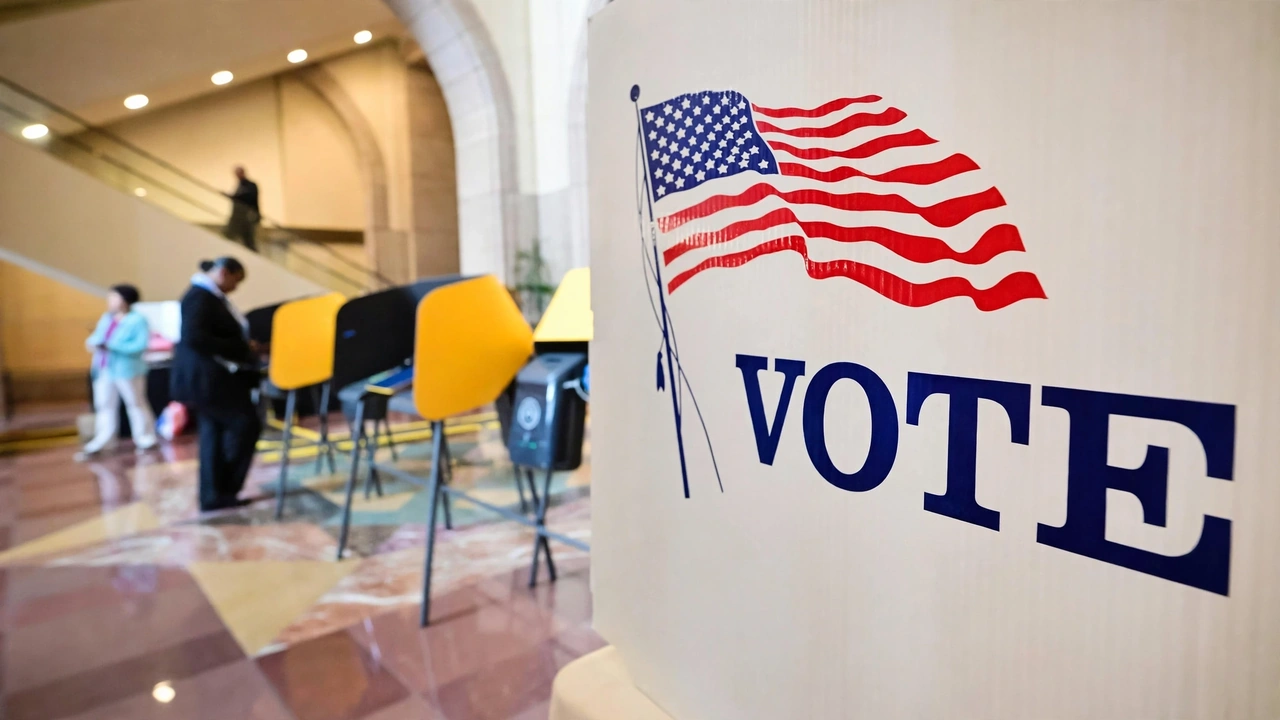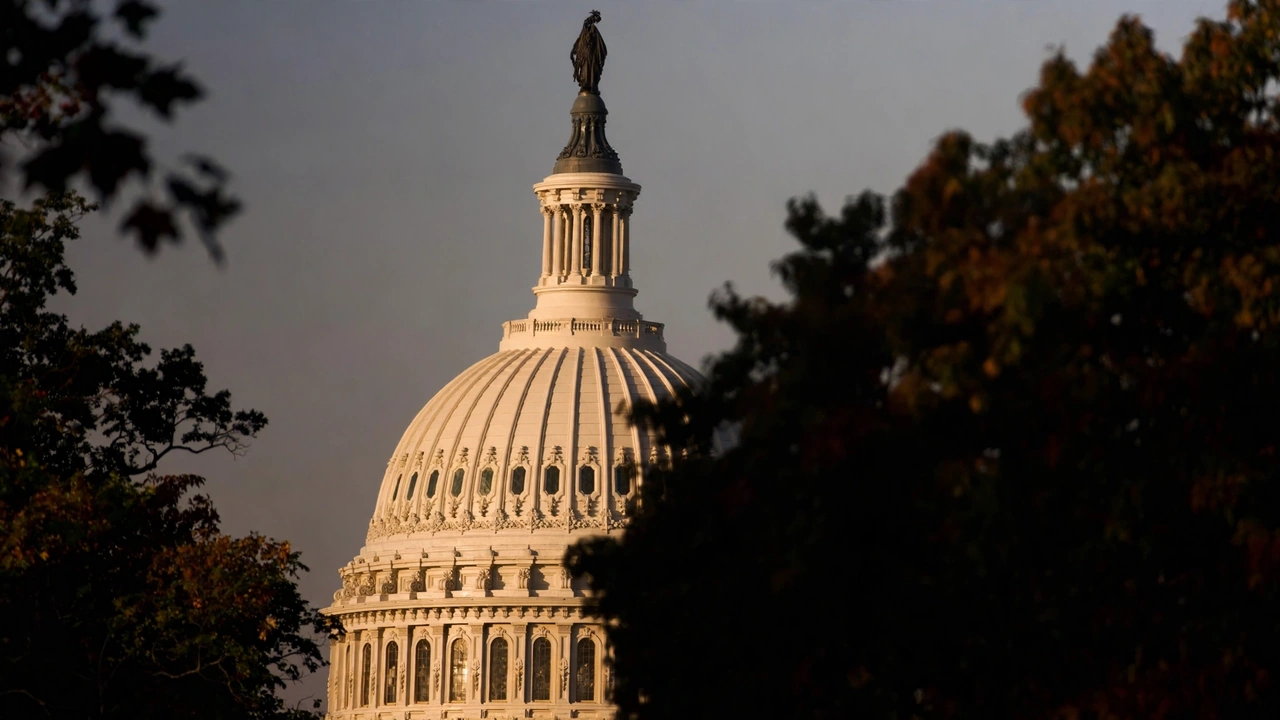
WASHINGTON, November 4, 2026 — Democrats have won control of the U.S. Senate after defeating Republicans in several traditionally conservative states, delivering a major setback to President Donald Trump in the midterm elections. The battle for the House of Representatives remains unresolved, although Democrats have already flipped seven seats as vote counting continues.
The Associated Press projected Democratic control of the Senate following victories in North Carolina, Texas, Ohio, Kansas, South Carolina and Iowa. The outcome ends Republicans’ Senate majority and gives Democrats the power to lead the chamber when the new Congress takes office in January.
The result represents a significant reversal from the pre-election balance. Republicans entered the midterms holding 53 Senate seats, while Democrats and two independents who caucus with them held 47. Democrats needed a net gain of four Republican-held seats to secure a majority without relying on a vice-presidential tie-breaking vote.
In Texas, Democrat James Talarico defeated Republican Ken Paxton, handing Democrats a striking victory in a state that has long favored Republicans in statewide elections. Former Democratic Sen. Sherrod Brown defeated Republican Sen. Jon Husted in Ohio, while former North Carolina Gov. Roy Cooper captured the seat being vacated by retiring Republican Sen. Thom Tillis.
Democrats also scored unexpected victories in Kansas and South Carolina. Adam Hamilton defeated Republican Sen. Roger Marshall in Kansas, while Annie Andrews won the South Carolina contest against Republican Darline Graham. In Iowa, Democrat Josh Turek defeated Republican Rep. Ashley Hinson.
The victories were especially consequential because Democrats entered the election facing a difficult Senate map, with several opportunities requiring them to win states that had supported Trump in the 2024 presidential election.
Democrats also defended important seats. Sen. Jon Ossoff won reelection in Georgia against Republican Rep. Mike Collins, while Democratic Rep. Chris Pappas defeated former Republican Sen. John Sununu in New Hampshire, retaining the seat being vacated by retiring Democratic Sen. Jeanne Shaheen.
The House election remains the other major contest. All 435 voting seats were up for election, and either party needs 218 seats to secure an outright majority. Democrats entered Election Day needing a net gain of three Republican-held seats to take control of the chamber.
According to the Associated Press, Democrats had already flipped seven House seats as results continued to develop. Their victories included Republican-held districts in New Jersey and Pennsylvania, alongside open-seat contests in North Carolina and Kentucky. However, those gains did not yet establish an overall House majority because additional races remained outstanding.
The election followed a period of substantial voter dissatisfaction with inflation, living costs and the direction of the country. The AP Voter Poll found that approximately three-quarters of voters described themselves as angry or dissatisfied with the country’s trajectory, while about eight in 10 said inflation had caused moderate or severe financial hardship for their households.
Those findings provide context for the result, but do not establish that every Democratic victory was caused by the same issue. Investozora previously examined the differences in voter priorities ahead of the election.
The Senate result changes the political outlook for the final two years of Trump’s presidency. A Democratic majority will control Senate committee leadership and have greater authority over investigations, oversight and the confirmation process for federal officials and judges.
The change is particularly important for judicial nominations. The Senate must confirm federal judicial appointments, meaning a Democratic majority could block nominees opposed by enough members of the chamber. It could also complicate Republican efforts to advance legislation, even if the party retains the House.
For households and businesses, the implications will depend on the policies Congress actually adopts. Investozora’s earlier examination of taxes and spending explained how a change in congressional control could affect budget negotiations, federal tax proposals and government funding.
Winning the Senate does not automatically change income tax rates, Social Security benefits or federal spending obligations. Existing provisions, including the standard deduction, remain governed by federal law unless changed through the legislative process.
A Democratic Senate could reject legislation approved by a Republican-controlled House, while Democratic control of both chambers would give the party greater power to advance its own proposals. Trump would nevertheless retain presidential veto authority, creating the possibility of prolonged negotiations over spending and taxes.
The constitutional limits are important. Under the Senate’s procedures, most legislation can face a 60-vote threshold to end debate, while certain budget legislation follows different rules. A simple majority therefore does not guarantee that every legislative proposal can become law.
The election results also remain distinct from official certification. The Federal Election Commission directs voters to state authorities for election results, while the Election Assistance Commission explains that state election offices are responsible for official vote reporting and certification. Media projections can establish a widely accepted electoral outcome before the legal certification process is completed.
The election also followed unusually heavy early participation. Investozora reported that early voting surpassed the comparable 2022 midterm benchmark before Election Day, although early-ballot participation alone could not determine the eventual result.
The next important developments are the remaining House race calls, updated vote totals and the formal certification of state results. The newly elected 120th Congress is scheduled to begin its term on January 3, 2027.
Democrats have secured the Senate and gained new leverage over the Trump administration. Whether they can also take the House will determine if Republicans retain a foothold in congressional leadership or face Democratic majorities in both chambers.