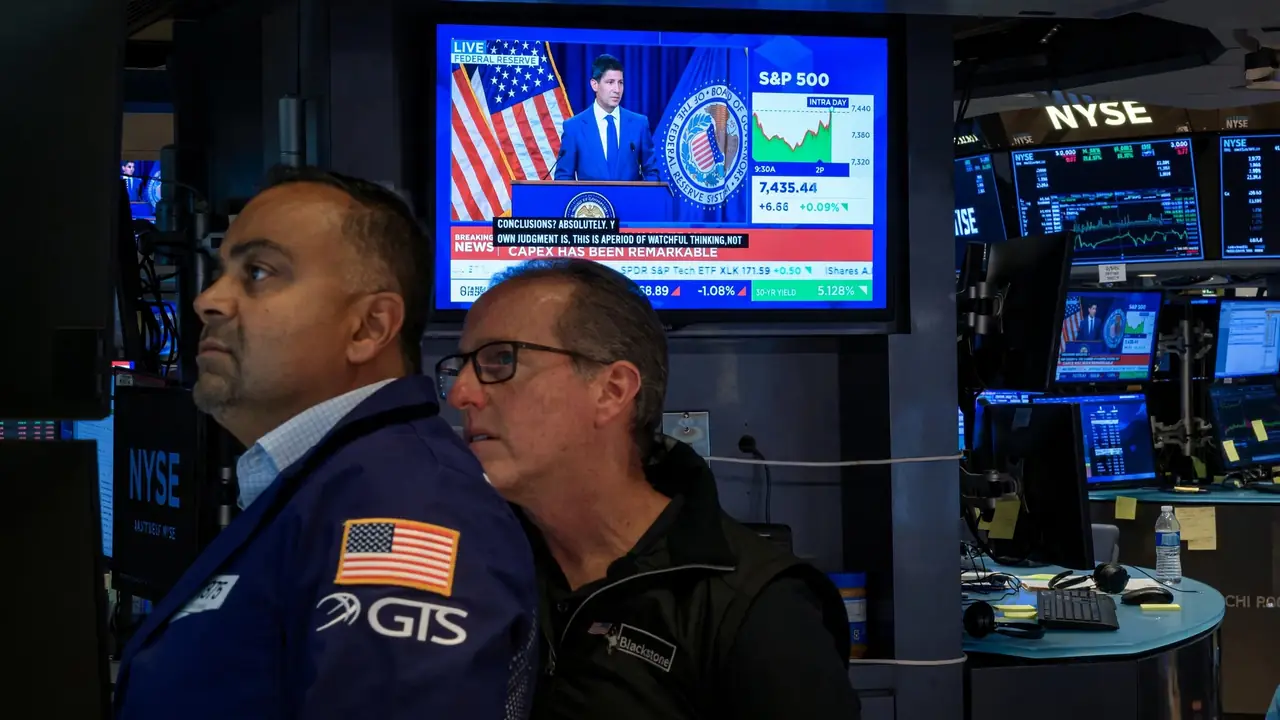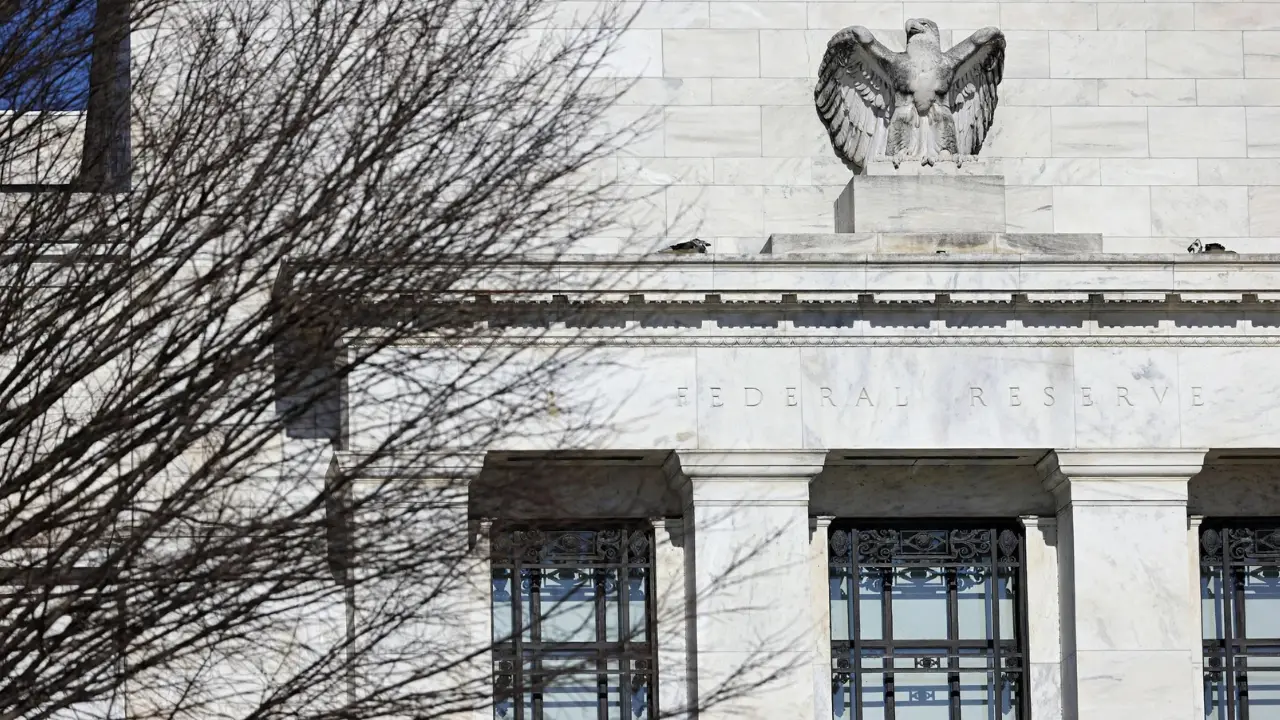


U.S. stocks closed lower Wednesday after the Federal Reserve raised interest rates for the first time since 2023 and released new projections showing policymakers expect rates to remain higher than they had forecast only three months ago.
The Dow Jones Industrial Average fell 631.21 points, or 1.21%, to close at 51,461.90 on September 16. The S&P 500 lost 33.92 points, or 0.45%, to finish at 7,551.81, while the Nasdaq Composite was nearly flat, falling 0.01%.
The market had been higher earlier in the session before turning lower following the Fed decision. That timing makes Wednesday different from the days of speculation leading into the meeting: investors were no longer trading only on the possibility of a rate increase. They were reacting to an actual increase and a new official rate outlook.
The Federal Open Market Committee voted unanimously to raise its federal funds target by a quarter percentage point, to 3.75% to 4.00%, according to the Fed’s September 16 FOMC statement. The committee said economic activity was expanding at a solid pace, domestic spending had remained resilient and inflation was still elevated.
The increase was the Fed’s first since July 2023. The Federal Reserve’s official history of federal funds rate changes shows that the July 2023 increase took the target to 5.25% to 5.50%. The Fed later cut rates during 2024 and 2025 before holding the 3.50% to 3.75% range through its July 2026 meeting.
Investozora reported the details of Wednesday’s policy action separately in its coverage of the Fed’s move to a 3.75%–4.00% target range. The important new question for stock investors is what came with the hike.
The Fed’s new September Summary of Economic Projections put the median federal funds rate at 4.1% at the end of 2026. In June, that median had been 3.8%. That is a 0.3-percentage-point upward shift in the median year-end policy-rate projection in only three months.
The individual projections make the change even clearer. Twelve of the Fed’s 18 participants now see the appropriate year-end rate midpoint at 4.125%, while four see 4.375% and two see 3.875%. Because the newly announced target range has a midpoint of 3.875%, the largest group of officials is effectively projecting another quarter-point increase by year-end.
That does not guarantee another hike. The dots are individual projections rather than commitments by the FOMC. But the September distribution gives investors information they did not have before Wednesday’s release: most policymakers currently see policy ending 2026 above the level established at this meeting.
The inflation projections also moved in the same direction. The Fed raised its median 2026 PCE inflation forecast to 3.7% from 3.6% in June and its core PCE forecast to 3.4% from 3.3%. At the same time, officials raised their 2026 real GDP growth forecast to 2.3% from 2.2% and lowered the projected unemployment rate to 4.1% from 4.3%.
That combination matters for equities. Stronger expected growth and lower unemployment are positive for the economy on their own. But when they are combined with inflation that remains well above the Fed’s 2% objective, they also give policymakers less reason to quickly reverse Wednesday’s tightening.
In other words, markets did not receive a simple “one hike and done” signal. Bond markets reflected the same pressure. The U.S. Treasury’s official September 16 yield curve data put the 2-year Treasury yield at 4.74% and the 10-year yield at 5.01%. One day earlier, the corresponding official Treasury rates were 4.67% and 5.00%.
That means the 2-year yield, which is especially sensitive to expectations for Federal Reserve policy, rose 7 basis points from Tuesday to Wednesday, while the 10-year rate increased 1 basis point. A basis point is one-hundredth of a percentage point.
The move is particularly important because Treasury yields were already high before the Fed meeting. Investozora’s reporting on the September 20-year Treasury auction found that the government’s latest 20-year sale cleared at a 5.420% yield, up sharply from the previous auction.
Higher Treasury yields increase the return investors can earn on government debt and also raise the discount rate applied to future corporate earnings. That can put pressure on stock valuations even when the economic outlook remains solid.
Wednesday’s divergence inside the stock market also matters. The Dow fell much more sharply than the S&P 500, while the Nasdaq was nearly unchanged. The three indexes therefore did not respond to the Fed decision with the same intensity.
The Dow is price-weighted, meaning large moves in higher-priced members can have an outsized effect on the index. The S&P 500 is weighted by market capitalization, while the Nasdaq has heavier exposure to large technology companies.
The difference between Wednesday’s 1.21% Dow decline and the Nasdaq’s 0.01% loss shows why the session should not be described simply as a uniform collapse in U.S. stocks. For investors, the larger change is the interest-rate backdrop.
Before the meeting, markets knew a quarter-point increase was possible. After the meeting, they knew the Fed had delivered the increase unanimously, raised its median 2026 rate projection from 3.8% to 4.1%, and still expected inflation to remain well above 2% this year. The next question is whether incoming economic data reinforce that path or give policymakers a reason to stop after one increase.
The Bureau of Labor Statistics release calendar shows that the September employment report is scheduled for October 2 and the September Consumer Price Index for October 14. Both arrive before the Fed’s next policy meeting on October 27–28, which is listed on the Federal Reserve’s official FOMC calendar.
Those reports can materially change expectations. Softer inflation or labor data could weaken the case for additional tightening, while renewed price pressure or continued economic strength could reinforce the higher rate path shown in the September projections.
For now, Wednesday established the new starting point. The Dow ended 1.21% lower, the S&P 500 fell 0.45%, Treasury yields remained near multi-year highs, and Federal Reserve officials shifted their projected 2026 policy rate higher.
The next market move will depend less on whether the September hike happened, it already has and more on whether the economic data support the additional tightening now embedded in most Fed officials’ year-end projections.