

Federal Reserve officials are signaling that the U.S. Treasury’s new effort to support the long end of the government bond market will not change how the central bank sets interest rates, but the intervention could make the Fed’s job harder if it materially alters financial conditions.
The Treasury Department said August 19 that it will at least double the maximum size of liquidity-support buybacks for nominal Treasury securities in the 10-to-20-year and 20-to-30-year sectors, raising the cap from $2 billion to at least $4 billion per operation.
Under Treasury’s August 19 buyback announcement, the larger operations begin September 9 and are scheduled through November 4. Treasury said the change is intended to provide “greater liquidity support” in longer-dated sectors, where it has received strong investor participation.
The timing matters because long-term Treasury yields had risen sharply while the Federal Reserve was already debating whether interest rates are restrictive enough to return inflation to its 2% goal.
St. Louis Fed President Alberto Musalem said Thursday that the Fed remains focused on inflation and the labor market and sets monetary policy independently of Treasury debt management or fiscal policy. He also described financial conditions as accommodative and indicated he was leaning toward a rate increase at the Fed’s September meeting.
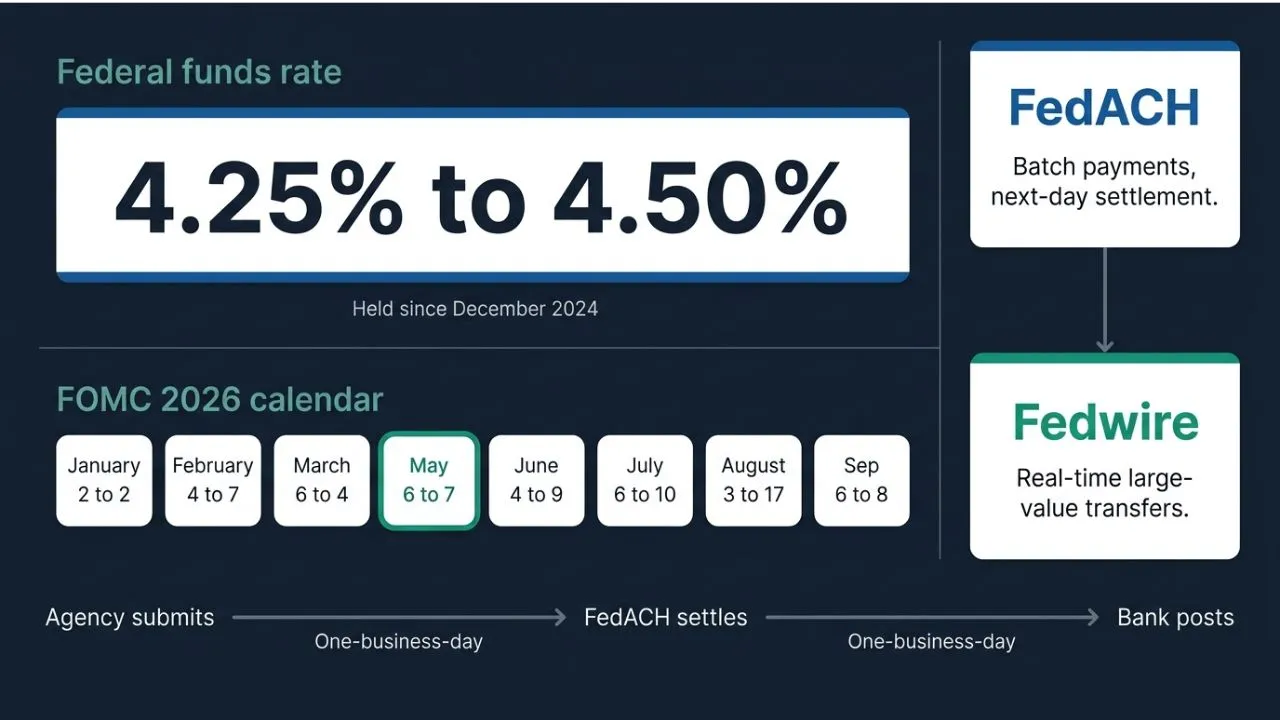
That view is consistent with the Federal Reserve’s July 28-29 FOMC minutes, released August 19. Many participants assessed that additional policy tightening would likely be necessary if inflation failed to decline, while some said financial conditions might not be restrictive enough to bring inflation back to 2%. The FOMC kept the federal funds target range at 3.50% to 3.75% by a 9-3 vote, with three members preferring a quarter-point increase.
The potential complication is a mismatch between the part of the yield curve Treasury is trying to support and the overall financial restraint the Fed may want. Treasury buybacks can improve liquidity and, if they lift bond prices, can put downward pressure on longer-term yields. Lower long-term yields can ease borrowing conditions in markets linked to Treasuries.
If that easing were large and persistent while inflation remained too high, the Fed could need a tighter short-term policy stance than otherwise to produce the same restraint. That is a conditional risk, not evidence that a rate hike is inevitable. Understanding how the federal funds rate and Treasury yields differ is critical to that distinction.
San Francisco Fed President Mary Daly was more cautious. She said longer-term yields currently provide little signal for near-term policy calibration and said it was too early to judge whether Treasury’s shifting debt-management pattern could create technical issues for the Fed. Her distinction is important: the federal funds rate and Treasury yields are related, but they are not the same policy instrument and are not controlled by the same institution.
There is also a technical channel. The Fed implements monetary policy through an ample-reserves framework, using administered rates and liquidity facilities to keep the federal funds rate inside its target range. Changes in Treasury issuance, settlements and cash balances can move liquidity through money markets.
More issuance at the front end of the Treasury curve could therefore create rate pressures the Fed’s operating tools must absorb. The New York Fed’s explanation of monetary-policy implementation in an ample-reserves regime shows how interest on reserve balances, overnight reverse repos and the standing repo facility help maintain rate control as liquidity conditions fluctuate.
Treasury’s move should not be confused with Federal Reserve quantitative easing. Treasury buybacks are debt-management operations designed to support market liquidity. Fed asset purchases, by contrast, change the central bank’s balance sheet and can create reserves in the banking system.
The distinction also matters when assessing quantitative tightening and the Federal Reserve balance sheet. Musalem’s comments underscore that monetary policy remains independently determined even as Treasury becomes more active in the government bond market.
The market’s first reaction shows why the policy implications remain unsettled. Long-term yields fell after Treasury announced the larger buybacks but rose again Thursday, indicating that the initial effect was not enough to override broader forces influencing the market.
Those forces include inflation expectations, the economic outlook, federal borrowing needs and investor demand for long-duration debt. The rebound does not by itself establish that Treasury’s program failed; the operations themselves do not begin at the enlarged size until September 9.
For households and businesses, the immediate takeaway is not that the Fed has changed course. The federal funds target remains 3.50% to 3.75%, and no September decision has been made. The important question is whether Treasury’s actions produce a sustained change in long-term financial conditions, which ultimately feed into broader borrowing costs when interest rates stay higher.
If yields fall materially while inflation stays elevated, Fed officials could view financial conditions as less restrictive than intended. If the move mainly improves trading liquidity without materially changing borrowing conditions, the monetary-policy impact may be limited.
Three dates now define the next phase: Treasury’s larger long-end buybacks begin September 9; the FOMC meets September 15-16; and Treasury has said it will provide more information on future buyback sizes at its November 4 Quarterly Refunding.
Until then, the central issue is not whether Treasury has taken over interest-rate policy. It is whether two institutions using different tools end up pushing financial conditions in different directions while the Fed is still trying to finish the job on inflation.