
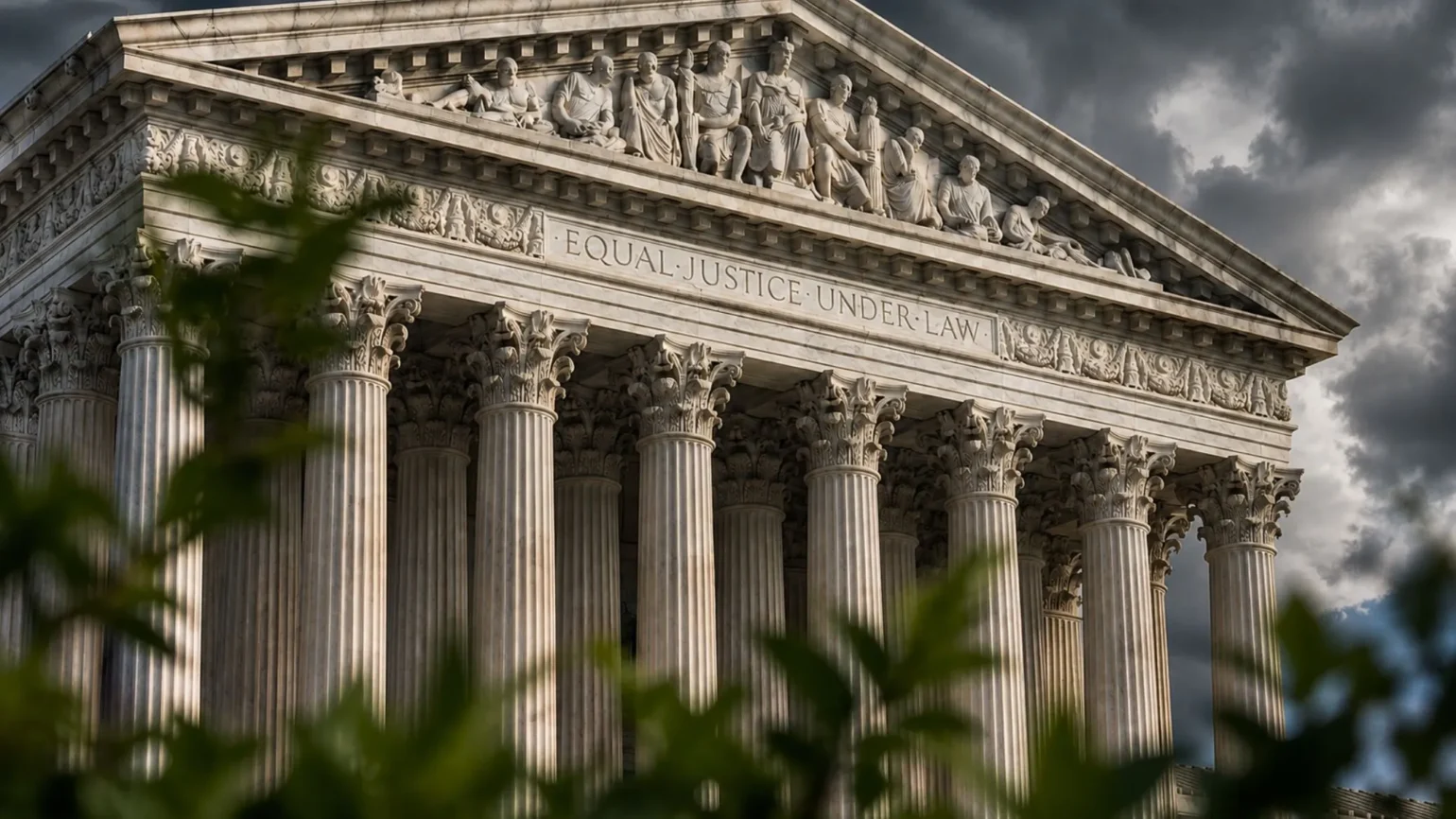
The Supreme Court ruled Monday that the Federal Reserve’s structure of insulating monetary policy from direct presidential control survives, at least for now, a decision that reaches well beyond the legal fate of a single Fed governor into the credibility framework underpinning the U.S. dollar, Treasury markets, and every borrowing rate tied to them.
In a 5 to 4 decision, Chief Justice John Roberts wrote for a majority that included three of the court’s liberal members that President Trump lacked the authority to immediately remove Fed Governor Lisa Cook from her position while her legal challenge proceeds through lower courts.
Roberts emphasized that Congress designed the central bank to operate with structural independence from day to day politics, and that any change to that arrangement must come from legislation rather than judicial reinterpretation or unilateral executive action.
The ruling left open whether Trump could ultimately succeed in removing Cook through proper legal process, but it firmly rejected the broader claim that a president could fire any Fed governor at will without notice or judicial review.
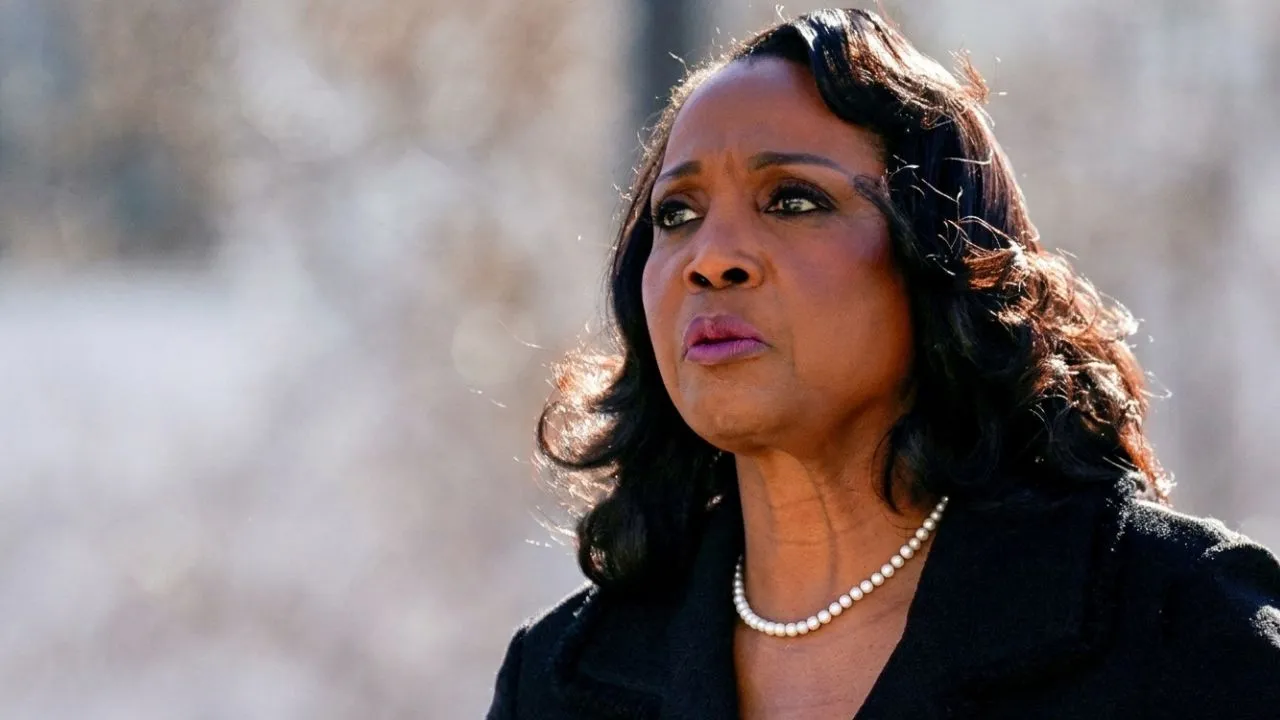
The case originated last August when Trump announced Cook’s termination over allegations of mortgage fraud predating her 2021 appointment, a move without precedent across the central bank’s 112 year history.
Cook has denied wrongdoing and has not been charged with any crime. What makes the ruling significant for ordinary borrowers and investors is not the underlying mortgage dispute, but what the court’s reasoning protects: a central bank empowered to set interest rates based on economic evidence rather than short term political pressure, a structural choice Congress made deliberately when it created the Fed in 1913.
What Federal Reserve Independence Actually Means
Congress built the Federal Reserve’s governance structure specifically to separate monetary policy decisions from electoral cycles. The legal foundation sits in the federal reserve act, which grants Fed governors fourteen year terms, staggered so no single president can appoint a majority of the board during one term in office, and permits removal only for cause rather than political disagreement.
The statute does not precisely define cause, which became the central legal question in the Cook litigation, but the structural intent was unambiguous from the outset.
This insulation does not mean the Fed answers to nobody. The about the Federal Reserve page describes a system accountable to Congress through regular testimony, published reports, and statutory mandates, even while remaining structurally independent from the White House’s day to day direction.
Governors testify before House and Senate committees multiple times yearly, and the Fed’s monetary policy decisions are reviewable by lawmakers who retain the constitutional authority to alter the agency’s structure entirely, a power the judiciary explicitly declined to exercise on Congress’s behalf in Monday’s ruling.
The actual interest rate decisions flow through the Federal Open Market Committee, a body of twelve voting members combining the seven Washington based governors with five of the twelve regional Reserve Bank presidents on a rotating basis. This committee meets eight times a year on a fixed calendar to set the federal funds rate, the benchmark that ripples through nearly every other borrowing cost in the American economy.
Why Central Bank Credibility Shapes Inflation Itself
Economic research has consistently shown that central bank independence functions as a credibility mechanism, not merely a bureaucratic preference.
When markets believe a central bank will raise rates whenever inflation threatens its target regardless of political consequences, that belief itself helps anchor inflation expectations lower, because businesses and workers price their decisions assuming the Fed will follow through. Erode that belief, and the anchor weakens even before any actual policy change occurs.
This dynamic is precisely what played out in markets the same week as the Supreme Court ruling, though through an entirely separate channel. New Fed Chair Kevin Warsh, confirmed in May and presiding over his first meeting as chair on June 17, delivered what multiple market analysts described as a hawkish surprise.
The FOMC held rates steady at 3.50 to 3.75 percent for a fourth consecutive meeting, but stripped previous easing bias language from its policy statement entirely, and the accompanying Summary of Economic Projections showed nine of eighteen participants now projecting at least one rate hike before year end, a sharp reversal from March projections that had leaned toward a cut.
Warsh told reporters the committee would deliver price stability regardless of near term political pressure, language that read directly from the institutional independence the Supreme Court reaffirmed days later.
The median year end projection for the federal funds rate rose to 3.8 percent from 3.4 percent in March, and seventeen of eighteen officials judged inflation risks to be tilted to the upside with none seeing downside risk at all.
Whether one agrees with this more hawkish path or not, the structural point stands: the committee reached this conclusion through its own internal evidence based process rather than through direct presidential instruction, which is the entire mechanism the court’s ruling protects.
How This Connects To The U.S. Dollar And Treasury Markets
Global investors generally extend more confidence, and accept lower yields, when lending to governments whose central banks operate with demonstrated independence from short term political interference.
That confidence translates concretely into demand for U.S. Treasury securities, the debt instruments that finance federal borrowing and that set the benchmark rate against which nearly every other dollar denominated asset is priced.
Treasury debt information tracks the scale of what is at stake here in real time: the federal government carries trillions in outstanding debt that must be continuously refinanced through Treasury auctions, and the interest rate the government pays on that debt depends directly on investor confidence in long term price stability.
A central bank perceived as politically compromised would likely face demands for higher yields to compensate investors for inflation risk they could no longer trust the Fed to manage independently, raising borrowing costs not just for the federal government but for every mortgage, auto loan, and corporate bond priced off the Treasury curve.
This is the mechanism most coverage of the Cook case missed by focusing narrowly on whether Trump could fire one specific governor. The deeper financial stakes involve whether global capital markets continue extending the United States favorable borrowing terms premised on the belief that American monetary policy remains insulated from electoral pressure, a belief the court’s majority opinion explicitly identified as worth protecting.
Justice Clarence Thomas, dissenting separately, characterized the majority’s reasoning as policy argument rather than constitutional analysis, a dispute that signals this question is far from permanently settled even after Monday’s ruling.
What This Ruling Does Not Change
Several things remain unchanged despite the significance of Monday’s decision. The ruling does not resolve the underlying legal question of whether Trump can ultimately remove Cook through proper process; it merely blocks immediate removal while litigation continues in lower courts, a process that could take considerable time.
It does not alter any current interest rate, nor does it bind the FOMC to any particular policy direction going forward. And it applies narrowly to the specific procedural question of notice and opportunity to respond before removal, not to the broader constitutional question of whether Congress’s for cause removal protection for Fed governors survives future challenges.
Congress.gov remains the authoritative source for tracking any legislative response to this dispute, since Roberts explicitly stated that any structural change to the Fed’s independence must originate with lawmakers rather than the courts.
Several members of Congress from both parties have signaled interest in clarifying statutory removal standards, though no legislation has yet moved through committee.
What Investors And Borrowers Should Watch Next
Rather than tracking the legal proceedings in isolation, the more useful signals for households and investors run through the Fed’s own scheduled outputs. FOMC meeting statements on the established eight meeting annual calendar will show whether the committee’s June hawkish pivot persists or moderates as new data arrives.
CPI inflation data published monthly will indicate whether the price pressures driving the Fed’s current caution are easing or accelerating. GDP figures from the Bureau of Economic Analysis will show whether the broader economy is absorbing higher for longer rates without a meaningful slowdown.
Treasury yield movements, particularly on the 2 year and 10 year maturities tracked through the debt to the penny dataset, will offer the clearest real time read on whether global investors view the Fed’s independence as durably protected or merely temporarily preserved pending further litigation.
These indicators, grounded in verifiable government data released on fixed schedules, will tell readers far more about where monetary policy and household borrowing costs are headed than any single court filing or political statement.
For now, the structural answer the Supreme Court provided is clear: the Federal Reserve continues operating as Congress designed it, insulated from direct presidential removal of its governors absent due process, a protection that matters far beyond the specific dispute over Lisa Cook‘s mortgage filings and reaches into the credibility foundation supporting every dollar of U.S. government debt currently outstanding.