

Federal retirees in the United States are set to receive two different cost-of-living adjustments (COLAs) in 2027, depending on the retirement system under which they receive their pensions. Eligible retirees under the Civil Service Retirement System (CSRS) will receive a 3.6% increase, while those under the Federal Employees Retirement System (FERS) will receive a 2.6% increase.
The Office of Personnel Management (OPM) confirmed the two rates, with the adjustments taking effect on December 1, 2026. Eligible retirees will see the increase reflected in their January 4, 2027, retirement payments.
Although both retirement systems use the same federal inflation measure, different laws determine how much of that inflation is reflected in their pensions. For some retirees, the difference could mean hundreds of dollars in annual retirement income.
Why Raises Differ
The federal government calculates retirement COLAs using the Consumer Price Index for Urban Wage Earners and Clerical Workers (CPI-W), published by the Bureau of Labor Statistics. The calculation compares average index readings for July, August and September with those from the corresponding base quarter. Understanding how inflation is measured helps explain why both retirement systems start with the same inflation figure but produce different benefit increases.
Under 5 U.S.C. § 8340, CSRS generally provides eligible retirees with the full inflation-based adjustment. However, FERS operates under a separate formula established by 5 U.S.C. § 8462. The FERS formula has three inflation thresholds:
- Inflation of 2% or less: The COLA matches inflation.
- Inflation above 2% but no higher than 3%: The COLA is 2%.
- Inflation above 3%: The COLA is one percentage point below inflation.
Because the inflation-based adjustment for 2027 is 3.6%, the FERS formula produces a 2.6% increase. The one-percentage-point difference is a consequence of existing federal law rather than a new reduction introduced for 2027.
How Much More?
The financial difference becomes clearer when comparing retirees who receive identical monthly pensions before the adjustment. The following examples use the full 2027 COLA rates confirmed by OPM and assume both retirees qualify for the entire increase.
| Current monthly pension | CSRS monthly raise | FERS monthly raise | Annual difference |
|---|---|---|---|
| $1,500 | $54 | $39 | $180 |
| $2,000 | $72 | $52 | $240 |
| $2,500 | $90 | $65 | $300 |
| $3,000 | $108 | $78 | $360 |
| $4,000 | $144 | $104 | $480 |
| $5,000 | $180 | $130 | $600 |
Source: Investozora calculations using OPM’s confirmed 2027 COLA rates. Figures represent illustrative gross benefit increases before deductions.
A CSRS retiree receiving $3,000 per month would see that amount rise to $3,108, while an eligible FERS retiree receiving the same starting pension would receive $3,078. That represents a $30 monthly difference, or $360 over 12 months. The comparison isolates the effect of the COLA formula. It does not establish that CSRS retirees receive more total retirement income than FERS retirees, whose income may also include Social Security benefits and Thrift Savings Plan withdrawals.
Who May Miss Out?
Not every federal retiree will qualify for the January increase. Age, retirement classification and the date an annuity began can all affect eligibility. Under the FERS retirement rules, most regular FERS retirees must reach age 62 before qualifying for a pension COLA. Exceptions apply to qualifying disability and survivor beneficiaries, as well as certain special-category retirees.
Some federal law enforcement officers and firefighters may qualify before reaching 62. Disability retirees receiving an annuity calculated at 60% of their high-three average salary are subject to a separate restriction.
Retirees whose own FERS annuities include a CSRS component may also receive different adjustment rates on the respective portions of their pensions. OPM applies separate rules to FERS survivor annuities, including those involving component service.
Recent Federal Retirees
Federal employees who recently retired may receive considerably less than the full 2027 adjustment, even if they otherwise qualify. According to OPM’s annuity payment guidance, an eligible annuity generally must have commenced by December 31, 2025, to qualify for the full increase. More recent retirement benefits are subject to proration. For every qualifying month, retirees generally receive one-twelfth of the applicable annual adjustment.
| Annuity commencement | CSRS COLA | FERS COLA |
|---|---|---|
| December 2025 | 3.6% | 2.6% |
| March 2026 | 2.7% | 2.0% |
| June 2026 | 1.8% | 1.3% |
| September 2026 | 0.9% | 0.7% |
| November 2026 | 0.3% | 0.2% |
Source: OPM’s 2027 prorated COLA tables. Eligibility restrictions continue to apply.
For example, an otherwise eligible FERS retiree whose annuity began in June 2026 and who receives $3,000 monthly would receive an illustrative $39 increase instead of the full $78. The smaller adjustment in this case reflects the retirement commencement date, not an administrative error or an additional benefit cut.
Social Security Payments
Federal retirees receiving Social Security benefits will encounter another important distinction in January. The Social Security Administration announced on October 14 that beneficiaries will receive a 3.6% COLA for 2027. The Social Security formula does not apply the same inflation-related reduction imposed on FERS pensions.
An eligible retiree receiving a $3,000 FERS pension and $2,000 in Social Security retirement benefits could therefore receive a $78 monthly pension increase and a $72 Social Security increase, amounting to $150 in additional gross monthly income before deductions.
Some former public employees may also receive Social Security benefits affected by the Social Security Fairness Act, which repealed the Windfall Elimination Provision and Government Pension Offset. Those changes are separate from the annual federal pension COLA calculation.
January Payment Date
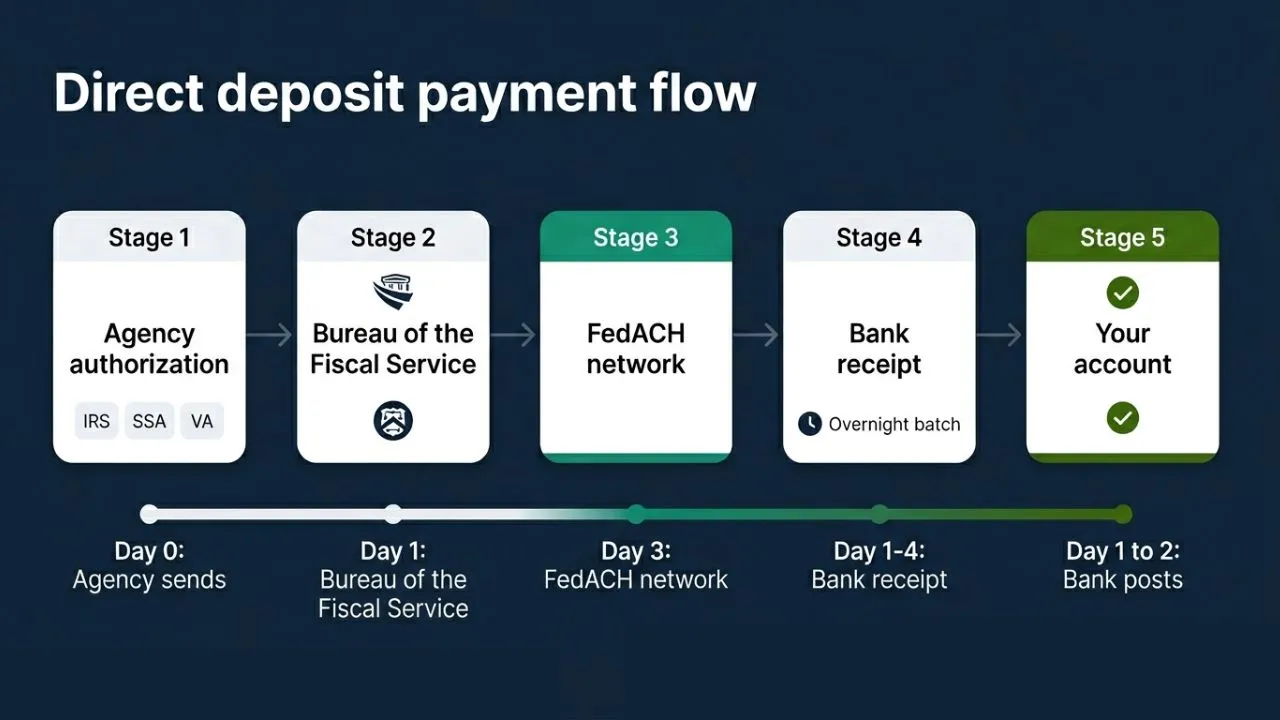
OPM has scheduled the adjusted December 2026 retirement benefits for payment on January 4, 2027. The December effective date and January payment date reflect the federal retirement system’s practice of paying benefits after the month in which they accrue.
The amount deposited into a retiree’s bank account may differ from the gross increase because of applicable insurance premiums, tax withholding and other deductions. Retirees reviewing their healthcare expenses should also distinguish their pension adjustment from changes associated with Medicare open enrollment.
Those receiving Social Security separately should review their SSA benefit notice, including the procedures for beneficiaries who missed the November 18 deadline for enrolling in electronic COLA notices.
What Retirees Should Check
Federal retirees can review their pension classification, adjustment notices and payment statements through OPM Retirement Services. No separate COLA application is generally required for existing eligible annuitants.
Retirees who believe their adjustment is incorrect should contact OPM through its official retirement support channels. Before reporting a discrepancy, they should check whether age restrictions, prorated benefits, retirement classification or changes in deductions explain the amount received.
The two different COLA rates for 2027 reflect a longstanding distinction between federal retirement systems. Eligible CSRS beneficiaries will receive the full 3.6% inflation-based adjustment, while eligible FERS beneficiaries will receive 2.6%, subject to their individual entitlement rules.
For retirees planning their 2027 household budgets, the most reliable figure will be the actual gross and net benefit amounts shown on their official retirement statements.