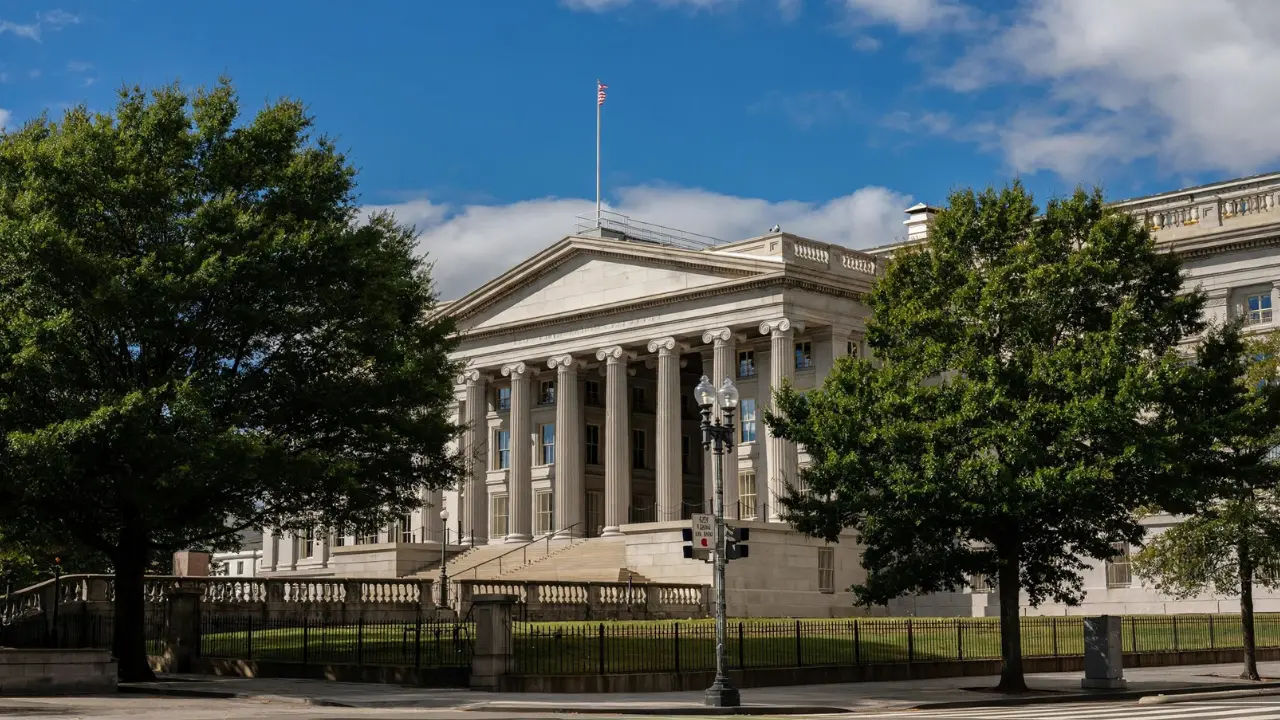


The Treasury Department has finalized a sweeping rollback of beneficial ownership information reporting, permanently removing the federal BOI filing requirement for companies created in the United States and for U.S. persons.
The Treasury Department’s August 11 announcement says the Financial Crimes Enforcement Network, or FinCEN, has adopted a final rule making permanent exemptions first introduced on an interim basis in March 2025. The final rule is scheduled for publication in the Federal Register on August 14, 2026, and takes effect immediately upon publication.
For owners of U.S.-created LLCs, corporations and similar entities, the practical answer is straightforward: they no longer have to submit, update or correct BOI reports merely because they created a company under U.S. state or tribal law. Certain companies formed outside the United States and later registered to do business here remain subject to reporting requirements, however.
That distinction is important because the phrase “BOI reporting ended” is now accurate for U.S. companies, but not for every business operating in the country.
What changed in the final BOI rule?
FinCEN originally implemented the Corporate Transparency Act with a rule requiring many corporations, LLCs and similar entities to report information about the people who ultimately owned or controlled them. The original reporting framework took effect January 1, 2024.
That framework changed substantially in March 2025. FinCEN issued an interim final rule that excluded companies created in the United States from the definition of a reporting company and limited the requirement largely to certain foreign entities registered to do business in the U.S. The August 2026 final rule now makes that basic framework permanent and provides additional relief.
Among the changes, U.S. persons who have FinCEN identifiers are no longer required to keep the information associated with those identifiers updated or corrected, and foreign reporting companies do not have to report U.S. persons who served as company applicants. FinCEN is a bureau of the U.S. Department of the Treasury, which administers the federal BOI reporting system.
Do LLCs still have to file a BOI report in 2026?
For an LLC created under the law of a U.S. state or tribal jurisdiction, no. FinCEN’s current rule exempts entities created in the United States from BOI reporting. That applies regardless of whether the domestic entity is organized as an LLC, corporation or another type of entity that would previously have fallen within the reporting framework.
This means a U.S. business owner who previously heard that a new LLC had to file a BOI report should not rely on an old 2024 filing guide, deadline article or reminder notice.
The regulatory framework has changed materially since those instructions were published. The relevant question now is where the entity was created, not simply whether it operates in the United States.
Who still has to file a BOI report?
BOI reporting has not disappeared completely. Under FinCEN’s final-rule guidance, the remaining category of reporting companies consists of entities that:
- were created under the law of a foreign country; and
- registered to do business in a U.S. state or tribal jurisdiction by filing a document with the relevant state or tribal office.
Those foreign entities may still qualify for one of the reporting exemptions contained in the rule. If no exemption applies, they generally remain reporting companies.
Even then, the reporting obligation is narrower than before. A foreign reporting company generally reports required information about the company and its non-U.S. beneficial owners. It does not report beneficial ownership information for U.S. persons.
This creates an important scenario: a foreign company can remain a reporting company while having no obligation to identify a particular owner in its BOI filing if that owner is a U.S. person.
What is the BOI deadline for a foreign company?
Foreign reporting companies registered to do business in the United States after March 26, 2025 generally have 30 calendar days to file an initial BOI report.
The clock begins from the earlier of the date the entity receives actual notice that its registration is effective or the date a secretary of state or similar office first provides public notice of that registration.
A reporting company that later has a change in reportable information generally has 30 days to submit an updated report. A company that discovers an inaccuracy in required information likewise generally has 30 days to correct it after becoming aware of, or having reason to know of, the error.
Businesses formed outside the United States therefore should not interpret headlines about Treasury “ending BOI reporting” as permission to ignore FinCEN entirely. Their entity-formation history determines whether the remaining rule applies.
What happens to BOI information businesses already submitted?
Companies and individuals that filed BOI information before the U.S. reporting requirement was removed do not need to submit a deletion request to FinCEN. The final rule says FinCEN is implementing a process to delete previously reported BOI associated with U.S. persons.
FinCEN says affected people and companies do not need to contact the agency, and the agency does not plan to send individual confirmation after each record is deleted. FinCEN instead intends to announce on its website when the deletion process has been completed. For a U.S. company that filed under the earlier rule, that means there is no new BOI form to submit simply to have its old filing removed.
Do people with a FinCEN identifier still have to update it?
The final rule also changes the continuing obligations attached to some FinCEN identifiers. A FinCEN identifier is a unique identifying number that can be used in place of repeatedly providing certain personal information in BOI reports.
Under the final rule, U.S. persons who hold individual FinCEN identifiers are exempt from the requirement to update or correct the information used to obtain those identifiers.
Non-U.S. persons who hold FinCEN identifiers and remain within the reporting system do not receive the same blanket exemption. FinCEN’s guidance says their identifying information generally must still be updated when required.
Was the Corporate Transparency Act repealed?
No. The distinction between the law and the reporting rule matters. The Corporate Transparency Act remains part of federal law through 31 U.S.C. § 5336. Congress did not repeal the statute as part of FinCEN’s August 2026 action.
Instead, Treasury and FinCEN used statutory authority to exempt categories of entities and individuals from the reporting requirement through regulation.
So a statement that “Congress repealed the BOI law” would be incorrect. The more precise description is that FinCEN has permanently narrowed the BOI reporting rule so U.S.-created companies and U.S. persons are exempt. That distinction could matter again if Congress changes the underlying statute or Treasury changes the regulatory framework in the future.
Can a bank still ask a business for beneficial ownership information?
Yes. The end of BOI reporting for U.S. companies does not mean a business will never again be asked to identify its owners. FinCEN explicitly distinguishes the BOI reporting requirements under the Corporate Transparency Act from separate customer due diligence requirements that apply to covered financial institutions.
Banks and other covered institutions can still have obligations under FinCEN’s Customer Due Diligence Rule to obtain beneficial ownership information when establishing certain customer relationships.
That means a U.S. LLC may have no FinCEN BOI filing requirement while its bank can still legitimately request ownership information for a business account. For business owners, keeping those two systems separate prevents one of the biggest sources of confusion created by the change.
What U.S. businesses should do now
For most companies created in the United States, there is no BOI report to file with FinCEN under the final rule. A domestic LLC or corporation that has not filed should not submit a report simply because an older article, email, accountant checklist or formation document says one was required under the previous system. FinCEN’s current rule controls the federal BOI requirement.
A U.S. company that already filed does not need to request deletion of the old information. FinCEN says it is handling that process itself. A U.S. person with an individual FinCEN identifier does not have to continue updating or correcting the underlying information solely because of the identifier.
A company created under foreign law and registered to do business in the United States should take the opposite approach: determine whether it remains a reporting company, check whether an exemption applies and, if reporting is still required, verify its filing or update deadline under the current rule.
And if a bank asks for beneficial ownership information, a business should not assume the request is obsolete merely because FinCEN’s separate BOI filing requirement no longer applies to domestic companies.
What happens next?
The immediate next milestone is publication of the final rule in the Federal Register on August 14, 2026. FinCEN says the rule becomes effective immediately upon that publication and does not require a transition period because it creates no new reporting obligations.
FinCEN is also working through the process of removing BOI previously reported by U.S. persons and says it will provide public notice when that work is complete.
For domestic businesses, the central answer is now unusually simple: a company created in the United States does not have to file a BOI report under FinCEN’s current reporting framework.
For foreign-created entities registered to conduct business in the United States, however, BOI compliance has not disappeared. Their reporting status, exemptions and deadlines still need to be checked against the current FinCEN rule.